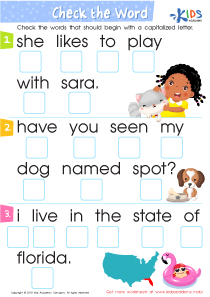
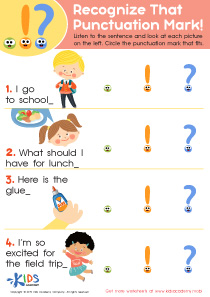
Grammar skills improvement Normal Grammar Worksheets for Ages 4-8
4 filtered results
-
From - To
Enhance your child's grammar skills with our engaging Normal Grammar Worksheets designed for ages 4-8! These worksheets make learning fun by incorporating colorful illustrations and interactive exercises that captivate young learners. Our resources focus on critical grammar concepts, including parts of speech, sentence structure, and punctuation tailored for early learners. Each worksheet features clear instructions and age-appropriate activities that help reinforce essential skills in a playful way. Perfect for both classroom use and at-homelearning, these worksheets ensure your child builds a solid grammar foundation while developing their writing abilities. Encourage confidence and creativity as your child masters the art of language!
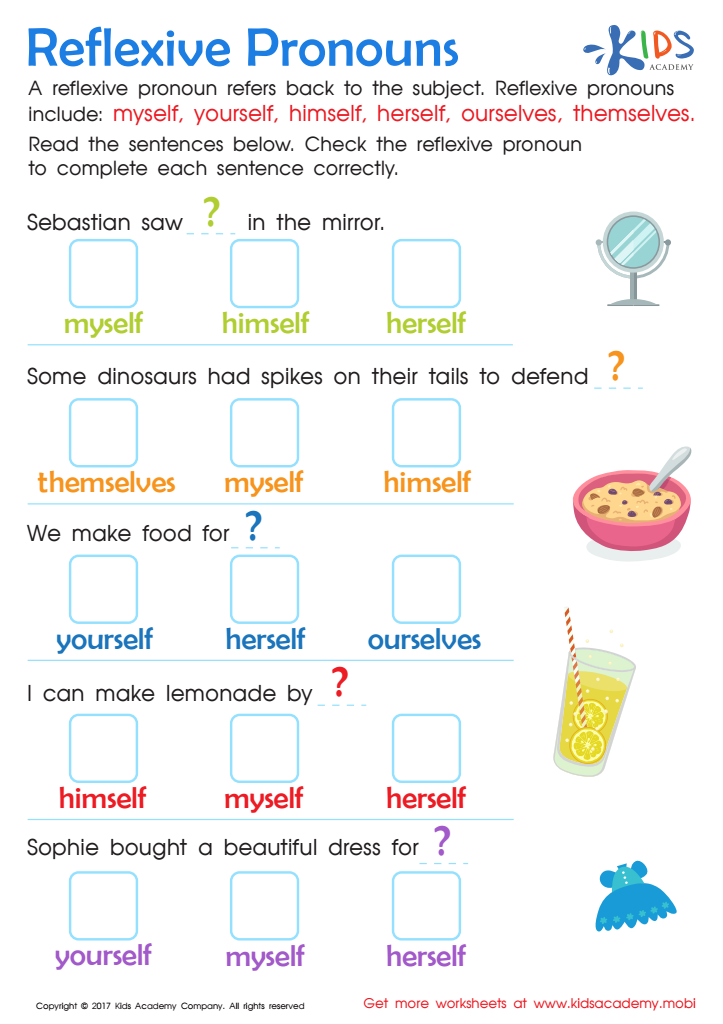
Reflexive Pronouns Worksheet
 Assign to My Students
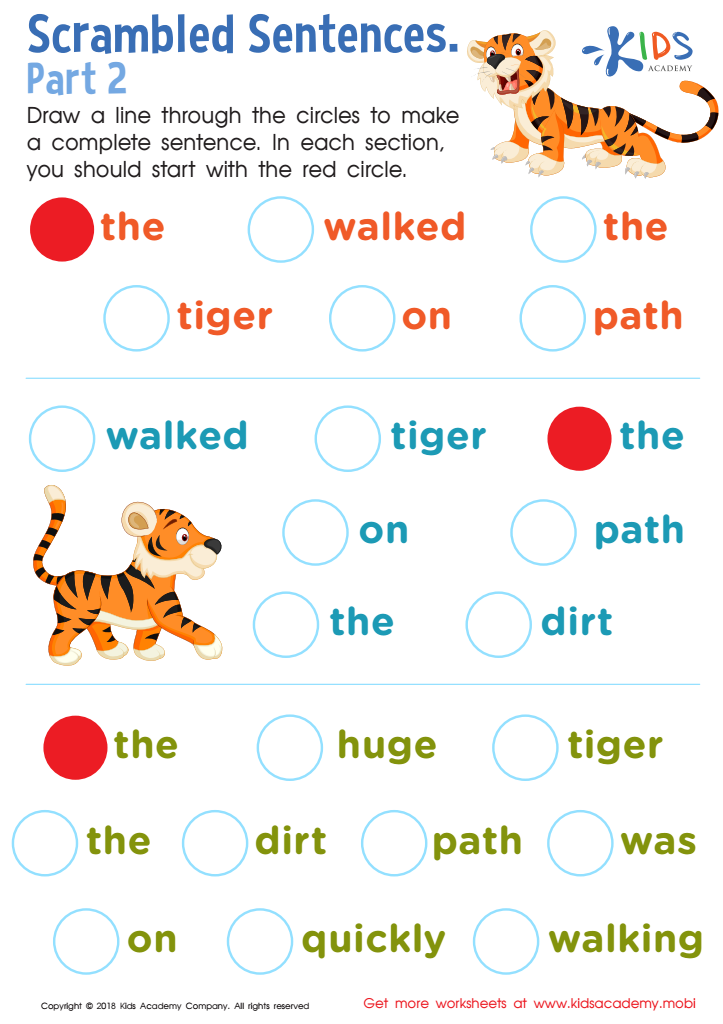
Scrambled Sentences Part 2 Worksheet
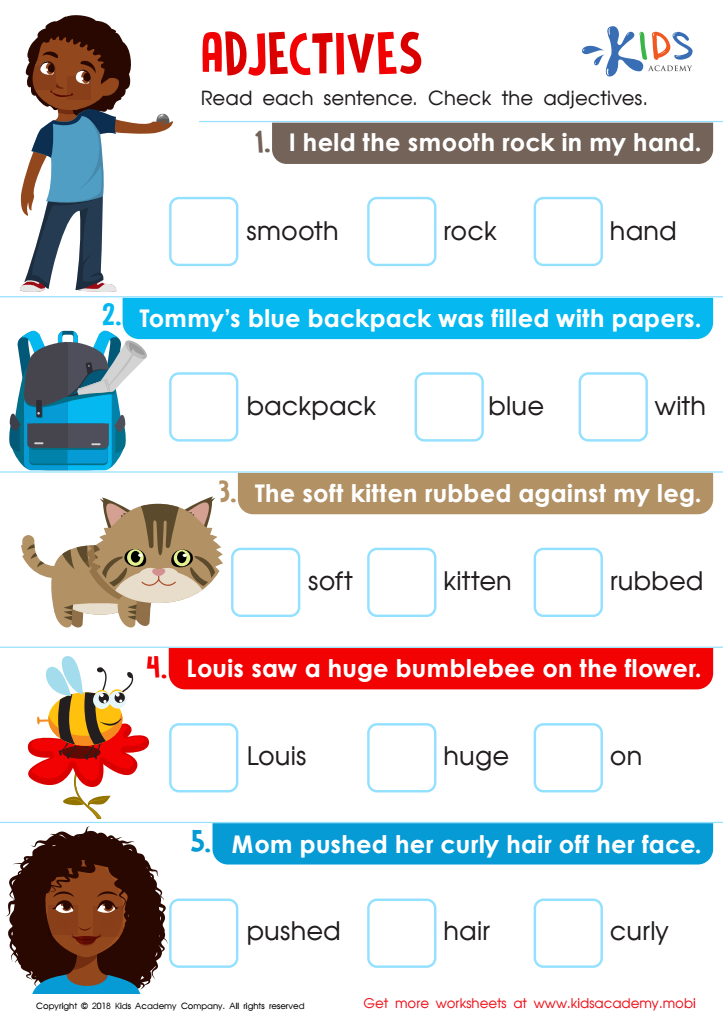
Adjectives Worksheet
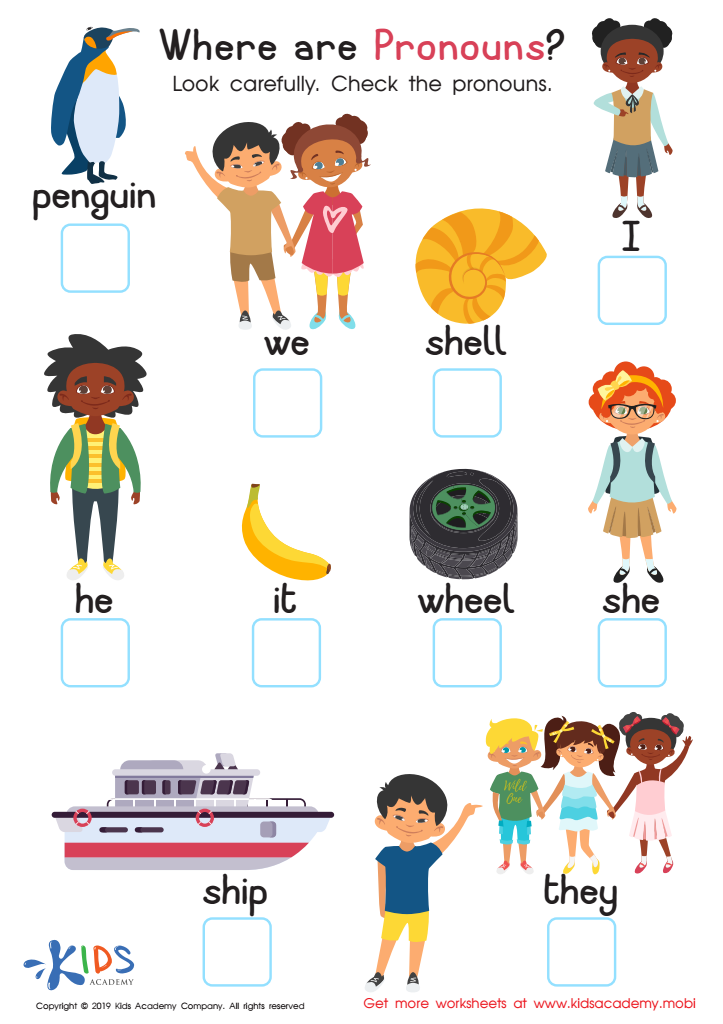
Where Are Pronouns? Worksheet





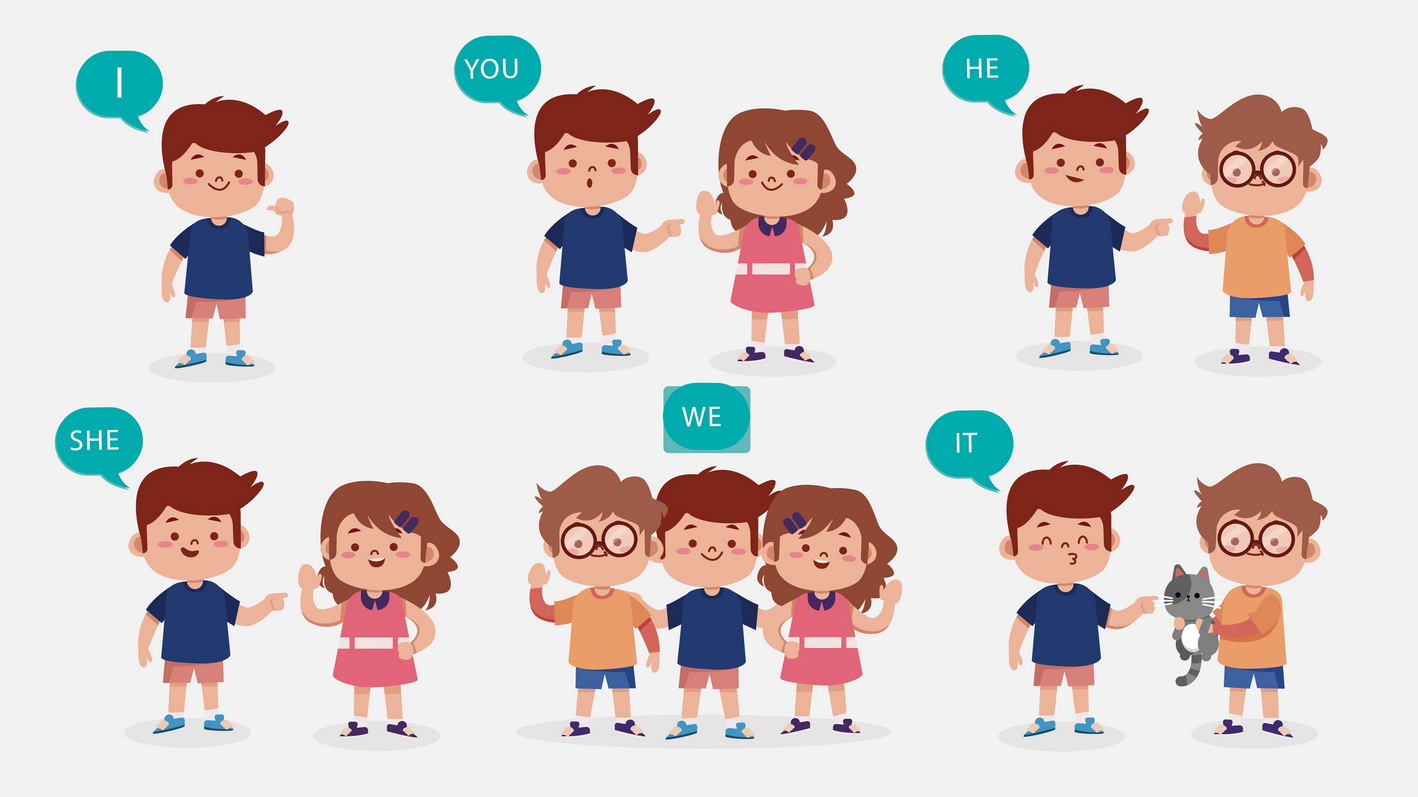


Grammar skills development in children aged 4 to 8 is crucial for a variety of reasons. At this formative stage, children are not only learning how to communicate but are also beginning to understand the structure of language. Strong grammar skills serve as the foundation for reading, writing, and effective communication, all of which are essential for academic success.
Proper grammar aids in clarity and understanding. When children learn correct usage—from subject-verb agreement to sentence structure—they can express their thoughts more clearly, reducing misunderstandings in social interactions and classroom discussions. Furthermore, a solid grasp of grammar fosters confidence. Children who communicate effectively are more likely to participate in classroom activities and engage with their peers.
In essence, grammar is not merely about rules; it's about equipping children with the tools they need for literacy and effective expression. As parents and teachers play pivotal roles in their children's education, emphasizing grammar skills can lead to long-term academic benefits and enhanced self-esteem. Therefore, prioritizing grammar instruction for young learners lays the groundwork for proficient communication and is a key factor in nurturing lifelong learners.