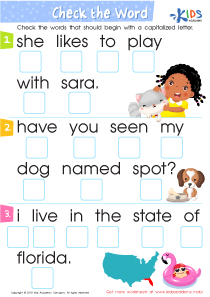
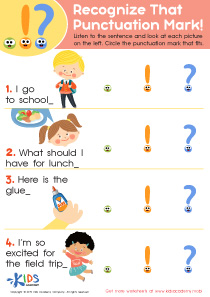
Capitalization rules Normal Writing Worksheets for Ages 4-8
3 filtered results
-
From - To
Enhance your child's writing skills with our Capitalization Rules Normal Writing Worksheets designed for ages 4-8! These engaging worksheets provide fun and interactive ways for young learners to master the basics of capitalization in everyday writing. With clear instructions and colorful illustrations, children will practice using capital letters for names, dates, and the beginning of sentences. Our worksheets promote fine motor skills while reinforcing essential grammar concepts, laying a strong foundation for future writing success. Ideal for at-home practice or classroom activities, these resources make learning capitalization enjoyable and effective. Start empowering your child's writing journey today!
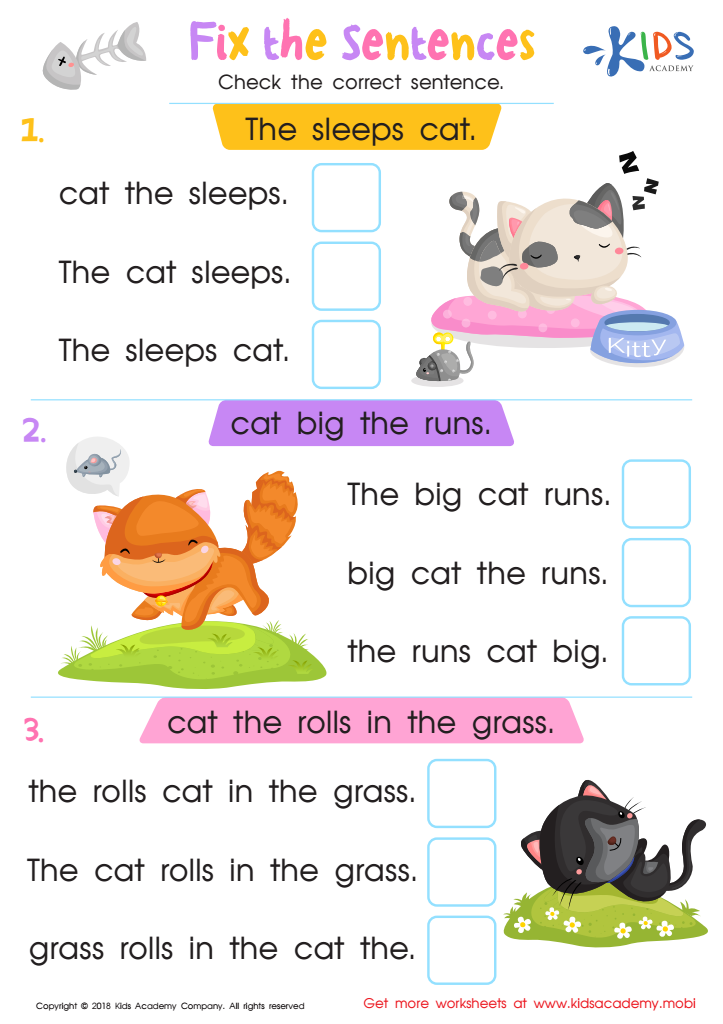
Fix the Sentences Worksheet
 Assign to My Students
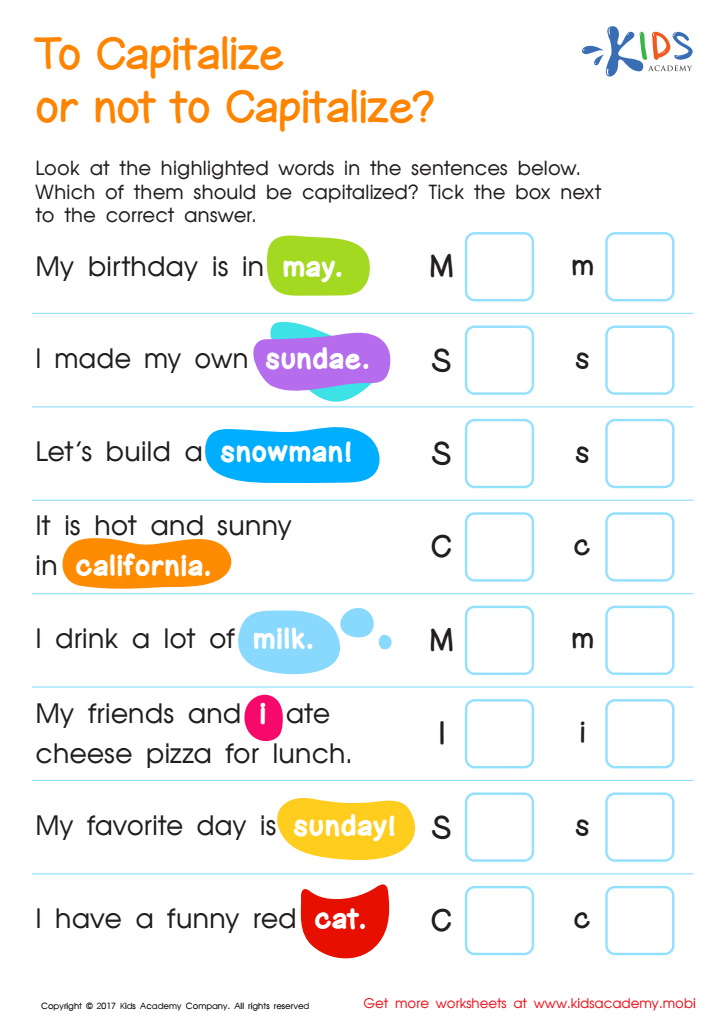
Capitalization: To Capitalize or Not? Printable
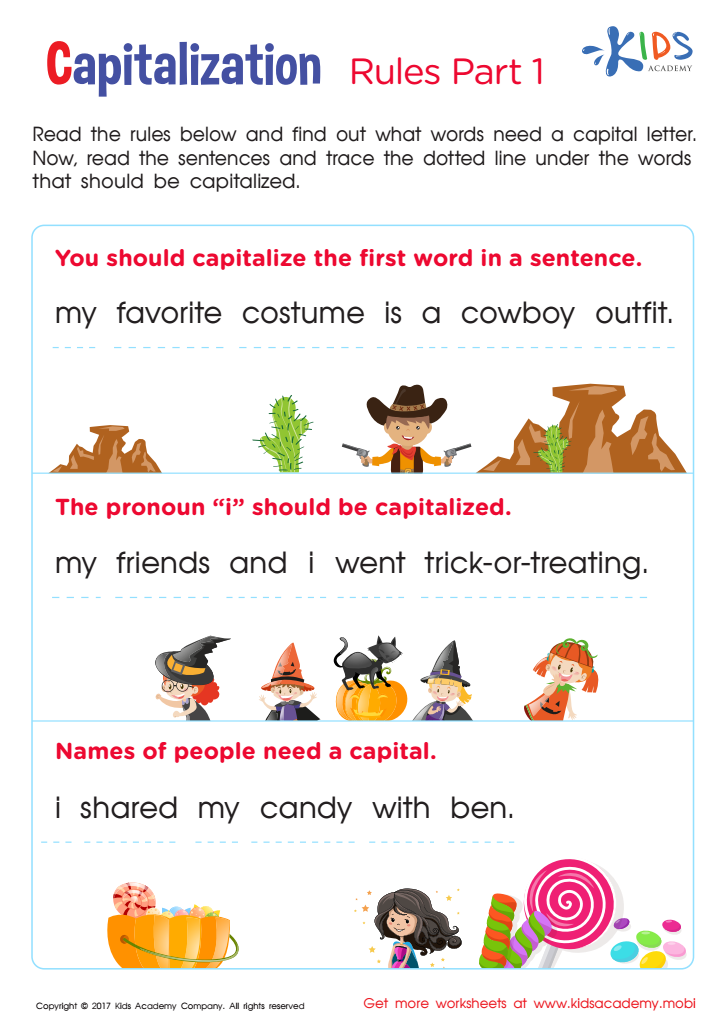
Capitalization Rules: Part 1 Worksheet





Understanding capitalization rules is essential for young learners aged 4-8, as it forms the foundation of effective writing and communication skills. Parents and teachers should care about these rules because they enhance reading comprehension and writing clarity. Capitalization helps convey meaning by indicating the beginning of sentences, proper nouns, and titles, allowing readers to understand the text better.
When children learn and apply capitalization rules, they develop a sense of structure in their writing. This knowledge encourages them to express their thoughts more clearly, boosting their overall confidence in communicating. Proper use of capitalization also prepares children for future academic success, as it is a critical component of grammar and writing standards.
Moreover, emphasizing capitalization reinforces attention to detail, an important skill applicable across various subjects and tasks. Parents and teachers can use everyday activities, such as reading books together or creating sentences, to reinforce these rules in a fun and engaging way. By cultivating an understanding of capitalization early on, educators and caregivers empower children to take pride in their writing, fostering not just literacy skills but also a love for learning and self-expression. Encouraging mastery of capitalization now sets the stage for proficient writing in the years to come.