Verb identification Normal Writing Worksheets for Ages 4-8
6 filtered results
-
From - To
Unlock your child's potential with our Verb Identification Normal Writing Worksheets, specially designed for ages 4-8! These engaging worksheets help young learners recognize and understand verbs in a fun and interactive way. Perfect for enhancing their writing skills, each worksheet offers a variety of exercises that encourage creativity while reinforcing essential grammar concepts. Our age-appropriate activities ensure that children develop a strong vocabulary foundation through fun exercises tailored to their developmental stage. With vibrant illustrations and easy-to-follow instructions, these worksheets transform learning into an enjoyable adventure. Start developing your child's language skills today with our delightful verb identification worksheets!
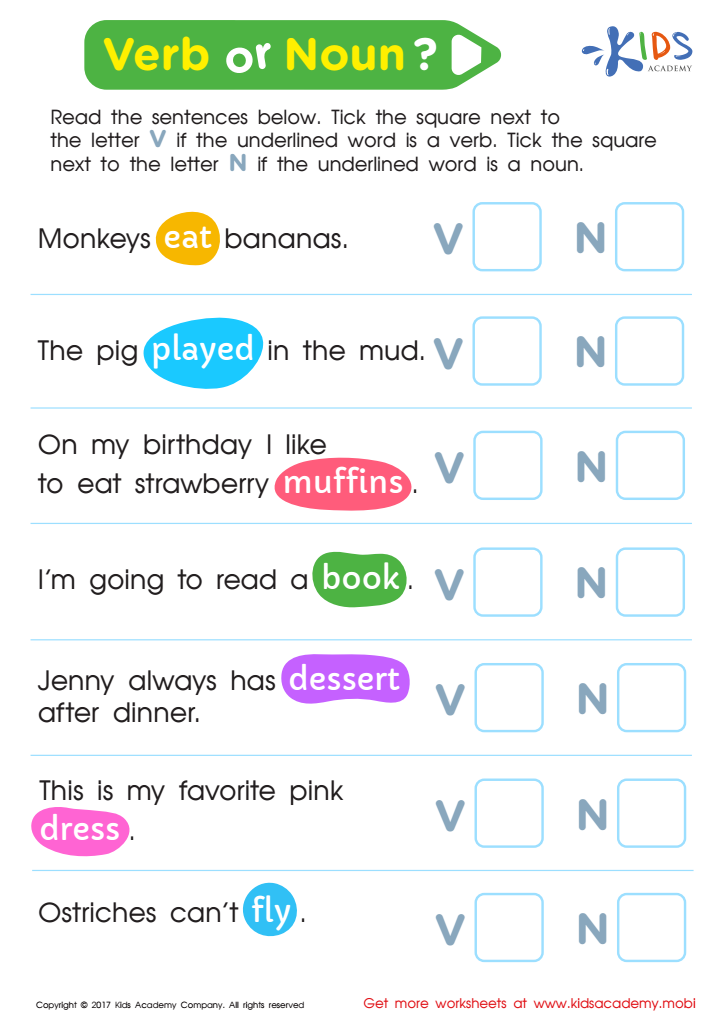
Verb or Noun Worksheet
 Assign to My Students
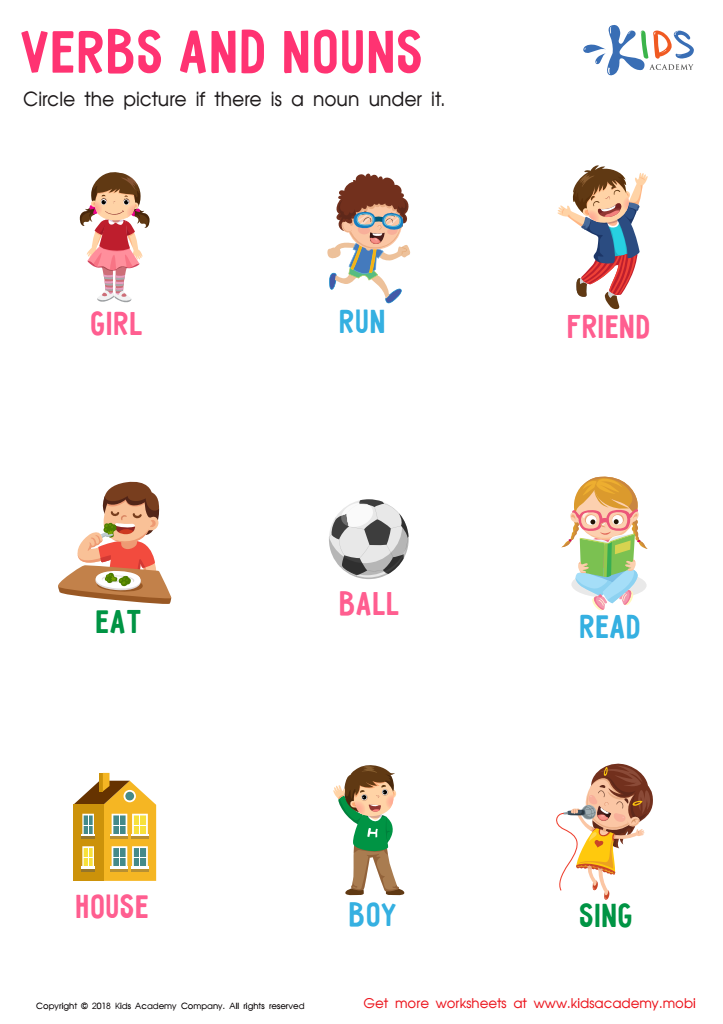
Verbs and Nouns Worksheet
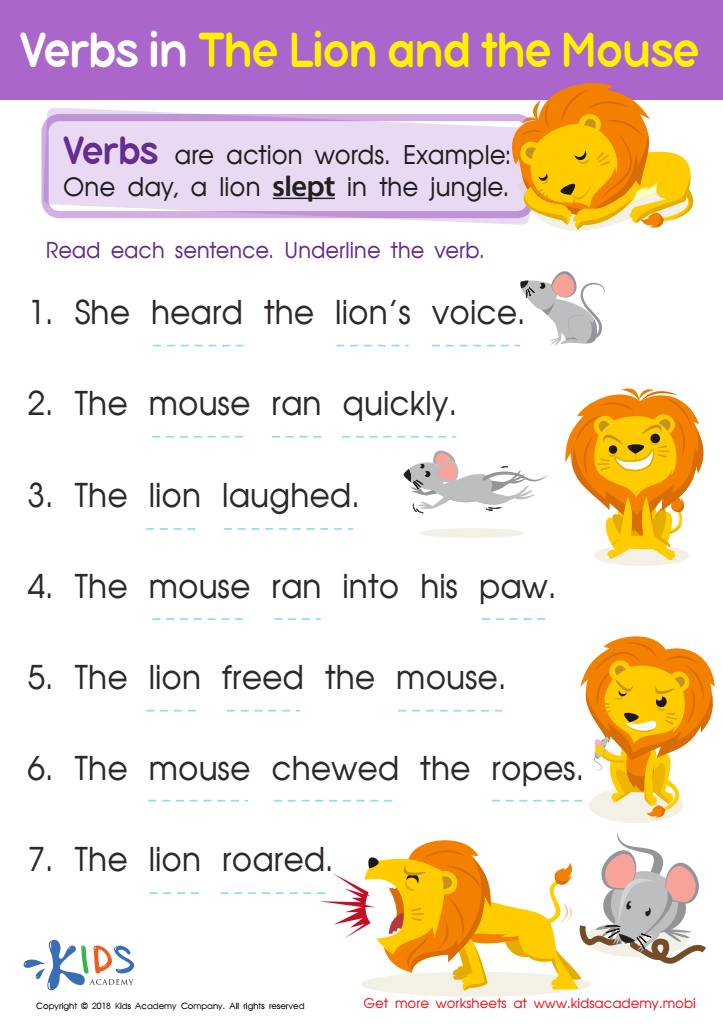
Verbs in The Lion and the Mouse Worksheet
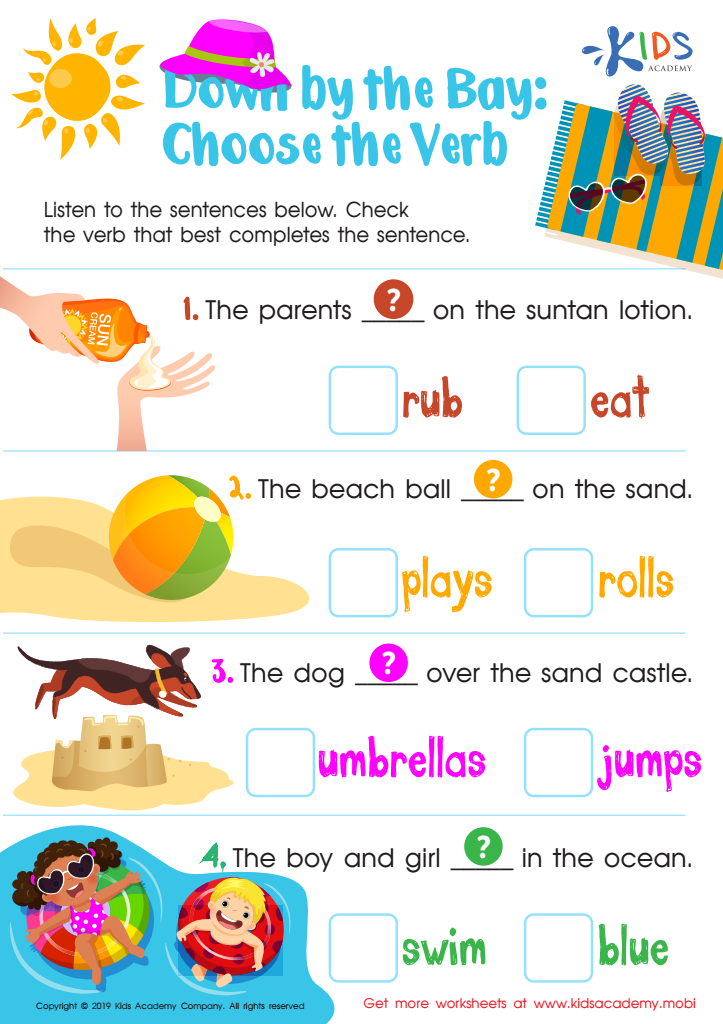
Down by the Bay: Choose the Verb Worksheet
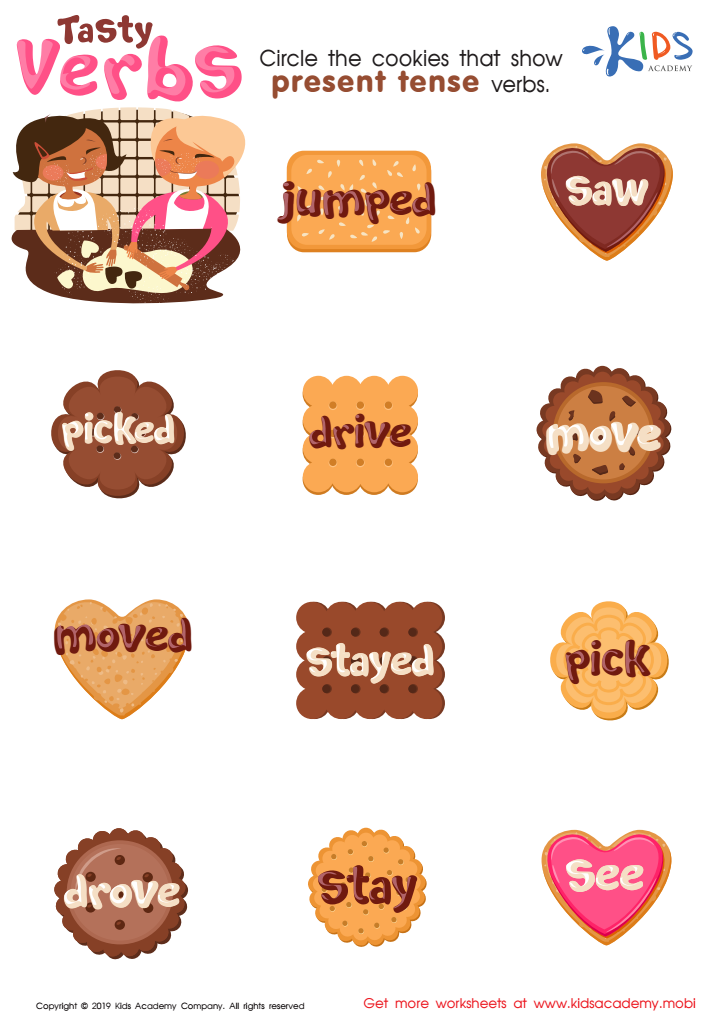
Tasty Verbs Worksheet
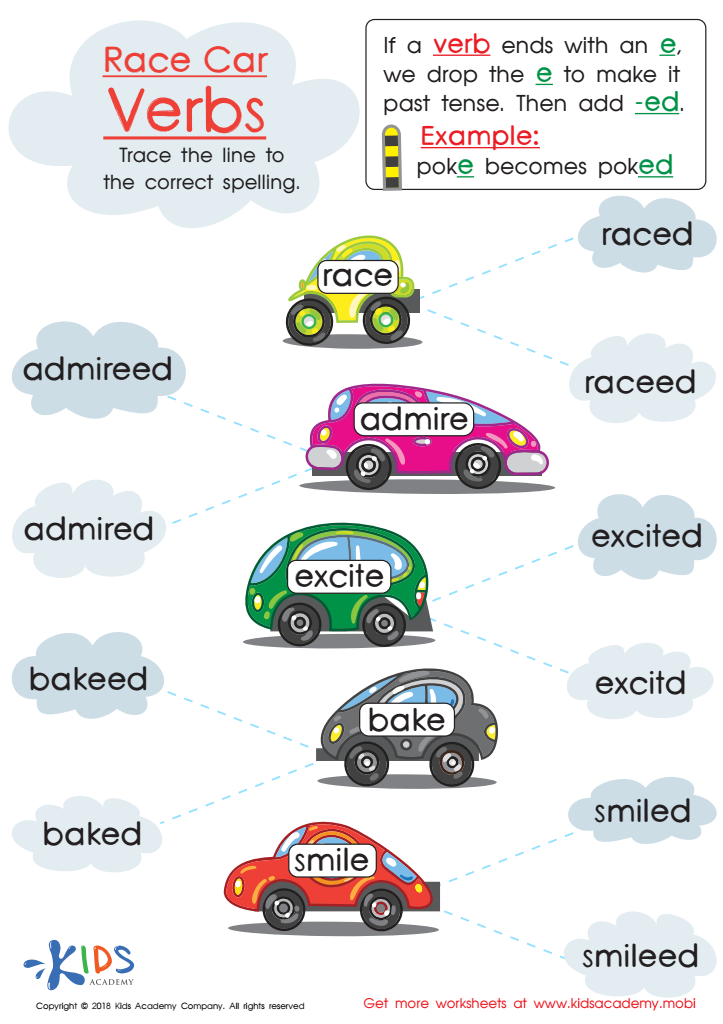
Race Car Verbs Worksheet






Parents and teachers should care about verb identification for children aged 4-8 because understanding verbs is crucial for language development and effective communication. Verbs are the action words that drive sentences and express what subjects do. By identifying and using verbs, children enhance their reading and writing skills, leading to improved comprehension and overall literacy.
At this age, children are naturally curious and in a critical stage of language acquisition. Engaging them in activities focused on verbs helps build their vocabulary and encourages them to form more complex sentences. For instance, identifying action words reinforces their understanding of how verbs work within different contexts, fostering better storytelling and descriptive abilities.
Moreover, recognizing verbs promotes cognitive skills such as categorization, sequencing, and critical thinking—all essential for academic success. It can make learning interactive and enjoyable, making it easier for children to grasp language mechanics.
Involving parents in these activities encourages supportive learning environments both at home and in school. This collaborative effort nurtures a child’s confidence in expressing themselves and lays a strong foundation for future learning, ultimately leading to better communication skills that are essential in all aspects of life.