Word identification Normal Writing Worksheets for Ages 4-8
5 filtered results
-
From - To
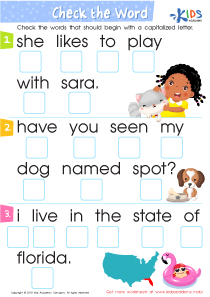
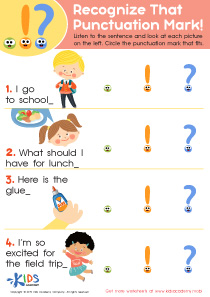
Discover our engaging "Word Identification Normal Writing Worksheets" designed for children ages 4 to 8. These worksheets aim to enhance early literacy skills by fostering word recognition and comprehension in a fun and interactive way. Tailored to young learners, our printable resources incorporate colorful illustrations and simple activities that captivate children’s attention. As students explore, they’ll build a solid foundation in reading and writing through consistent practice. Ideal for both classroom settings and at-home learning, these worksheets support word identification crucial for their academic growth. Unlock the joy of learning with our carefully crafted worksheets today!
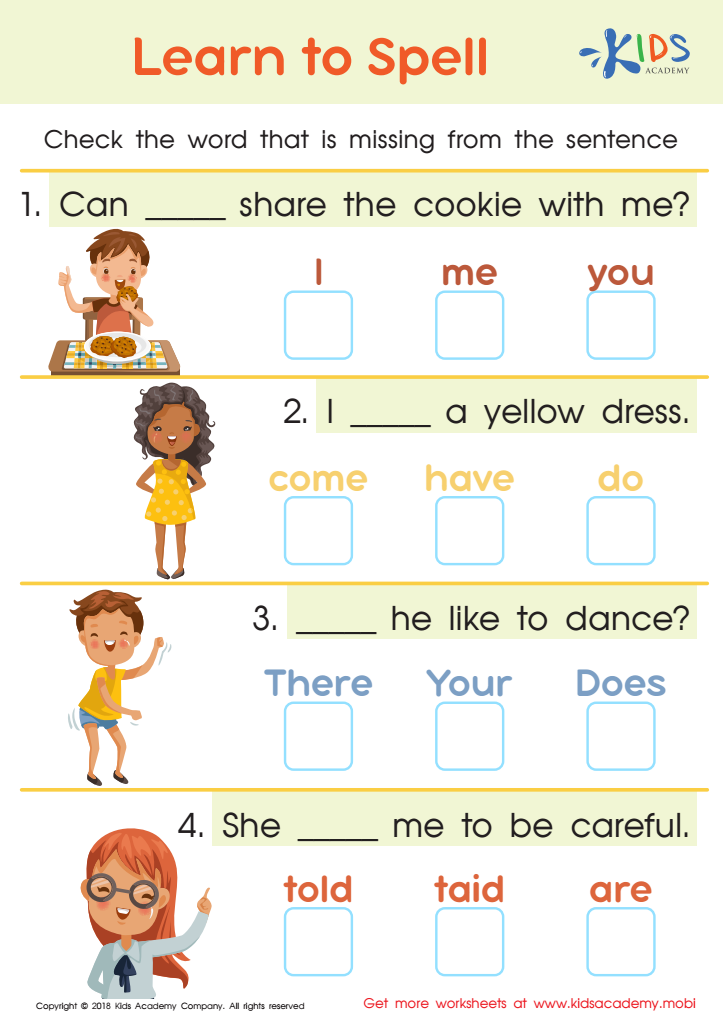
Learn to Spell Worksheet
 Assign to My Students
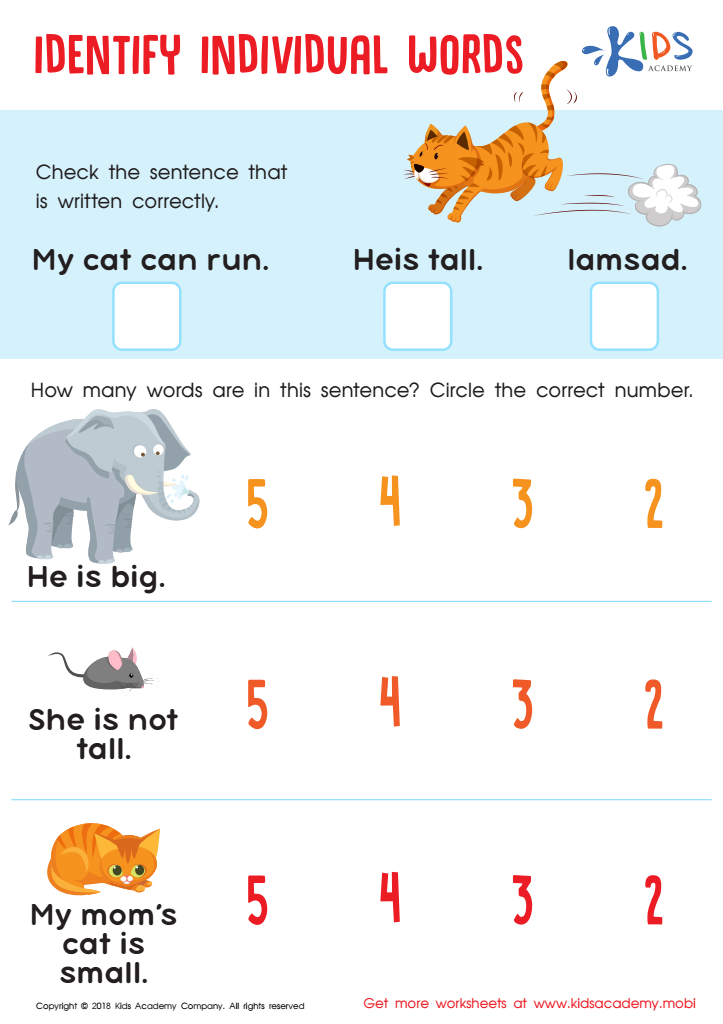
Identify Individual Words Worksheet
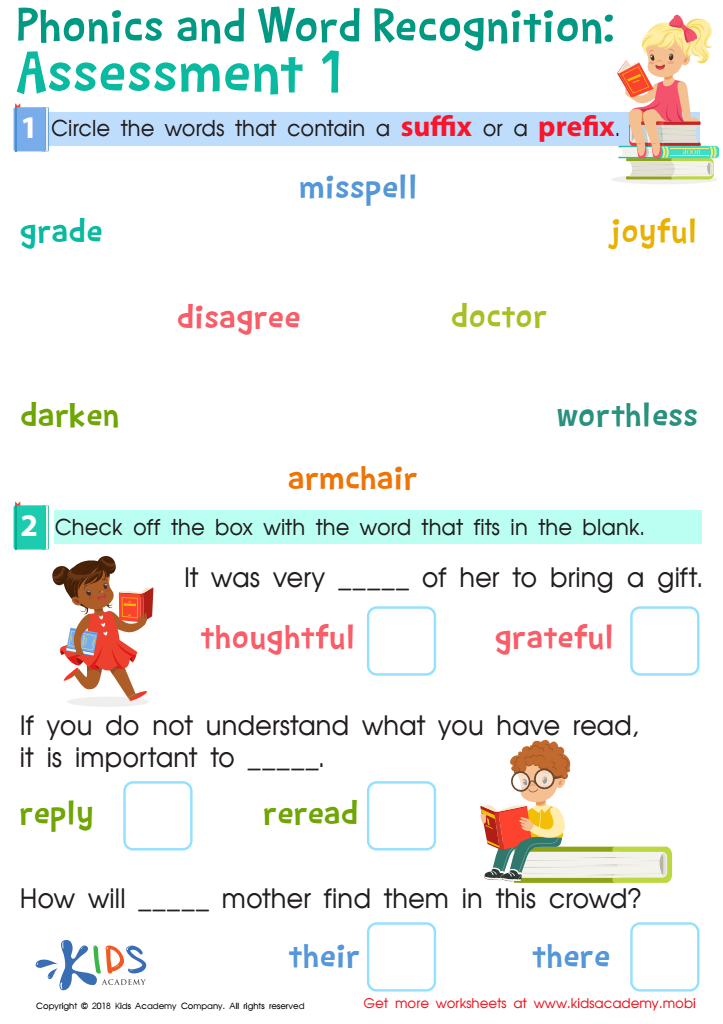
Phonics and Word Recognition: Assessment 1 Worksheet
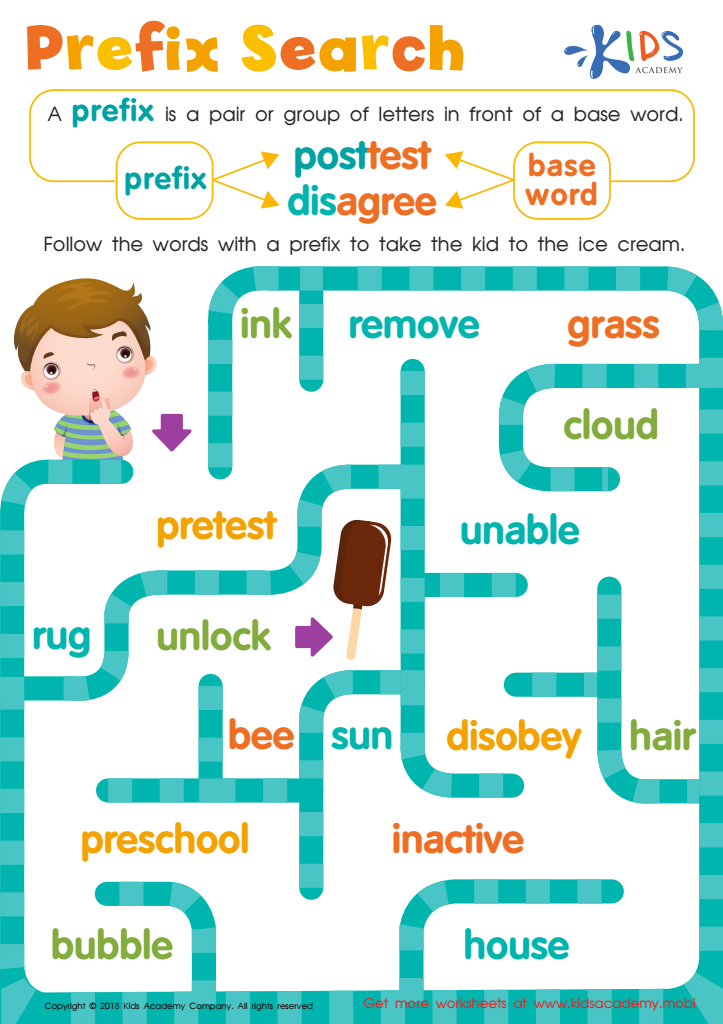
Reading: Prefix Search Worksheet
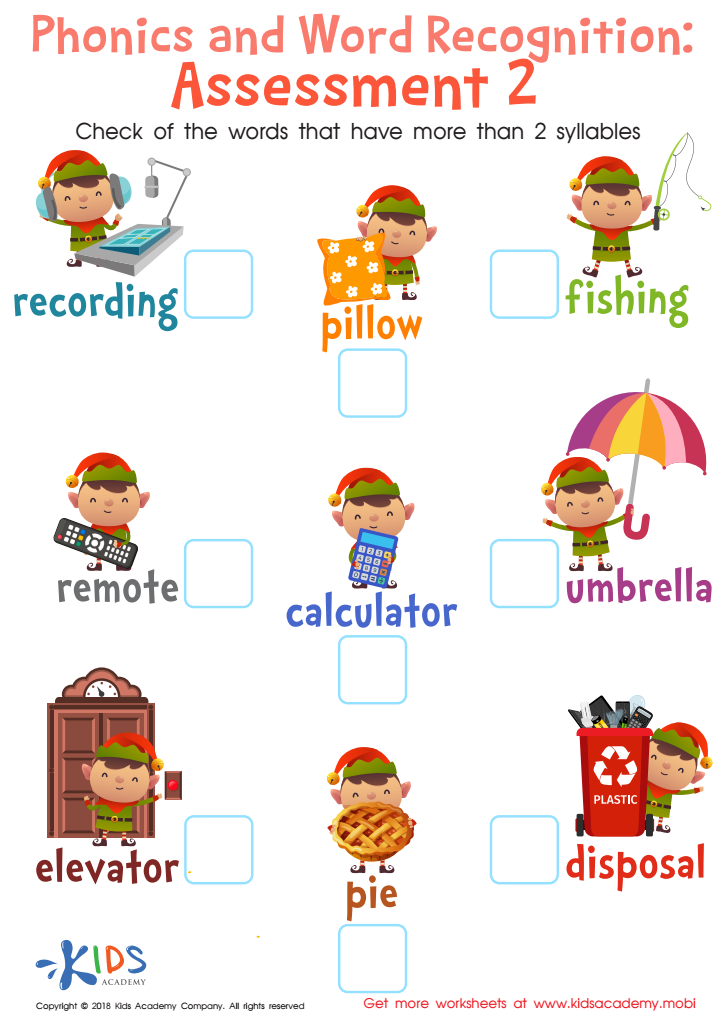
Phonics and Word Recognition: Assessment 2 Worksheet








Word identification is a crucial skill for children aged 4-8, as it forms the foundation for their literacy development. At this stage, children are beginning to explore the world of reading, and strong word identification skills can significantly impact their overall academic journey. Parents and teachers should care about this skill for several reasons.
Firstly, effective word identification enhances reading fluency. When children can quickly recognize and decode words, they can focus on comprehension, leading to a more enjoyable reading experience. This fluency builds confidence and a love for reading, which is essential for lifelong learning.
Secondly, word identification supports vocabulary growth. As children identify words, they are exposed to new vocabulary and concepts that enrich their language skills, enabling effective communication.
Moreover, strong word identification is linked to academic success across subjects. As children transition from learning to read to reading to learn, being able to efficiently identify words becomes crucial in understanding content in other disciplines like math and science.
Ultimately, fostering word identification skills in early education equips children with the tools necessary to participate actively in their learning and empowers them to become competent, confident readers. Therefore, it is vital for parents and teachers to invest in these fundamental skills.