Phonics understanding Normal Phonics Worksheets for Ages 4-9
3 filtered results
-
From - To
Phonics Understanding Normal Phonics Worksheets for Ages 4-9 offer a comprehensive approach to mastering phonics for young learners. Perfectly designed for children aged 4-9, these engaging worksheets support the development of foundational reading skills by focusing on sound-letter relationships, blending sounds, and decoding words. Through vibrant visuals and interactive exercises, kids can practice their phonetic skills in a fun and effective way. Ideal for both classroom and home use, these worksheets are aligned with standard learning goals, ensuring children build solid literacy foundations for future academic success. Give your child the gift of phonetic understanding with our expertly crafted worksheets.
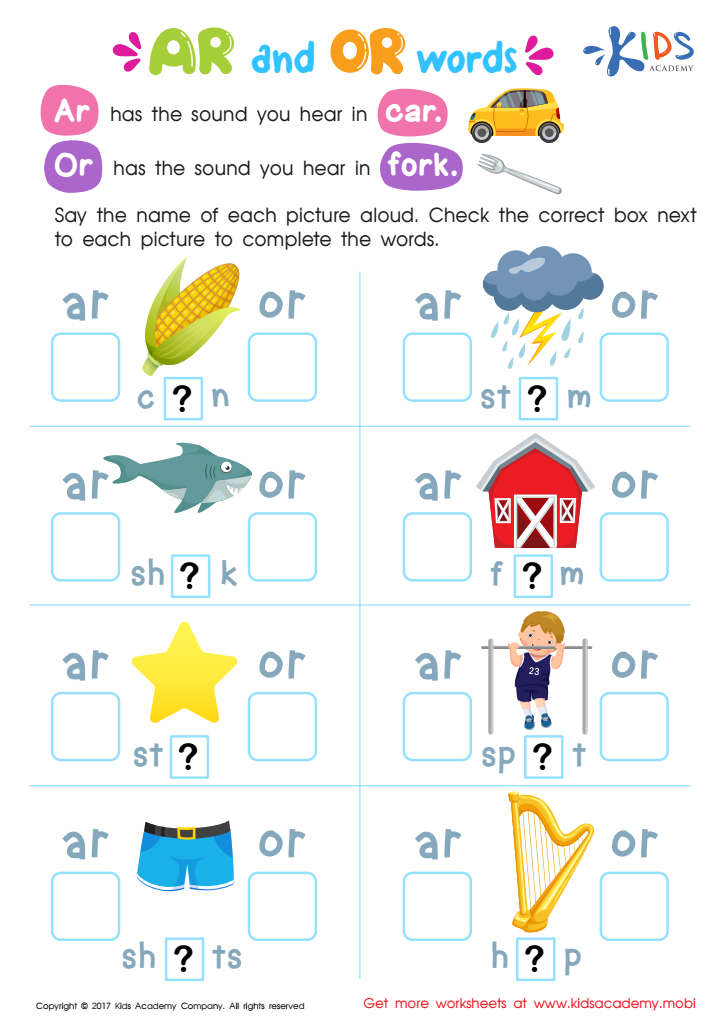
Ar and Or Words Phonics Worksheet
 Assign to My Students
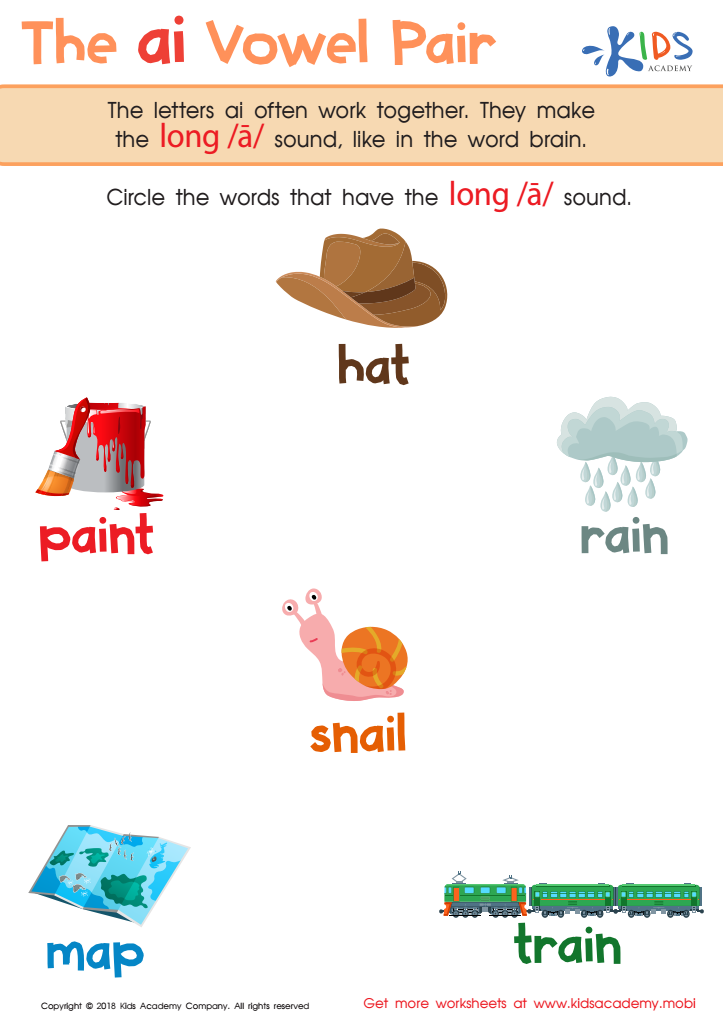
The AI Vowel Pair Worksheet
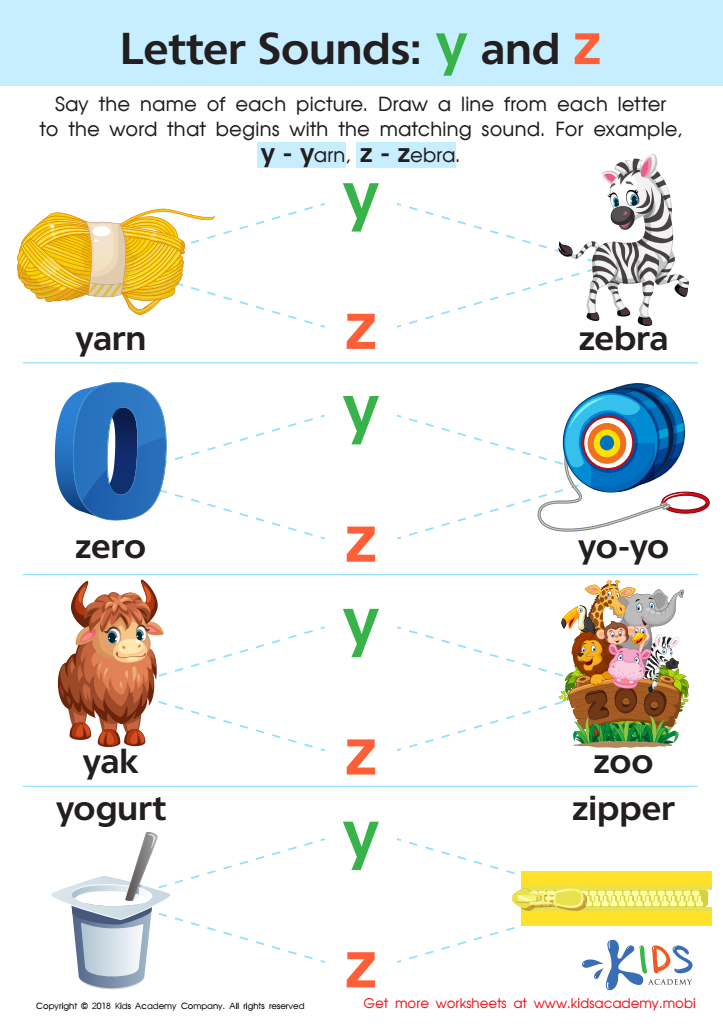
Letter Y and Z Sounds Worksheet








Parents and teachers should prioritize phonics understanding for children aged 4-9 because it forms the crucial foundation for reading and writing skills. Phonics is the method of teaching how spoken language translates into written language by associating sounds with letters or groups of letters. During these formative years, children’s brains are particularly receptive to language acquisition.
Phonics instruction helps children decode new words, enabling them to read independently and fluently. Children who master phonics gain confidence as they recognize patterns in word construction, improving their ability to tackle unfamiliar words. This boosts their reading comprehension and overall literacy, setting them up for academic success across all subjects.
Moreover, phonics-based education can significantly reduce the likelihood of reading difficulties and dyslexia. Children who struggle with speech or processing difficulties particularly benefit from phonics, as it provides clear, rule-based learning strategies.
For parents, engaging with phonics can mean the difference between a reluctant reader and a youngster who finds joy and confidence in reading. Meanwhile, teachers can more effectively guide a whole classroom of varying abilities, ensuring that each child progresses without falling behind.
In summary, understanding and implementing phonics during the key developmental window of ages 4-9 lays the essential groundwork for proficient reading, fostering long-term academic and personal growth.







