Phonological awareness Normal Phonics Worksheets for Ages 4-9
3 filtered results
-
From - To
Enhance your child's reading skills with our Phonological Awareness Normal Phonics Worksheets, specially designed for ages 4-9. These interactive resources focus on developing critical phonemic awareness through engaging activities. Perfect for both home and classroom settings, our worksheets cover essential skills such as rhyming, syllable segmentation, and sound recognition. By practicing with these easy-to-follow exercises, children will strengthen their understanding of phonics, laying a solid foundation for their literacy journey. Explore our collection today and watch your little ones develop confidence in their reading abilities while having fun learning! Start making phonics interactive and enjoyable!
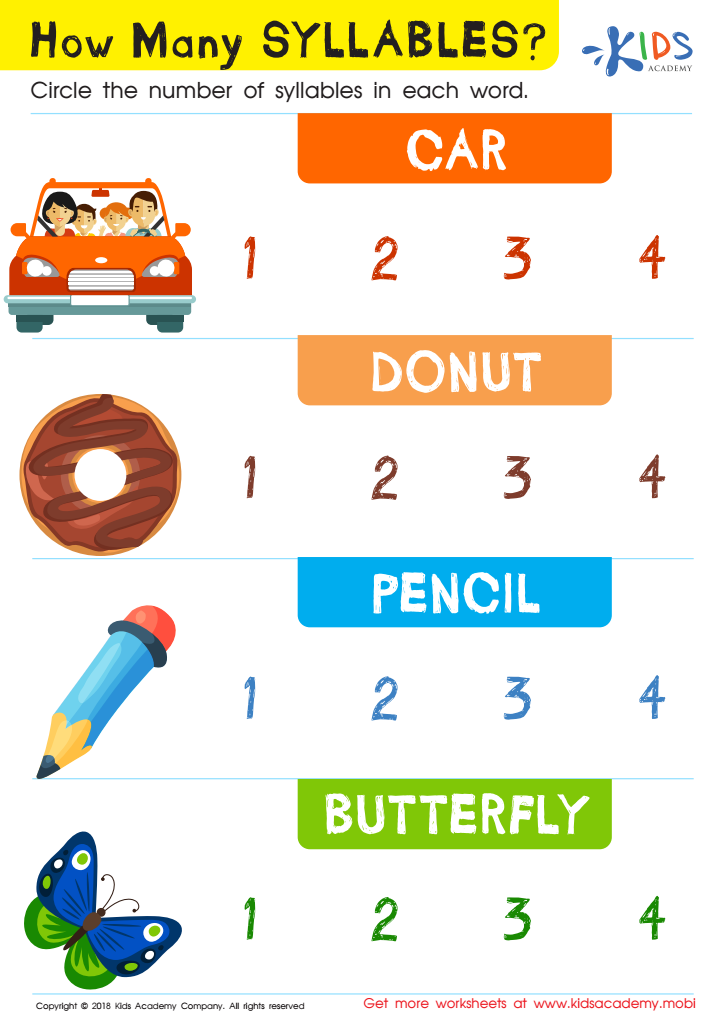
How Many Syllables? Worksheet
 Assign to My Students
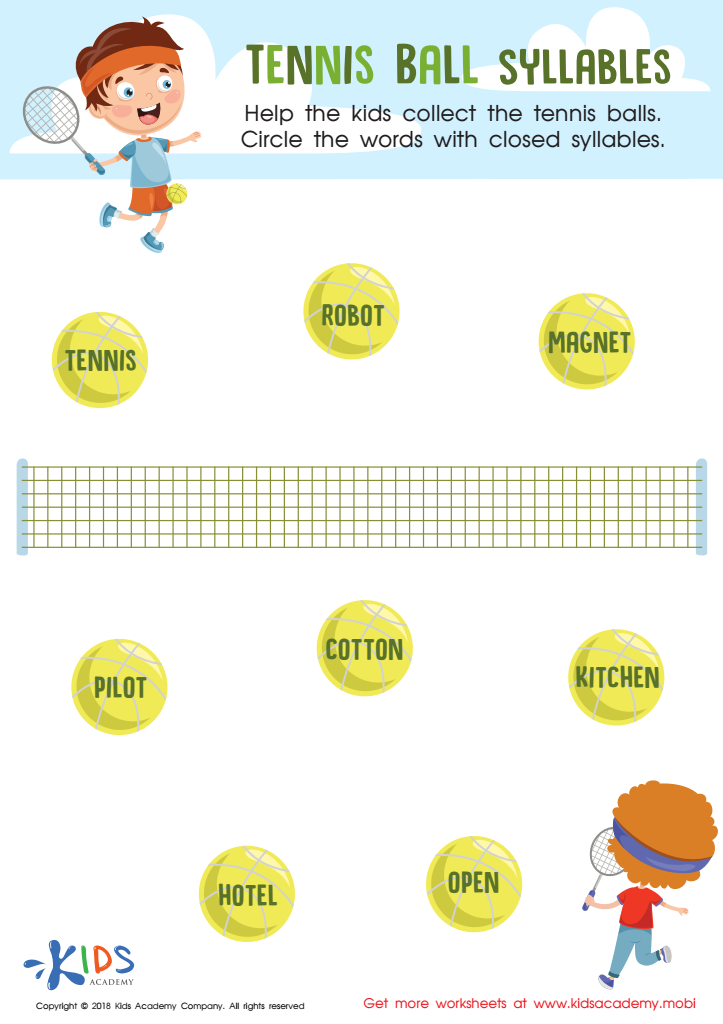
Tennis Ball Syllables Worksheet
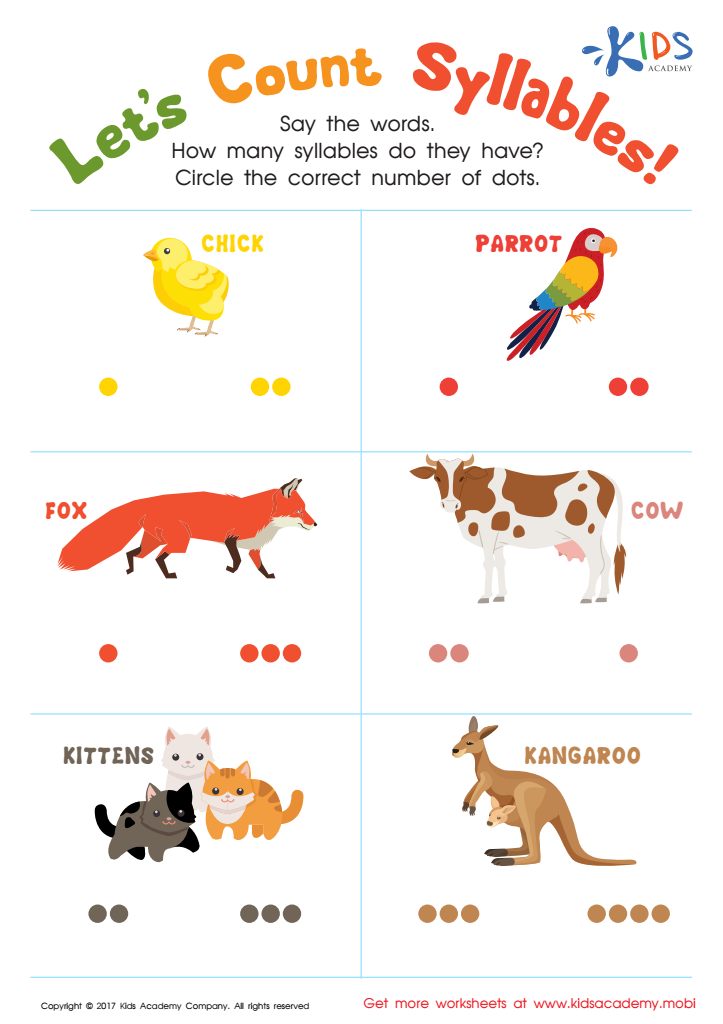
Lets Count Syllables Worksheet








Phonological awareness and phonics are foundational skills critical for early literacy development in children ages 4-9. Understanding phonological awareness—the ability to recognize and manipulate sounds in spoken language—is essential for children to decode words effectively. When learners can identify rhymes, syllables, and initial sounds, they develop a strong auditory foundation that supports reading skills.
Phonics instruction teaches children the relationship between letters and their spoken sounds, enabling them to apply this knowledge while reading and writing. This structure empowers learners to sound out unfamiliar words, fostering confidence and independence in their reading abilities.
Parents and teachers should care about these concepts because they directly impact students’ language processing and comprehension skills. Early intervention in phonological awareness and phonics can significantly reduce the risk of reading difficulties later on. Moreover, children who master these skills often exhibit improved academic performance, enhanced vocabulary, and greater self-esteem.
By prioritizing phonological awareness and phonics in educational settings and at home, parents and teachers create a rich literacy environment that promotes lifelong reading enjoyment and success. Investing in these foundational skills is crucial for nurturing proficient readers who can sustain curiosity and learning throughout their educational journeys.







