Phonics Skills Normal Vowel Blends Worksheets for Ages 4-9
5 filtered results
-
From - To
Boost your child’s reading abilities with our "Phonics Skills Normal Vowel Blends Worksheets for Ages 4-9"! These engaging printables are expertly designed to help young learners master essential vowel blend sounds, laying a solid foundation for fluent reading. Perfect for children ages 4 to 9, each worksheet encourages phonemic awareness, blending, and decoding skills through fun and interactive activities. Whether at home or in the classroom, these worksheets make learning enjoyable and effective. Help your child confidently navigate the world of words and improve their reading proficiency by exploring our collection today!
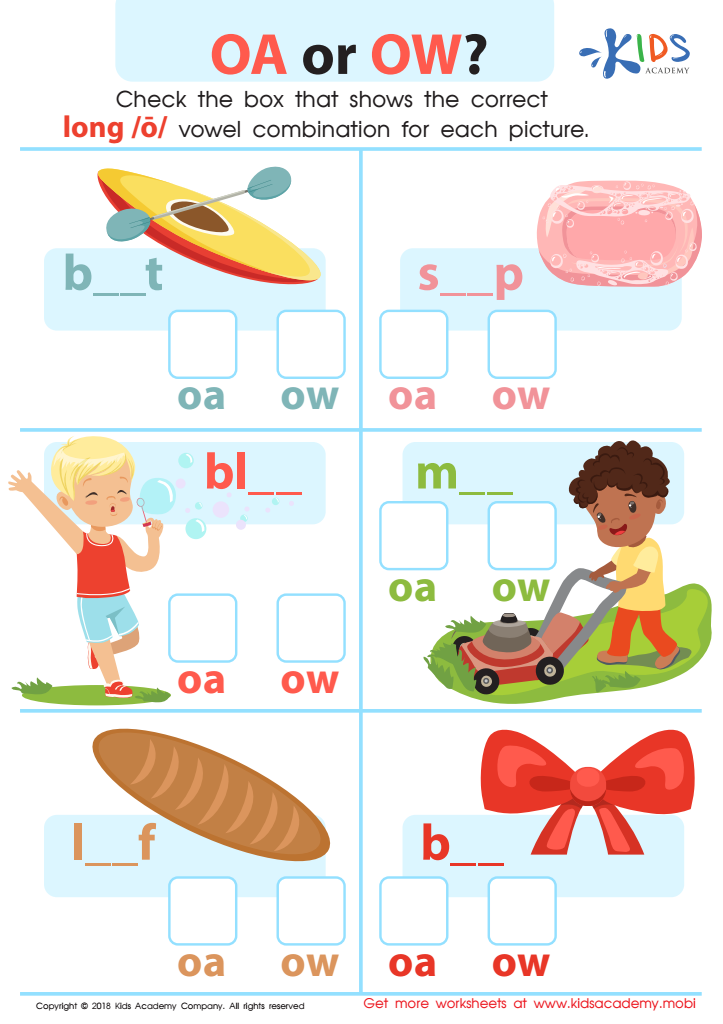
Reading: OA or OW Worksheet
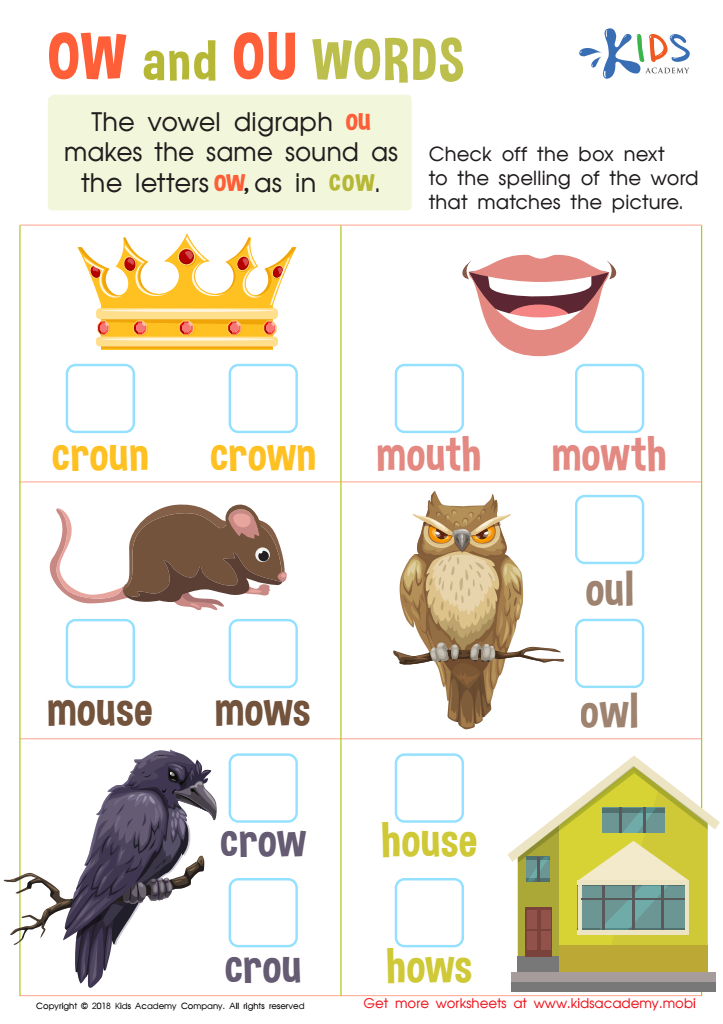
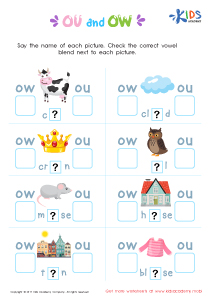
Reading: OW and OU Words Worksheet
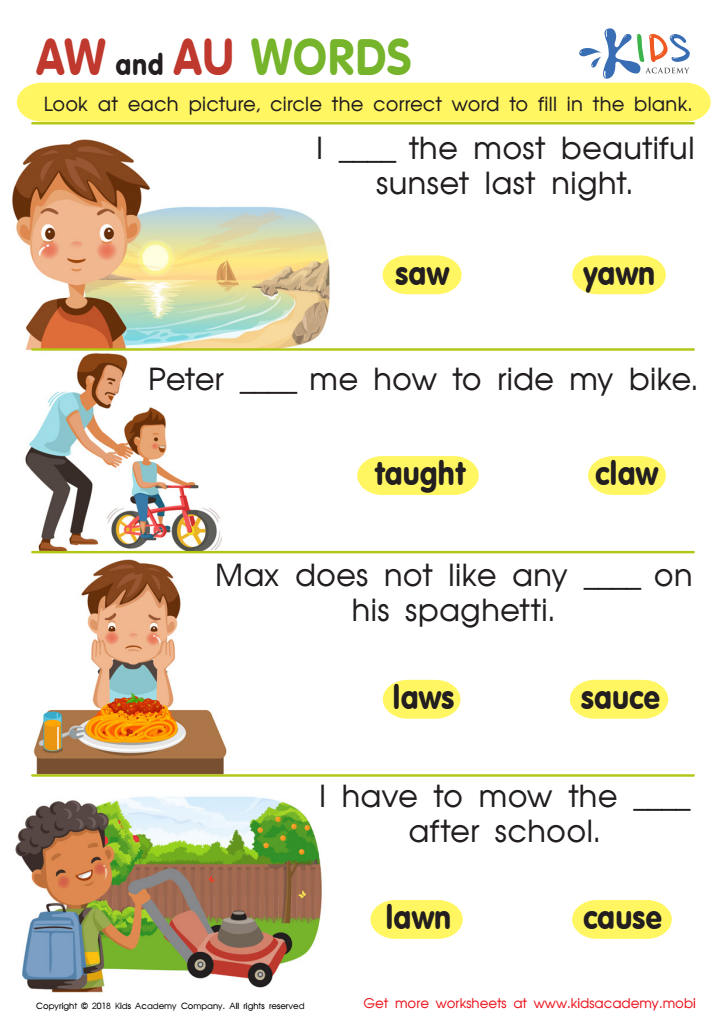
Reading: AW and AU Words Worksheet
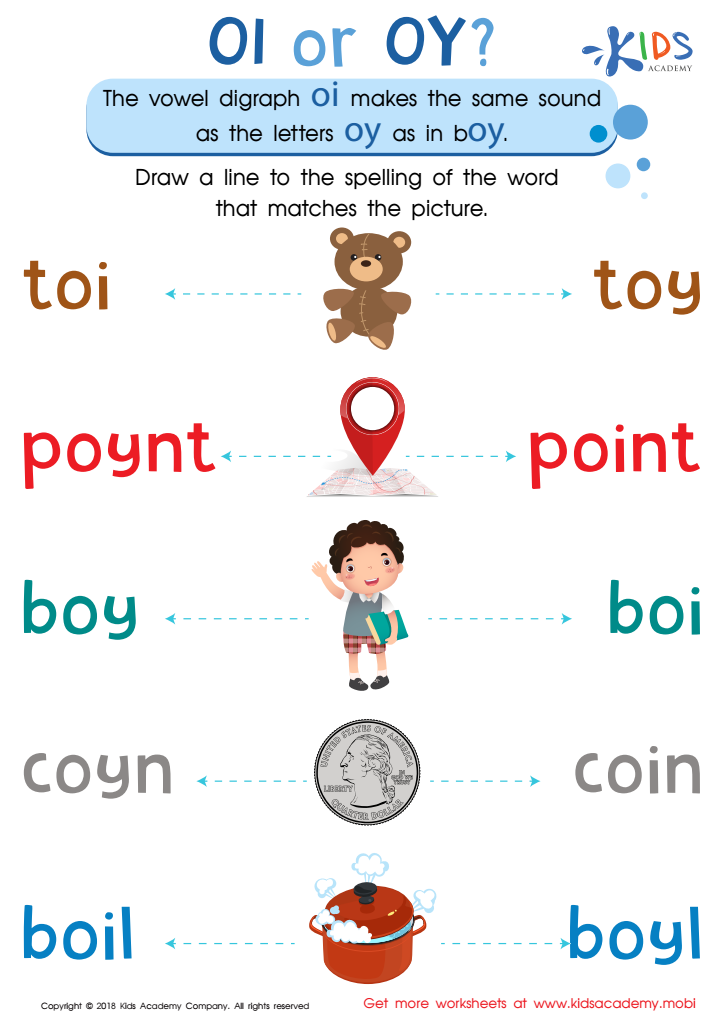
Reading: OI and OY Worksheet

Long and Short E Worksheet
 Assign to My Students





Phonics skills, especially normal vowel blends, are fundamental for early reading development in children aged 4-9. These skills enable young learners to decode words and understand the relationship between letters and their sounds, which is crucial for reading fluency. Vowel blends, like "ea" in "read" or "ai" in "rain," are common in the English language and mastering them can significantly boost a child's ability to read new words.
For parents and teachers, focusing on phonics skills fosters literacy in children by enhancing their phonemic awareness. This awareness allows children to hear, identify, and manipulate sounds in words, which is the foundation for accurate and swift decoding of text. Additionally, proficiency in vowel blends aids in spelling, speaking, and writing, laying a robust educational foundation.
With strong phonics skills, children are more likely to become confident readers, which can lead to better academic performance overall. It also encourages a love for reading, which can benefit all areas of learning and development. Thus, parents and teachers should prioritize phonics education to help children thrive both in school and in everyday communication. Investing time and effort into teaching normal vowel blends can yield significant long-term benefits for young learners.