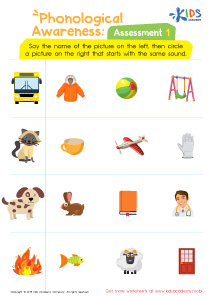
Reading proficiency Normal Vowels Worksheets for Ages 4-9
5 filtered results
-
From - To
Enhance your child's reading skills with our "Reading Proficiency Normal Vowels Worksheets for Ages 4-9." Perfect for early learners, these engaging worksheets focus on understanding and mastering vowels. Each activity fosters phonemic awareness, pronunciation, and vocabulary development. Designed by expert educators, our materials offer interactive and fun exercises tailored to different learning styles. Suitable for both classroom and home use, these worksheets ensure that children build strong foundational reading skills. Give your child a head start in literacy with our comprehensive vowel-focused reading resources. Explore now and support your child's journey to reading proficiency!
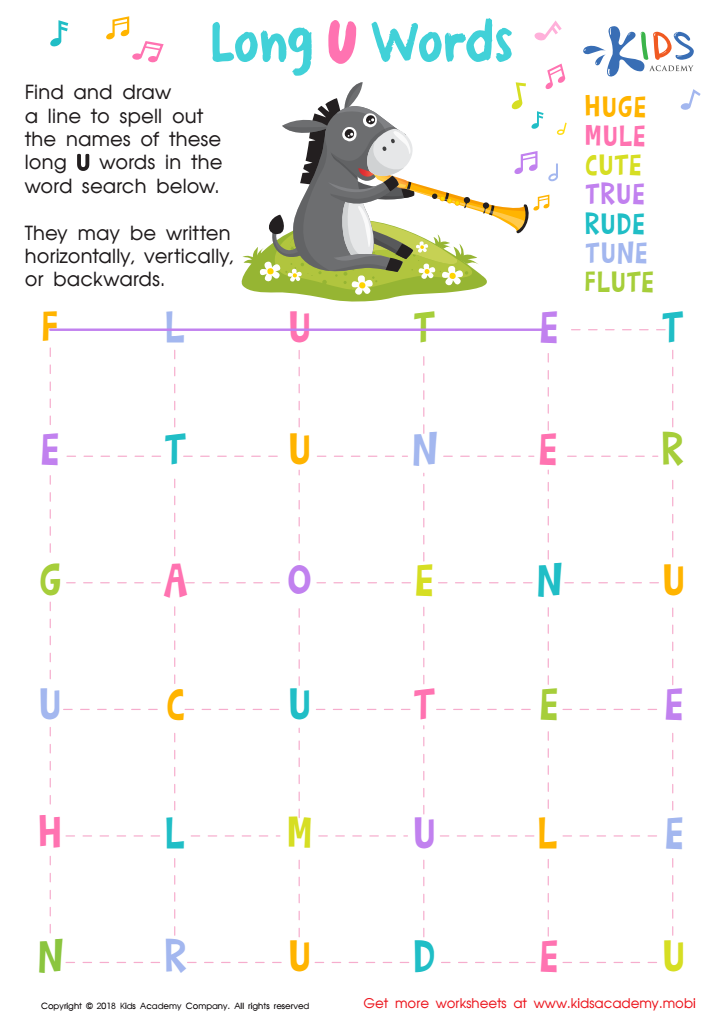
Long /u/ Words Worksheet
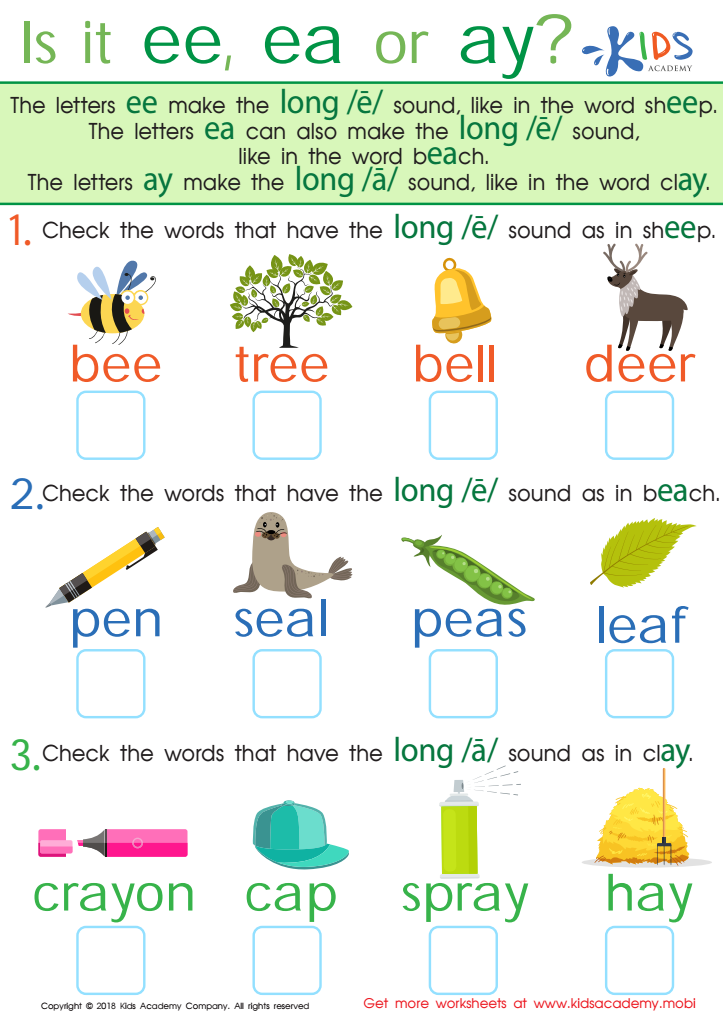
Is It EE, EA, or AY? Worksheet
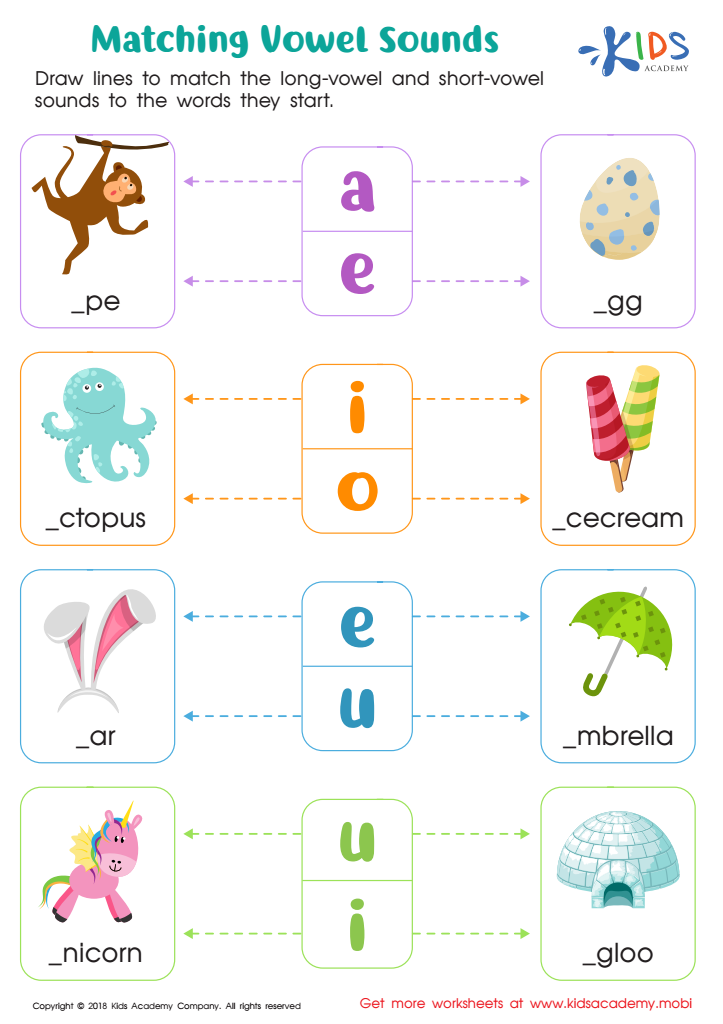
Matching Vowel Sounds Worksheet
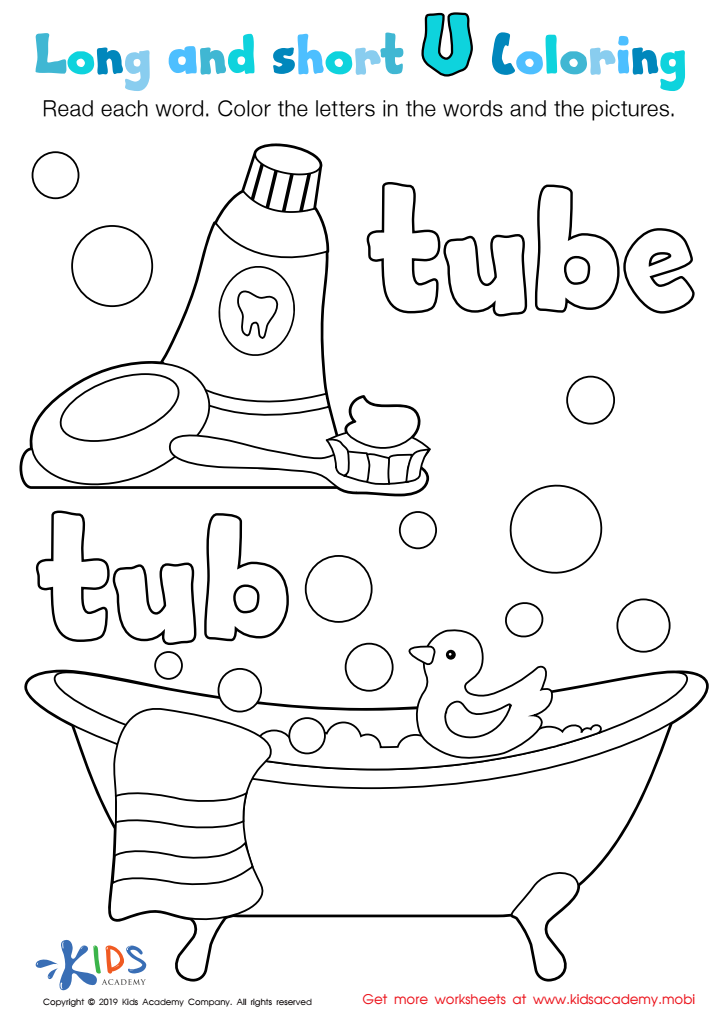
Long and Short U Worksheet
 Assign to My Students
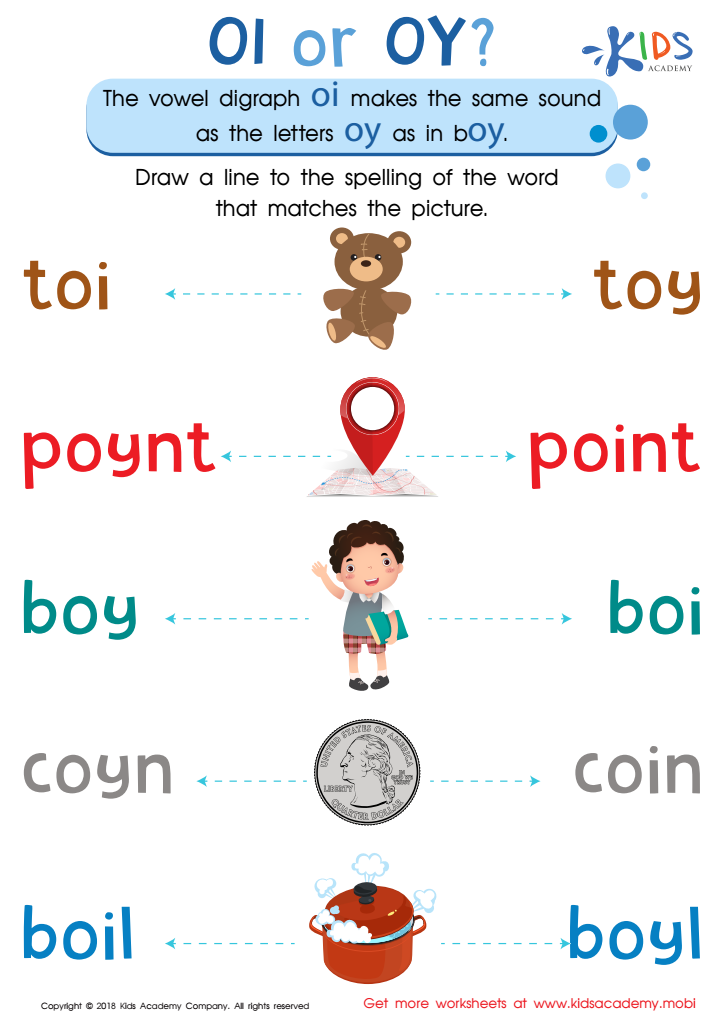
Reading: OI and OY Worksheet





Reading proficiency is a critical skill set that sets the foundation for all future learning, and normal vowel recognition plays a major role in developing this ability for children aged 4-9. During these formative years, children's brains are highly adaptable and receptive, making it the ideal time to introduce proper vowel sounds.
Vowels form the core of phonics, the basic building blocks of reading. When a child can easily identify and articulate normal vowels, it enhances their ability to decode words accurately. This leads to smoother, more confident reading and reduces frustration that might otherwise discourage them. Proficiency in vowel sounds also aids in spelling skills and boosts vocabulary, as many English words have complex vowel combinations.
Moreover, early reading proficiency is strongly linked with academic success across subjects. Children who can read well generally perform better in areas like math, science, and social studies because they can grasp instructions, comprehend texts, and engage with content independently.
In addition to academic benefits, reading proficiency influences cognitive development, including attention, memory, and critical thinking skills. Socially, children who are confident readers often have higher self-esteem and better communication skills, which positively impacts their interactions.
Thus, by focusing on adequate vowel recognition for young learners, parents and teachers can facilitate comprehensive educational and personal development, making it a worthwhile and essential endeavor.