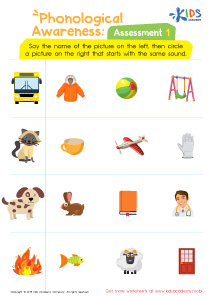
Spelling Skills Normal Vowels Worksheets for Ages 4-9
3 filtered results
Difficulty Level
Grade
Age
-
From - To
Subject
Activity
Standards
Enhance your child’s spelling abilities with our "Spelling Skills Normal Vowels Worksheets for Ages 4-9". These engaging and educational activities help young learners master vowel sounds and their correct placements within words. Designed specifically for children ages 4-9, these colorful and interactive worksheets build foundational spelling skills through a variety of exercises, including matching, filling in the blanks, and word puzzles. Ideal for both classroom and home use, our worksheets make learning vowels fun and effective, fostering early literacy and boosting your child’s confidence in reading and spelling. Unlock their potential today with Kids Academy resources!
Favorites
With answer key
Interactive
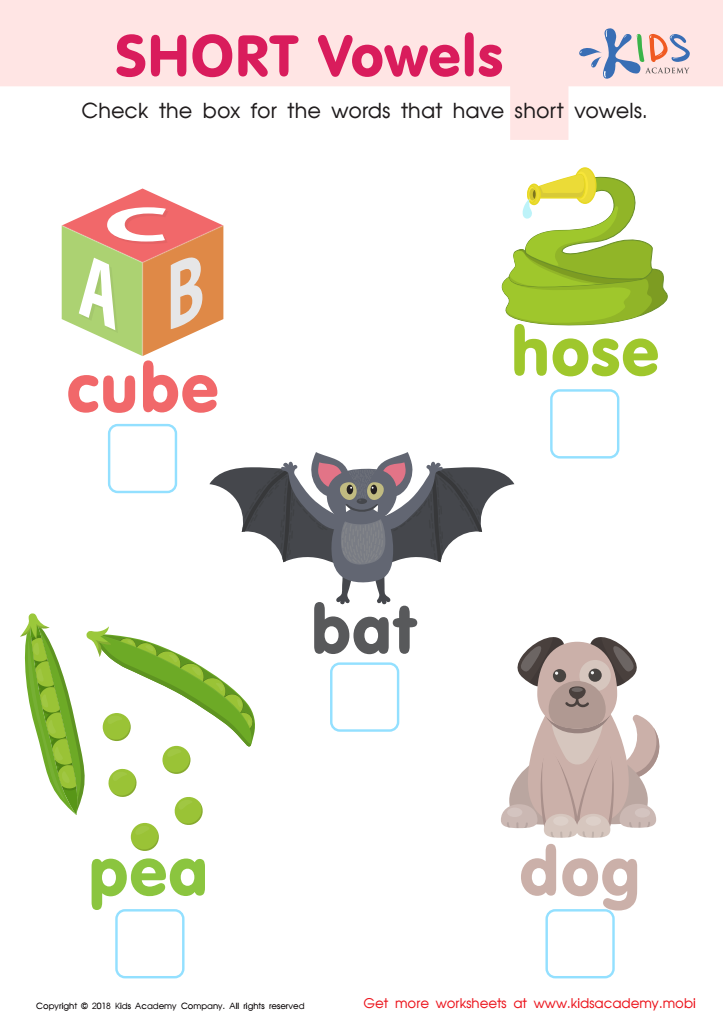
short vowels Worksheet
Say "dog" and notice how long it takes to pronounce the vowel. Is it short or long? Compare it to "pea" and use this worksheet to quickly assess your child's mastery. Have them name each picture and listen for the vowel sounds. Only check the boxes for words with short vowel sounds.
 Assign to My Students
short vowels Worksheet
Worksheet
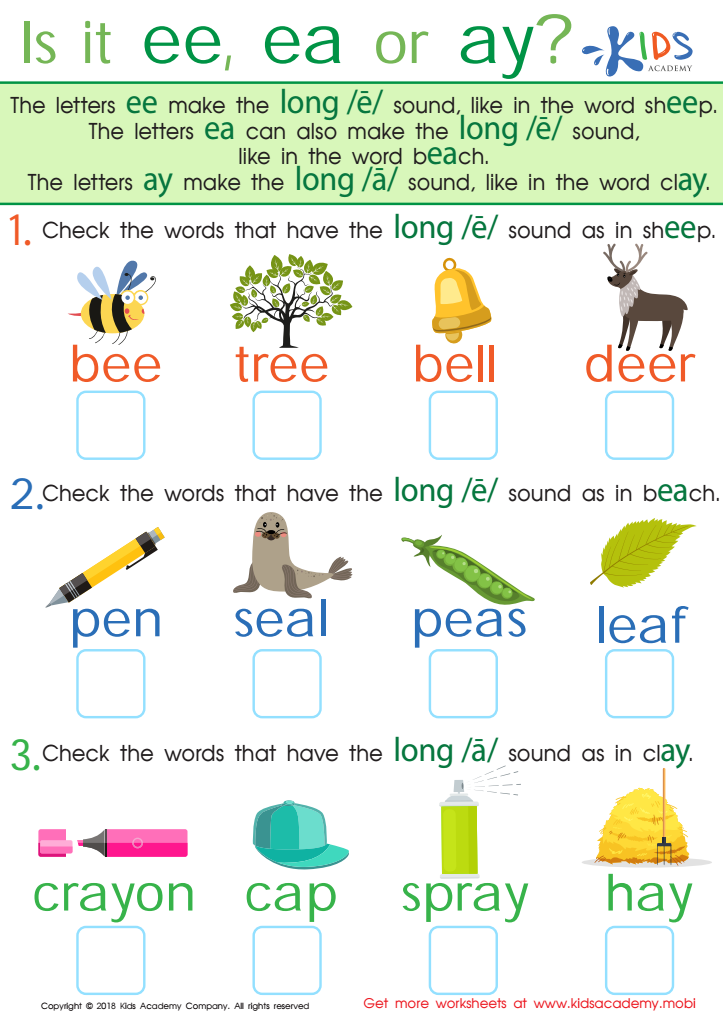
Is It EE, EA, or AY? Worksheet
When 'ee', 'ea' and 'ay' are in words, they usually make the long /e/ and /a/ sounds. Examples of words with 'ee' are "sheep", 'beach' and 'seat' with 'ea', and 'clay' and 'play' with 'ay'. Check this colourful worksheet with your kids; help them find the words that make the long /e/ sound like 'sheep'.
Is It EE, EA, or AY? Worksheet
Worksheet
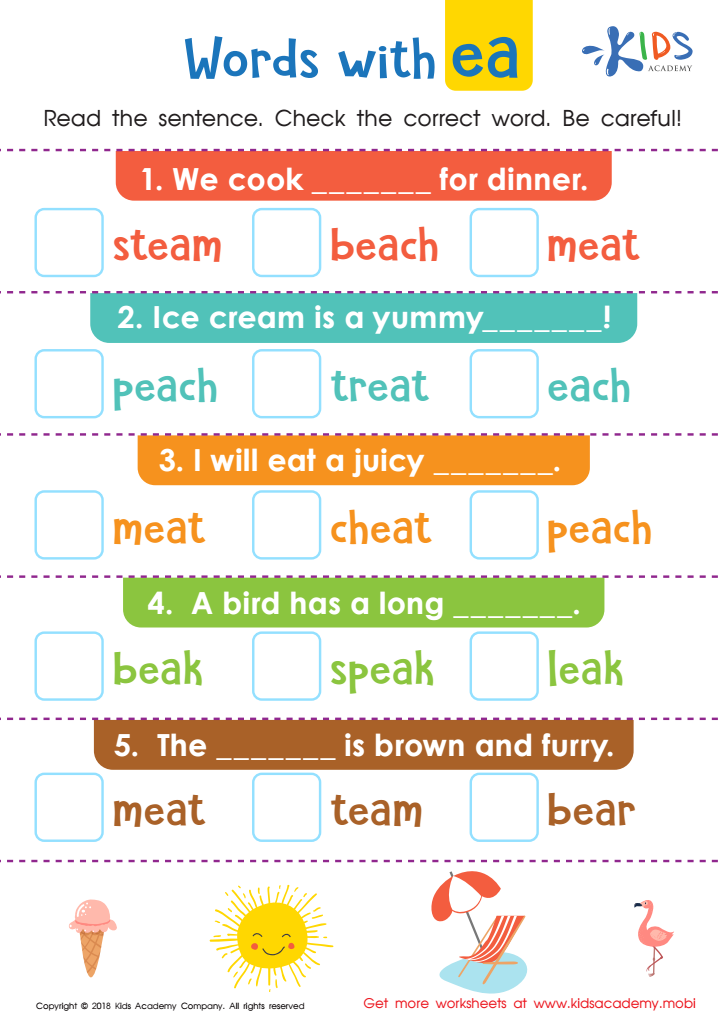
Words with ea Worksheet
Beginning readers may struggle with -ea vowel digraphs, which can have multiple sounds and be tricky to decode. This cheerful worksheet helps kids practice reading sentences with missing -ea words, using context clues to fill in the blanks. They'll also be exposed to various -ea sound examples, and build their sight word knowledge.
Words with ea Worksheet
Worksheet
Join Kids Academy for Free
Who is primarily going to use this learning content?





Fostering strong spelling skills in young children, especially focusing on normal vowels, is crucial for foundational literacy development. Ages 4-9 represent a critical period where cognitive development, language acquisition, and academic growth intersect. Mastering vowel sounds during these formative years aids in reading fluency, comprehension, and expressive writing.
Vowels are the heart of words, facilitating natural speech patterns and phonemic awareness. Early proficiency in spelling aids children in understanding word structures, enabling them to decode unfamiliar words with greater ease. This skill boosts their reading confidence and reduces frustration, fostering a positive attitude towards learning.
For parents, engaging in spelling activities strengthens home-school connections and allows them to actively participate in their child's educational journey. Teachers benefit as their students become more independent learners, capable of contributing to more advanced classroom activities.
Additionally, early spelling success lays a foundation for better vocabulary and critical thinking skills. As phonetic patterns and vowel sounds become familiar, children can stretch their linguistic capabilities, delving into more complex texts and diverse curricula. Ultimately, investing in vowel-based spelling skills for young learners cultivates lifelong literacy competence and academic achievement, giving children robust tools to excel across all subjects.