Word Recognition Normal English for Beginners Worksheets for Ages 4-9
3 filtered results
-
From - To
Discover engaging and effective word recognition worksheets designed for beginners aged 4-9 at Kids Academy. Our expertly crafted activities aid young learners in mastering basic English vocabulary through enjoyable exercises, perfect for home or school use. These worksheets comprehensively cover essential reading skills, ensuring a solid foundation in English language development. Tailored for young minds, our materials make learning effortless and fun, boosting your child's confidence in word identification and literacy. Ideal for both native speakers and ESL students, our resources foster a love for reading from an early age. Visit our site to explore our extensive collection and elevate your child's learning journey.
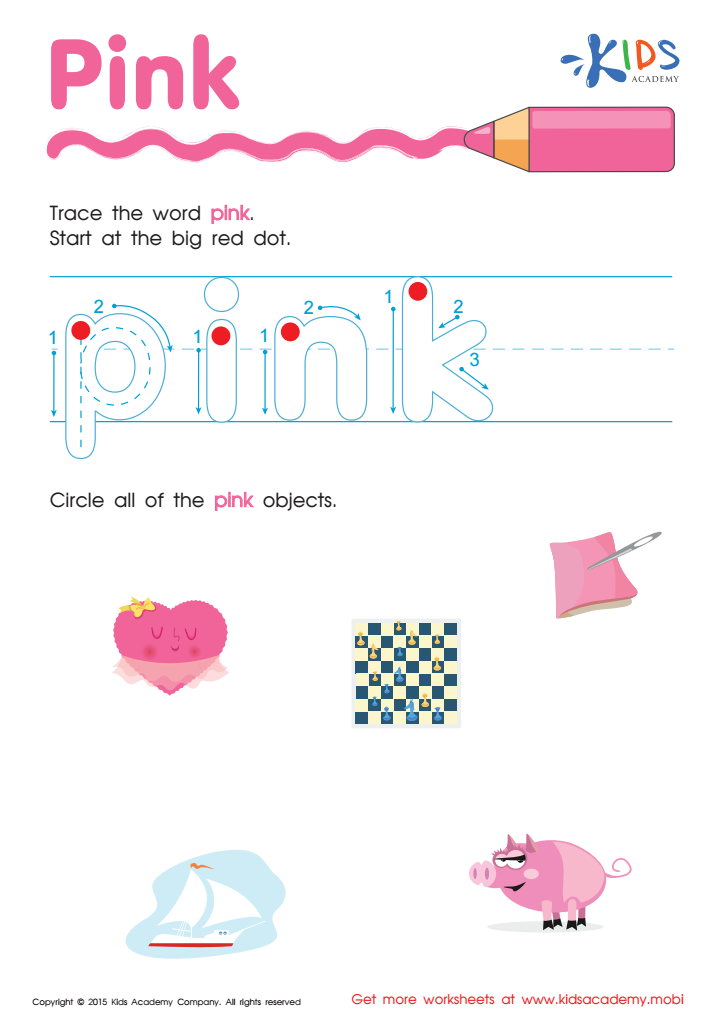
Pink Tracing Color Words Worksheet
 Assign to My Students
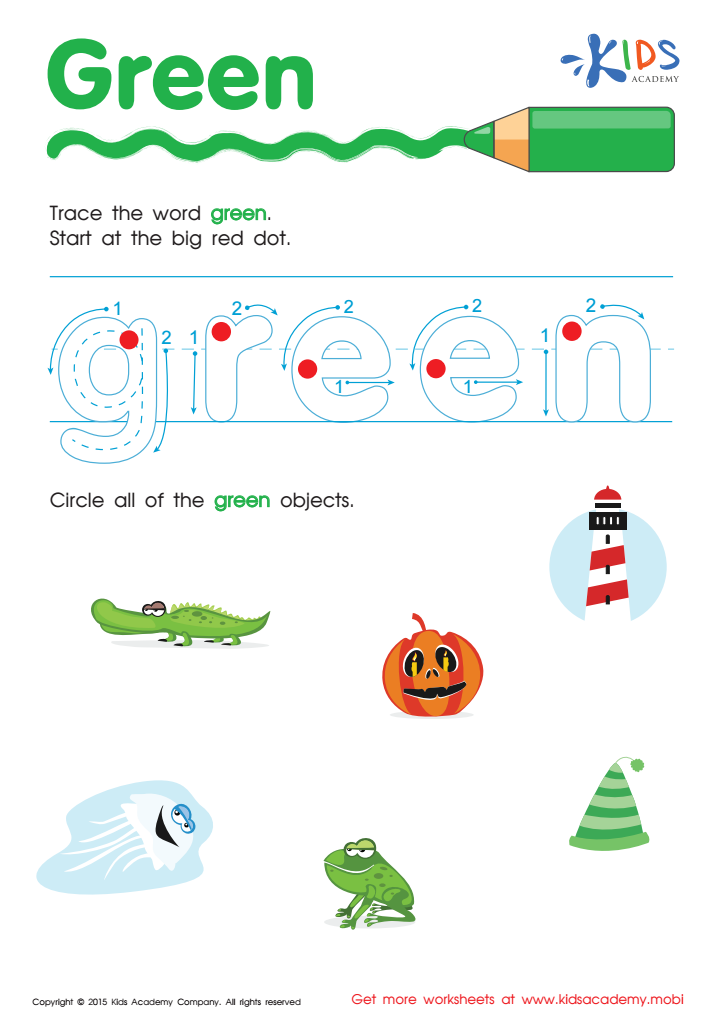
Green Tracing Color Words Worksheet
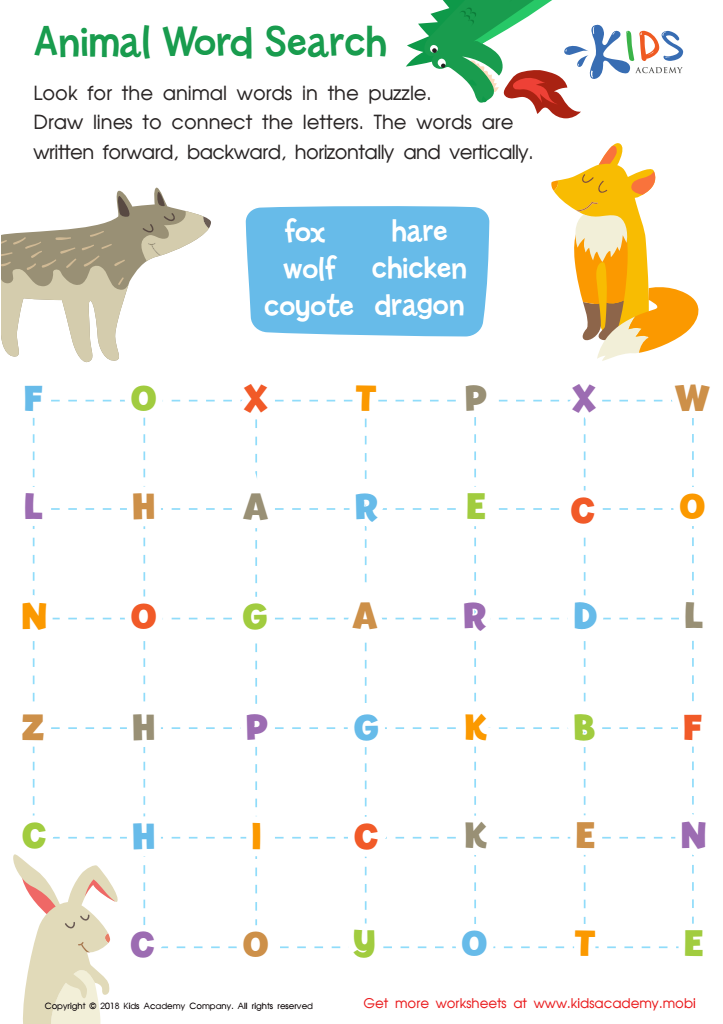
Animal Word Search Worksheet





Parents and teachers should prioritize word recognition in early education, particularly for children aged 4-9, because it serves as the foundation for all future literacy skills. During these formative years, children’s brains are highly receptive to language learning. Word recognition enables them to transition from merely decoding letters to fluently reading and comprehending text, which is crucial for academic success.
Understanding and recognizing words quickly leads to increased reading fluency, allowing children to focus on understanding the story or information rather than struggling with individual words. Fluency enhances comprehension, critical thinking, and enjoyment of reading. This builds a solid habit and love for reading, which translates to higher academic achievement across subjects, including math and science, where written instructions and word problems are common.
Moreover, early word recognition positively impacts a child’s self-esteem and confidence. Children who can read words effortlessly are more likely to participate in classroom activities, foster better social skills, and enjoy learning. It also equips them with vital communication skills, which are essential for their personal and academic growth.
Therefore, a strong emphasis on word recognition from an early age sets a durable foundation for lifelong learning and curiosity, ensuring that children are well-prepared for the complex texts they will encounter in later stages of their education.