
Animal recognition Normal Worksheets for Ages 4-9
13 filtered results
Difficulty Level
Grade
Age
-
From - To
Subject
Activity
Standards
Welcome to our delightful collection of Animal Recognition Normal Worksheets, specifically designed for children aged 4-9. These engaging and colorful worksheets help young learners recognize, identify, and learn about various animals in a fun and interactive way. Each worksheet is carefully crafted to promote cognitive development, enhance observation skills, and boost memory retention. Whether your child is just starting to discover the animal kingdom or looking to reinforce their knowledge, our printables provide the perfect blend of education and entertainment. Dive into the world of animals today and watch your child’s understanding and curiosity grow!
Favorites
With answer key
Interactive
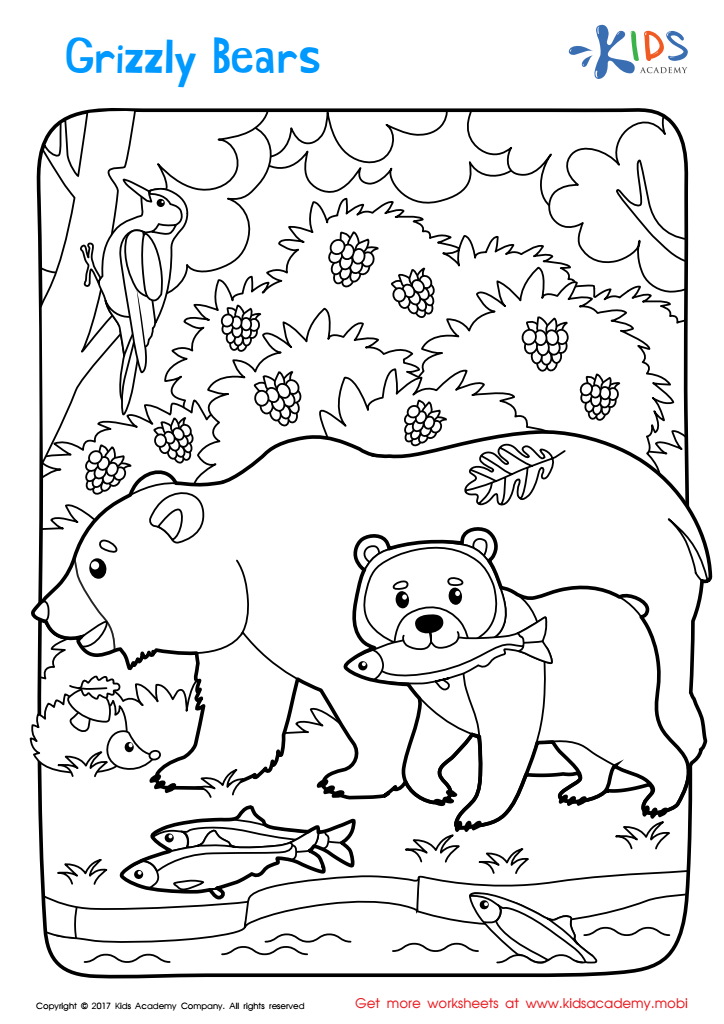
Free Printable Grizzly Bear Coloring Page
Today we're exploring the Great Plains and its most popular inhabitant: the grizzly bear! Our free printable coloring page introduces kids to the bear's natural habitat and food, like salmon and berries. Join us for a fun and educational experience!
Download (PDF)
 Assign to My Students
Assign to My Students
Free Printable Grizzly Bear Coloring Page
Worksheet
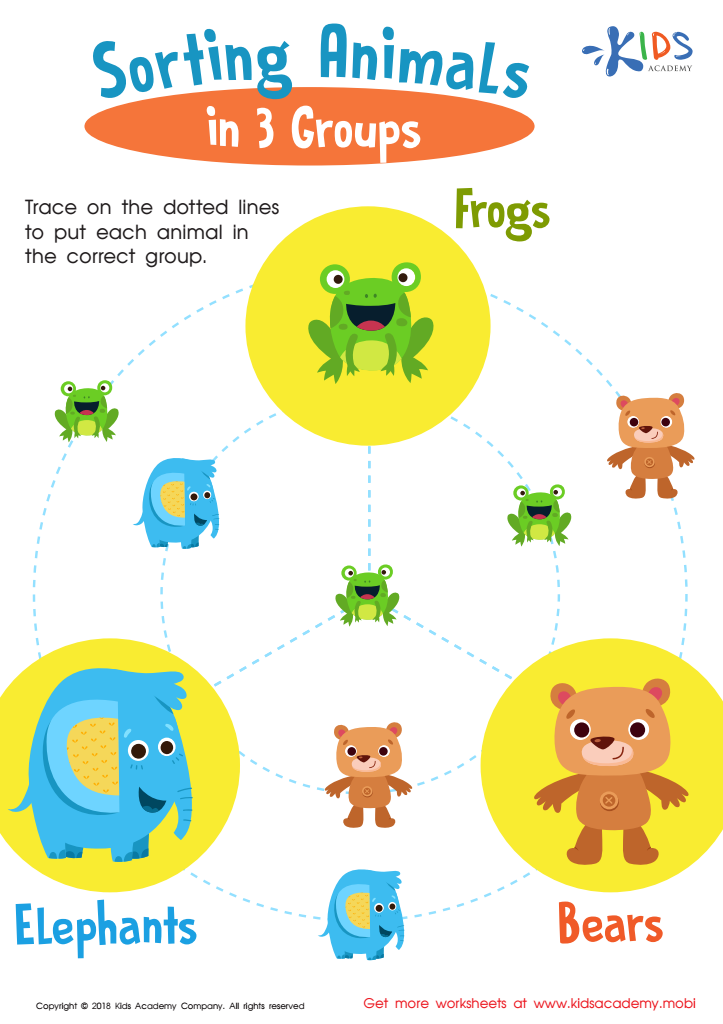
Sorting Animals in 3 Groups Worksheet
Let your kids practice and build skills for future Venn Diagrams with this PDF worksheet. They'll trace lines to match and group animals, and learn the differences and similarities of animals by categorizing with pictures and words. Plus, it's a great way to develop fine motor skills.
Sorting Animals in 3 Groups Worksheet
Worksheet
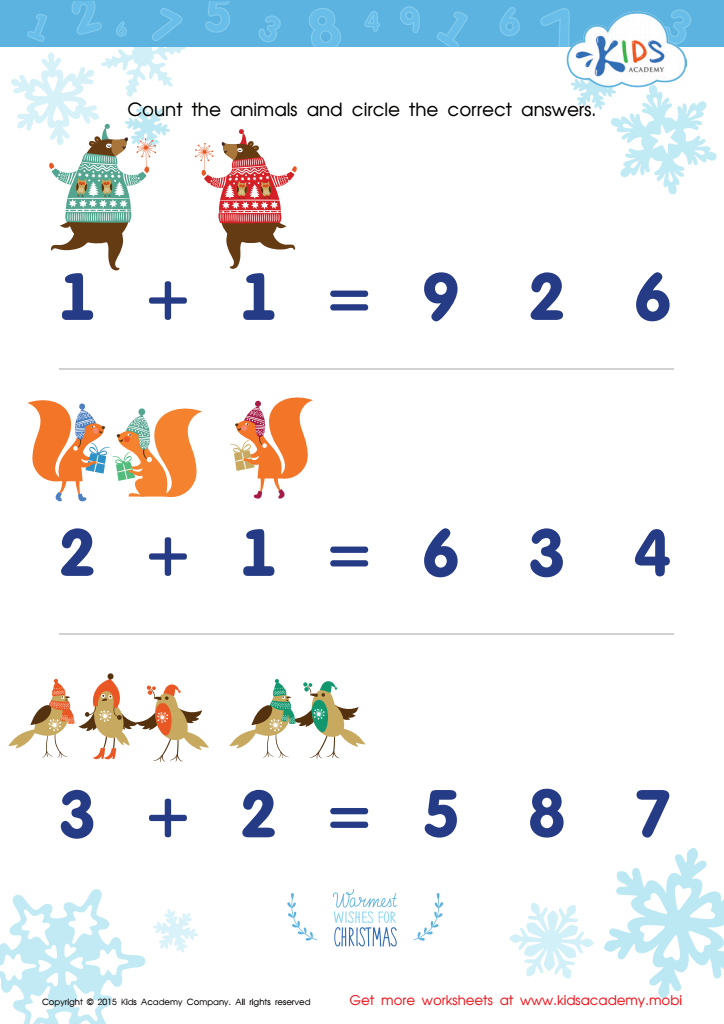
Count Funny Animals Worksheet
Get your kid in the Christmas spirit with this festive addition worksheet! They'll have fun counting the colorful animals and writing in the numbers. Our graphic layout makes it easy for them to visualize and solve the task. Print it out and help your kid keep their math skills sharp this winter with Kids Academy!
Count Funny Animals Worksheet
Worksheet
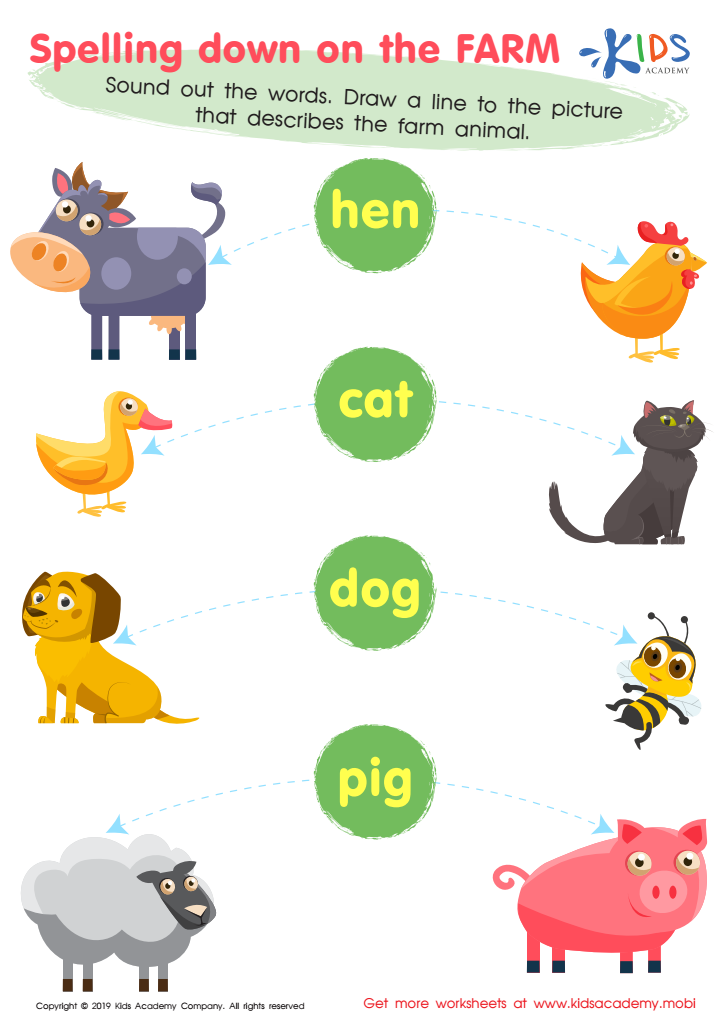
Spelling Down on the Farm Worksheet
Want to help your kids nail their spelling? Introduce them to this farm animal worksheet! Get them to look at the animals in the tracing sheet, name them and then sound out the words. Have them draw a line to the picture that describes it. You'll be surprised at how quickly their skills improve.
Spelling Down on the Farm Worksheet
Worksheet
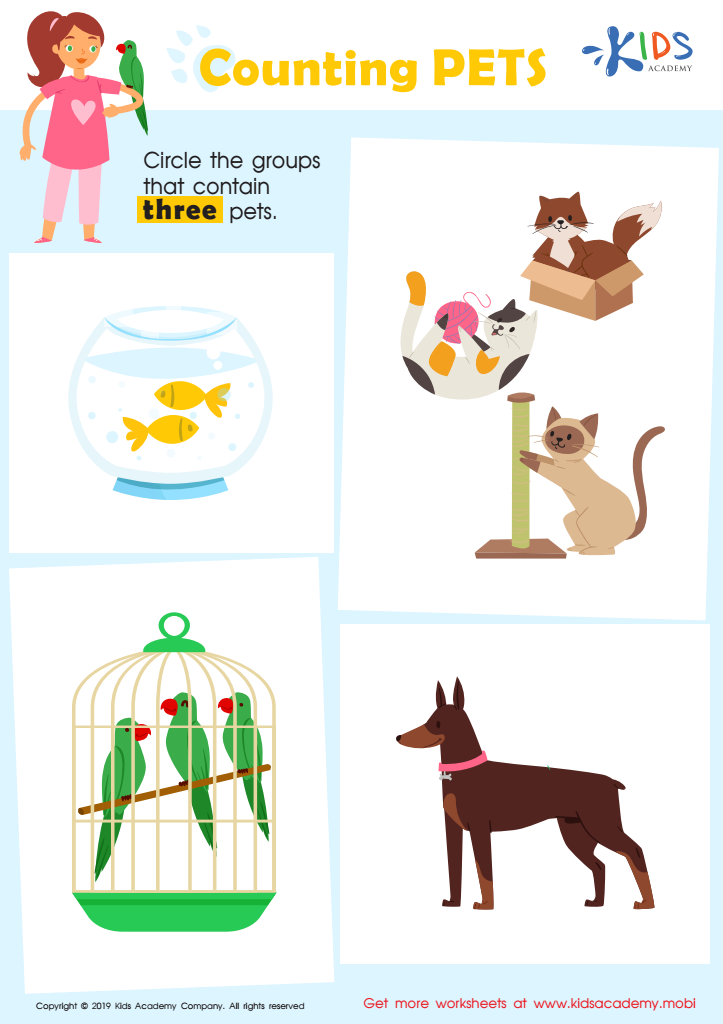
Counting Pets Worksheet
Kids adore their pets, making this free pet counting worksheet the perfect way to combine something they love with math skills. They'll count the number of pets, circle the pictures with three pets, and use one-to-one picture representation to help. This exercise will cultivate their learning and reinforce their love of animals!
Counting Pets Worksheet
Worksheet
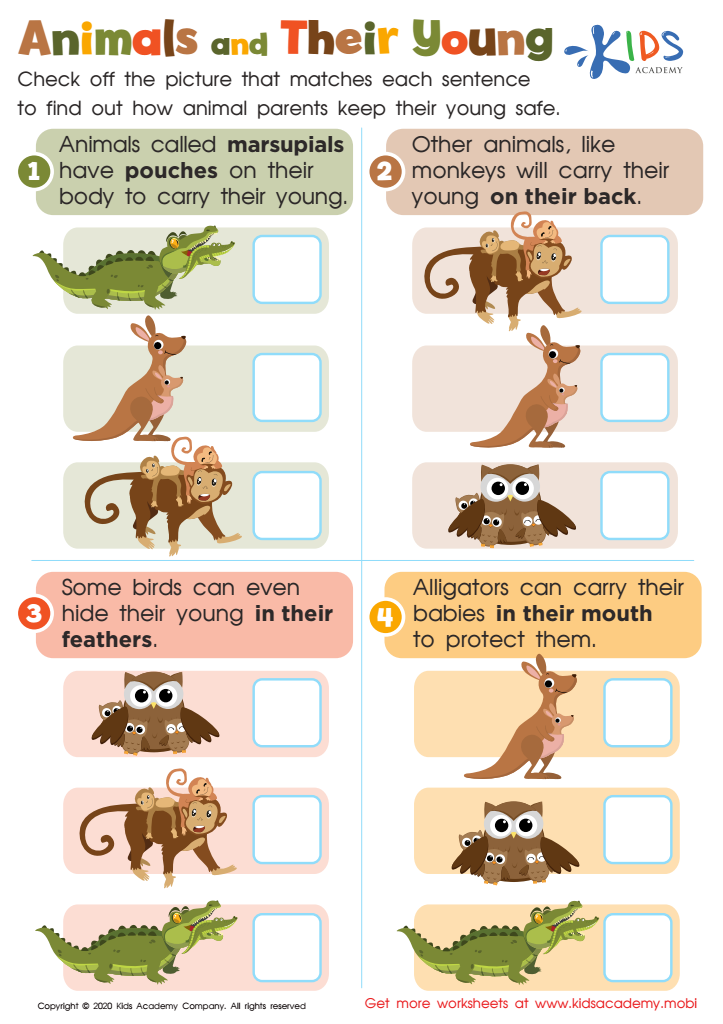
Animals and Their Young Worksheet
Help your child learn more about the animal kingdom with this cute science worksheet! They'll find out how animals protect and keep their babies close. From pouches to hitching a ride on mama’s back, they'll read the sentence above each illustration and select the description that fits. Check off the correct description as they go - a fun and educational activity!
Animals and Their Young Worksheet
Worksheet
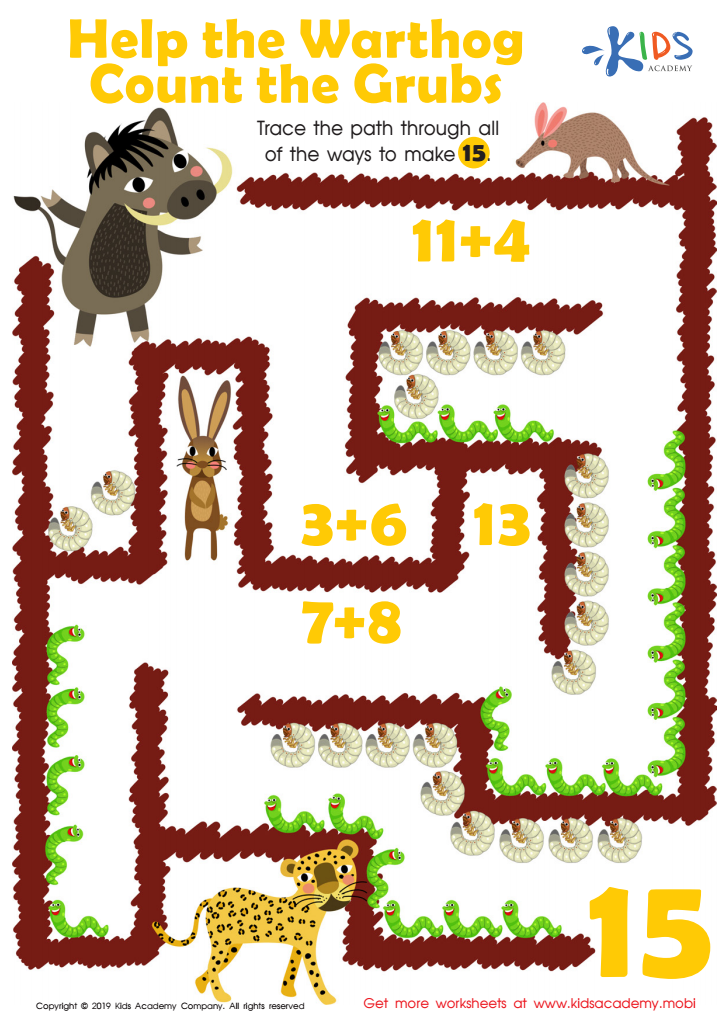
Help the Warthog Count the Grubs Worksheet
Test your kids' knowledge of wild animals. Ask them to name some they know, then have them identify the animals on this worksheet. If they can't, take the time to tell them the names. Finally, trace the warthog's path through the maze by solving the equations and going through paths that make 15.
Help the Warthog Count the Grubs Worksheet
Worksheet
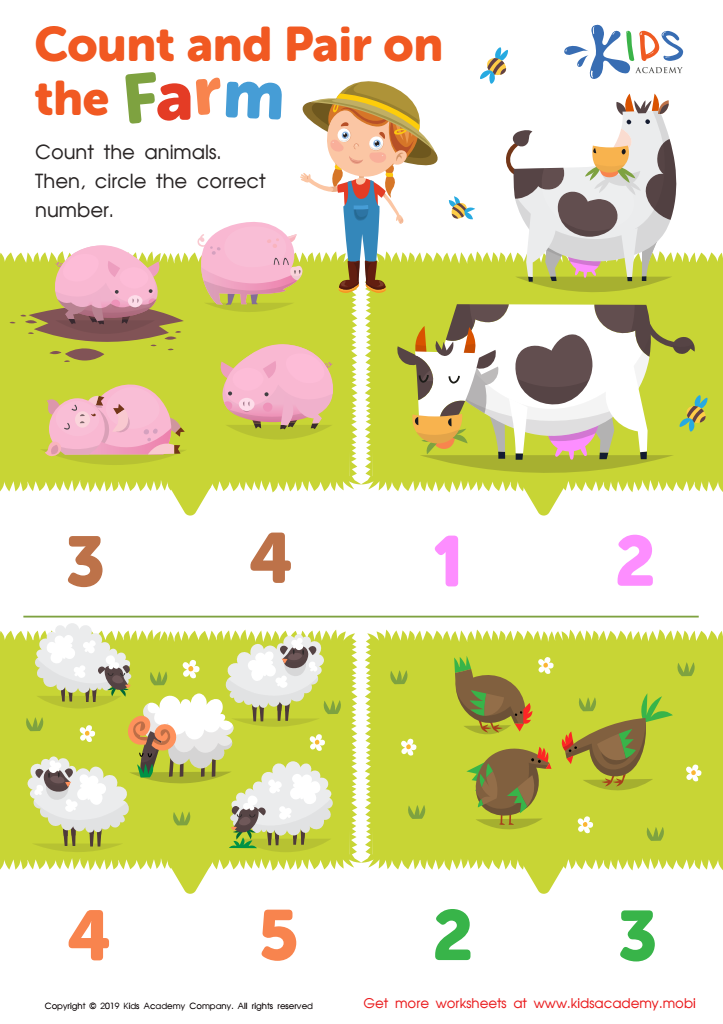
Count and Pair on the Farm Worksheet
Farms are essential to our society: they grow food and crops, and raise animals for us to use. Kids can have a great time at a farm, engaging in activities like identifying animals, counting them, and circling the correct number. On this worksheet, ask your kids to try all three!
Count and Pair on the Farm Worksheet
Worksheet
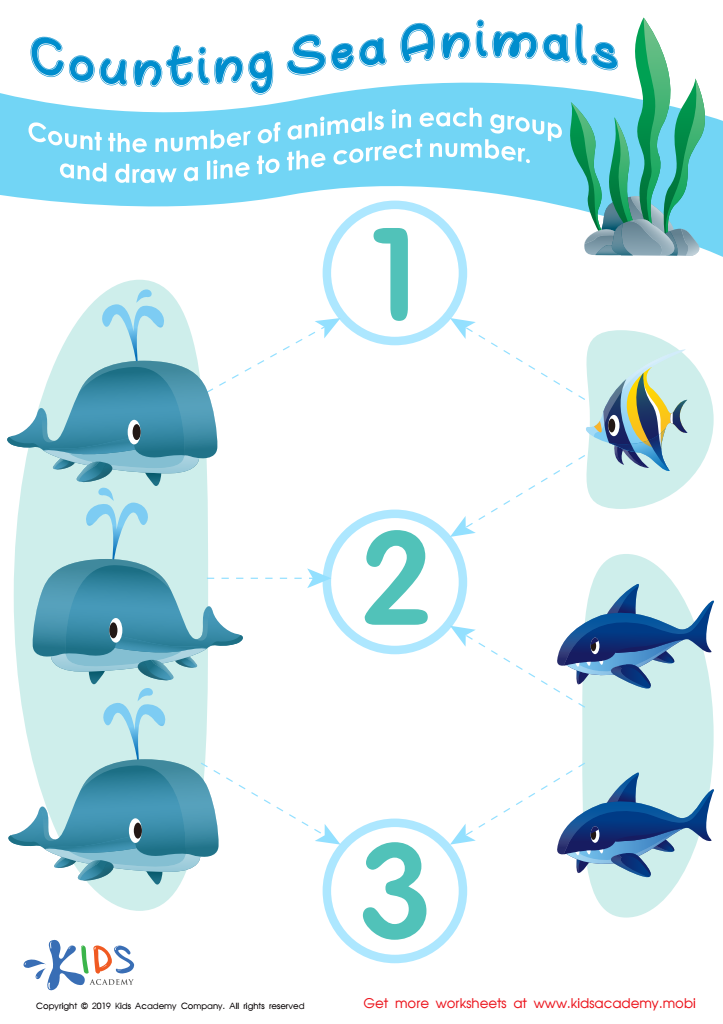
Counting Sea Animals Worksheet
Kids adore sea creatures for their captivating, unknown nature. Let them use this free worksheet to practice counting, where they match numbers to groups of animals. Through traceable lines, they'll easily connect numbers to sea creatures and learn math with vibrant, underwater fun!
Counting Sea Animals Worksheet
Worksheet
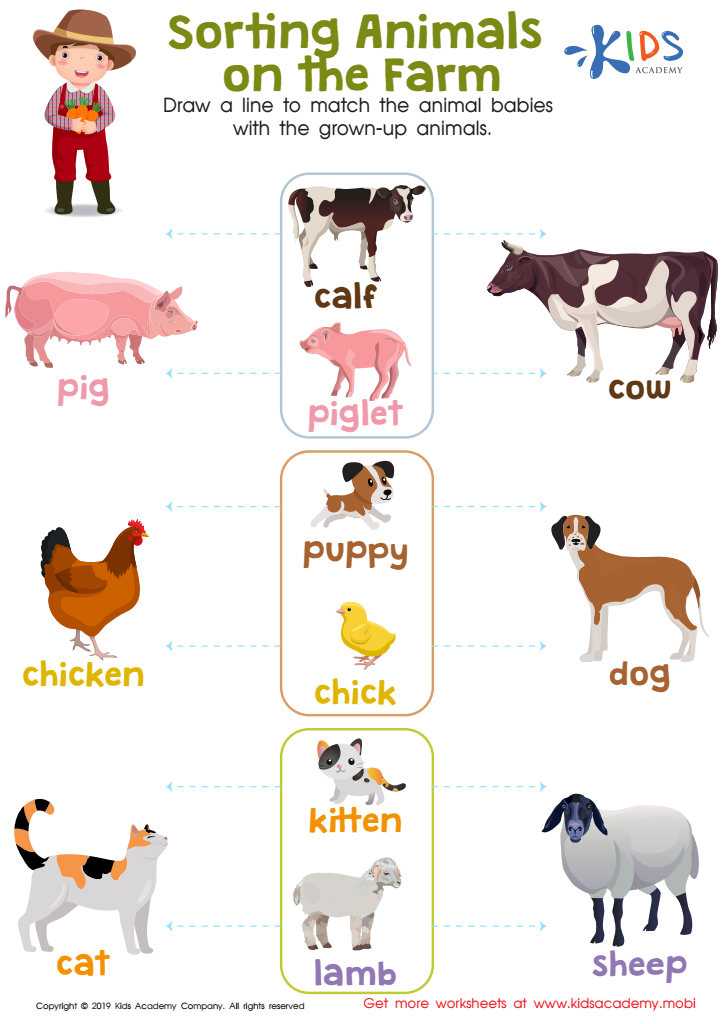
Sorting Animals on the Farm Worksheet
This PDF worksheet engages preschoolers in a fun activity to match Mama farm animals with their babies, strengthening their sorting and patterning skills. They'll learn to recognize rules and relationships, while gaining familiarity with animal-related words.
Sorting Animals on the Farm Worksheet
Worksheet
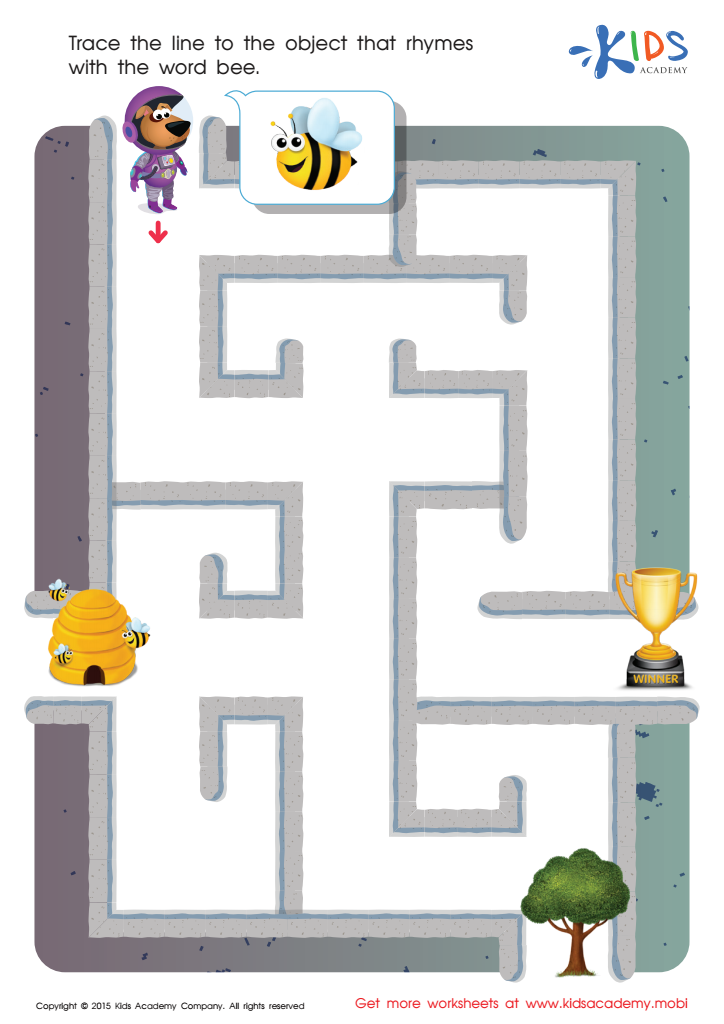
Bee Rhyming Words Worksheet
Download our new vocab builder worksheet and help our pup find rhymes. See how easy it is to trace the root between words! Make learning fun with our collection of English materials and worksheets. Get them now on our web site.
Bee Rhyming Words Worksheet
Worksheet
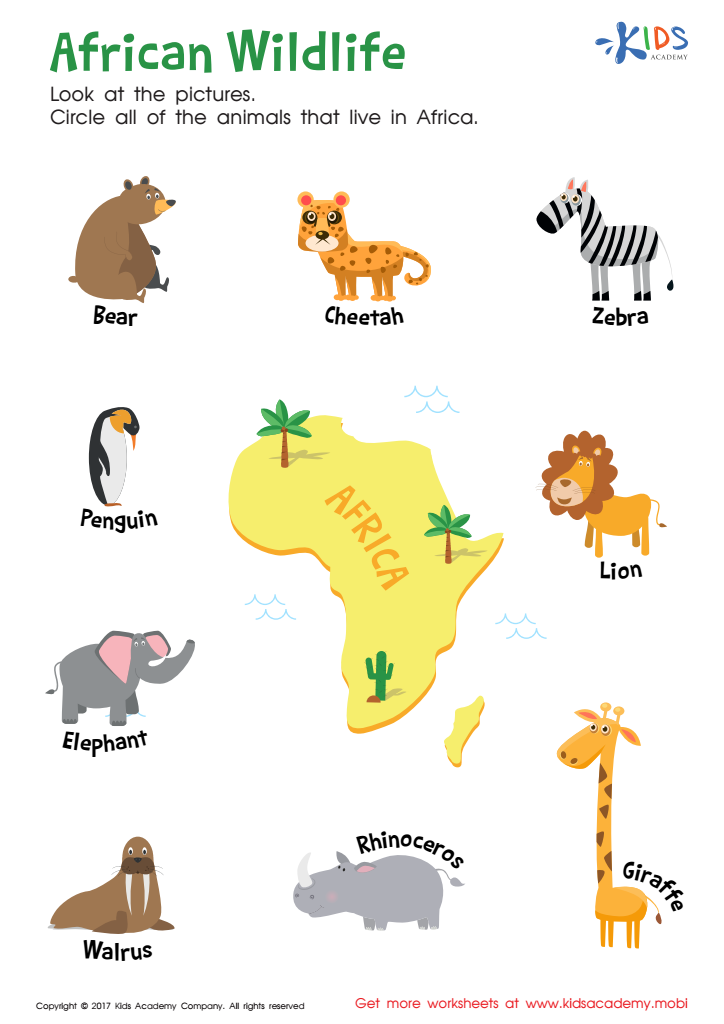
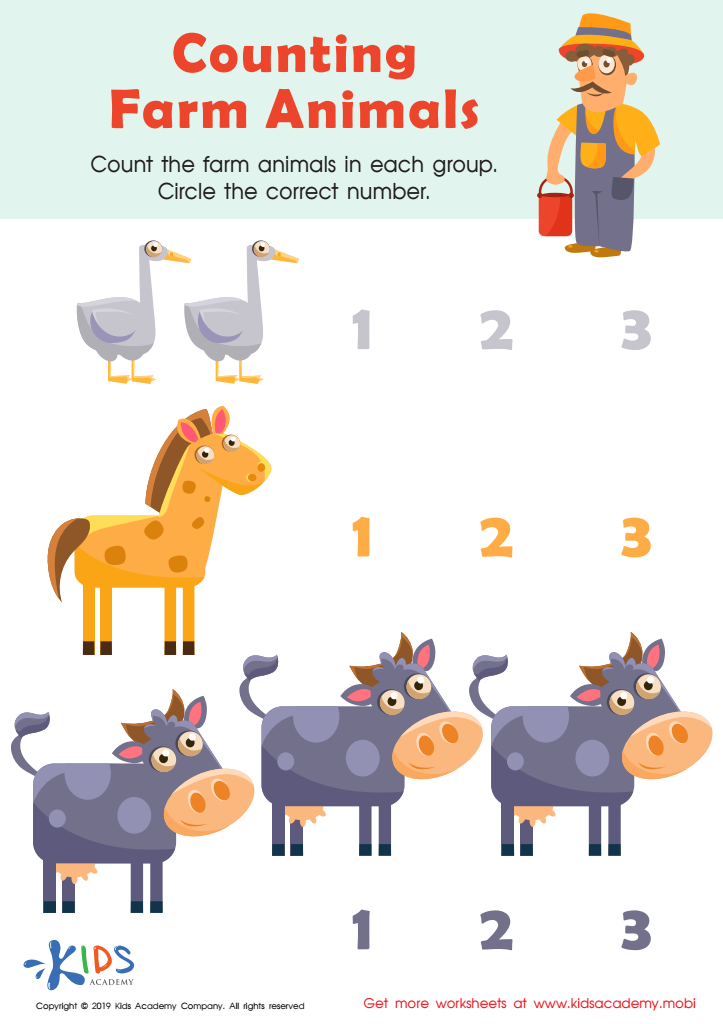
Counting Farm Animals Worksheet
Kids love farms! That's why this free farm animals counting worksheet is great for building number sense and counting skills. Have your young mathematician count the pictures, then circle the corresponding number. It's a fun and meaningful way to practice counting.
Counting Farm Animals Worksheet
Worksheet
Join Kids Academy for Free
Who is primarily going to use this learning content?



.jpg)


Animal recognition is a key educational milestone that parents and teachers should prioritize for children between the ages of 4 and 9. This developmental stage is ripe for learning about the world, and understanding animals plays a significant role in that. Firstly, animals often serve as the foundation for introducing broader scientific concepts. For example, learning about habitat, diet, and behaviors leads to a better grasp of ecosystems and biodiversity.
Secondly, recognizing different animals enhances cognitive skills such as memory and categorization. By identifying various species, children practice recognizing patterns and distinctions, important skills for reading and math.
Animal recognition also contributes to emotional and social development. Many children naturally empathize with animals, fostering compassion and empathy, traits important for interpersonal relationships. Animals in stories, pictures, and classroom environments are also effective in teaching responsibility and care.
Moreover, in a digital age, knowing about animals encourages outdoor activities and interactions with nature, balancing screen time with physical exploration.
Lastly, animal-themed learning activities can be culturally enriching and inclusive, often bridging gaps between interdisciplinary subjects across the curriculum, such as literacy, art, and geography.
In essence, animal recognition supports multiple dimensions of a child’s development—academic, cognitive, emotional, and social—making it a fundamental aspect of early education.








