Basic measurement concepts Normal Worksheets for Ages 4-9
3 filtered results
-
From - To
Introduce your child to the world of measurement with our Basic Measurement Concepts Normal Worksheets for Ages 4-9! Featuring fun and engaging activities, these printable worksheets help kids grasp essential measurement skills, including size comparison, length, weight, and volume. Perfectly suited for early learners, our interactive exercises ensure children understand and enjoy learning foundational math concepts. Tailored for young minds, these worksheets effectively combine education and entertainment. Explore new learning adventures with our expertly designed resources, helping kids prepare for future math success. Visit Kids Academy to download these free, high-quality worksheets today!
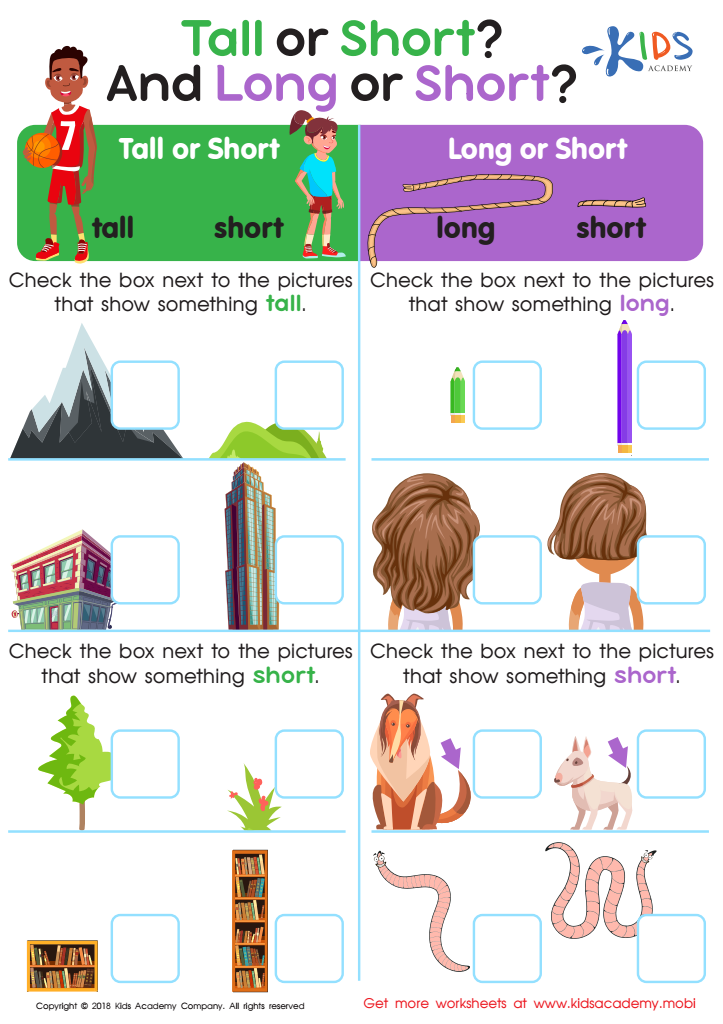
Tall or Short and Long or Short? Worksheet
 Assign to My Students
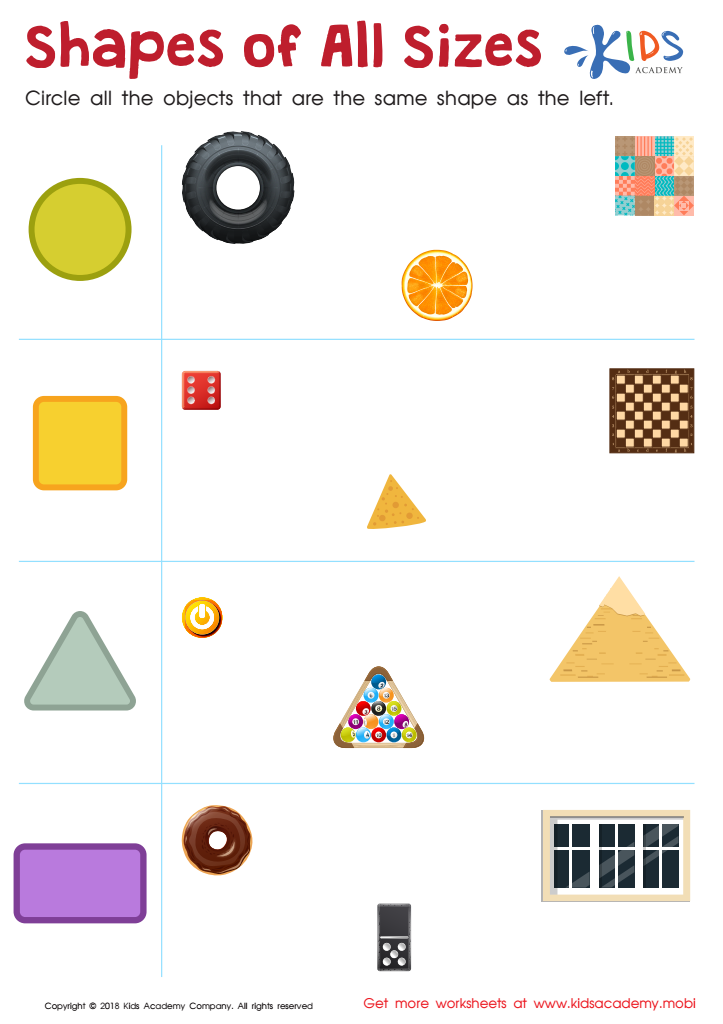
Shapes of All Sizes Worksheet
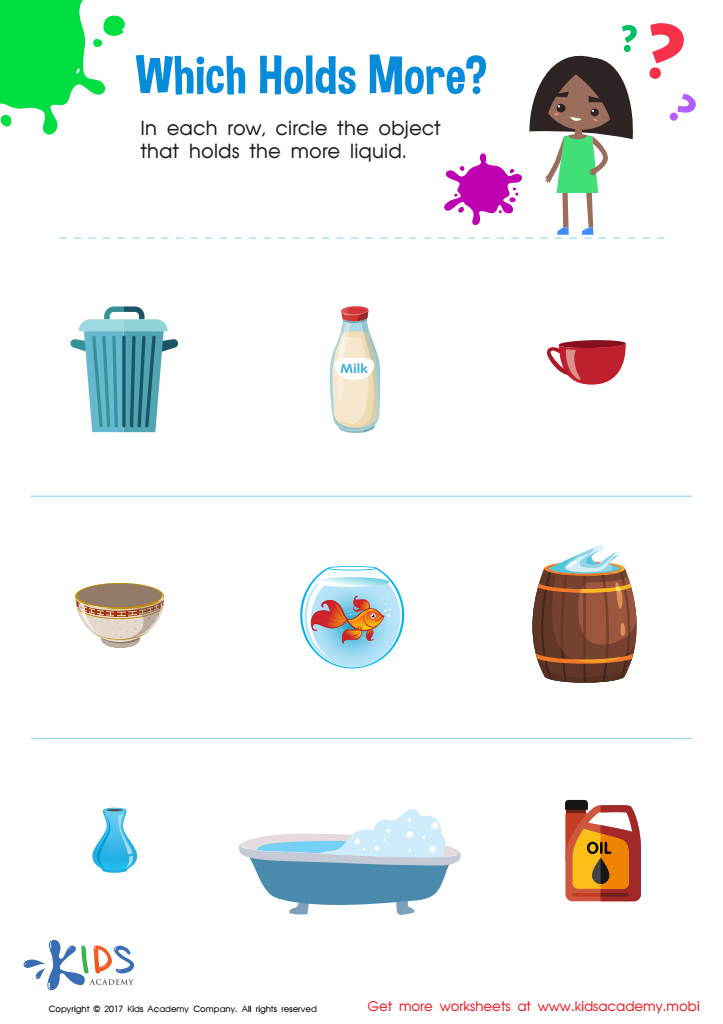
Which Holds More: Capacity Worksheet







Understanding basic measurement concepts is crucial for children aged 4-9 as it lays the groundwork for more complex mathematical and scientific learning. For parents and teachers, investing time in teaching these concepts benefits children by enhancing their cognitive development and problem-solving skills. At this age, children are naturally curious and inclined towards exploring the world around them. Introducing concepts like length, weight, volume, and time helps satisfy this curiosity and boosts their confidence and enthusiasm for learning.
Basic measurement concepts also play a vital role in daily life skills. Knowing how to measure objects, understand time, and compare quantities is essential for everyday activities, from cooking to managing schedules. Kids gain practical skills that make them more self-sufficient.
Furthermore, an understanding of measurements supports the acquisition of other subjects, such as science, where children need to observe, compare, and record data accurately. It encourages logical thinking and mathematical reasoning. By engaging kids in activities that involve measuring, comparing sizes, or keeping track of time, parents and teachers nurture a child's ability to approach tasks methodically.
Overall, equipping children with measurement skills during their formative years provides a solid foundation for academic success and practical life skills, fostering a well-rounded development.








