
Comparison Skills Normal Worksheets for Ages 4-9
5 filtered results
Difficulty Level
Grade
Age
-
From - To
Subject
Activity
Standards
Enhance your child's critical thinking with our engaging comparison skills worksheets designed for ages 4-9! These printable activities encourage little learners to explore the concepts of greater than, less than, and equal to while comparing various objects, numbers, and images. Each worksheet introduces age-appropriate challenges to help kids develop essential analytical skills in a fun and interactive way. Ideal for homeschooling or classroom use, our comparison skill worksheets promote cognitive growth while fostering a love for learning. Discover an exciting way to build foundational math skills today and watch your child confidently tackle comparisons with ease!
Favorites
With answer key
Interactive
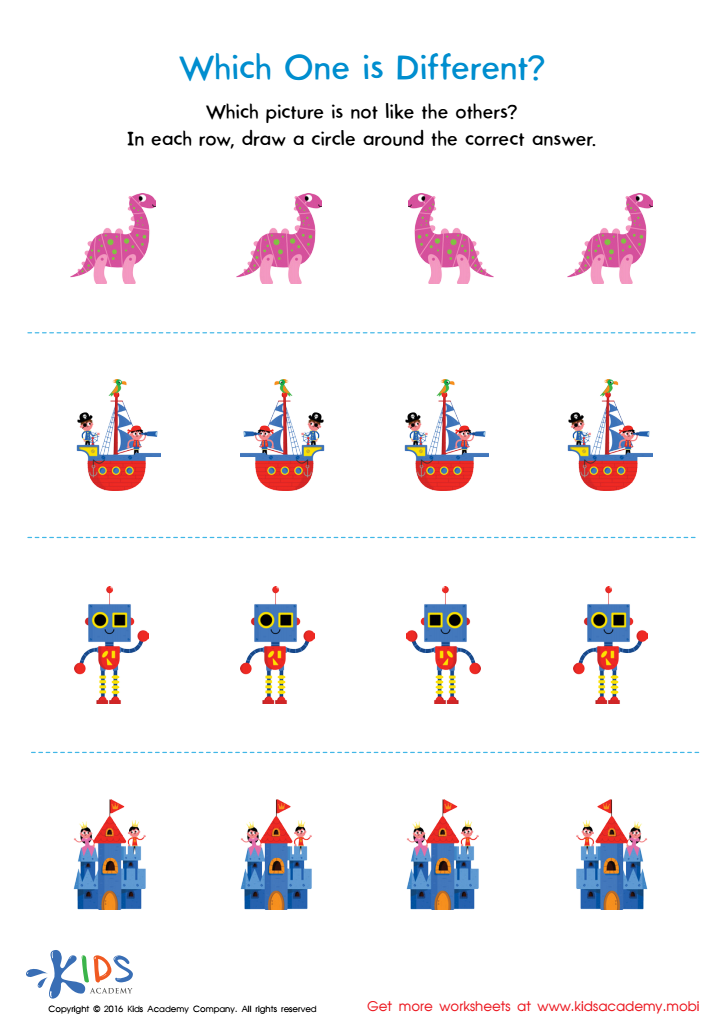
Which One Is Different Worksheet
Preschoolers can hone logical reasoning and critical analysis skills with this "Which one is Different?" worksheet. Kids must look closely and pick out unique attributes of objects and images. It's a skill that can serve them throughout their lifetime.
 Assign to My Students
Which One Is Different Worksheet
Worksheet
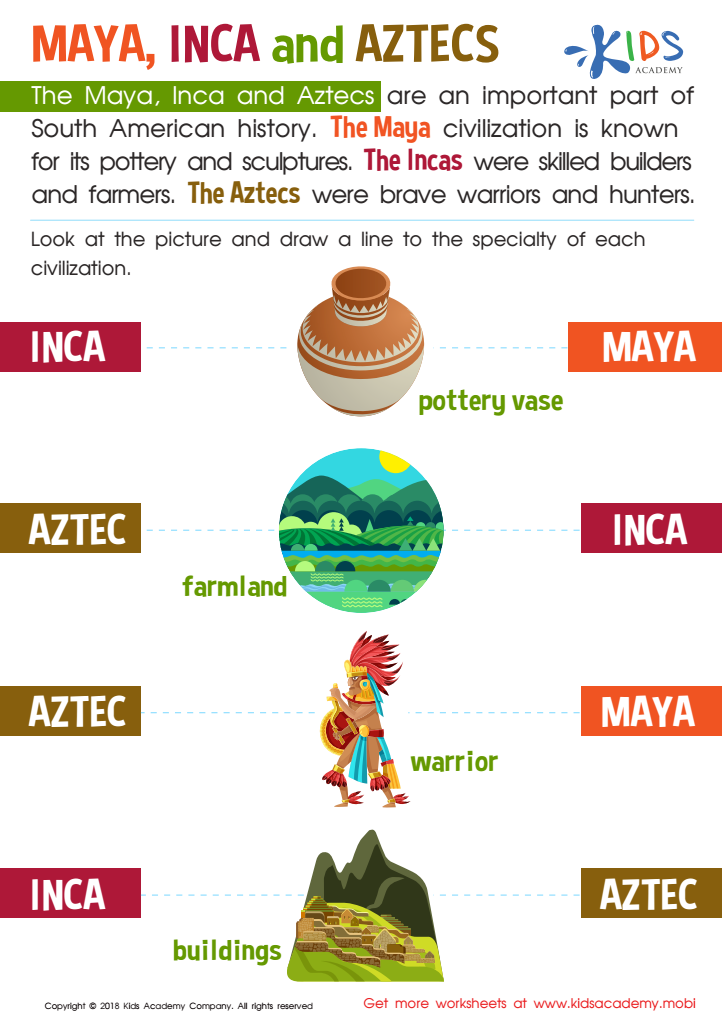
Maya, Inca and Aztecs Worksheet
This worksheet introduces your child to the thrilling histories of the Mayan, Incan and Aztec cultures, teaching them about their warriors, sculptors and farmers. With traceable lines and colorful imagery, they'll connect each culture with its correct associated picture - great for cementing concepts!
Maya, Inca and Aztecs Worksheet
Worksheet
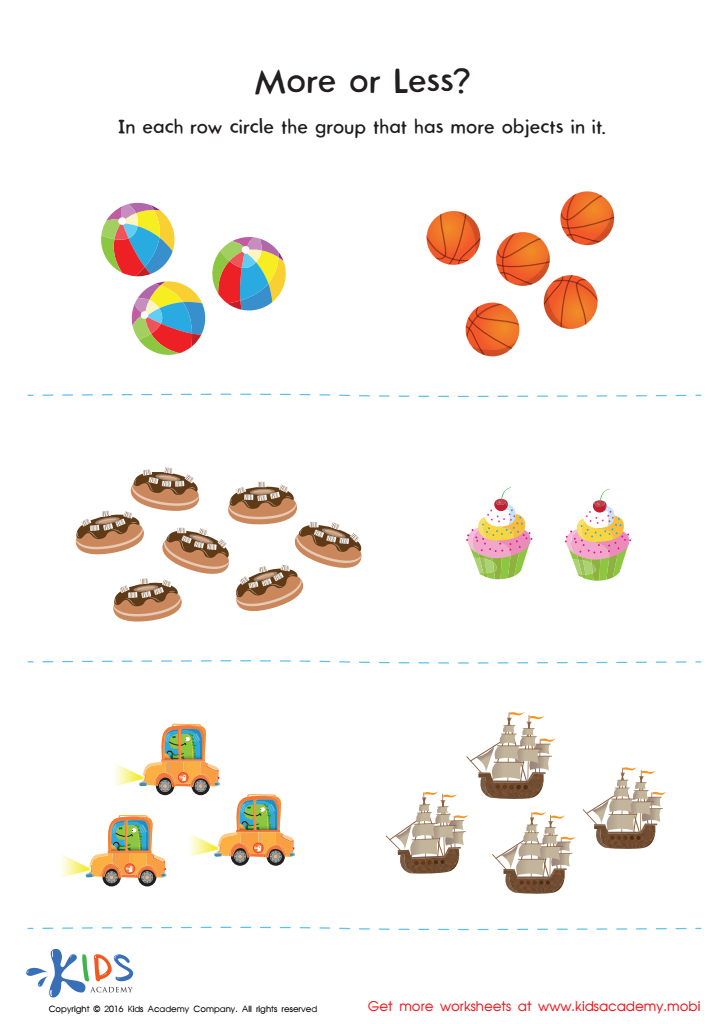
More or Less Size Worksheet
Worksheet
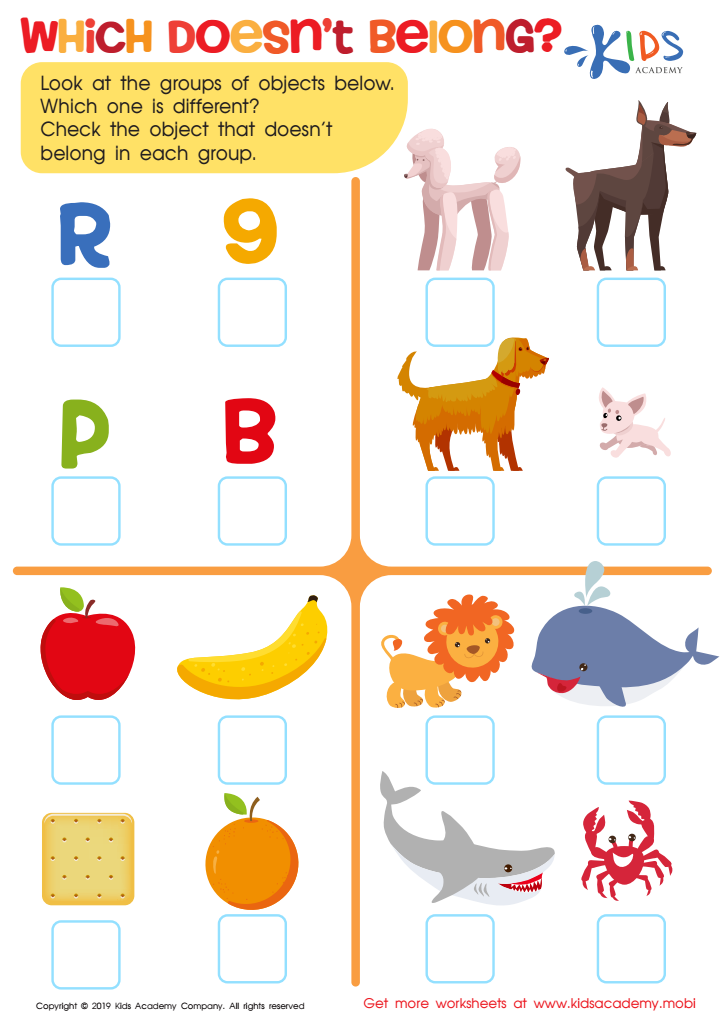
Which Doesn't Belong? Worksheet
This engaging worksheet helps preschoolers recognize similar and different attributes of common words, using brightly-colored pictures. They analyze the items in each category and check off what is different. For extra practice, have them explain their reasoning verbally! Sorting and classifying are important skills to learn.
Which Doesn't Belong? Worksheet
Worksheet
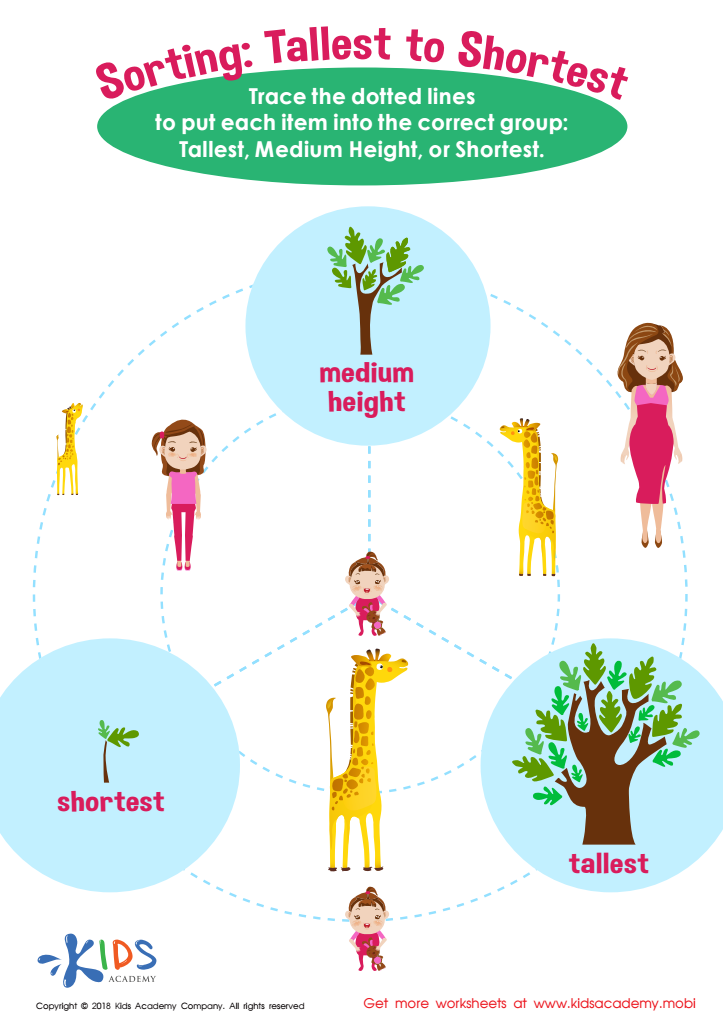
Sorting: Tallest to Shortest Worksheet
This worksheet is great for preschoolers to practice foundational measurement skills. Traceable lines help them sort pictures into Tallest, Shortest and Medium categories, giving them concrete examples to compare. Fine motor skills and understanding of relationships between sizes are also developed - perfect for preparing them for larger measurement concepts.
Sorting: Tallest to Shortest Worksheet
Worksheet
Join Kids Academy for Free
Who is primarily going to use this learning content?








Comparison skills are essential for children aged 4-9 as they form the foundation for critical thinking, problem-solving, and mathematical reasoning. During these formative years, children begin to understand relationships between objects and concepts—learning to evaluate differences and similarities enhances their cognitive development.
Developing these skills helps children categorize and organize their thoughts, paving the way for effective decision-making. For instance, comparing sizes, colors, and quantities allows children to make basic mathematical judgments, which are crucial as they progress into more advanced math. Moreover, comparison skills support language development, giving children the vocabulary and frameworks to express their observations and reasoning.
Parents and teachers play a pivotal role in nurturing these skills through engaging activities such as sorting games, storytelling, and discussions about personal experiences. These experiences promote not only academic growth but also social skills, as children learn to share opinions and negotiate differences. By fostering comparison skills, caregivers equip children to approach challenges with a critical eye, enhancing both their academic success and their ability to navigate the world. Thus, investing time in these skills reaps long-term benefits, enriching children's learning experiences during a vital stage of their growth.








