Discover our engaging collection of Normal Worksheets designed for children ages 4-9, focusing on enhancing contextual understanding. These worksheets are carefully crafted to help young learners make connections between words and their meanings in different contexts. Featuring a variety of fun activities, including matching games and reading comprehension exercises, our resources encourage critical thinking and boost language skills. Perfect for both classroom and home use, these worksheets provide a valuable opportunity for children to develop essential comprehension abilities in an enjoyable way. Explore our thoughtfully designed materials and watch your child thrive in their learning journey!

Check out this FREE "Contextual understanding" Trial Lesson for age 4-9!

Let's Go to School!

Favorites
With answer key
Interactive
  • 4-9
  • Contextual understanding
  • Normal
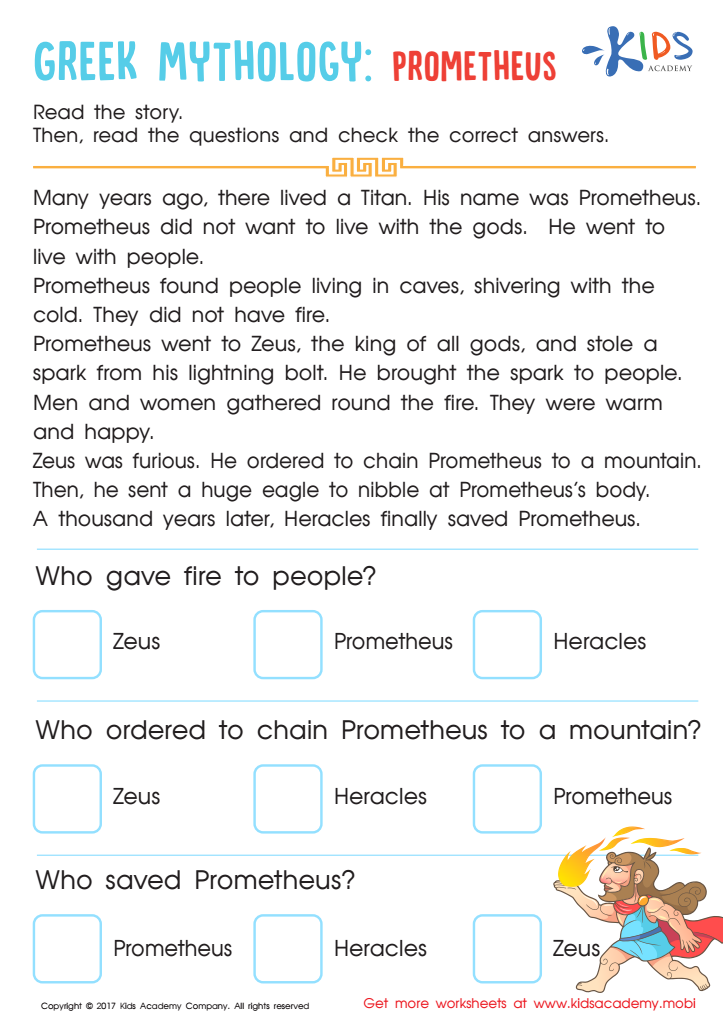
Prometheus story worksheet

Prometheus Story Worksheet

Help kids improve reading comprehension with this Prometheus story worksheet! Learn about this classic mythological tale and break down the plot into understandable parts. By doing so, children will understand the story each step of the way.
Prometheus Story Worksheet
Worksheet
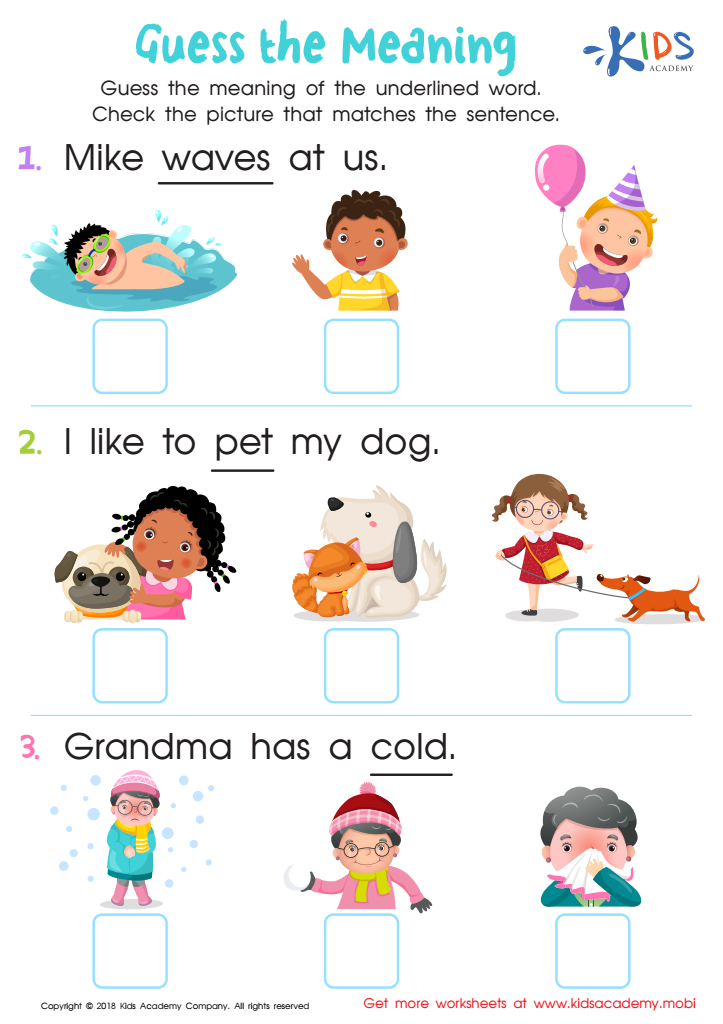
Guess the Meaning Worksheet

Guess the Meaning Worksheet

Help your child learn the meanings of words in different contexts by using this colourful, free worksheet. What is the meaning of the underlined words in each sentence? Look at the images and pick the one that accurately describes the word's context.
Guess the Meaning Worksheet
Worksheet
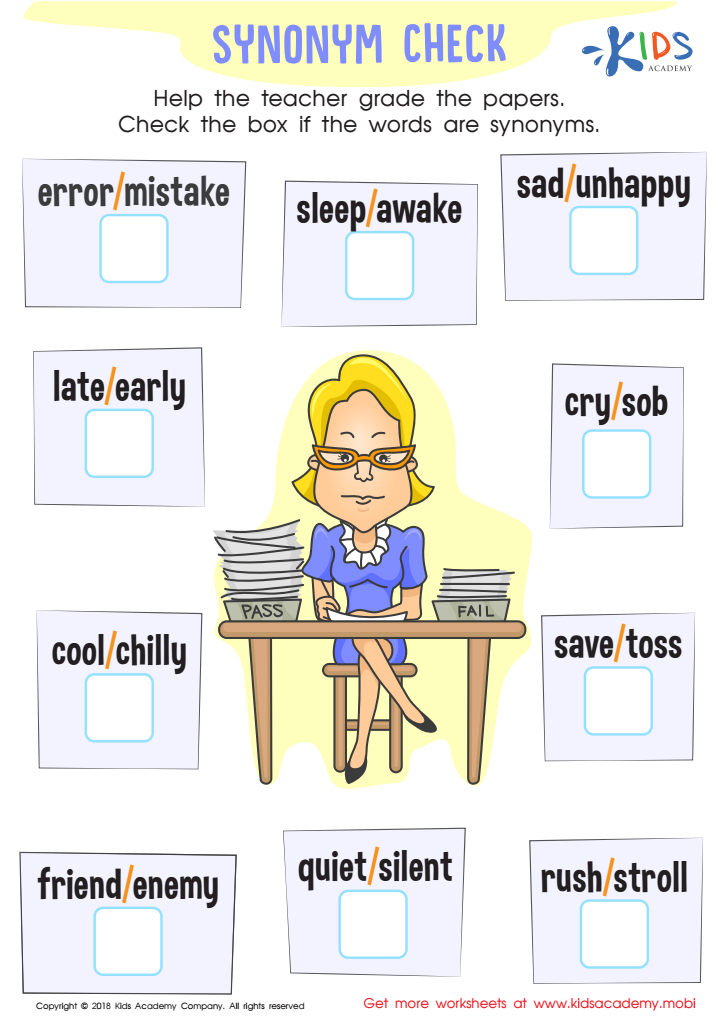
Synonym Check Worksheet

Synonym Check Worksheet

Ask your kids what a synonym is, and listen to their definitions. If needed, explain it's a word that has a similar meaning to another. Give examples, then ask them to do the same. For this worksheet, get them to help grade the papers. Have them check the boxes if the words are synonyms.
Synonym Check Worksheet
Worksheet
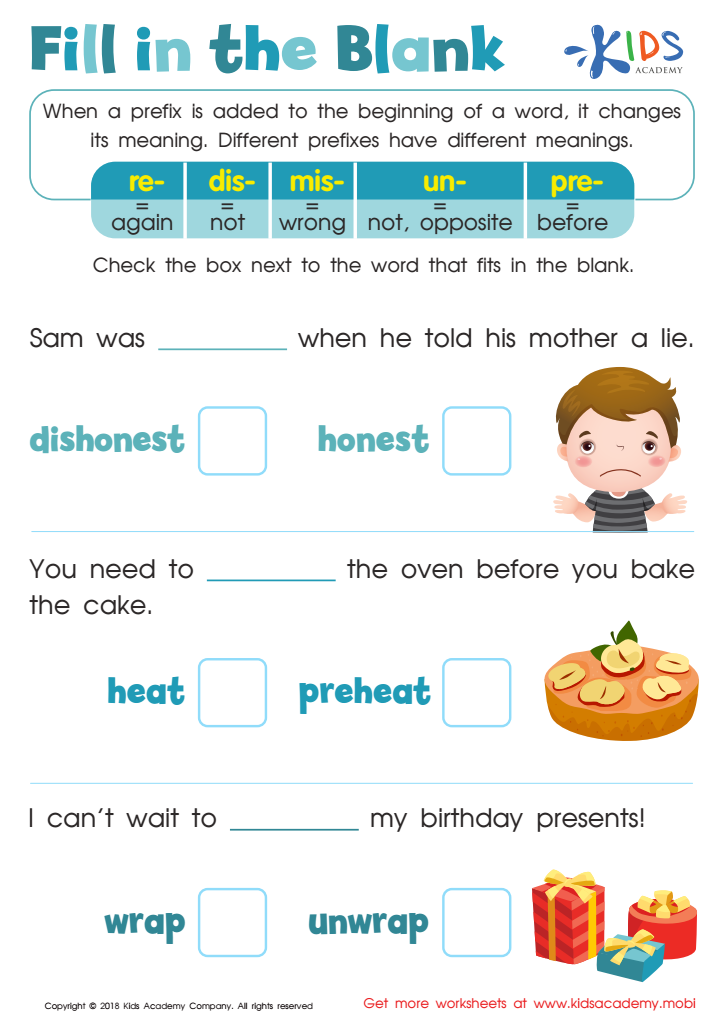
Reading: Fill in the Blank Worksheet

Reading: Fill in the Blank Worksheet

Students can practice understanding the meaning of common prefixes with this worksheet. They read sentences and pick the correct word with the appropriate prefix to complete it. Downloadable and a great addition to reading and vocabulary resources, this helps improve comprehension with mastery of the skill!
Reading: Fill in the Blank Worksheet
Worksheet
Vocabulary: Assessment 1 Worksheet

Vocabulary: Assessment 1 Worksheet

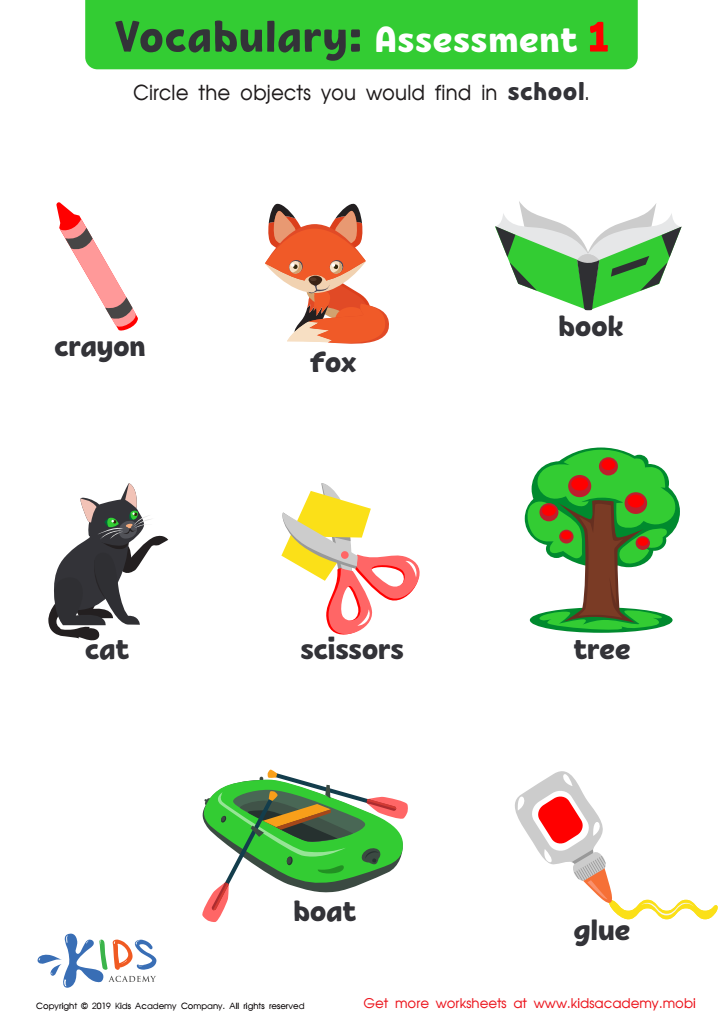
Want to check your child's vocabulary? This worksheet has kids identify objects from school through picture clues. It reinforces reading and fine motor skills, while providing an assessment of their reading growth and needs.
Vocabulary: Assessment 1 Worksheet
Worksheet
Adjectives: At The Zoo Worksheet

Adjectives: At The Zoo Worksheet

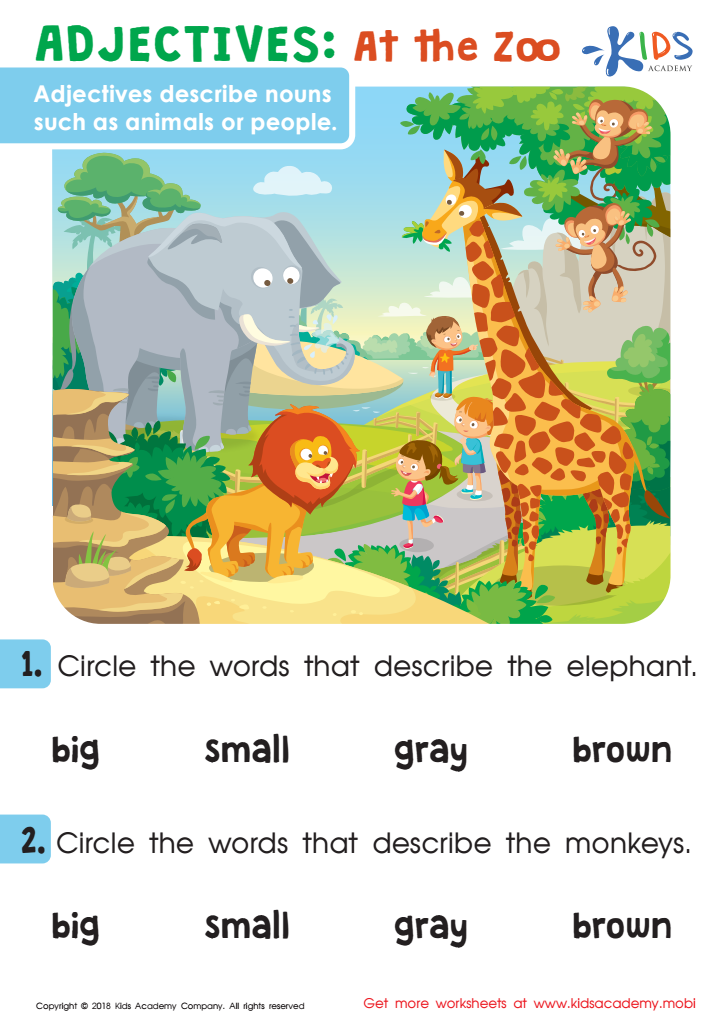
Take your kids to the zoo and ask them about their favorite activities and animals. This worksheet is a great way for kids to learn about adjectives. Explain that adjectives describe nouns like people or animals (e.g. big, tall, dark). Look at the printout with your kids and help them circle words that describe the animals in the picture.
Adjectives: At The Zoo Worksheet
Worksheet
Word Choice Worksheet


Word Choice Worksheet

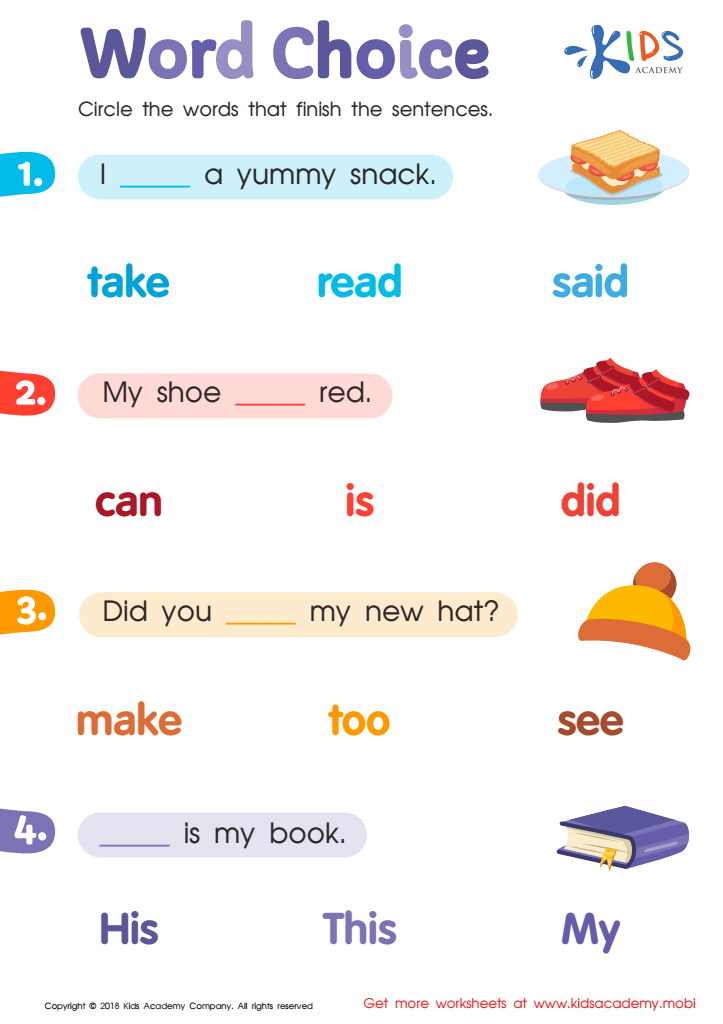
This worksheet can help your children become better readers. By now, you should have an idea of their reading level. Read the incomplete sentences aloud and point to the missing piece. Have your students pick the correct word they think best fits the sentence out of the options given.
Word Choice Worksheet
Worksheet


Contextual understanding is crucial for children aged 4-9 because it significantly enhances their learning and development. During these formative years, kids are naturally curious and eager to make sense of the world around them. Parents and teachers should care about this aspect, as contextual understanding helps children connect new information to their experiences, fostering deeper comprehension and retention.

When children grasp the context of what they're learning, they are better equipped to navigate social situations, solve problems, and think critically. For instance, in reading, understanding the context of a story allows young learners to relate to characters and plot, which improves their engagement and empathy. Furthermore, when educators tailor lessons to reflect real-world applications, it can excite students about learning and instill a lifelong love for knowledge.

Moreover, contextual understanding also supports language development, as kids learn to interpret and express ideas based on varying situations. Overall, by prioritizing contextual understanding, parents and teachers can create rich, meaningful learning experiences that encourage creativity, enhance motivation, and build a strong foundation for future education. In short, nurturing this skill is essential for fostering confident, capable learners.