
Foster creativity Normal Worksheets for Ages 4-9
3 filtered results
Difficulty Level
Grade
Age
-
From - To
Subject
Activity
Standards
Unlock the creative potential of young minds with our Foster Creativity Normal Worksheets designed specifically for children aged 4-9. These engaging and colorful worksheets provide an enriching experience that encourages imaginative thinking and artistic expression. Covering various themes and activities, our resources promote fine motor skills, critical thinking, and problem-solving abilities through fun tasks. From coloring and drawing to simple writing exercises, each worksheet is thoughtfully crafted to spark curiosity and nurture a love for creativity. Perfect for parents and educators alike, these worksheets make learning enjoyable while fostering essential skills for lifelong success. Explore our collection today and inspire creativity!
Favorites
With answer key
Interactive
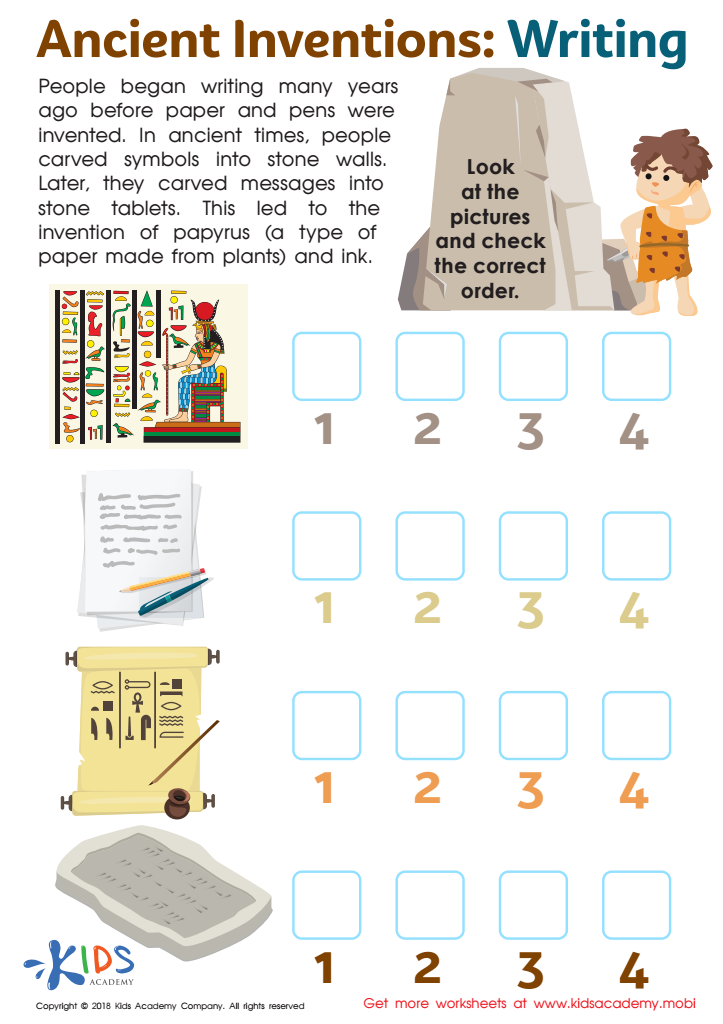
Ancient Inventions: Writing Worksheet
Writing has been around for ages, often in the form of symbols for objects and words. With Kids Academy's interesting worksheet, your child can learn about how writing has changed over time - from symbols on stone tablets to letters on notebook paper. Fascinate them with this ancient invention!
 Assign to My Students
Ancient Inventions: Writing Worksheet
Worksheet
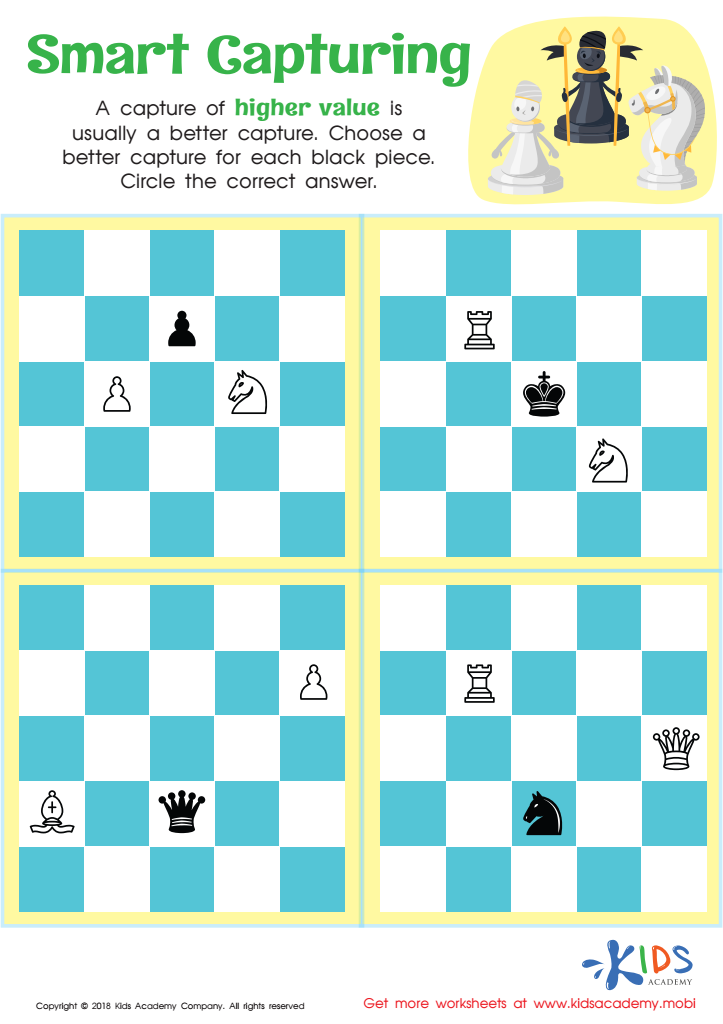
Smart Capturing Worksheet
Chess is a game of strategy and calculation. When presented with two captures, a player should always go for the one that yields the highest value. For example, taking a knight over a pawn. In this worksheet, your children will choose the best capture for each black piece. Ask them to circle the correct answers. (80 words)
Smart Capturing Worksheet
Worksheet
Join Kids Academy for Free
Who is primarily going to use this learning content?








Fostering creativity in children aged 4-9 is essential for their overall development and well-being. During these formative years, children are naturally curious and imaginative. Encouraging creativity allows them to express their thoughts and feelings, enhancing emotional intelligence. Creative activities such as drawing, storytelling, and pretend play stimulate cognitive development, helping children improve problem-solving skills and critical thinking.
Parents and teachers who nurture creativity create an environment where children feel safe to explore ideas and take risks. This builds confidence and resilience, preparing them to face challenges in life. Furthermore, creativity promotes adaptability—an essential skill in our rapidly changing world.
Creative experiences also aid in building social skills. When children collaborate on projects or engage in group play, they learn teamwork and communication, which are vital for building strong relationships.
In addition, fostering creativity can enhance academic performance. Engaging in arts and innovative projects often makes learning more enjoyable and meaningful, leading to greater motivation and deeper understanding of subjects.
By prioritizing creativity, parents and teachers can cultivate well-rounded individuals capable of thinking outside the box, leading to success not only in school but throughout their lives. Ultimately, nurturing creativity is an investment in a brighter future for our children.








