Identifying story elements Normal Worksheets for Ages 4-9
3 filtered results
-
From - To
Discover engaging and interactive worksheets designed specifically for children ages 4-9 to identify key story elements. Our curated Normal Worksheets focus on enhancing young learners’ reading comprehension skills. Each activity is thoughtfully crafted to encourage kids to recognize and understand characters, settings, plots, and more. Through colorful, fun exercises, children will improve critical thinking and storytelling abilities. Perfect for both classroom and home settings, these worksheets provide a solid foundation for budding readers. Ignite your child’s passion for reading and storytelling with Kids Academy’s Identifying Story Elements worksheets for early learning success.
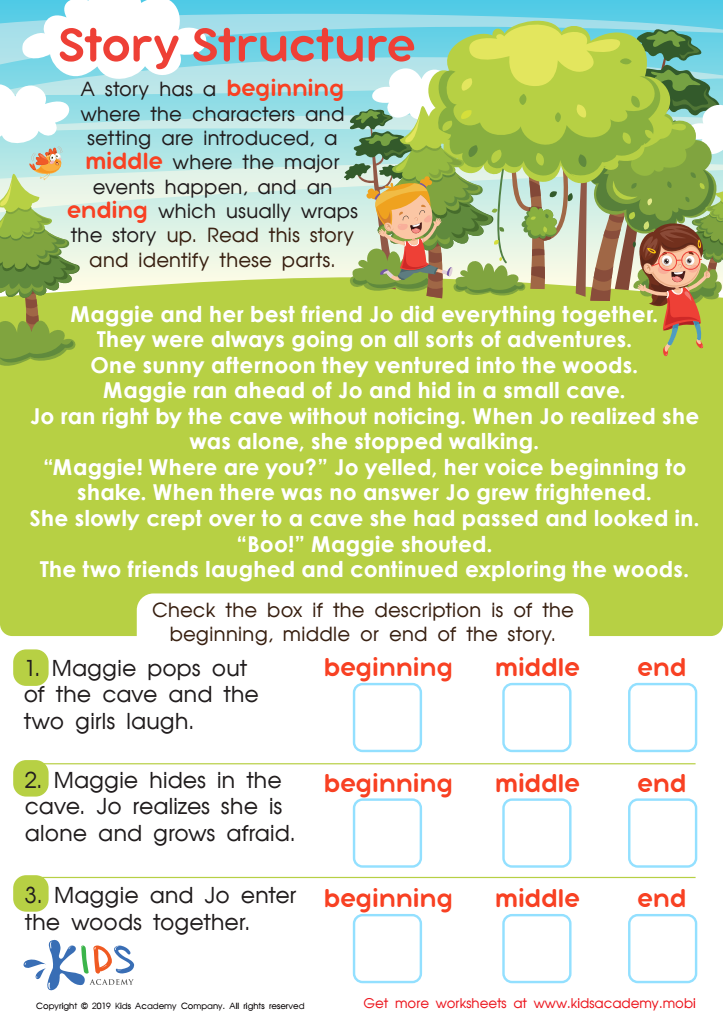
Story Structure Worksheet
 Assign to My Students
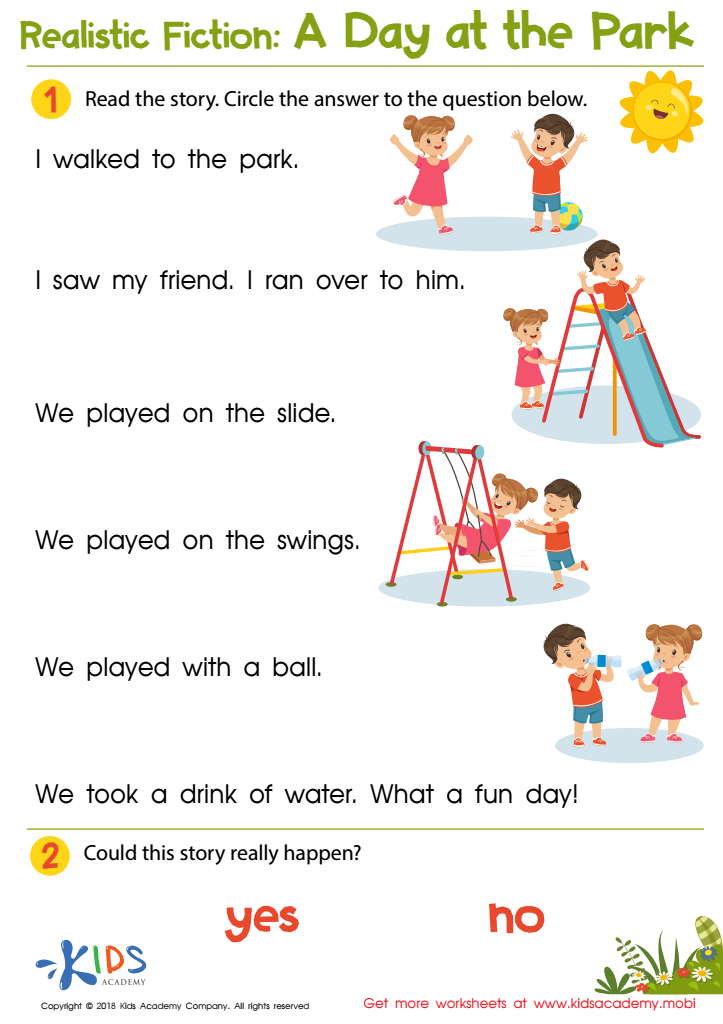
A Day at the Park Worksheet

Story Elements Printable






.jpg)

Identifying story elements such as characters, setting, plot, conflict, and resolution is essential for children aged 4-9 as it lays the foundation for critical literacy and cognitive development. For parents and teachers, emphasizing these components aids in developing a child's comprehension skills. Understanding story elements helps children better remember and retell stories, leading to enhanced verbal communication and comprehension abilities. They learn to recognize narrative patterns, which builds predictive and inferential thinking—key skills not just in reading, but across all learning areas.
Fostering these skills early on promotes empathy by encouraging children to put themselves in the characters' shoes, which aids in social development. Discussing the elements can also stimulate imagination and creativity, essential traits for problem-solving and innovation. Additionally, identifying these elements introduces structured thinking, which is crucial in organizing thoughts logically—a skill they will rely on for academic writing as they advance in school.
In summary, helping young students identify story elements is crucial not only for academic success but also for their overall cognitive, emotional, and social growth. Parents and teachers who invest in this understanding are essentially setting the stage for well-rounded, proficient learners ready to navigate both educational settings and life intricacies.








