Improving mental arithmetic Normal Worksheets for Ages 4-9
3 filtered results
-
From - To
Unlock your child's potential with our "Improving Mental Arithmetic" worksheets, expertly crafted for ages 4-9. Our engaging, fun worksheets are designed to bolster arithmetic skills by focusing on fundamental concepts like addition, subtraction, multiplication, and division. Developed by educational experts, these worksheets provide varying levels of difficulty suitable for your child’s learning pace. Enhance their problem-solving abilities and boost confidence through consistent practice. Ideal for parents and educators alike, our printable resources make learning math an enjoyable journey. Start today and watch your child flourish in their mathematical abilities. Visit Kids Academy to download now!
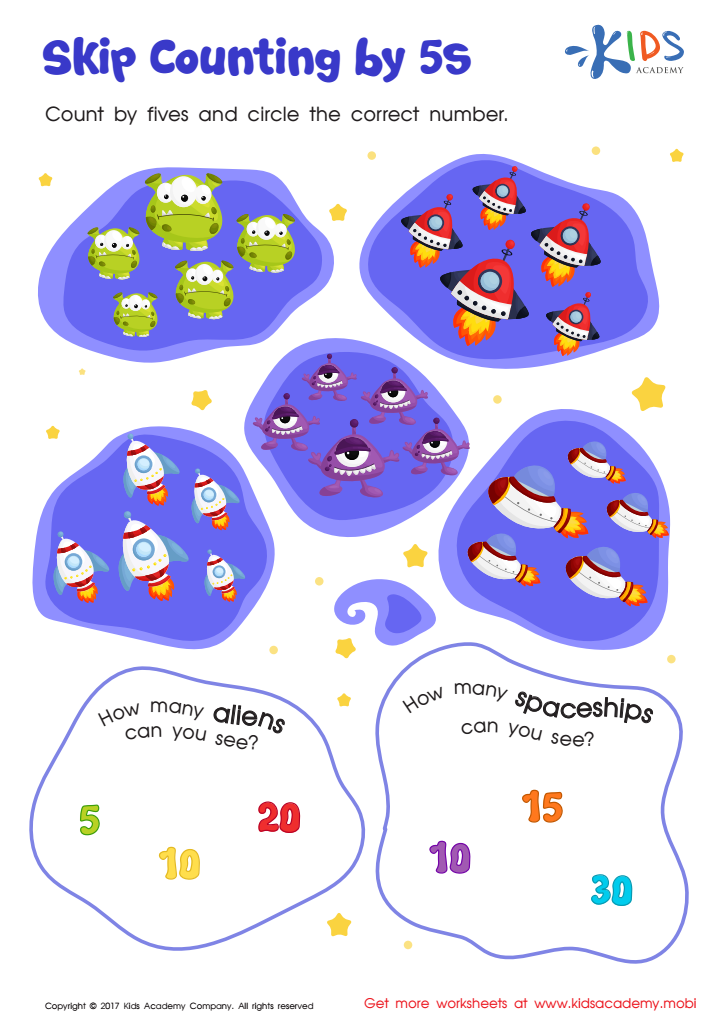
Skip Counting by 5s: Aliens and Spaceships Printable
 Assign to My Students
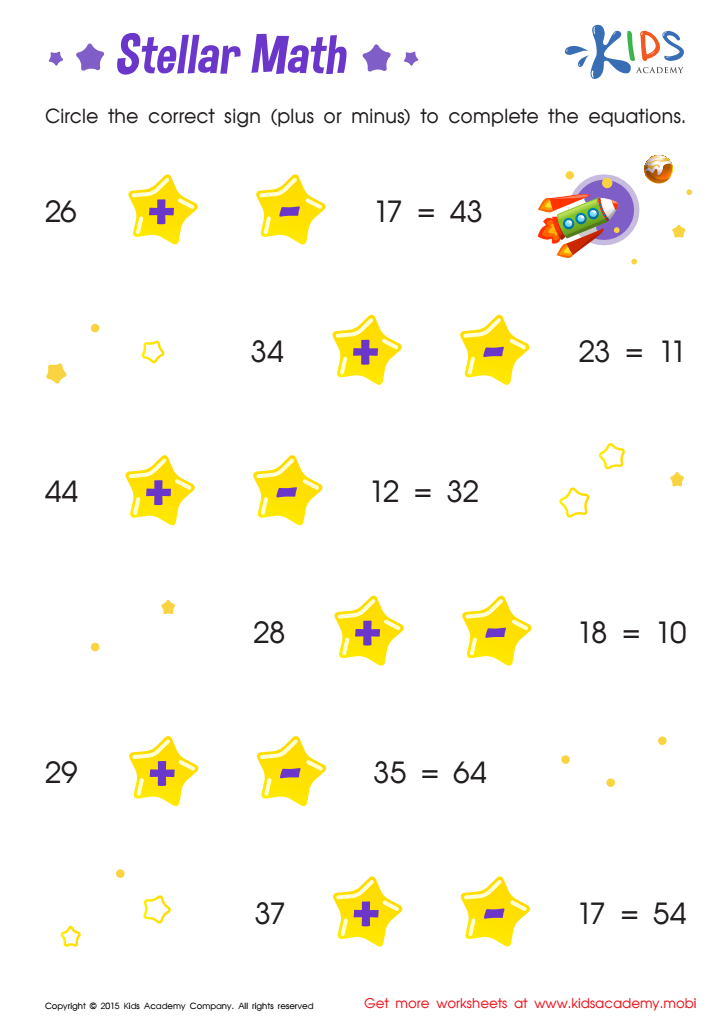
Stellar Math Substraction Worksheet
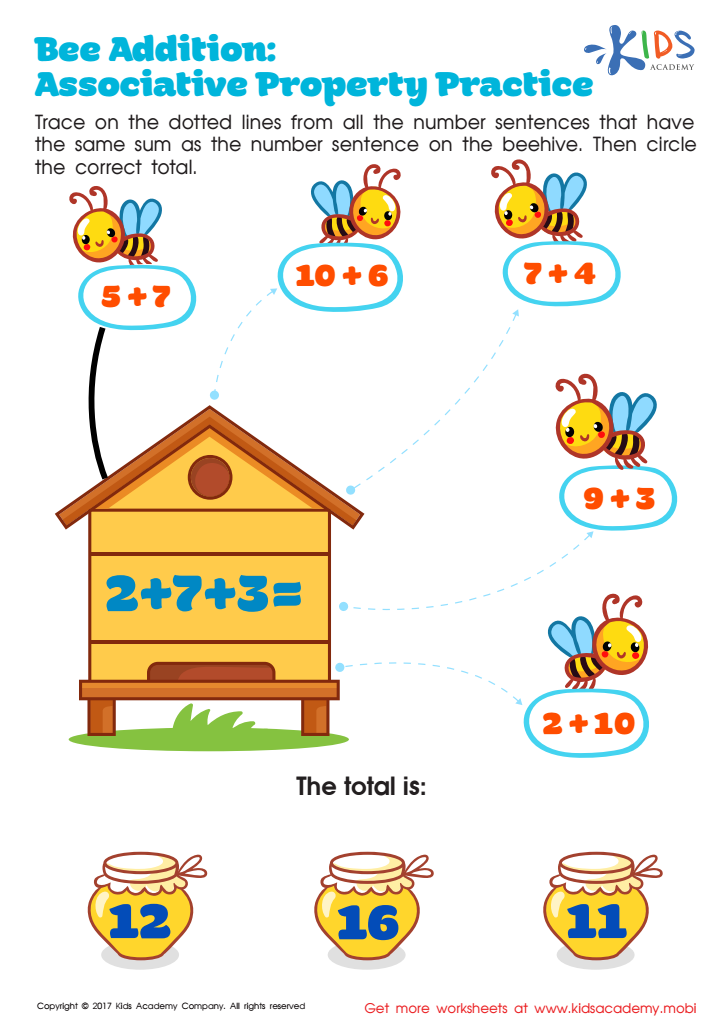
Bee Addition: Associative Property Practice Worksheet


.jpg)




Improving mental arithmetic skills in children ages 4-9 is crucial for several reasons. Firstly, mental arithmetic helps to enhance cognitive abilities such as memory, concentration, and problem-solving. Young children are in a highly receptive stage of brain development, making it the perfect time to introduce and reinforce such skills. When children practice mental arithmetic, they learn to think logically and sequentially, building a strong foundation for more complex mathematical concepts they will encounter in later education.
Moreover, mental arithmetic fosters confidence and independence. It equips children with the ability to make quick, accurate decisions in everyday scenarios, such as counting change or managing time, aiding in developing practical life skills. This boosts their self-esteem and encourages a positive attitude towards learning.
In addition, early success in mathematics can have a significant positive impact on a child's overall academic performance. Children who excel in mental arithmetic are often better at subjects that require logical thinking and precision. This academic confidence can then transfer across various areas of learning.
Lastly, parental or teacher involvement in improving a child's mental arithmetic can strengthen their relationship with the child. Through consistent practice, games, and activities, mutual engagement in learning turns into quality interaction time, making education a shared and enjoyable journey.








