Phonics comprehension Normal Worksheets for Ages 4-9
3 filtered results
-
From - To
Explore our "Phonics Comprehension Normal Worksheets" designed for children ages 4-9. These engaging resources help young learners strengthen their phonics skills while enhancing their reading comprehension. Each worksheet is carefully crafted to promote letter recognition, sound association, and word decoding through fun exercises. With varied activities, including matching words to images and simple reading passages, kids will gain confidence in their reading abilities. Ideal for classroom or at-home use, these worksheets make learning phonics enjoyable and interactive. Dive into our collection to support your child's literacy journey and cultivate a love for reading from an early age!
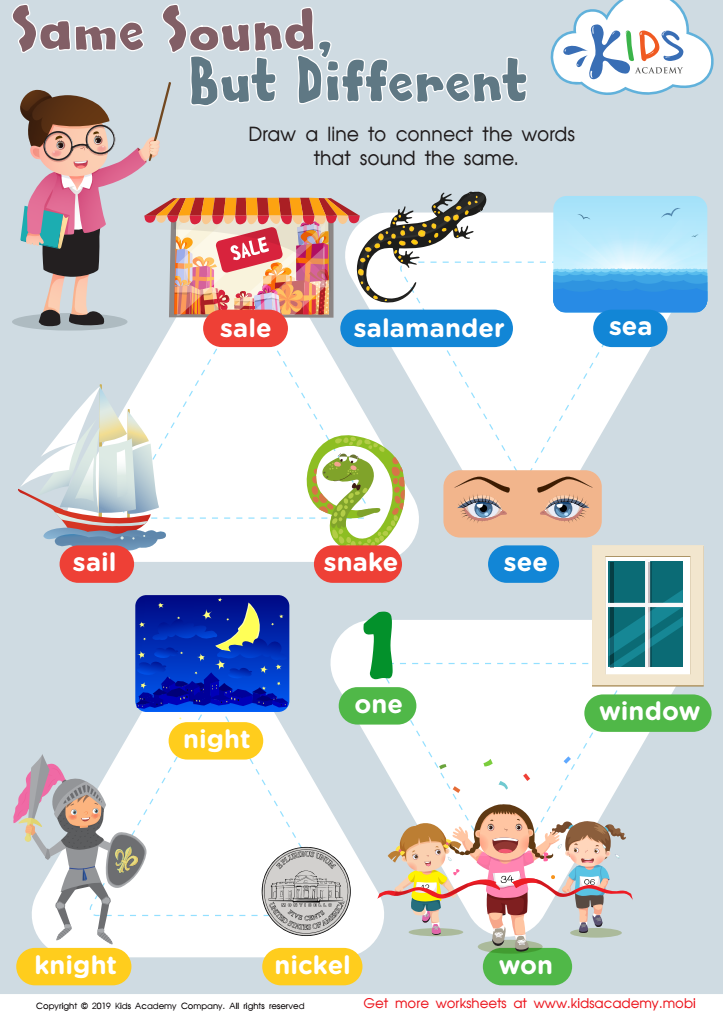
Sound Different Worksheet
 Assign to My Students
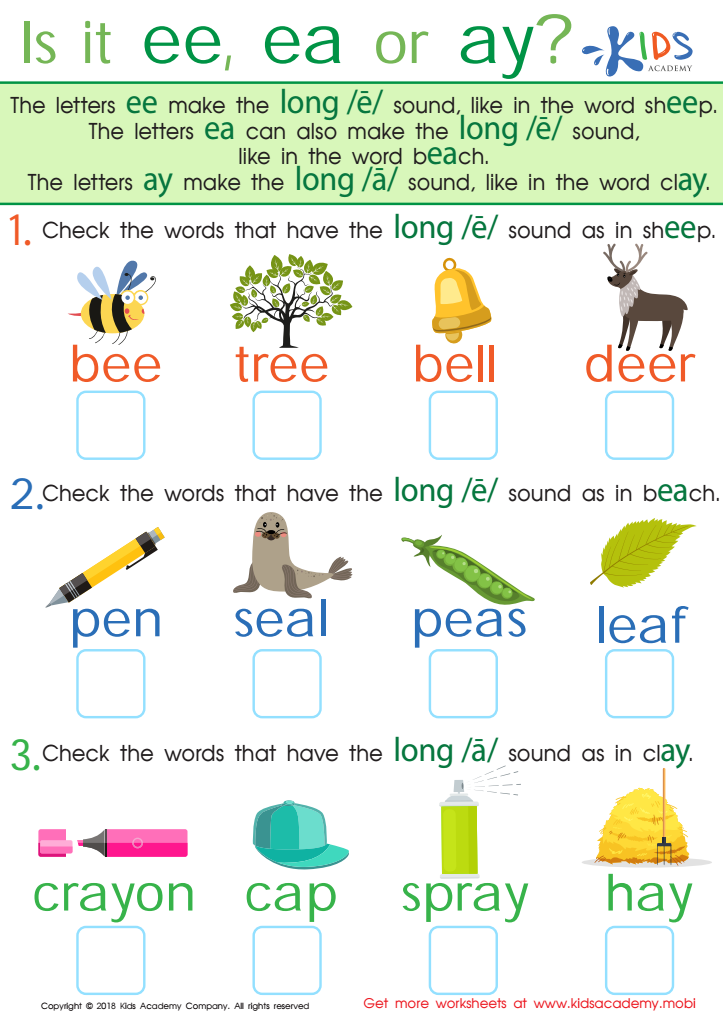
Is It EE, EA, or AY? Worksheet
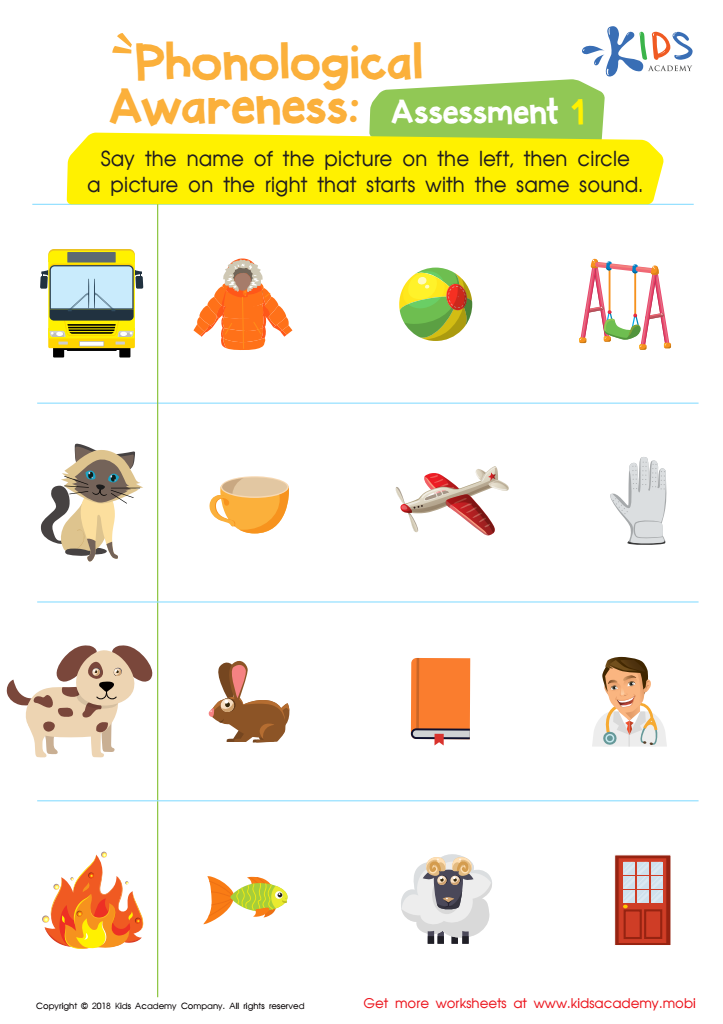
Phonological Awareness: Assessment 1 Worksheet








Phonics comprehension is a crucial aspect of early literacy development for children aged 4-9. Parents and teachers should care about this because it lays the foundation for reading proficiency and overall academic success. Phonics involves understanding the relationship between letters and sounds, which equips children with the skills to decode words effectively. Mastering phonics helps them to read fluently, which in turn boosts their confidence and enjoyment in reading.
Strong phonics skills also contribute to vocabulary development, as children learn to recognize words and make connections between different terms. Early readers with solid phonics knowledge tend to perform better in all subjects, as reading is integral to learning across the curriculum. Additionally, developing phonics understanding at an early age can help prevent future reading difficulties, reducing the likelihood of long-term academic struggles.
Engaging parents in phonics education fosters a supportive home environment, where reading becomes a shared activity. Teachers can build on this foundation, reinforcing phonics through systematic instruction and interactive experiences. Ultimately, prioritizing phonics comprehension promotes not only literacy but also social and emotional growth, creating confident, capable learners ready to tackle future academic challenges.








