Phonological awareness Normal Worksheets for Ages 4-9
5 filtered results
-
From - To
Discover our collection of Phonological Awareness Normal Worksheets tailored for children ages 4 to 9. Designed to enhance essential listening and language skills, these engaging worksheets provide a fun and interactive way for young learners to practice sound recognition, rhyming, syllable manipulation, and segmenting words. Each worksheet is meticulously crafted with age-appropriate activities that make learning enjoyable. Whether at home or in the classroom, our resources will help children build a strong foundation in phonological skills necessary for reading success. Explore our versatile worksheets to support your child's literacy journey today!
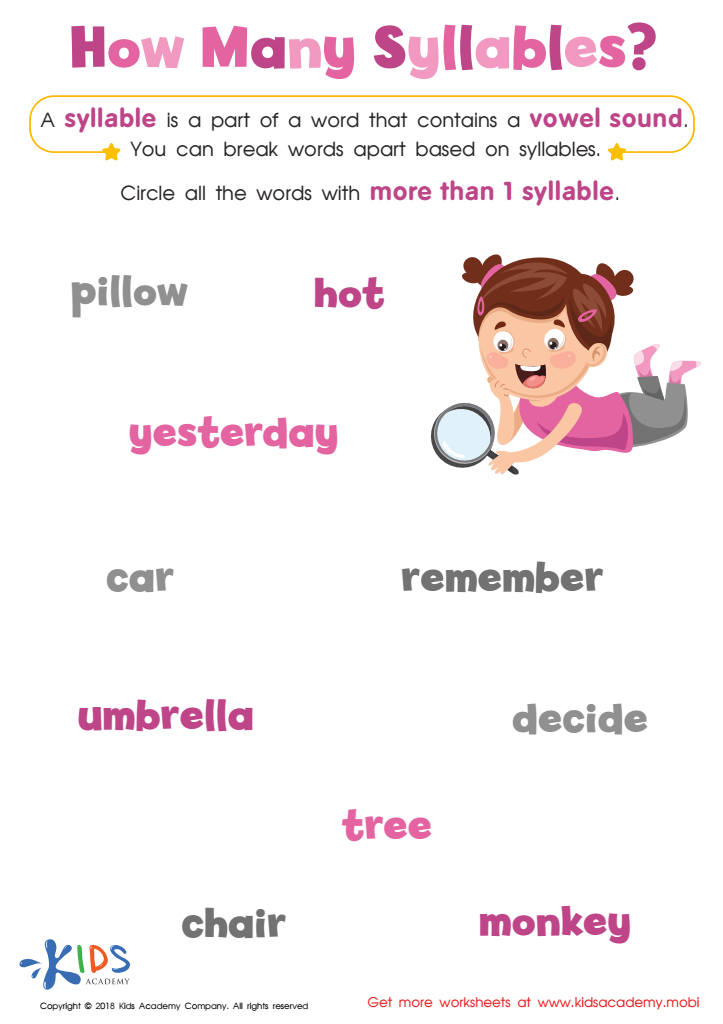
Reading: How Many Syllables Worksheet
 Assign to My Students
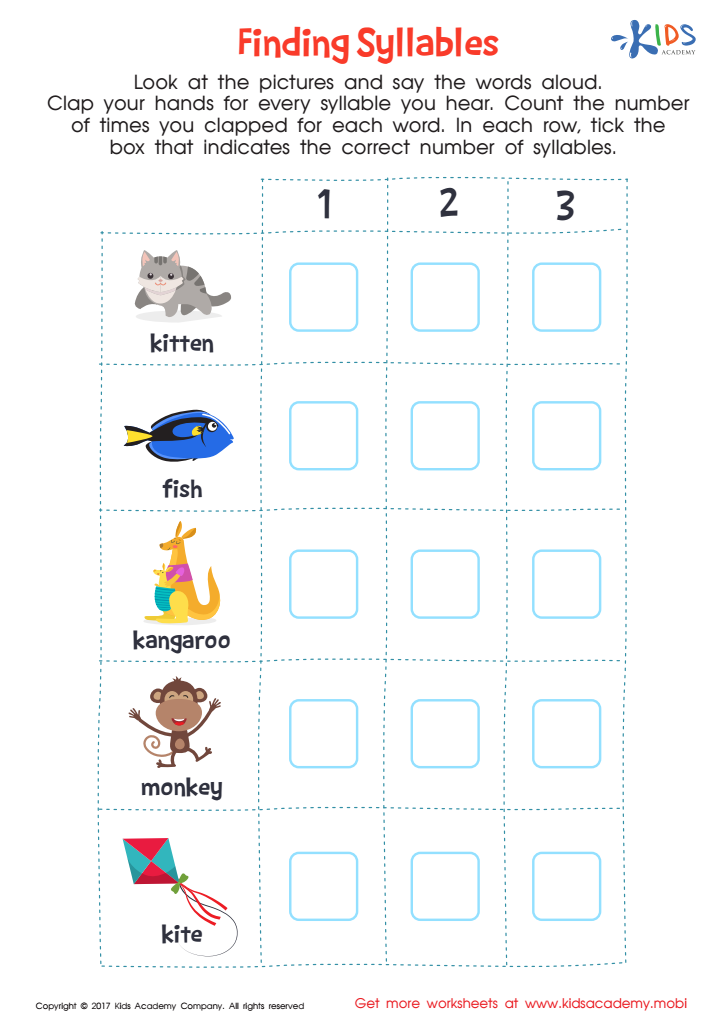
Finding Syllables Word Structure Worksheet
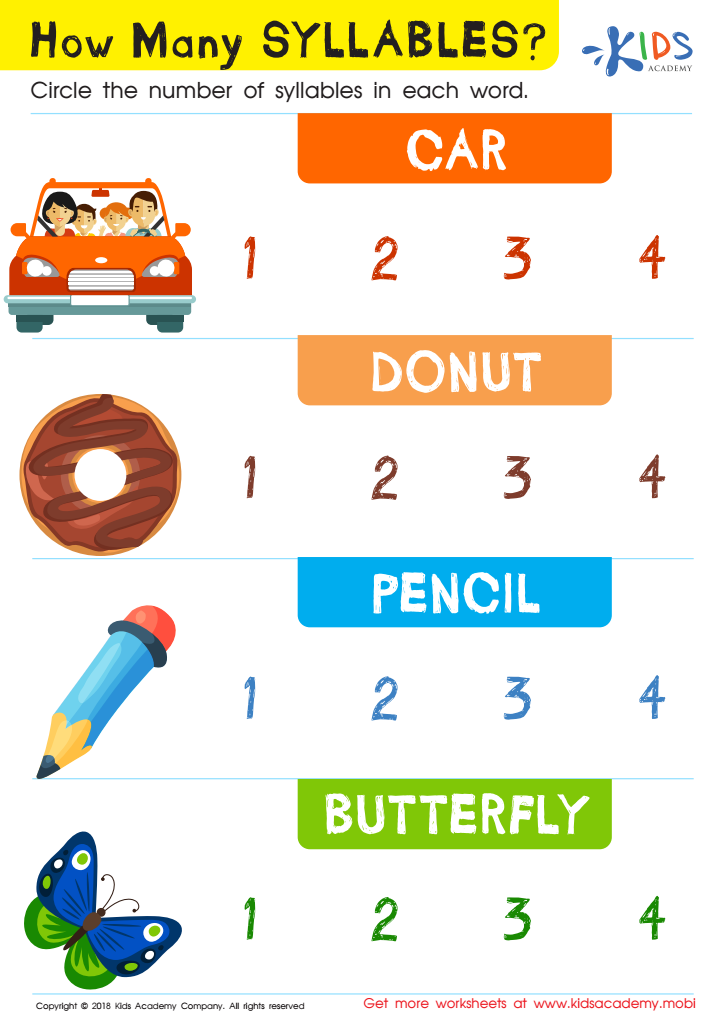
How Many Syllables? Worksheet
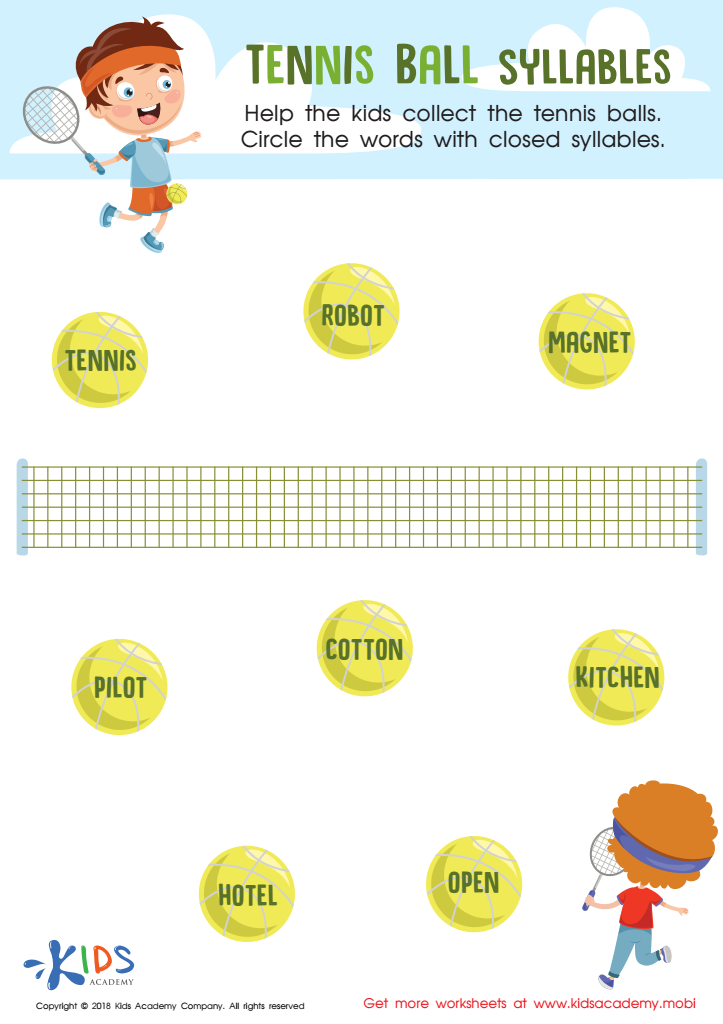
Tennis Ball Syllables Worksheet
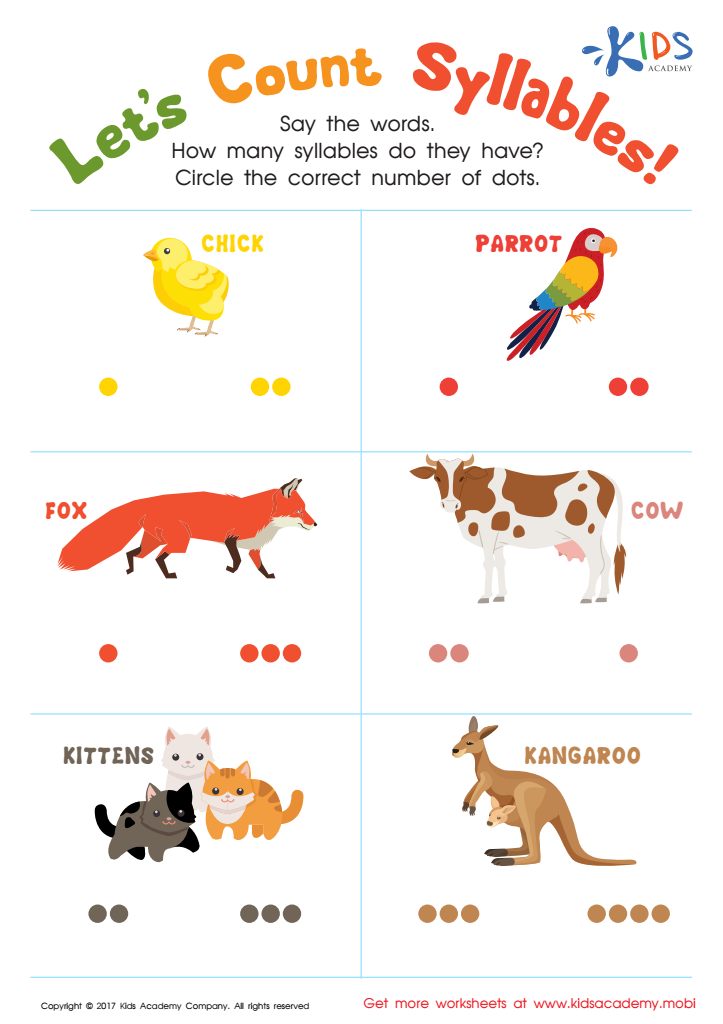
Lets Count Syllables Worksheet








Phonological awareness is a crucial skill for children aged 4-9, laying the foundation for successful reading and language development. It refers to the ability to recognize and manipulate sounds in spoken words, including awareness of syllables, rhymes, and individual phonemes. Parents and teachers should prioritize phonological awareness for several reasons.
Firstly, strong phonological skills enhance decoding ability, enabling students to accurately sound out words. This is essential for reading fluency and comprehension, as students who struggle with phonological tasks often face reading challenges. Secondly, phonological awareness supports vocabulary development and spelling, contributing to better overall communication skills.
Additionally, engaging children in phonological activities fosters listening skills and cognitive flexibility. By introducing rhymes, songs, and sound games, parents and teachers can make learning enjoyable while promoting essential skills.
Lastly, early intervention is critical. Children who do not develop phonological awareness by age 5 may need additional support, which can lead to greater difficulties as they progress in their education. Understanding the importance of this skill empowers parents and teachers to create a supportive environment, ensuring that every child is equipped with the necessary tools for linguistic success.








