Sound Association Normal Worksheets for Ages 4-9 - Page 2
27 filtered results
-
From - To
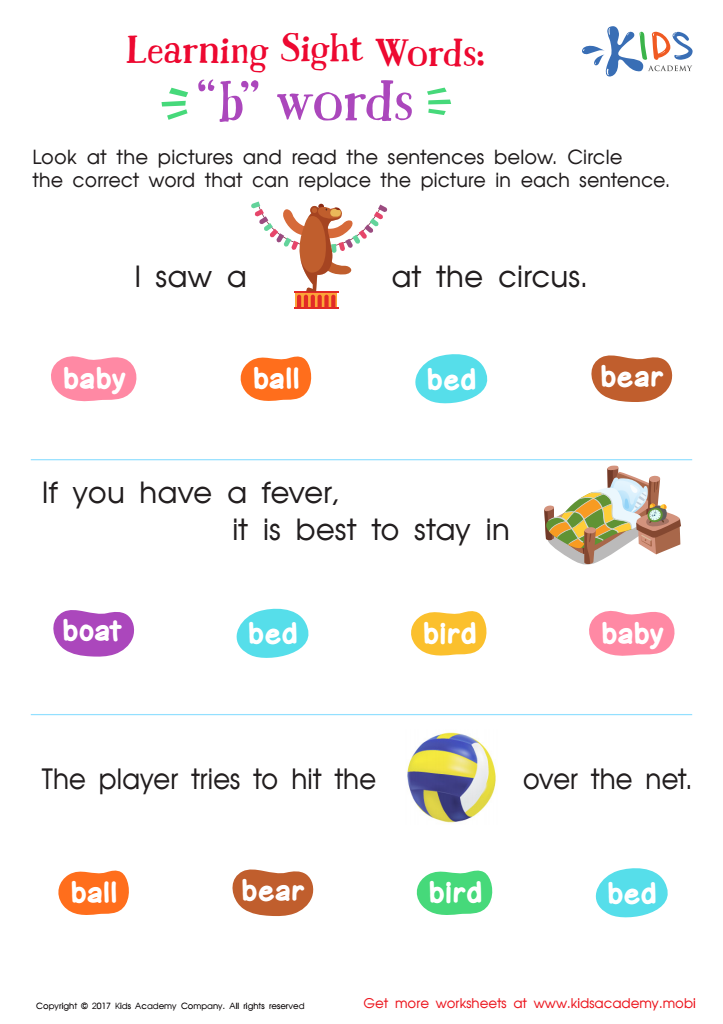
"B" Words Printable Sight Words Worksheet
 Assign to My Students
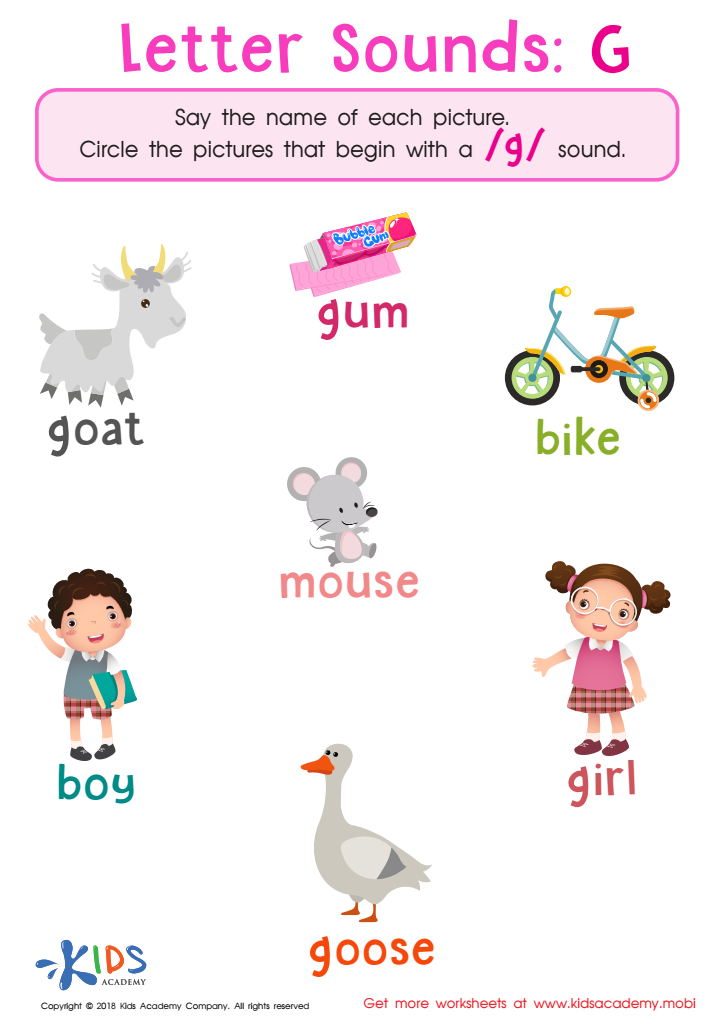
Letter G Sounds Worksheet
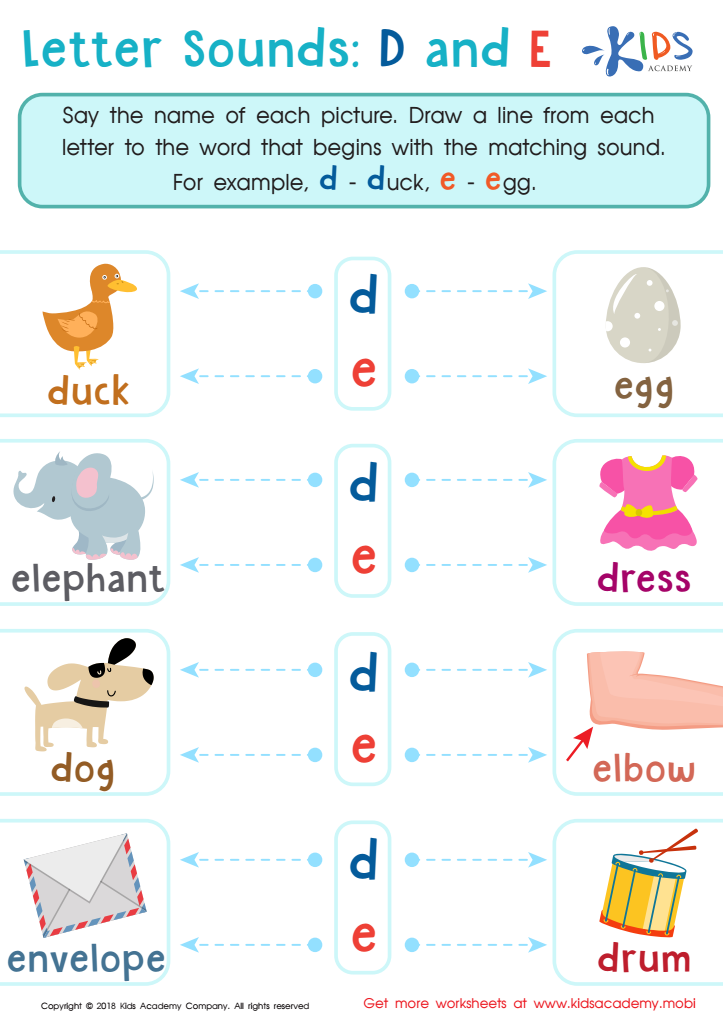
Letter D and E Sounds Worksheet







Sound Association Normal (SAN) refers to a child’s ability to link specific sounds with relevant meanings or objects, which is crucial for language development and literacy skills. For parents and teachers of children aged 4-9, supporting SAN is essential for several reasons.
Firstly, strong sound association skills lay the foundation for phonemic awareness, which is vital for reading and writing. Children learn to recognize letters and sounds, enabling them to decode words efficiently. Furthermore, enhancing SAN can improve vocabulary as children connect sounds to new words and their meanings, fostering better communication skills.
Secondly, SAN plays a significant role in cognitive development. It helps children make connections between auditory inputs and their experiences, promoting critical thinking and problem-solving skills. Engaging with sounds in creative ways, such as through music or storytelling, further stimulates cognitive growth.
Additionally, proficiency in sound associations can boost a child's confidence in their language abilities, encouraging them to participate more actively in discussions and learning activities. This emotional aspect contributes to a positive learning environment, promoting social skills as well. In summary, prioritizing SAN nurturing in early education equips children with the essential tools for literacy, cognitive development, and effective communication.








