Sound discrimination Normal Worksheets for Ages 4-9
3 filtered results
-
From - To
Discover engaging Sound Discrimination Normal Worksheets designed for children ages 4-9 at Kids Academy! Our expertly crafted activities enhance auditory skills, empowering young learners to differentiate between various sounds and phonemes. Elevate your child's linguistic and cognitive abilities as they enjoy playful exercises in a structured, fun format. Perfectly tailored for early-grade students, these worksheets provide a solid foundation for reading and speaking skills. Visit Kids Academy for a collection of printables that support both at-home practice and classroom learning, making sound differentiation an exciting and essential part of your child’s education journey.
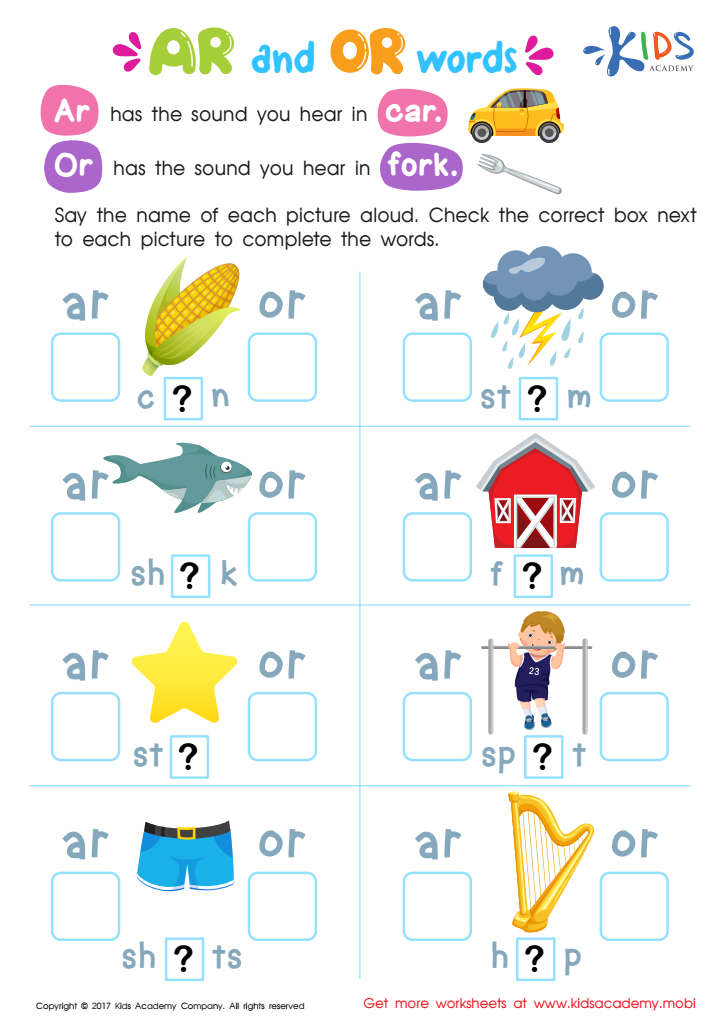
Ar and Or Words Phonics Worksheet
 Assign to My Students
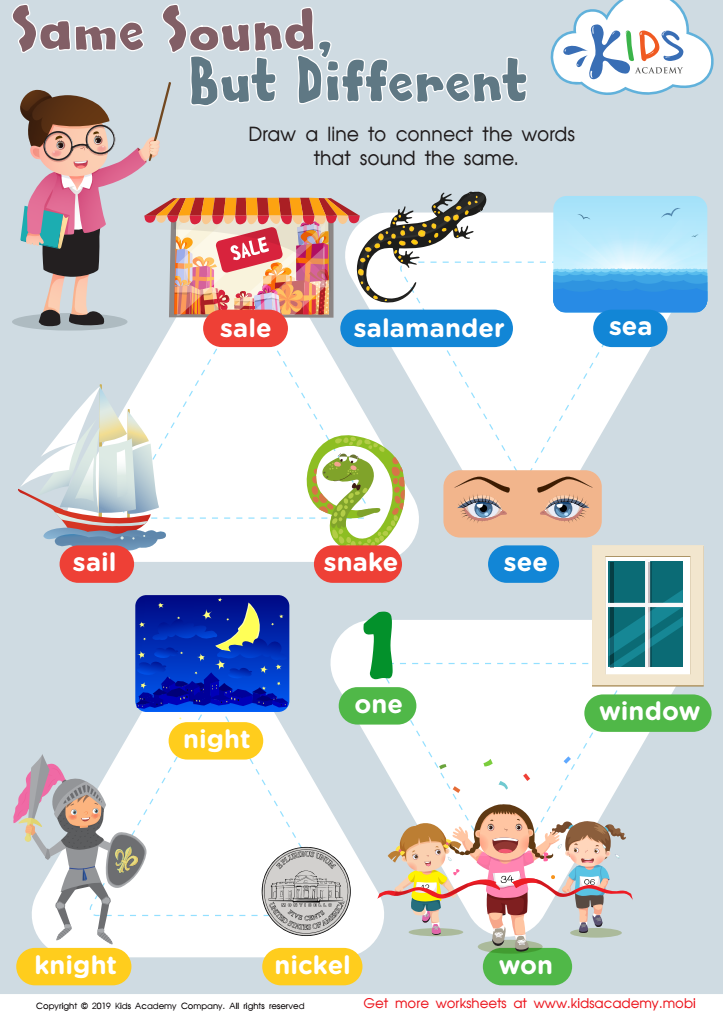
Sound Different Worksheet
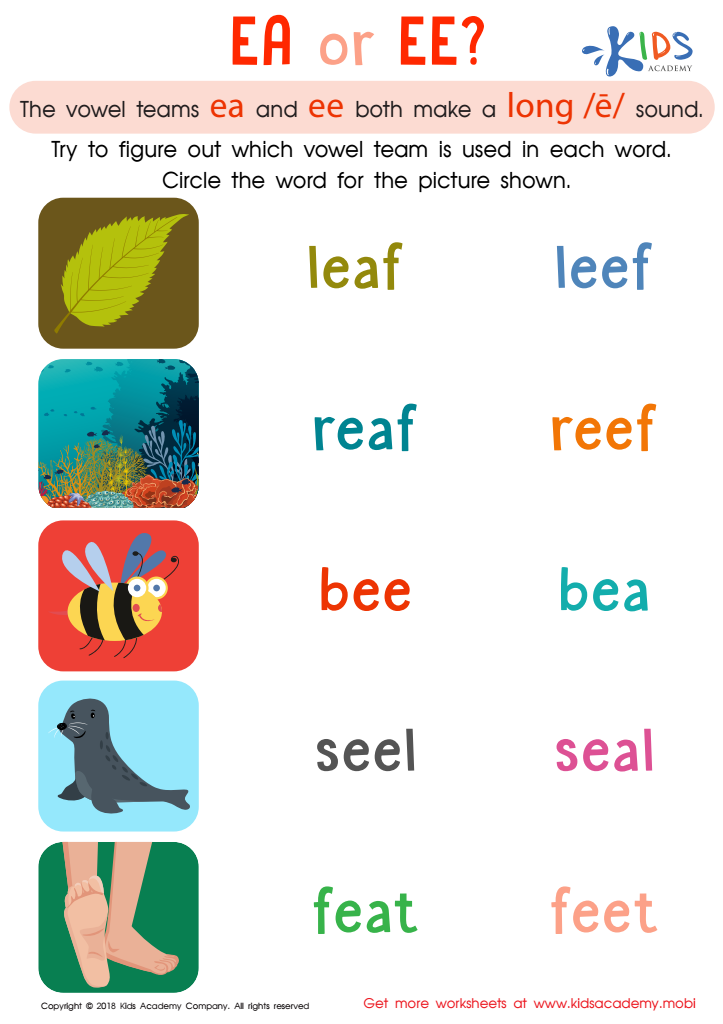
Reading: EA and EE Worksheet





.jpg)
.jpg)
Sound discrimination, the ability to distinguish between different sounds, is vital for children aged 4-9 as it directly impacts their language development, reading skills, and overall learning. For parents and teachers, understanding and fostering sound discrimination during these formative years is crucial for several reasons.
Firstly, strong sound discrimination skills help children differentiate between similar-sounding phonemes, the building blocks of language. For instance, distinguishing between "bat" and "pat" relies on recognizing subtle differences in sound. This skill underpins successful reading and spelling, both of which are foundational to academic achievement.
Secondly, auditory discrimination influences listening skills and comprehension. In classroom settings, the ability to discern and focus on relevant sounds amidst background noise enables children to follow instructions, participate in discussions, and absorb new information effectively.
Moreover, early detection of sound discrimination difficulties allows for timely intervention. If a child struggles in this area, they might face challenges with articulation, phonics, or even social interaction, given the role of clear speech and listening in communication.
Therefore, by prioritizing and supporting sound discrimination skills, parents and teachers can enhance a child's linguistic abilities, academic success, and overall confidence in learning. Activities such as rhyming games, read-aloud sessions, and listening exercises can significantly contribute to this essential aspect of early childhood development.








