
Spatial understanding Normal Worksheets for Ages 4-9
3 filtered results
Difficulty Level
Grade
Age
-
From - To
Subject
Activity
Standards
Unlock your child's spatial intelligence with our Spatial Understanding Normal Worksheets for ages 4-9. Designed to captivate and educate, these printable worksheets enhance skills like shape recognition, visual perception, and problem-solving. Perfect for young learners, the activities range from simple puzzles to more advanced spatial tasks, promoting cognitive development in a fun, engaging way. Tailored to fit various skill levels, they offer a progressive learning experience that adapts to your child's growing abilities. Download these essential educational resources from Kids Academy and give your child the spatial skills they need to excel in school and beyond.
Favorites
With answer key
Interactive
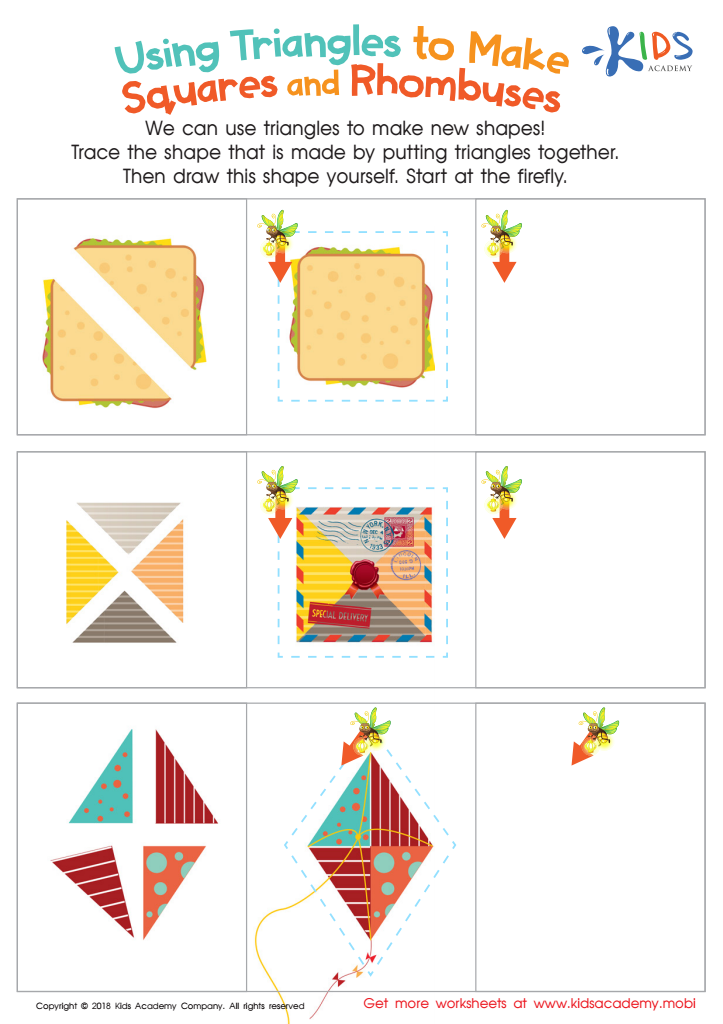
Using Triangles to Make Squares and Rhombuses Worksheet
Learning shapes is a fun way to boost spatial skills and critical thinking. This worksheet shows children how to use triangles to construct squares and rhombuses. Clear illustrations and a printout help children draw the new shape. A great activity for the math classroom! 80 words.
 Assign to My Students
Using Triangles to Make Squares and Rhombuses Worksheet
Worksheet
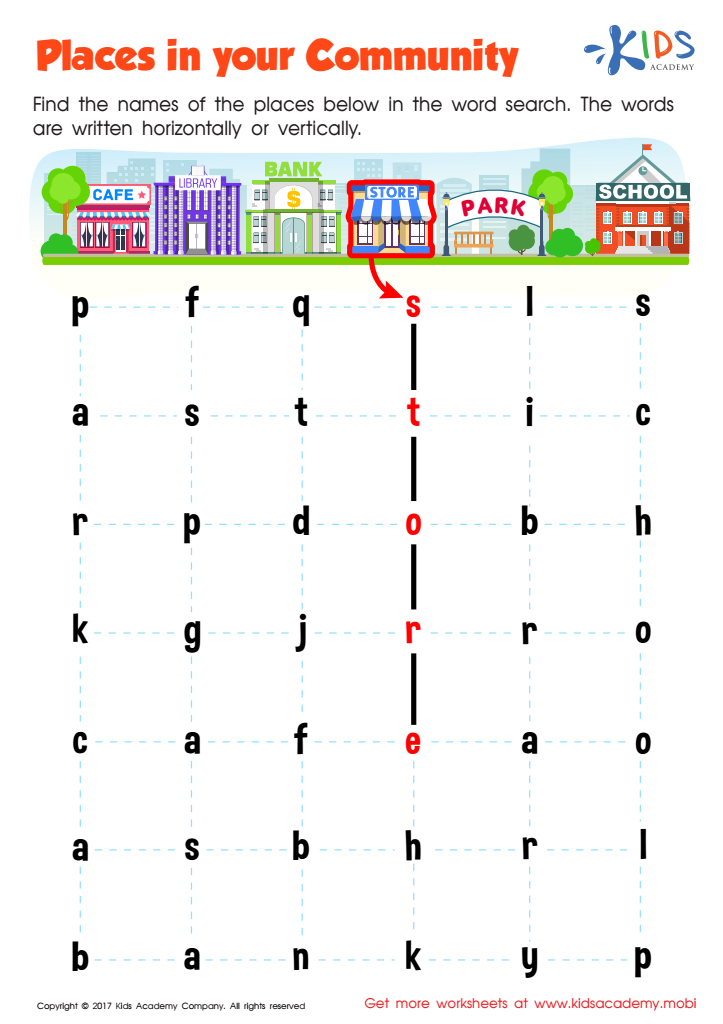
Places in Your Community Worksheet
Find and circle words related to common places in your community, like library, fire station, and more. Practicing vocabulary and spelling, your child will gain a better understanding of their community.
Places in Your Community Worksheet
Worksheet
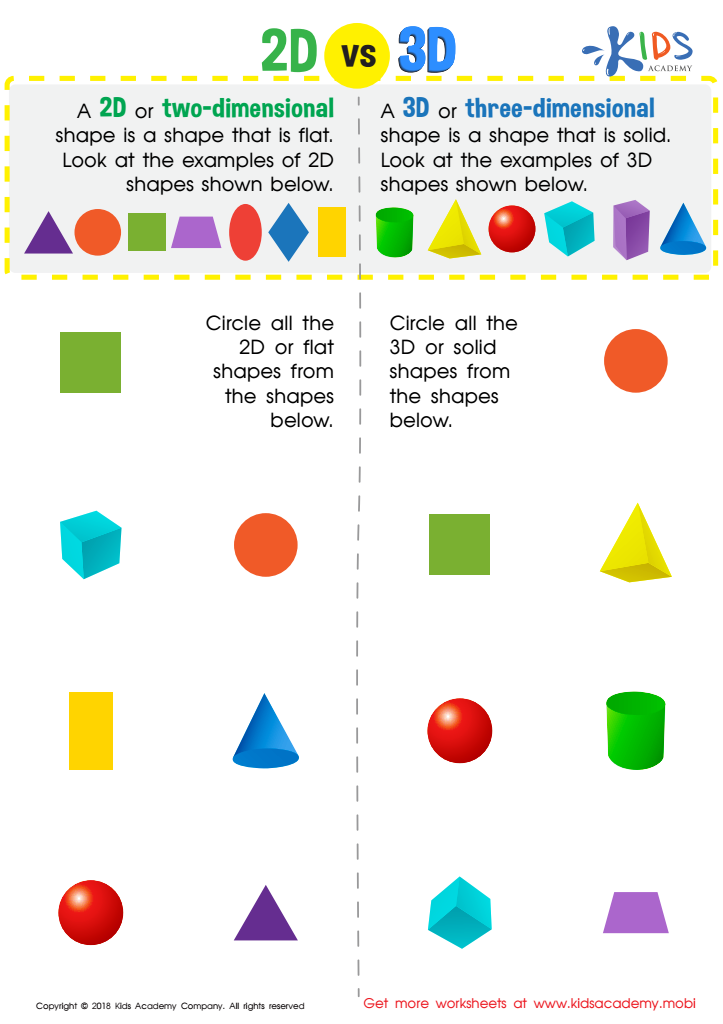
2D vs 3D Shapes Worksheet
Help your child understand 3D shapes using this engaging worksheet! Read the descriptions at the top and search for 2D and 3D shapes. An ideal activity for toddlers learning shapes. A fun way to understand the tricky concept of 3D shapes!
2D vs 3D Shapes Worksheet
Worksheet
Join Kids Academy for Free
Who is primarily going to use this learning content?








Spatial understanding, or spatial awareness, is the ability to comprehend and organize the physical spaces around us and manipulate objects within those spaces. For children aged 4-9, developing a strong grasp of spatial concepts is crucial for several reasons.
Firstly, spatial skills are fundamental in everyday tasks, such as reading maps, understanding directions, and solving puzzles. These abilities directly impact a child's problem-solving skills and self-reliance in the real world. Early development of spatial understanding equips children with the tools they need to navigate their environment more efficiently.
Secondly, spatial awareness is strongly linked to success in science, technology, engineering, and mathematics (STEM) fields. These subjects often require the ability to visualize and manipulate objects mentally. Engaging children in spatially-rich activities like building with blocks, drawing, or playing certain video games can stimulate these skills and foster a deeper interest in STEM learning.
Lastly, understanding spatial relationships improves children’s handwriting, reading, and comprehension skills. For example, being able to distinguish left from right or understanding the spatial orientation of letters and numbers is essential for literacy and numeracy.
Therefore, parents and teachers should prioritize activities that nurture spatial understanding in early years to support holistic cognitive development and lay a strong foundation for future academic and life skills.








