Synonym identification Normal Worksheets for Ages 4-9
3 filtered results
-
From - To
Enhance your child's language skills with our Synonym Identification Normal Worksheets for Ages 4-9! Designed to make learning fun and effective, these worksheets help young learners explore the concept of synonyms through engaging activities. Kids will strengthen their vocabulary as they identify words with similar meanings, fostering essential reading and writing skills. Perfect for at-home learning or classroom use, these resources are tailored to support various learning styles. Our brightly designed worksheets keep children motivated while promoting literacy growth. Ideal for educators and parents aiming to enrich their child's understanding of language—download these exciting worksheets today!
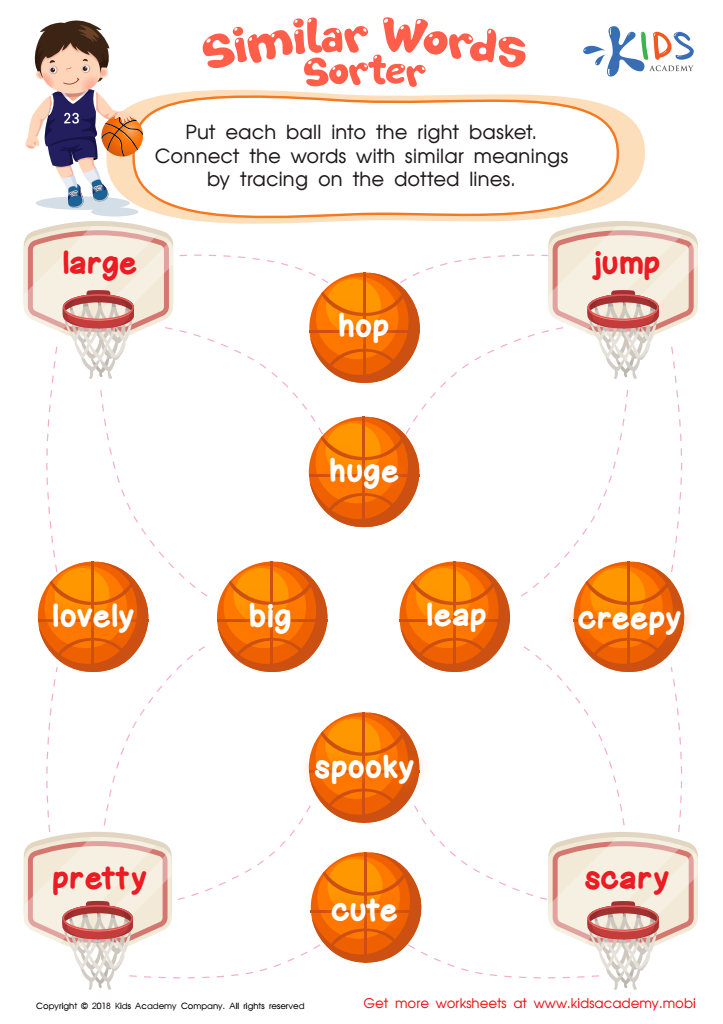
Similar Words Worksheet
 Assign to My Students
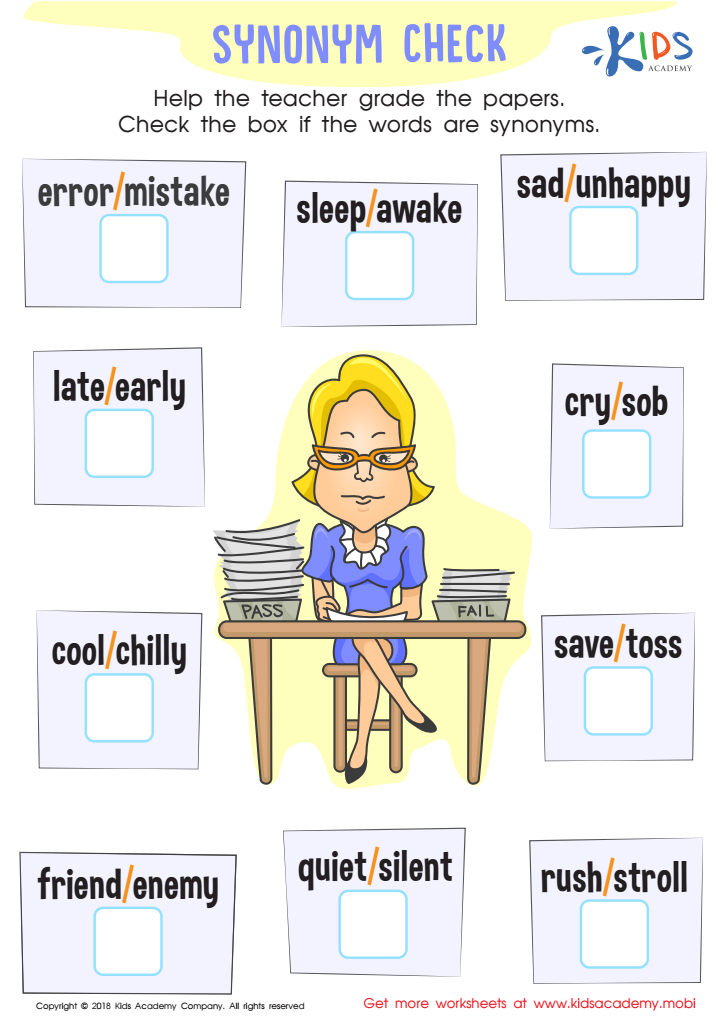
Synonym Check Worksheet
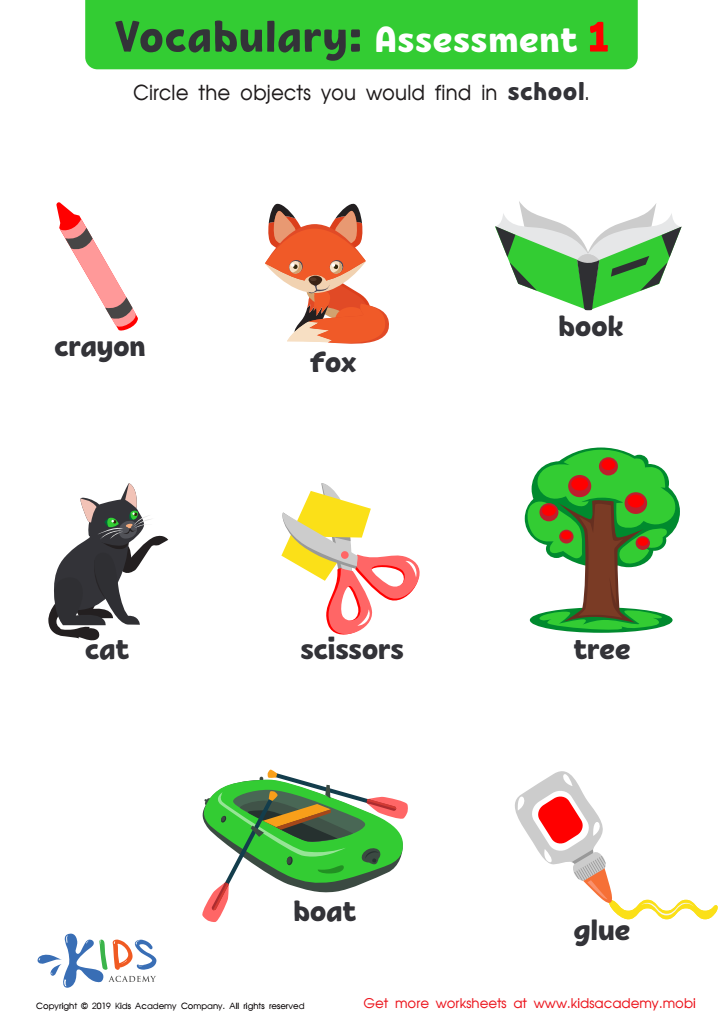
Vocabulary: Assessment 1 Worksheet








Synonym identification is a vital skill for children aged 4-9, and it holds significant importance for parents and teachers alike. It enhances vocabulary development, which is foundational for effective communication and literacy. When children learn to recognize synonyms, they not only enrich their language but also improve their understanding of nuanced meanings in words, fostering deeper comprehension skills.
Additionally, synonym identification promotes critical thinking. Children learn to analyze words and understand how words can be similar yet distinct in context, which encourages them to think more creatively and expand their expressive capabilities. This skill prepares them for advanced reading and writing tasks in future academic stages.
For teachers, incorporating synonym identification into lessons cultivates an engaging learning environment, stimulating children’s interest in language arts and encouraging collaborative learning through discussions and games.
For parents, reinforcing this skill at home lays the groundwork for lifelong learning while enhancing reading fluency. Fostering a strong vocabulary helps children feel more confident in their language abilities and boosts their performance in school. Ultimately, synonym identification is a cornerstone skill that supports overall language proficiency and academic success, making it essential for caregivers to prioritize and nurture it during these formative years.








