Understanding adjectives Normal Worksheets for Ages 4-9
5 filtered results
-
From - To
Discover the excitement of learning with our "Understanding Adjectives" Normal Worksheets, designed specifically for children ages 4 to 9. These engaging and interactive resources help young learners grasp the concept of adjectives in a fun and educational way. With a variety of activities, including matching, coloring, and filling in the blanks, children will enhance their vocabulary and improve their descriptive writing skills. Each worksheet reinforces key concepts while keeping children entertained and motivated. Perfect for home or classroom use, our worksheets cater to different learning styles, making it easy to support your child’s language development and confidence. Get started today!
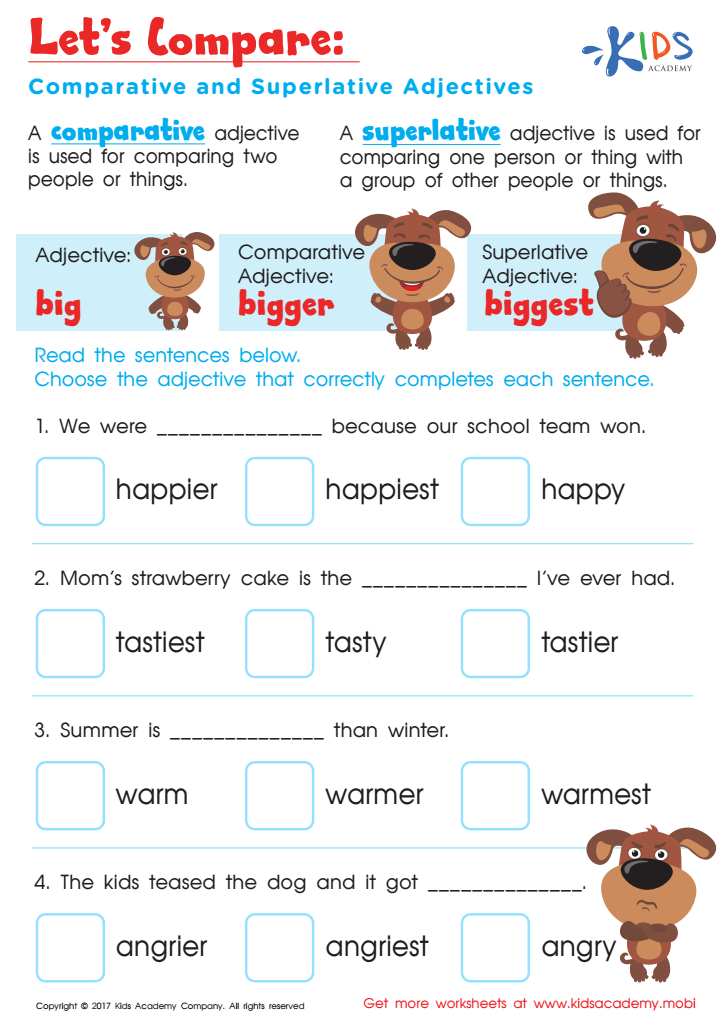
Comparative and Superlative Worksheet
 Assign to My Students
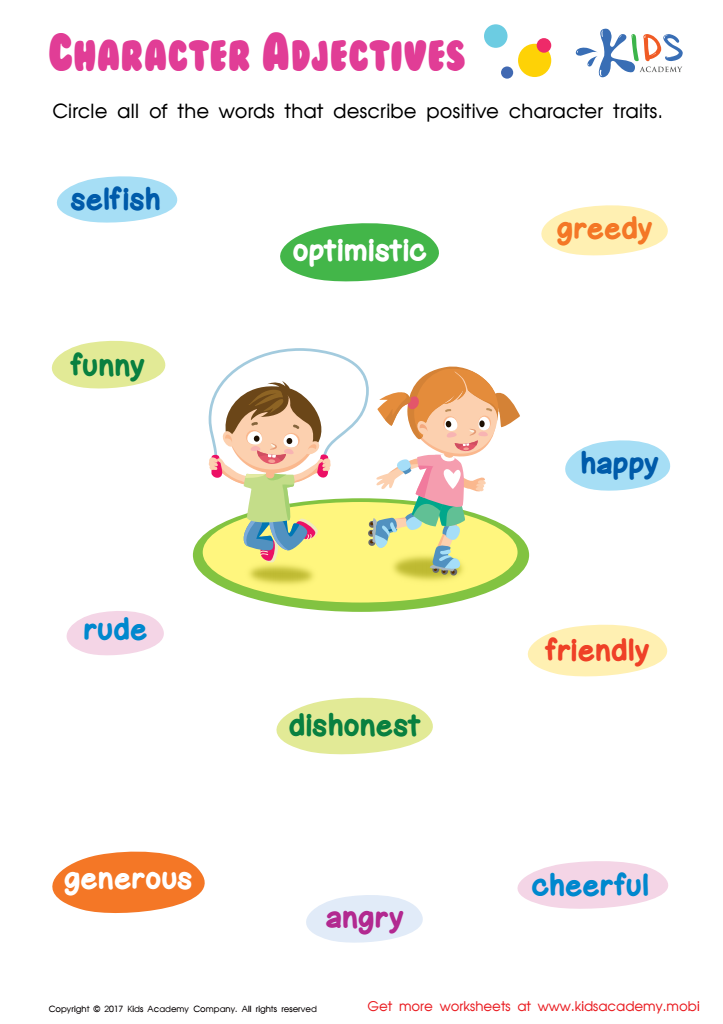
Character Adjectives Worksheet
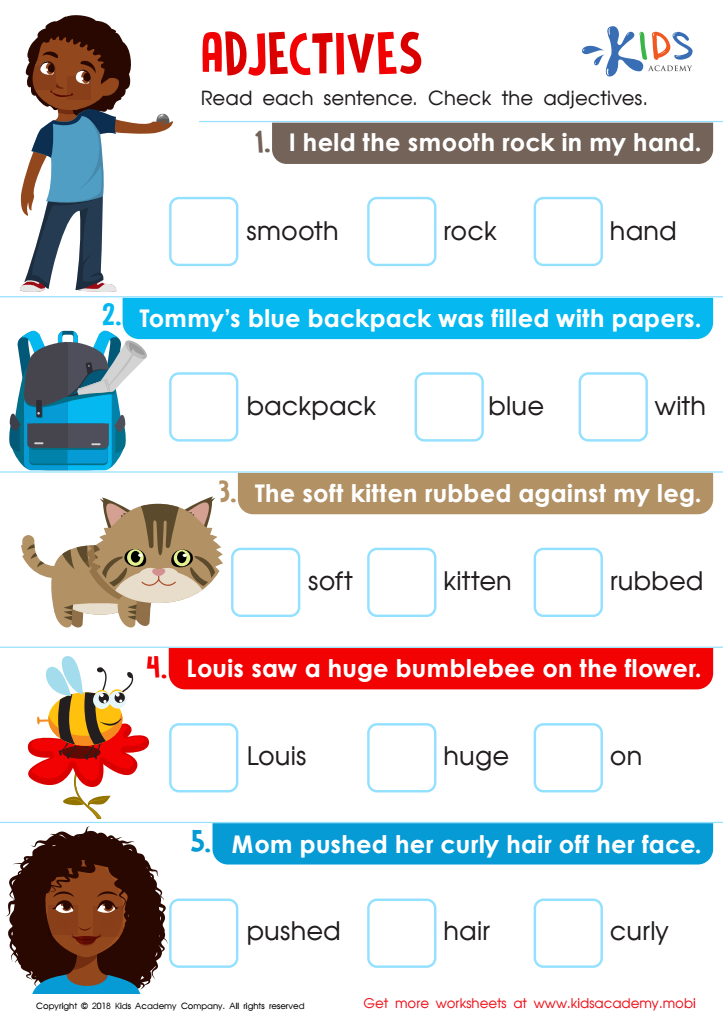
Adjectives Worksheet
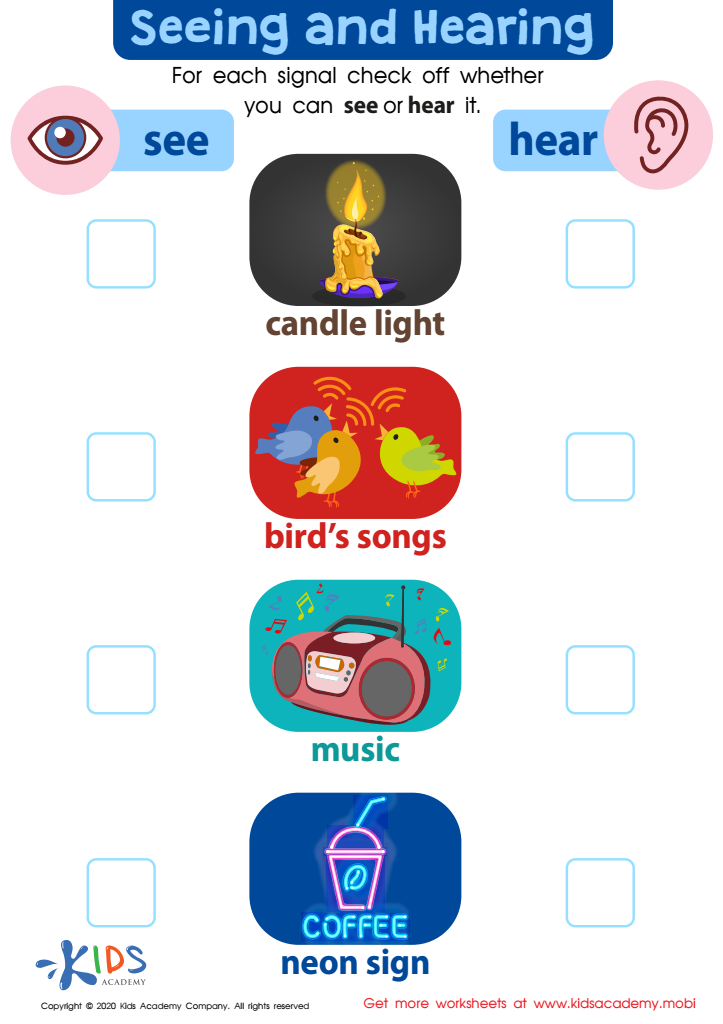
Seeing and Hearing Worksheet
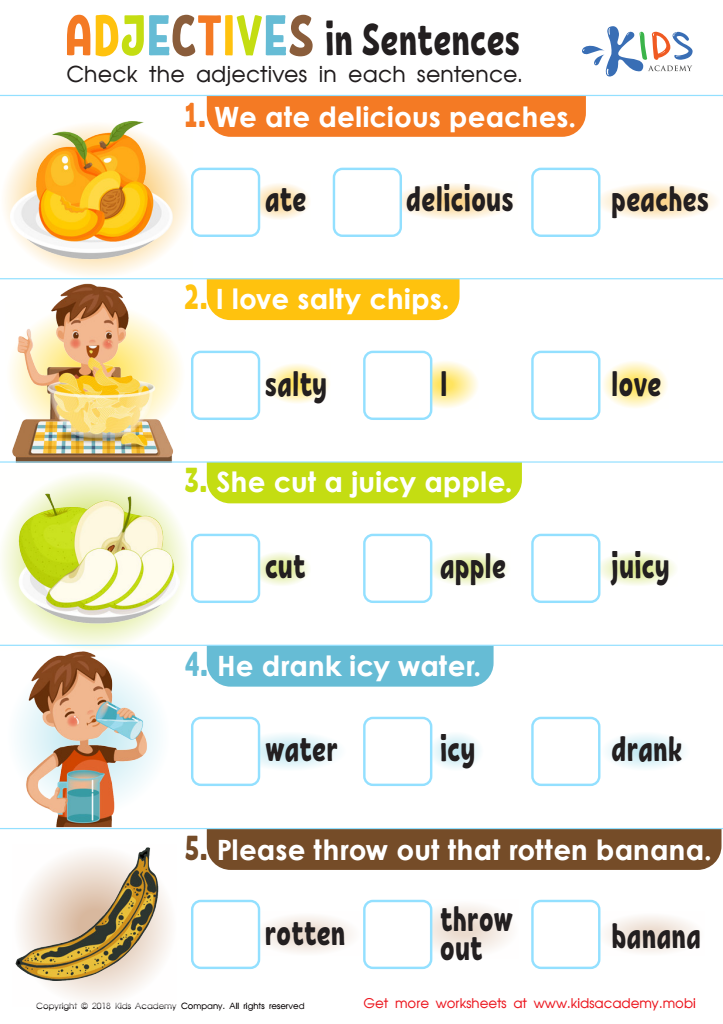
Adjectives in Sentences Worksheet








Understanding adjectives is essential for children aged 4 to 9, and it is vital for parents and teachers to recognize this importance. Adjectives are descriptive words that enhance children’s vocabulary and communication skills. From identifying colorful objects to describing emotions, adjectives bring language to life.
When children learn about adjectives, they develop a stronger ability to express their thoughts and ideas clearly. This skill is crucial for effective storytelling, which can foster creativity and imagination. Furthermore, mastering adjectives aids in reading comprehension, as students begin to understand the nuances of the text; they can analyze characters and settings more deeply.
Parental and teacher involvement in this learning process helps create enriched environments where children feel encouraged to experiment with language. Engaging activities, such as games, storytelling, and art projects, can make learning adjectives enjoyable and memorable.
Moreover, the use of adjectives nurtures critical thinking as children categorize, compare, and contrast different objects, enhancing their cognitive skills. Ultimately, emphasizing adjectives in everyday conversations not only supports literacy development but also fosters a love for language and learning, laying a strong foundation for future academic success.








