Understanding plant growth Normal Worksheets for Ages 4-9
3 filtered results
-
From - To
Unlock the wonders of nature with our "Understanding Plant Growth" worksheets, tailored for children aged 4-9. Explore the stages of plant development through engaging activities designed to spark curiosity and learning. Our printable worksheets foster skills in observation, sequencing, and basic biology concepts. Perfectly suited for young gardeners, these exercises make learning fun and interactive, supporting scientific thinking and environmental awareness. Whether at home or in the classroom, watch young minds bloom alongside their green projects. Cultivate a love for nature and knowledge with Kids Academy’s carefully crafted educational resources. Start your botanical adventure today!
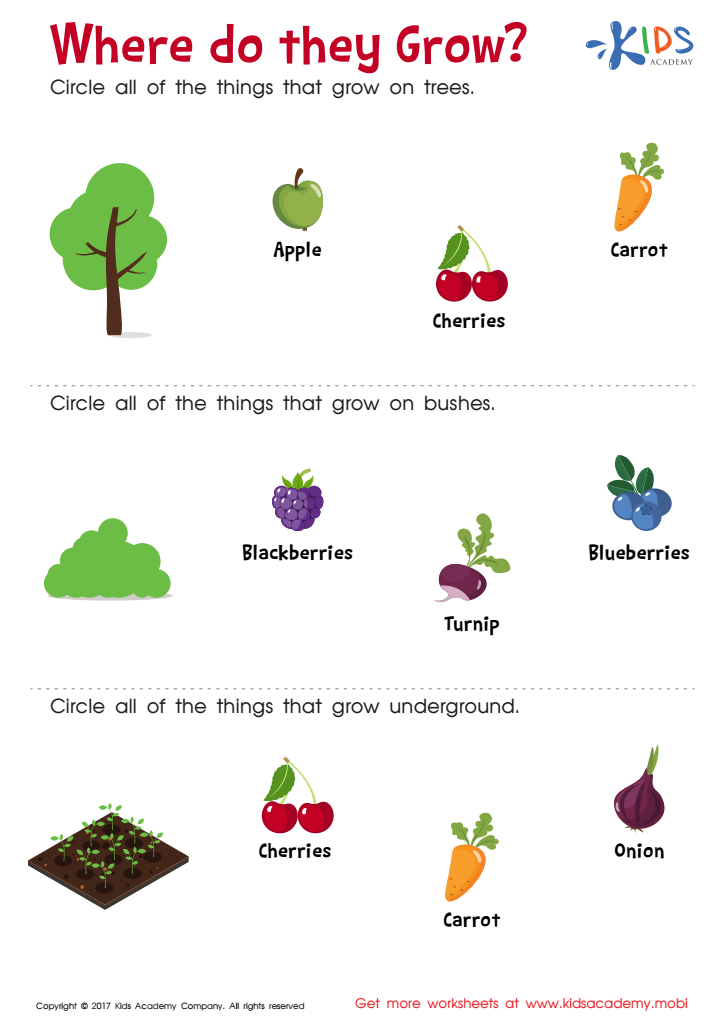
Where Do They Grow Worksheet
 Assign to My Students
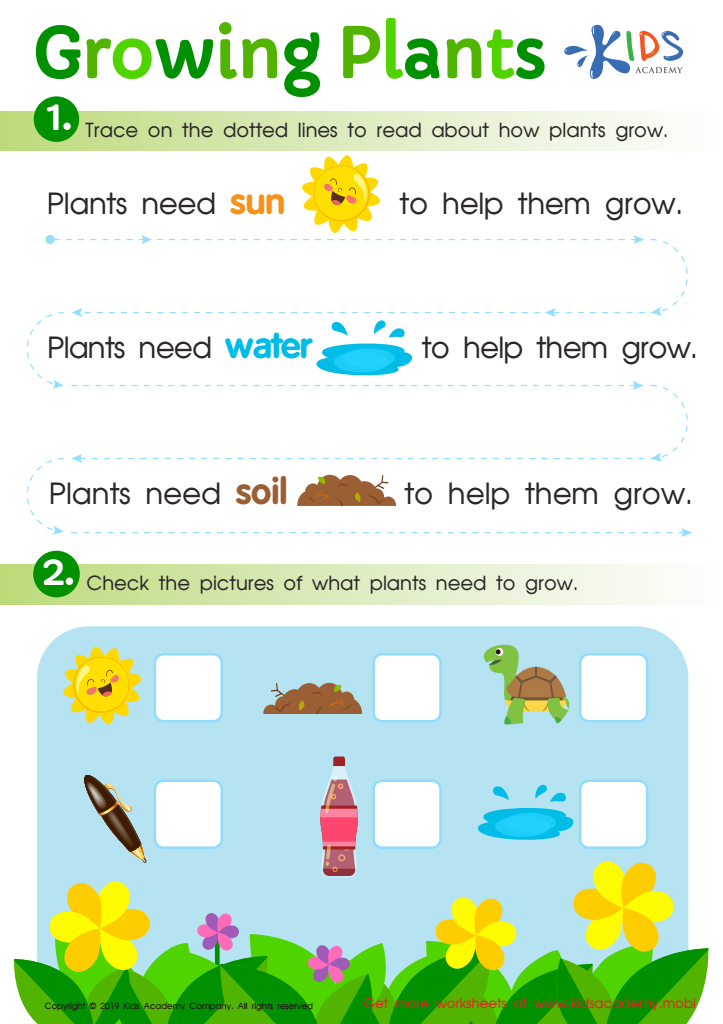
Growing Plants Worksheet
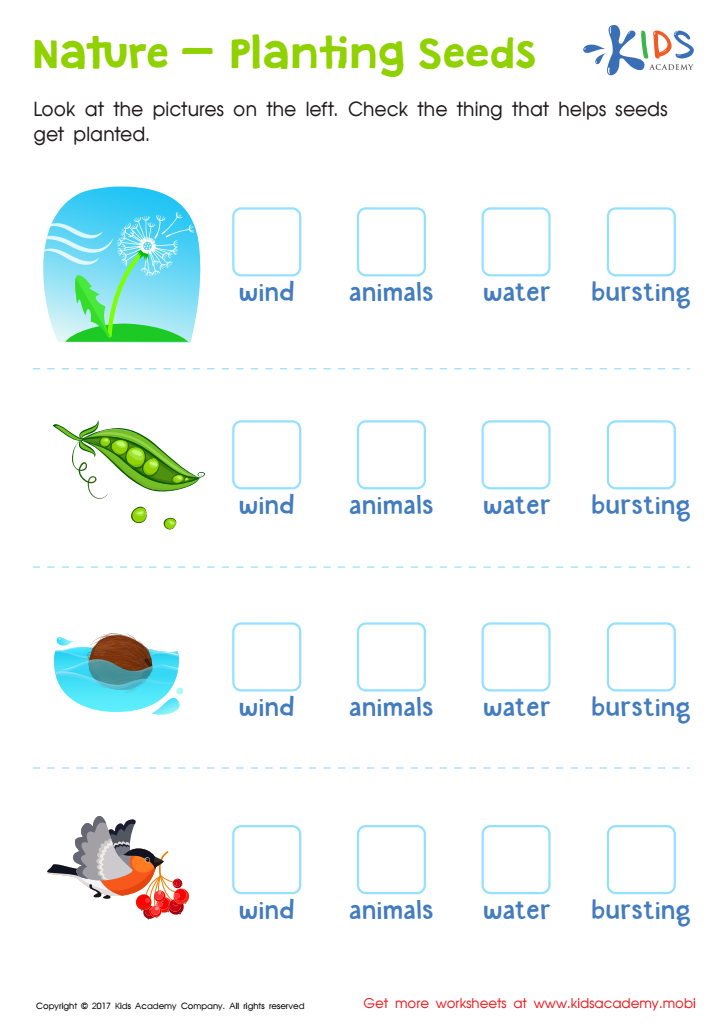
Nature Planting Seeds Worksheet




.jpg)



Understanding plant growth is fundamental for children aged 4-9 because it connects them to nature, fosters responsibility, and enhances their observational skills. When parents or teachers introduce children to the basic principles of plant growth, they cultivate a sense of wonder and curiosity about the natural world. Watching a plant grow from a seed offers tangible lessons in patience and diligence, as children must consistently water and care for their plants.
Additionally, learning about plant growth supports scientific thinking. Children ask questions, make predictions, and observe outcomes—key aspects of the scientific method. At these ages, hands-on, experiential learning is particularly effective, and plants provide an accessible, engaging tool for this purpose.
Moreover, understanding plant life cycles links directly to core educational subjects. For example, it connects to biology through learning about photosynthesis, ecosystems, and life cycles. It ties into math by counting seeds, measuring plant growth, and even creating graphs or charts to document progress. Reading about plants or writing observations enhances literacy skills.
Finally, such activities instill in children a sense of responsibility and empathy. Caring for plants teaches them to nurture living things and understand the impact of their actions, fostering early environmental stewardship—an invaluable mindset for the future guardians of our planet. Therefore, the attention to plant growth in early education brings multiple pedagogical, social, and environmental benefits.








