Understanding Quantities Normal Worksheets for Ages 4-9
3 filtered results
-
From - To
Explore our "Understanding Quantities" Normal Worksheets designed specifically for children ages 4-9. These engaging and interactive resources help young learners grasp the concept of quantity through fun activities tailored to their developmental needs. Each worksheet promotes number recognition, counting skills, and an understanding of larger and smaller quantities. With vibrant illustrations and age-appropriate challenges, these worksheets make learning an enjoyable experience. Ideal for use at home or in the classroom, they enhance foundational math skills while encouraging critical thinking. Download your set today and watch your child's confidence in numbers grow as they master the essentials of understanding quantities!
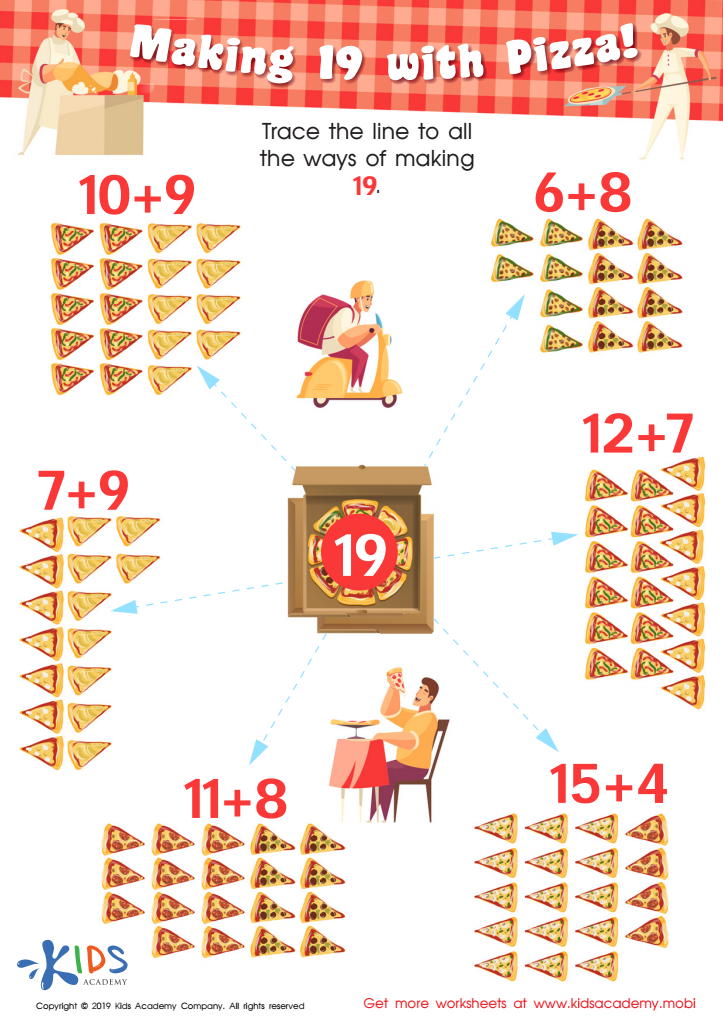
Making 19 with Pizza! Worksheet
 Assign to My Students
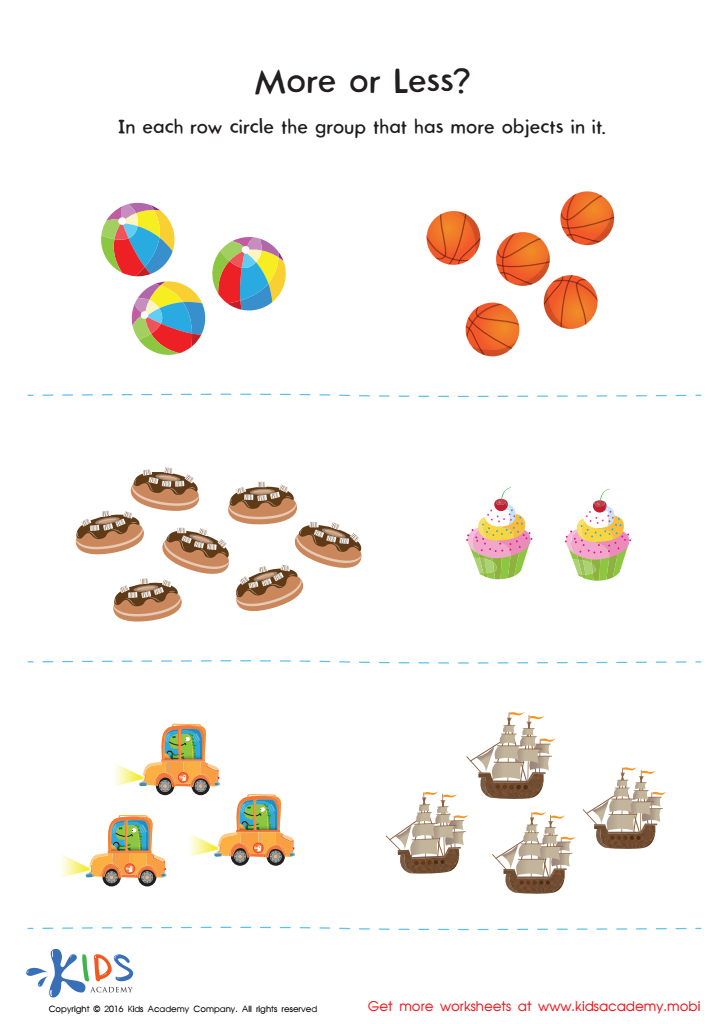
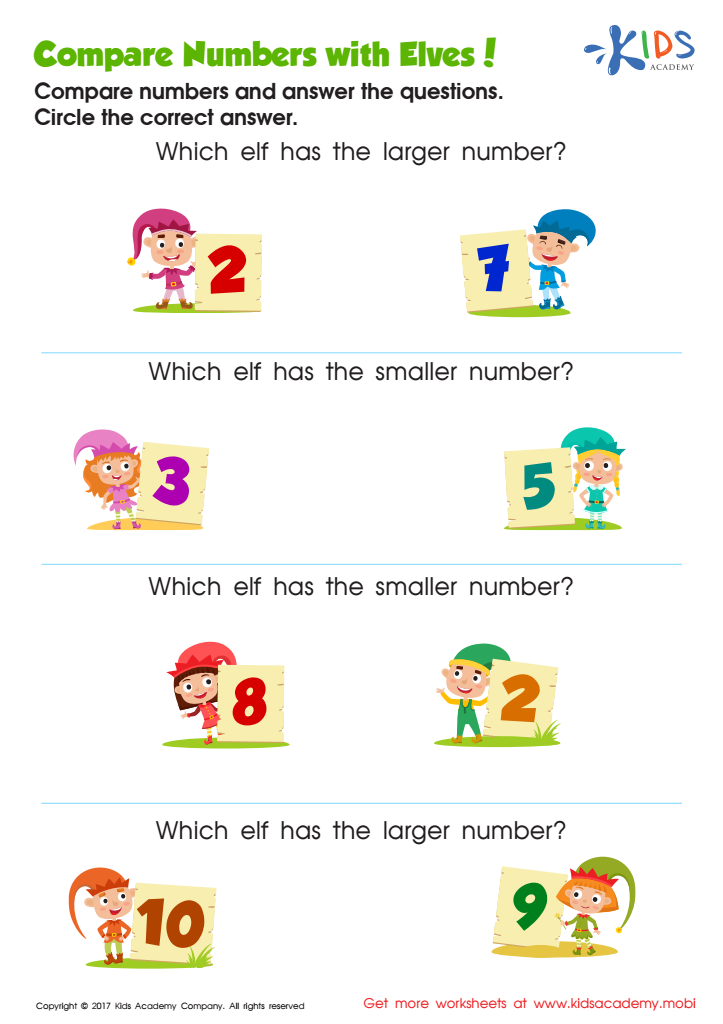
Comparing Numbers Worksheet for Kindergarten







.jpg)
Understanding quantities is foundational for young children as they embark on their mathematical journeys. For parents and teachers of children aged 4-9, nurturing this understanding is crucial for several reasons.
Firstly, grasping quantities helps develop a child's numerical sense, allowing them to compare amounts, recognize patterns, and solve basic problems. This early competency forms the building blocks for more complex mathematical concepts in later years.
Secondly, knowledge of quantities aids in everyday decision-making and practical applications. Children learn to quantify items, which is essential for tasks such as sharing, measuring, and budgeting, fostering independence and confidence.
Additionally, engaging with quantities fosters critical thinking and develops analytical skills. Through activities that involve counting objects or estimating amounts, children hone their reasoning ability, which is essential for future academic success.
Lastly, understanding quantities is linked to overall cognitive development. It enhances problem-solving skills, encourages logical reasoning, and promotes a positive attitude towards math, making it an integral part of early education.
In summary, fostering an understanding of quantities in young learners empowers them with essential life skills, prepares them for more advanced mathematical concepts, and cultivates a strong foundation for lifelong learning.








