Unlock your child’s potential in reading with our engaging Word Identification Normal Worksheets, designed for ages 4-9! These worksheets offer fun and interactive activities tailored to enhance your child’s vocabulary and reading comprehension skills. With clear instructions and colorful illustrations, young learners will easily identify words and phrases in various contexts. Our resources support different learning styles, ensuring every child can succeed at their own pace. Perfect for home or classroom use, these worksheets will encourage a love of reading through playful learning experiences. Explore the joy of words and help build a strong foundation for your child’s educational journey!

Check out this FREE "Word identification" Trial Lesson for age 4-9!

Schools

Favorites
With answer key
Interactive
  • 4-9
  • Word identification
  • Normal
Learn to Spell Worksheet

Learn to Spell Worksheet

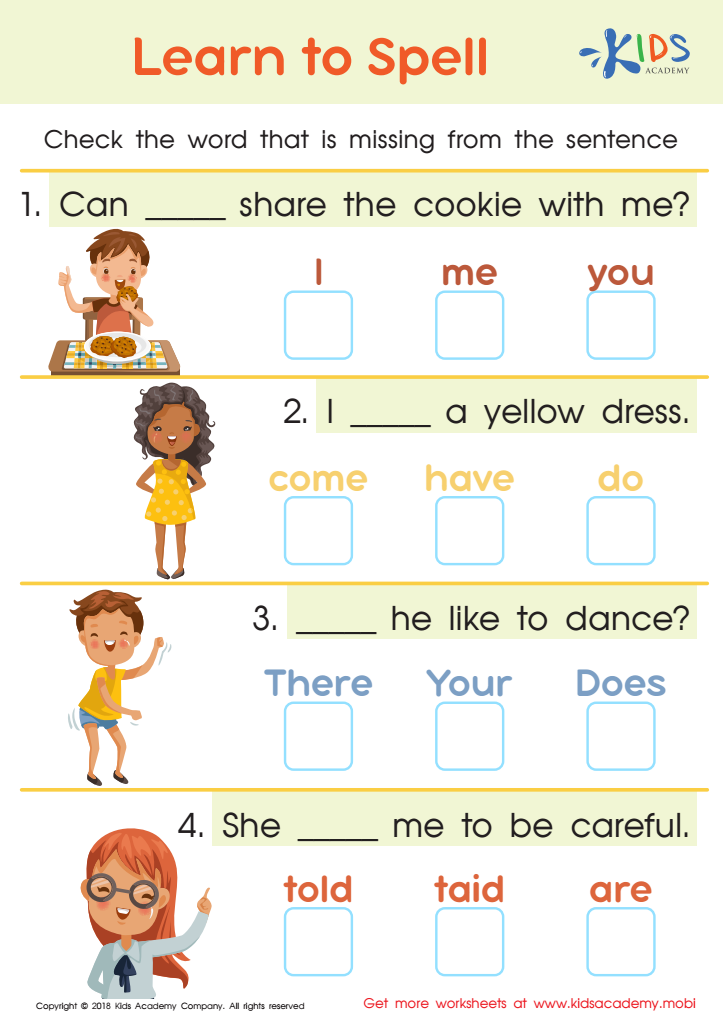
Help sharpen spelling skills with a simple worksheet. Read sentences aloud and show which word is missing. Ask students to pick the correct word from the options. Ensure they check the missing word for accuracy.
Learn to Spell Worksheet
Worksheet
Identify Individual Words Worksheet

Identify Individual Words Worksheet

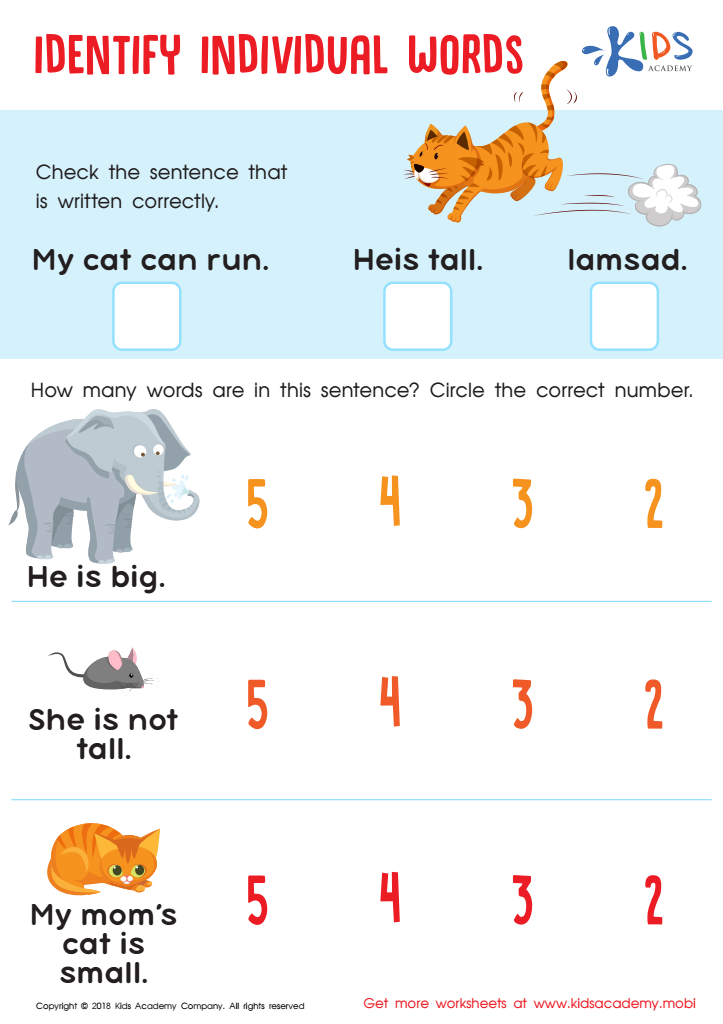
Does your child have trouble constructing sentences? Check out this worksheet! It will help them identify words that make up sentences and assess how well they can read and answer questions. The first part tests how well they can recognize a written sentence. The second part has them read questions and circle the correct number of words. Give it a try!
Identify Individual Words Worksheet
Worksheet
Open Syllables Worksheet

Open Syllables Worksheet

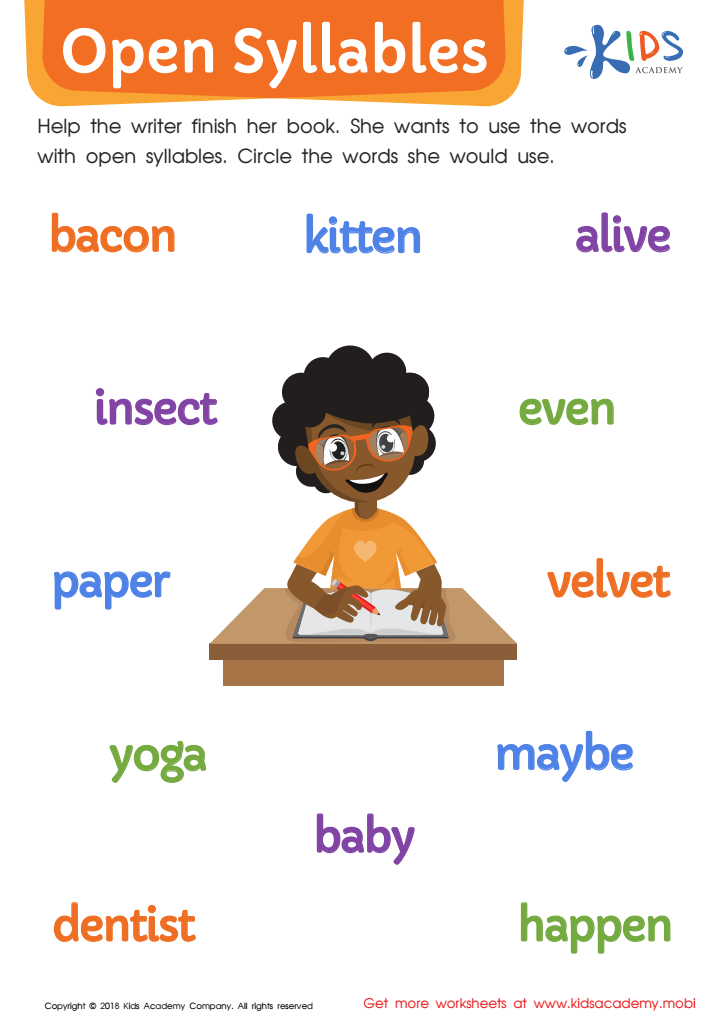
Before beginning this worksheet, make sure your child knows what open syllables are. If not, take time to teach them with examples. Then, help the writer finish her book by circling words with open syllables. She needs your child's help!
Open Syllables Worksheet
Worksheet
What Do you See at School? Worksheet

What Do you See at School? Worksheet

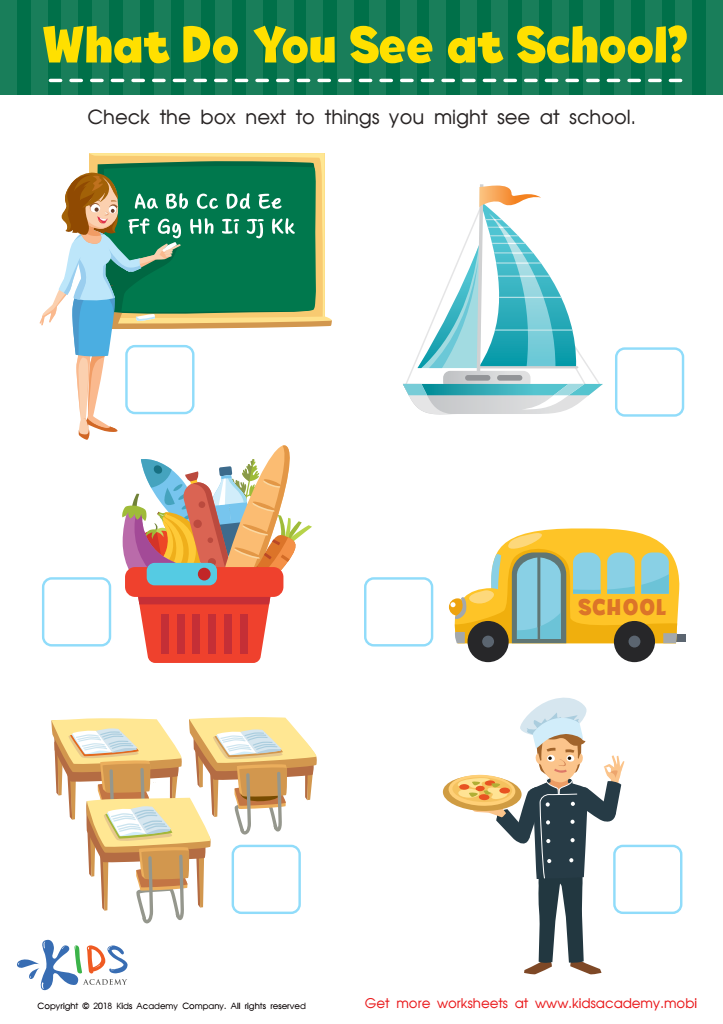
Have your kids give you a list of things they see at school. Then, view the worksheet together. Ask them to check the boxes next to the school items. Look for objects that can be found at school and those that don't belong. This is a great way to check their knowledge of what they see at school daily, except on weekends and holidays.
What Do you See at School? Worksheet
Worksheet
Phonics and Word Recognition: Assessment 1 Worksheet

Phonics and Word Recognition: Assessment 1 Worksheet

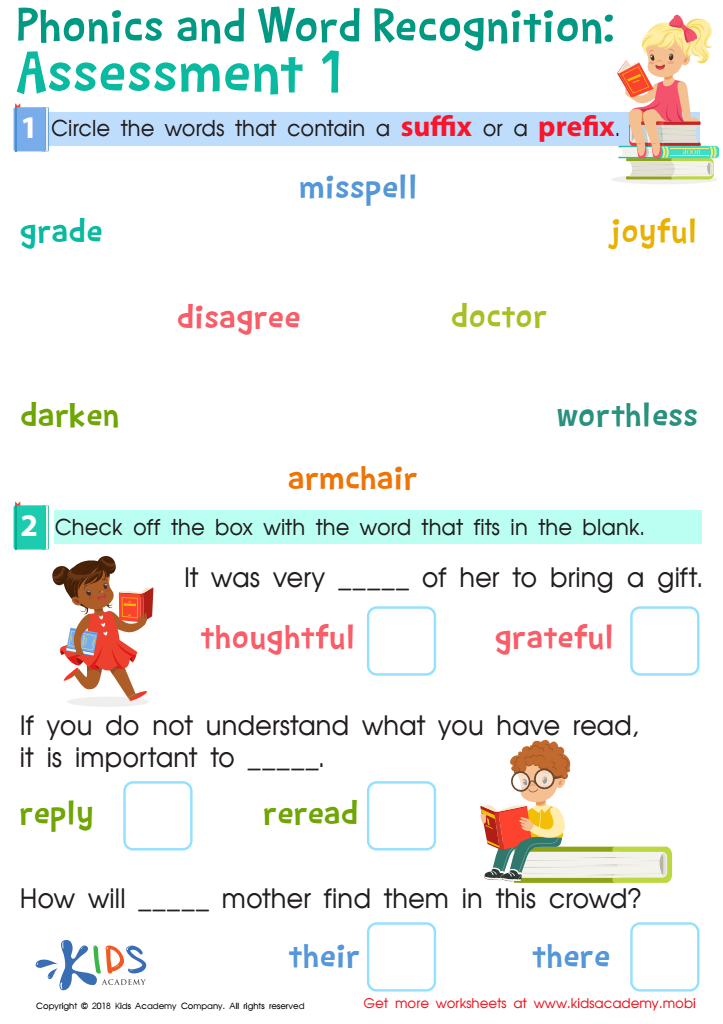
Explain prefixes (words added to start of another word to give it a new meaning) and suffixes (added to end of word to change its meaning) to your kids with examples like 'unhappy' (prefix) and 'forgetful' (suffix). Now, help your child complete this worksheet, including circling words and checking boxes.
Phonics and Word Recognition: Assessment 1 Worksheet
Worksheet
Reading: Prefix Search Worksheet

Reading: Prefix Search Worksheet

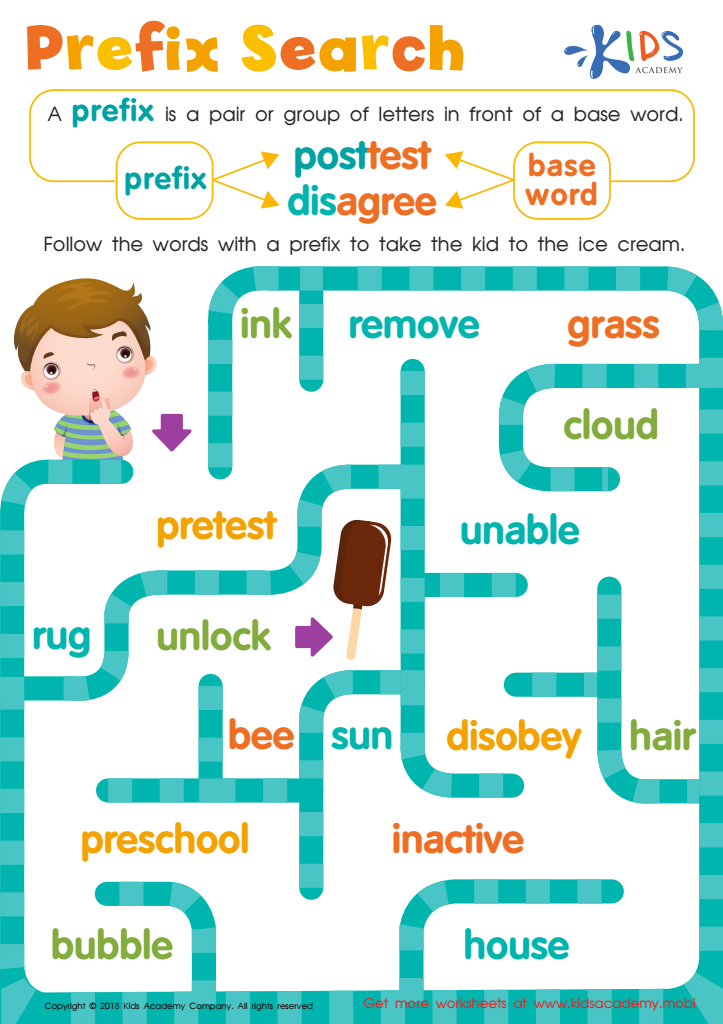
Maze your way through prefixes! This worksheet helps students practice reading new words with a prefix and figuring out the base word. An understanding of prefixes gives students the skills to comprehend new words. A fun and useful activity for the reading classroom!
Reading: Prefix Search Worksheet
Worksheet
Long I Vowel Team Coloring Worksheet

Long I Vowel Team Coloring Worksheet

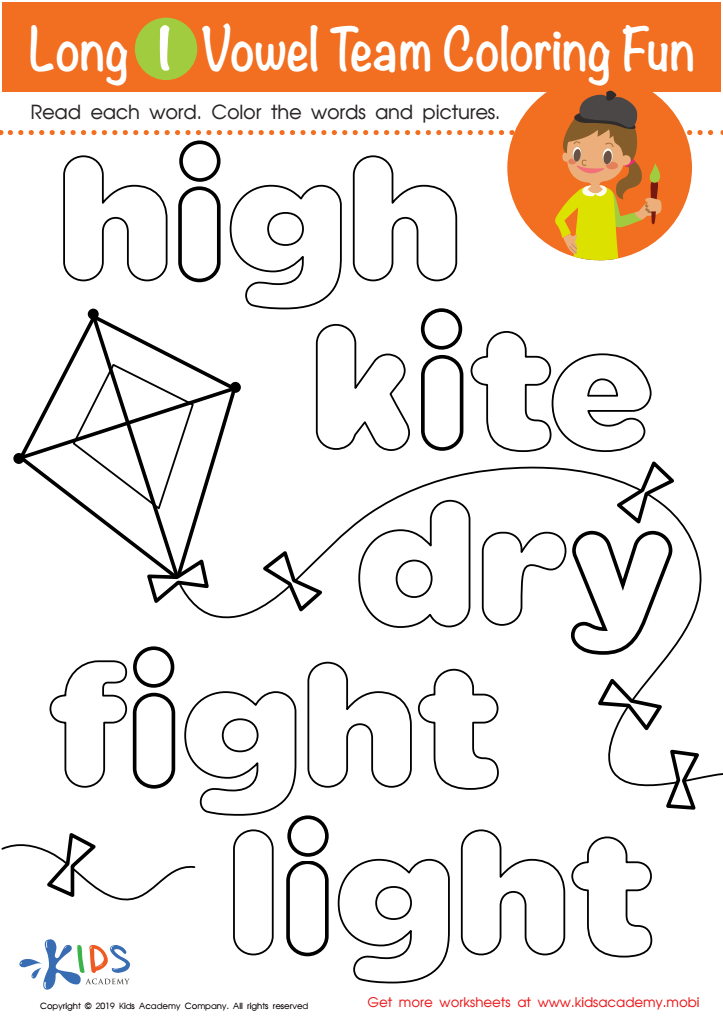
This worksheet provides practice with letter combinations that make the long "i" sound while enhancing creativity and motor skills with a fun coloring activity. Unknowingly, new readers learn key phonics skills while having fun!
Download (PDF)
Assign to My Students
Long I Vowel Team Coloring Worksheet
Worksheet
Phonics and Word Recognition: Assessment 2 Worksheet

Phonics and Word Recognition: Assessment 2 Worksheet

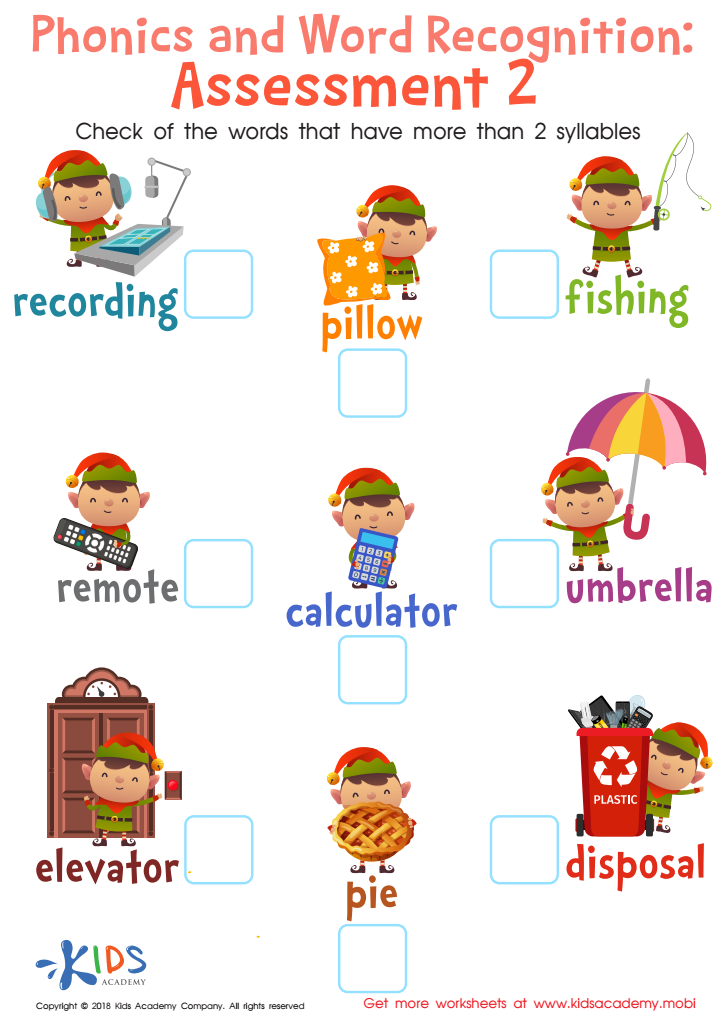
Help your kids learn proper pronunciation by counting syllables. Most words they'll encounter have 1-3 syllables, making them simple to say. Have them repeat the words in your worksheet after you. Focus on longer words with more than two syllables.
Phonics and Word Recognition: Assessment 2 Worksheet
Worksheet
Phonics and Word Recognition: Assessment 1 ELA Worksheet


Phonics and Word Recognition: Assessment 1 ELA Worksheet

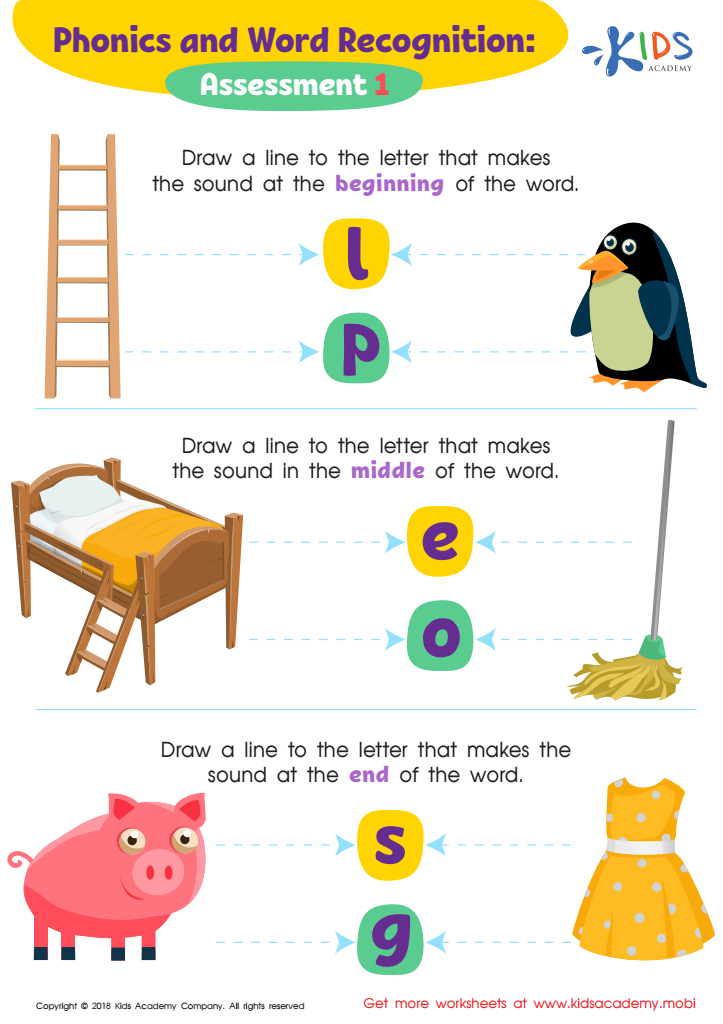
This fun worksheet tests your child's sound recognition skills for each part of a word. Ask your child to name each image and trace the line to match it with the corresponding letter. Listen for beginning sounds on 1st, middle sounds on 2nd, and ending sounds on 3rd. Encourage learning with this colorful and interactive activity!
Phonics and Word Recognition: Assessment 1 ELA Worksheet

Worksheet


Word identification is a crucial part of early literacy development for children aged 4-9, which is vital for their academic success and future learning. At this stage, children build foundational skills that influence their ability to read and understand texts. Proficient word identification allows children to recognize, decode, and comprehend words, enabling them to engage meaningfully with written material.

Parents and teachers should care about this skill because it directly impacts a child's confidence and motivation to read. Children who struggle with word identification may feel defeated or frustrated, leading to disengagement from reading activities. Early intervention can help children master these skills, fostering a love for reading that can last a lifetime.

Additionally, strong word identification skills contribute to broader vocabulary development and comprehension abilities. As children move into higher grades, their reading becomes increasingly complex. Without a solid grasp of word identification, they may struggle to keep up with more challenging texts.

Lastly, encouraging word identification supports overall academic success, as reading proficiency is linked to performance in various subjects. By prioritizing word identification, parents and teachers can help children develop essential skills, paving the way for their lifelong learning and personal growth.