Problem-Solving Skills Normal 2D Shapes Worksheets for Ages 4-9
5 filtered results
-
From - To
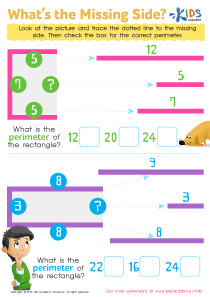
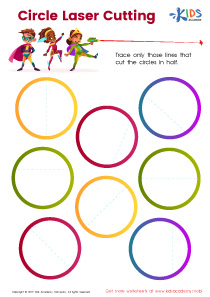
Discover our engaging "Problem-Solving Skills Normal 2D Shapes Worksheets" designed for children aged 4-9. These worksheets help young learners enhance their critical thinking and problem-solving abilities while exploring essential 2D shapes such as circles, squares, triangles, and rectangles. Each activity is carefully crafted to provide an interactive learning experience, encouraging kids to recognize shapes in different contexts and solve fun, age-appropriate problems. Ideal for classrooms or at-home learning, our worksheets align with educational standards, promoting creativity and confidence in mathematical reasoning. Download now and watch your child's problem-solving skills blossom as they delve into the world of shapes!
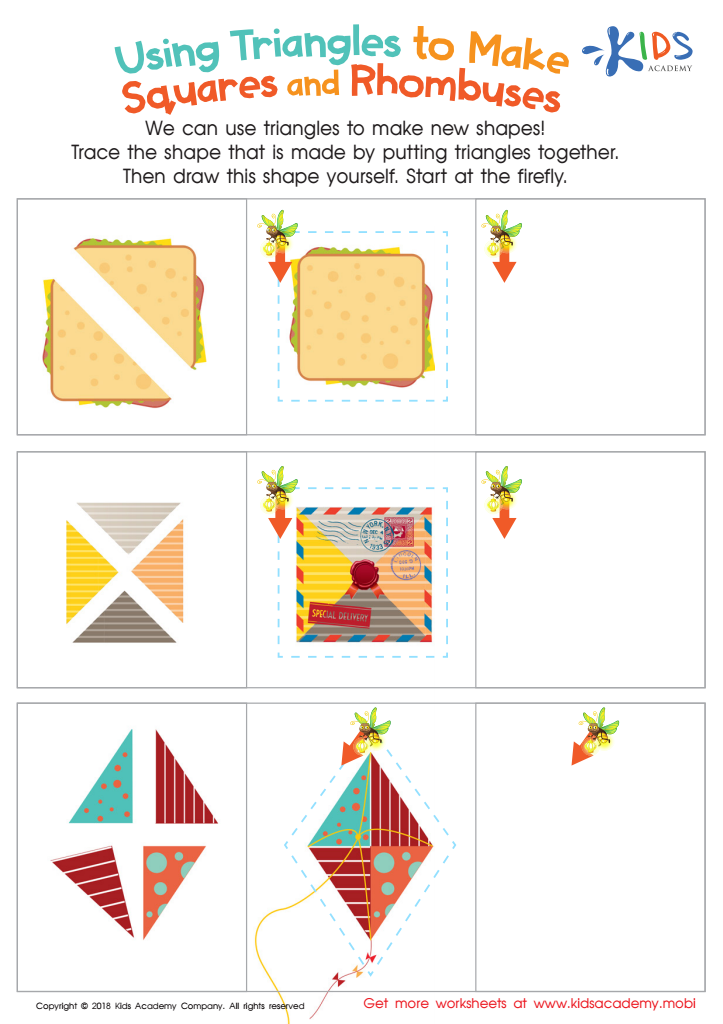
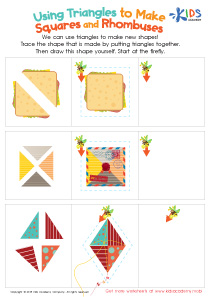
Using Triangles to Make Squares and Rhombuses Worksheet
 Assign to My Students

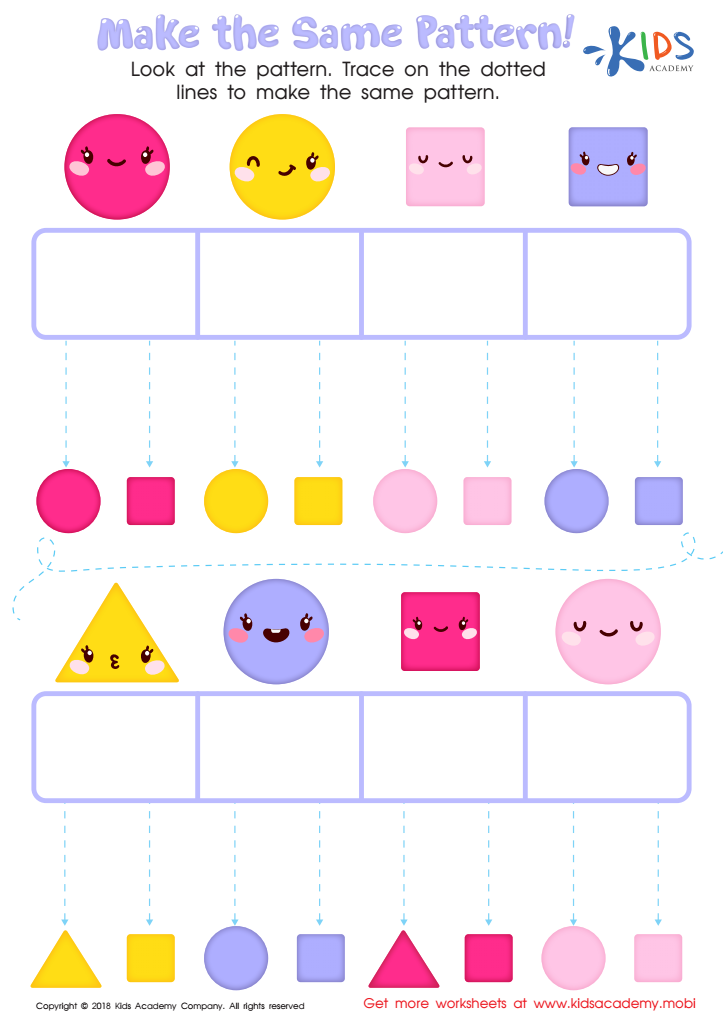
Make the Same Pattern Worksheet
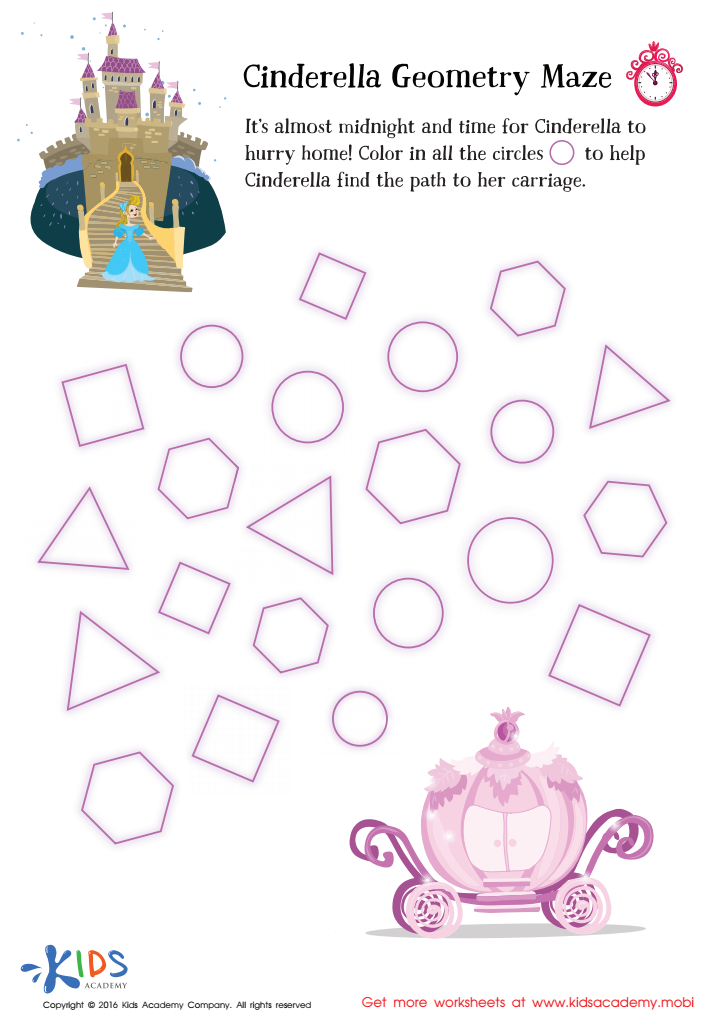
Cinderella Geometry Maze Worksheet
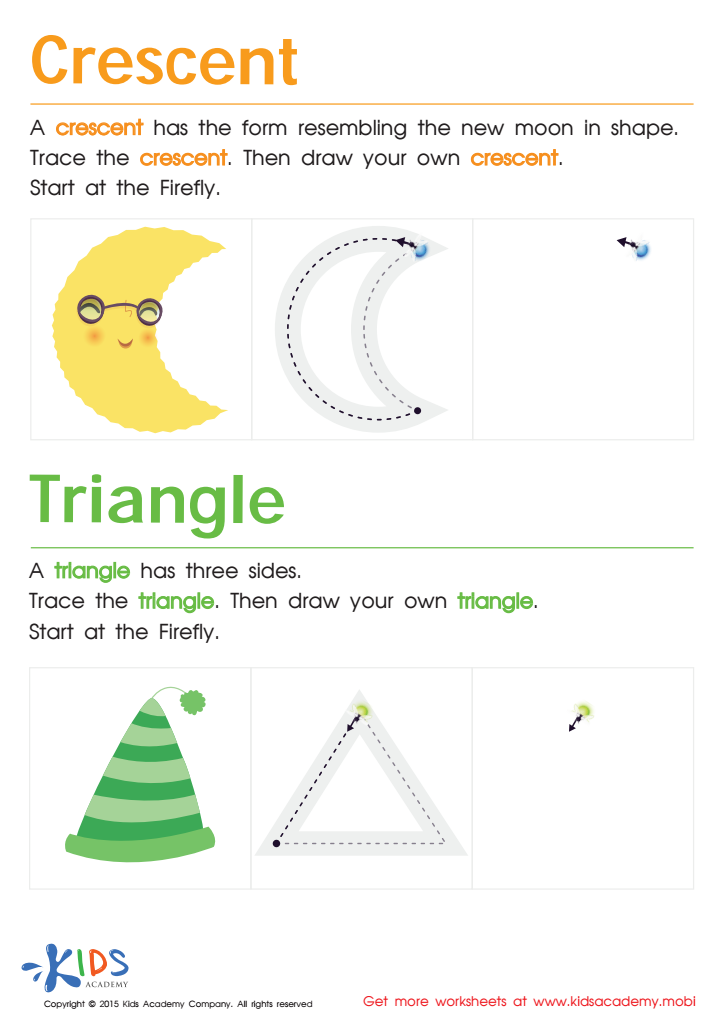
Learning to Draw Crescents And Triangles Worksheet
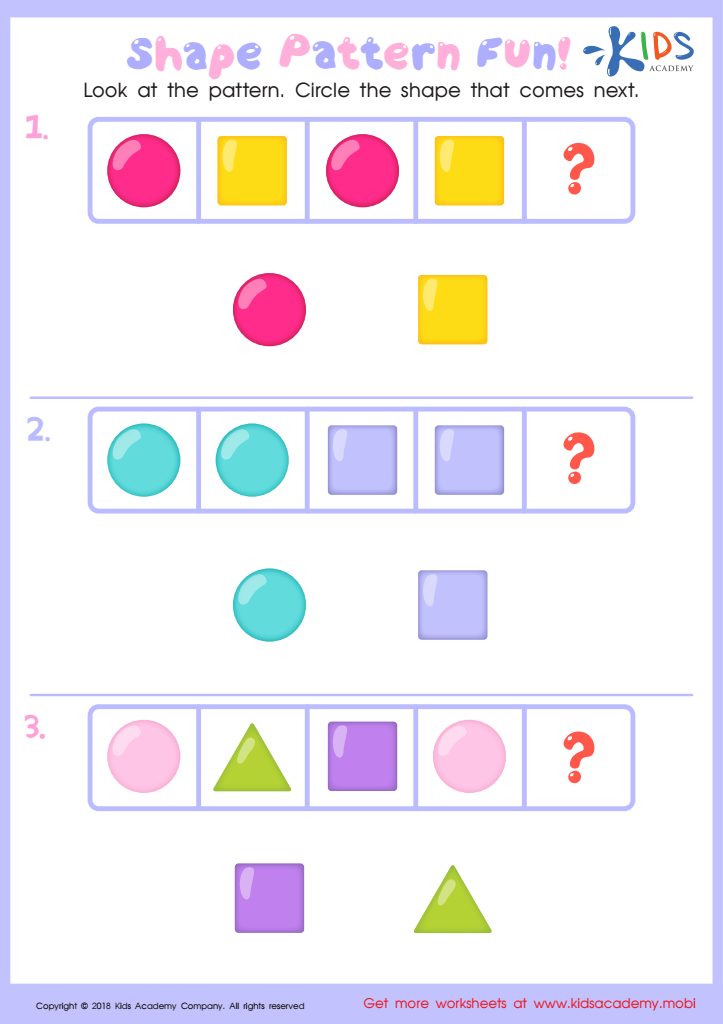
Shape Pattern Fun Worksheet








Parents and teachers should prioritize problem-solving skills related to 2D shapes for children aged 4-9 because these foundational abilities underpin critical mathematical and cognitive development. Understanding 2D shapes enables young learners to recognize patterns, develop spatial awareness, and enhance their reasoning skills. Problem-solving with shapes encourages creativity and critical thinking, as children learn to visualize, manipulate, and classify various geometric forms.
Additionally, engagement with shapes builds a strong base for more complex mathematical concepts later on, such as area, perimeter, and even algebra. These skills also bridge into everyday life, where identifying shapes plays a role in activities like building, drawing, or organizing spaces. Enhancing problem-solving skills in the context of 2D shapes also fosters perseverance and resilience, encouraging children to tackle challenges, explore different solutions, and learn from mistakes—traits that are essential for overall success in learning.
Motivating early learners through fun, hands-on activities with shapes not only boosts interest in mathematics but also fosters a positive attitude toward problem-solving in general. By cultivating these skills at an early age, parents and teachers lay the groundwork for lifelong learning and comprehension.