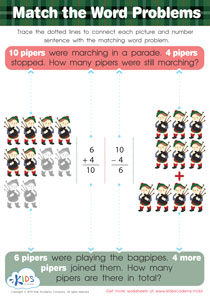
Counting practice Normal Addition Worksheets for Ages 4-9
3 filtered results
-
From - To
Enhance your child's math skills with our Counting Practice Normal Addition Worksheets, designed for ages 4-9. These engaging worksheets offer a fun and interactive way for young learners to develop counting and addition fundamentals. Featuring colorful illustrations and age-appropriate exercises, children will gain confidence in their math abilities while practicing essential skills. These worksheets are perfect for both classroom and home learning environments. Parents and teachers can easily access and print them, making it simple to incorporate counting practice into everyday routines. Start your child's mathematical journey today with our effective and enjoyable addition worksheets designed to spark a love for learning!
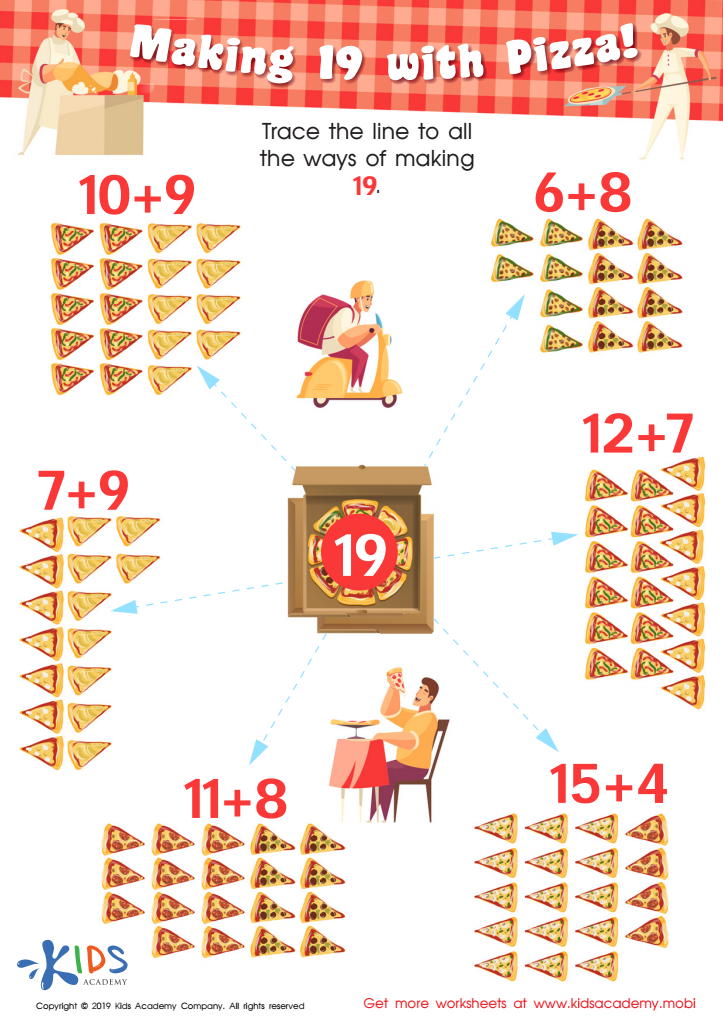
Making 19 with Pizza! Worksheet
 Assign to My Students
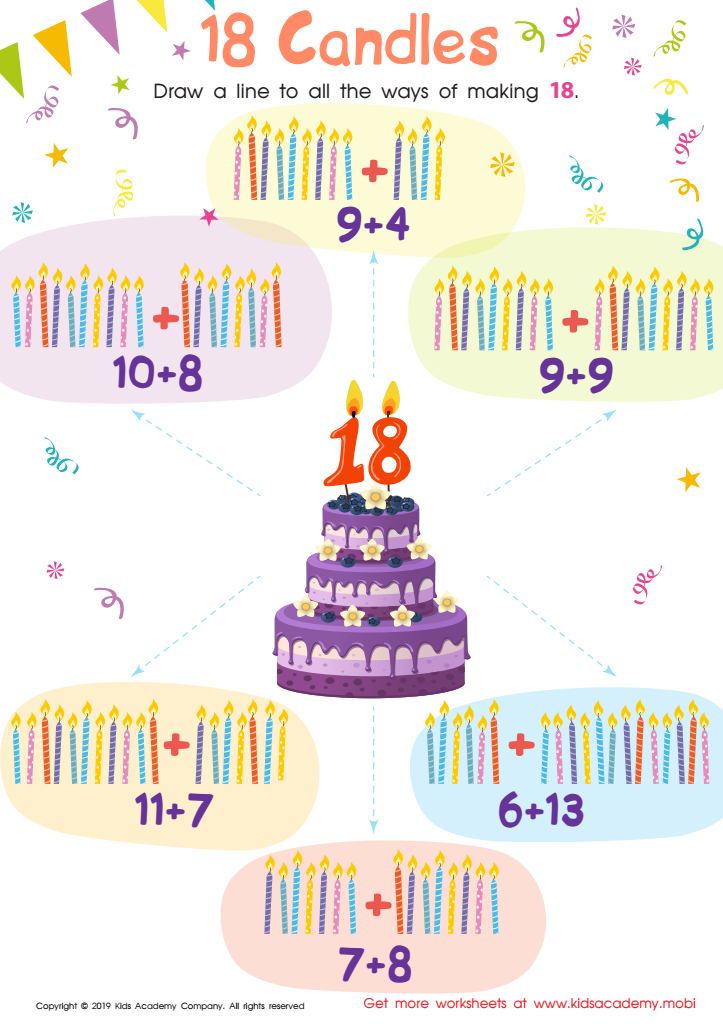
18 Candles Worksheet
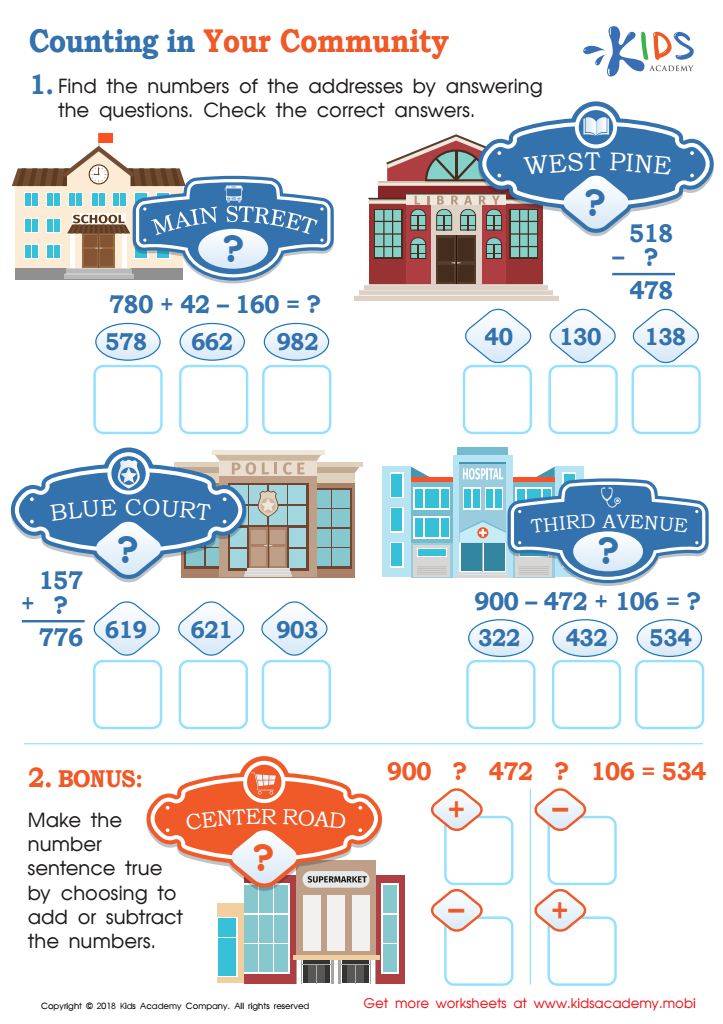
Counting in Your Community Worksheet








Counting practice and normal addition are critical components of early childhood education for children aged 4-9. During these foundational years, children develop essential cognitive and mathematical skills that will serve them throughout their academic journey. Understanding counting helps children grasp number sense, which is vital for recognizing patterns, comparing quantities, and solving more complex mathematical problems later on.
Parents and teachers play a crucial role in fostering this skill. Consistent counting and addition practice builds confidence, encouraging a positive attitude towards math. Engaging children in activities like counting objects, using number games, and incorporating real-life examples helps make learning fun and relatable. These practical experiences can solidify abstract concepts.
Additionally, mastering normal addition supports critical thinking and problem-solving abilities. As children learn to add and manipulate numbers, they strengthen their reasoning skills, providing a foundation for higher-level mathematics.
Furthermore, arithmetic practice promotes fine motor skills through writing numbers and drawing representations of addition problems, enhancing overall cognitive development. By prioritizing counting and addition, parents and teachers can help children gain proficiency, preparing them for academic success in math and beyond. This foundation ultimately impacts their confidence in engaging with mathematical concepts throughout life.