
Visual discrimination Normal Geometry Worksheets for Ages 4-9
3 filtered results
Difficulty Level
Grade
Age
-
From - To
Subject
Activity
Standards
Unlock your child's potential with our Visual Discrimination Normal Geometry Worksheets for Ages 4-9. These fun and engaging activities are designed to enhance children's ability to distinguish shapes, patterns, and spatial relationships. Perfect for early learners, our worksheets not only sharpen visual discrimination skills but also lay a strong foundation in geometry. Each colorful and age-appropriate sheet promotes critical thinking and problem-solving. Tailored for home or classroom use, they make learning an enjoyable adventure. Help your child explore the exciting world of shapes and geometry, fostering a love for math that lasts a lifetime!
Favorites
With answer key
Interactive
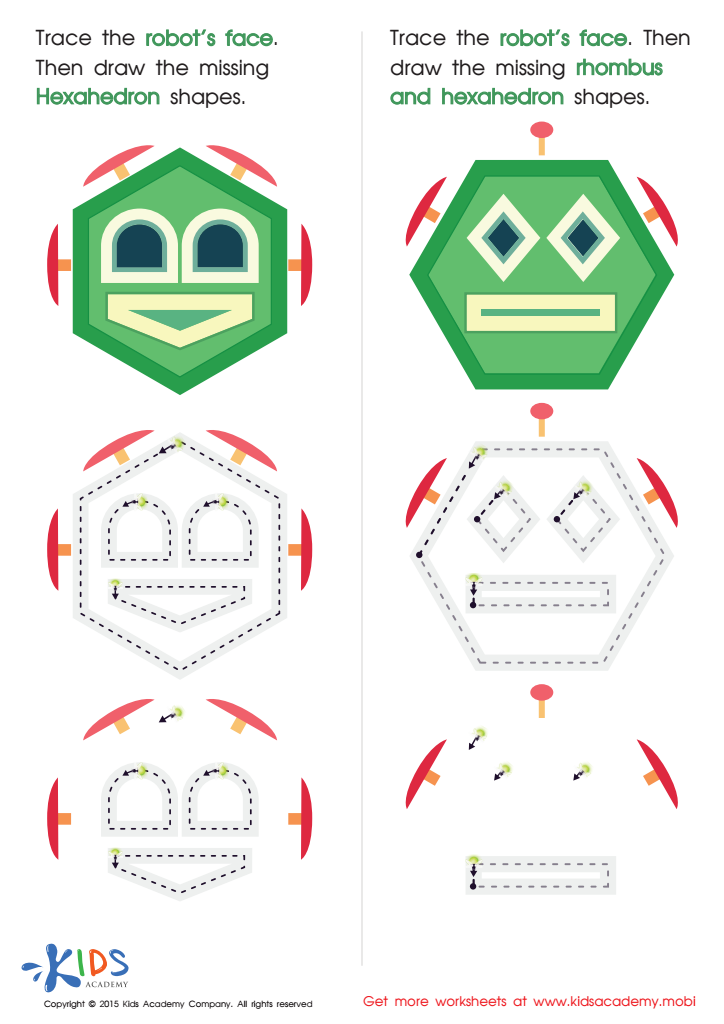
Practice Drawing Hexahedrons And a Rhombus Worksheet
Trace the Robot's face, draw hexahedron and rhombus shapes, then trace again. Our tracing shapes worksheets make it easy for kids to learn geometry. Get more materials from Kids Academy to practice all the shapes.
 Assign to My Students
Practice Drawing Hexahedrons And a Rhombus Worksheet
Worksheet











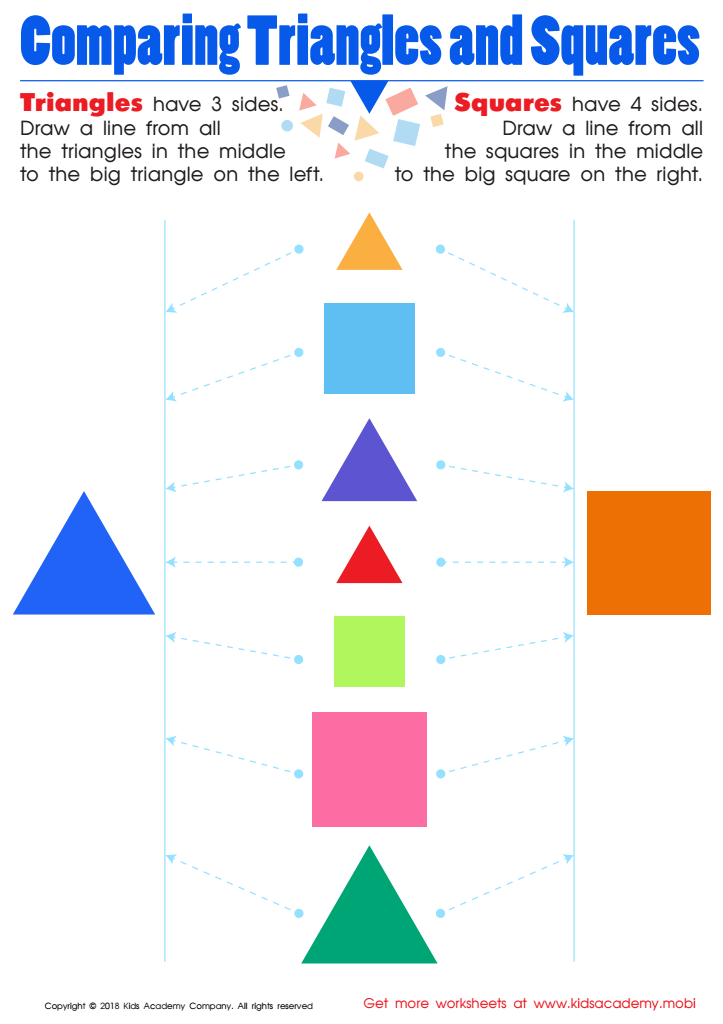
Comparing Triangles Squares Worksheet
Squares and triangles are different in the number of sides they have. Challenge kids to compare them with this fun worksheet! Read the descriptions at the top, then use the left and right shapes to match up the middle ones. Go down the page, joining the middle shapes to the side using the dotted lines!
Comparing Triangles Squares Worksheet
Worksheet
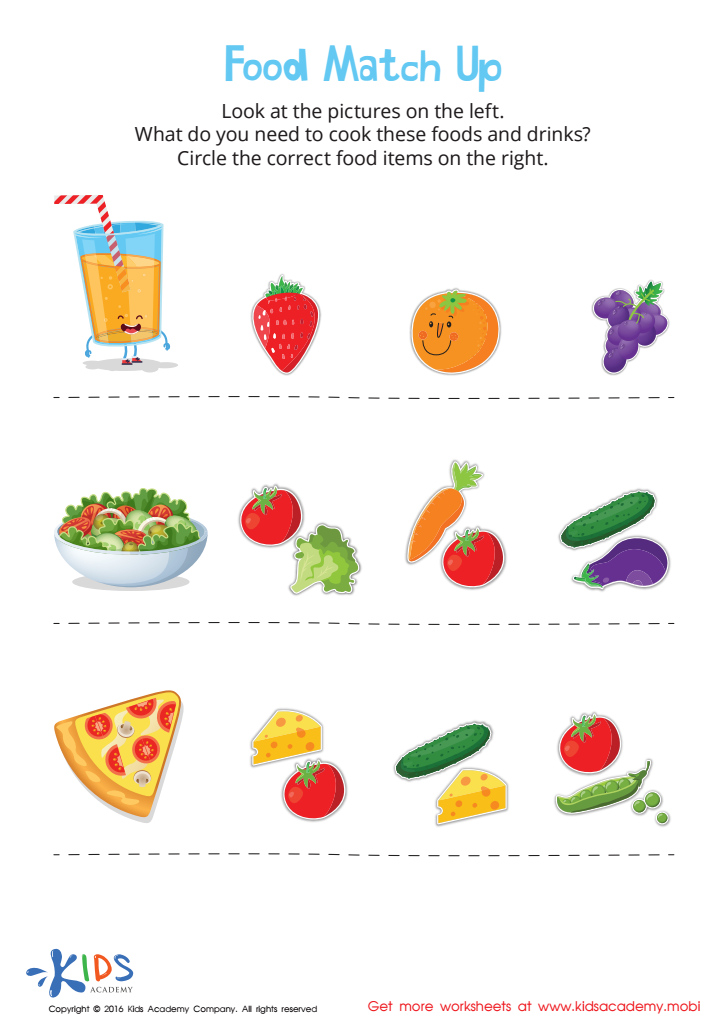
Food Match Up Worksheet
This worksheet will help your preschooler develop early math and cognitive skills. It challenges them to pay attention to details, understand how smaller parts make a whole, and increase important matching skills. Use it to give them a hands-on learning experience in the kitchen, and watch them understand how ingredients come together to make something delicious!
Food Match Up Worksheet
Worksheet
Join Kids Academy for Free
Who is primarily going to use this learning content?








Visual discrimination— the ability to see differences and similarities among shapes, sizes, colors, and objects— is fundamental to a child's cognitive and academic growth. For ages 4-9, this skill is vital, especially when it comes to normal geometry skills.
Firstly, visual discrimination supports the development of reading and writing. Recognizing the distinct shapes and sizes of letters aids in distinguishing them, essential for both early reading strategies and penmanship. For example, telling "b" from "d" or "p" from "q" are basic forms of visual discrimination.
Secondly, an early grasp of geometry nurtures spatial awareness and problem-solving abilities. Identifying and categorizing shapes and their properties can help children understand symmetry, patterns, and basic math concepts. This empowerment through visual learning translates to greater confidence and ability in other subjects, from science to teamwork in physical education.
Furthermore, fostering these skills during formative years helps children in everyday tasks, like identifying objects, recognizing symbols, and following visual instructions. This is particularly relevant as digital education tools increasingly utilize graphic elements and icons for user-interface navigation.
Overall, integrating visual discrimination and geometry into early education doesn't just check academic boxes; it lays the foundation for more comprehensive cognitive development, cultivates curiosity, and embeds critical thinking skills essential for lifelong learning.








