Matching skills Normal Numbers Worksheets for Ages 4-9
4 filtered results
Difficulty Level
Grade
Age
-
From - To
Subject
Activity
Standards
Enhance your child’s numerical skills with our specially designed Matching Skills Normal Numbers Worksheets for Ages 4-9. These engaging activities help young learners practice number recognition, sequencing, and counting in a fun and interactive way. Perfect for preschool and early elementary students, our printable worksheets are crafted to promote critical thinking and problem-solving abilities. Children will enjoy matching numbers with pictures and finding pairs, while educators and parents can easily track progress. Support your child’s math journey with Kids Academy’s expert-developed resources designed to make learning numbers exciting and rewarding.
Favorites
With answer key
Interactive
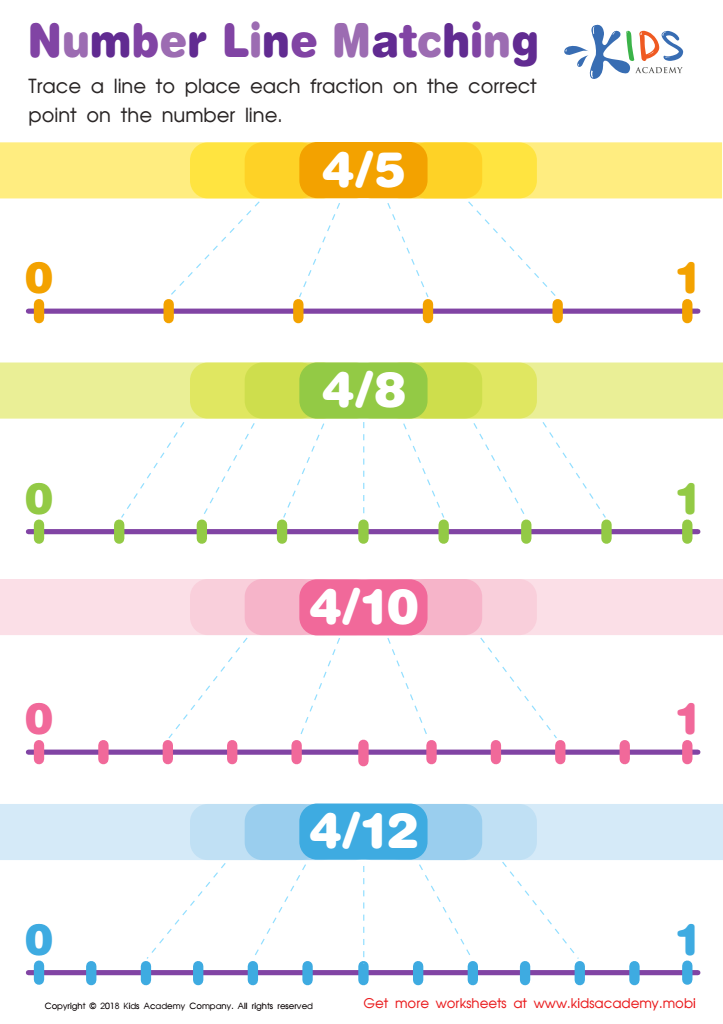
Number Line Matching Worksheet
Math can be fun! Have your child count points on the number line, then identify and trace fractions above it. It's a great way for them to learn and have some fun!
 Assign to My Students
Number Line Matching Worksheet
Worksheet
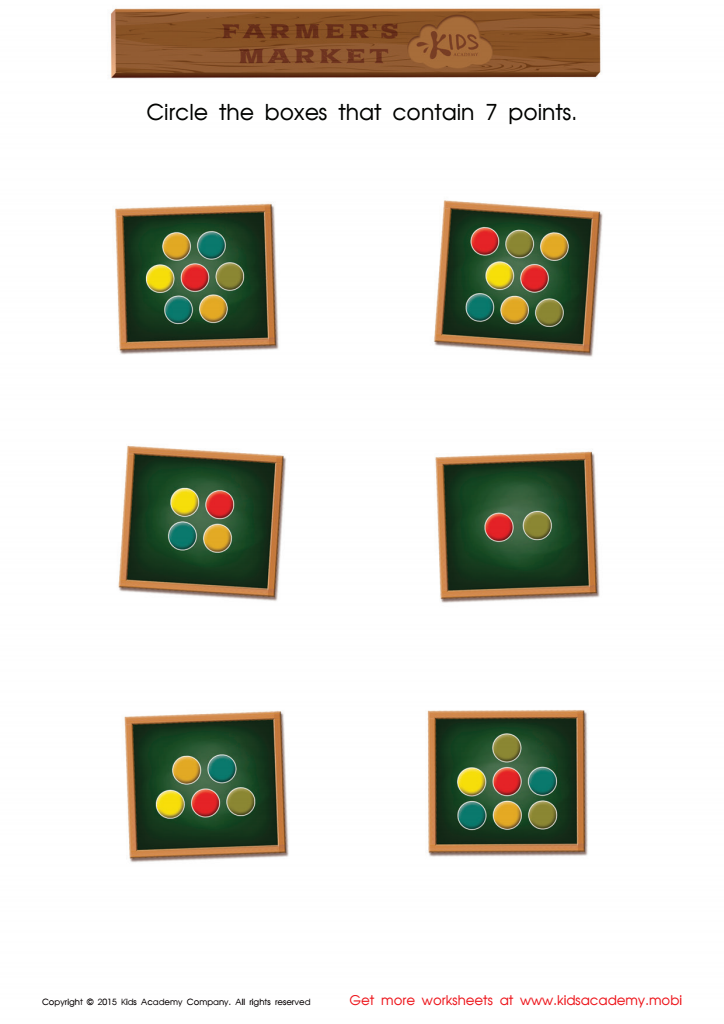
Count and Match Points 7 Math Worksheet
Help your child count and recognize similar numbers by using this fun, colorful worksheet. Guide them to count the dots in each box, then circle those with a total of 7. It's a great way for your child to see how different arrangements lead to the same number.
Count and Match Points 7 Math Worksheet
Worksheet
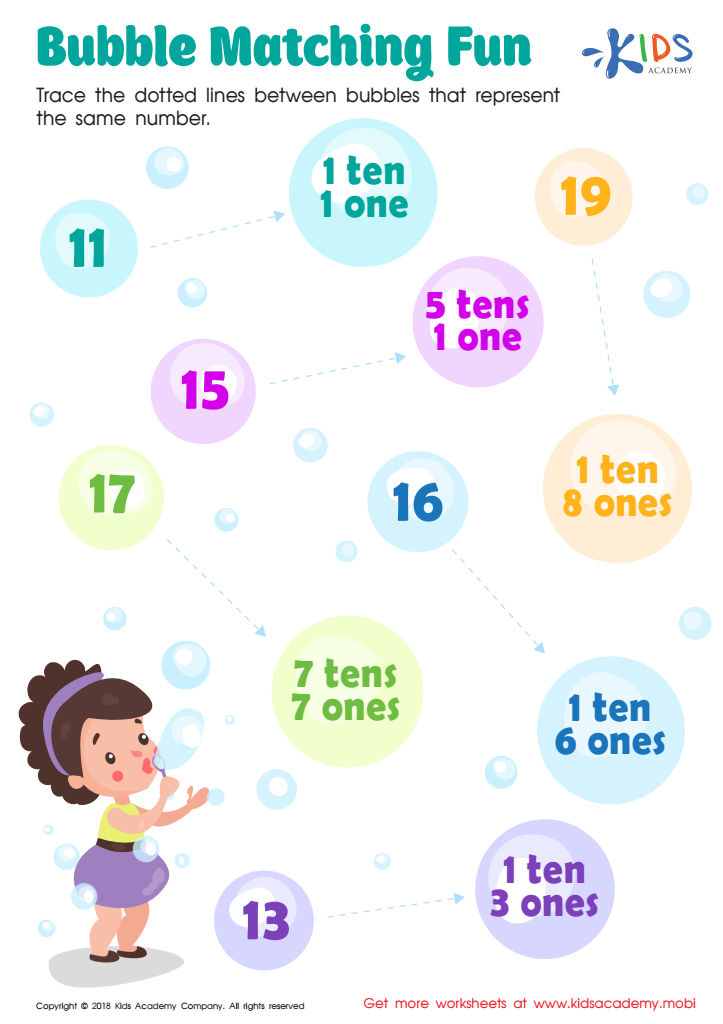
Bubble Matching Fun Worksheet
Try this fun worksheet to stimulate your young one's learning! Test their number matching skills by having them trace the dotted lines between bubbles representing the same numbers. Look through the exercise with your child and watch their understanding of how two numbers can add up to the same value grow!
Bubble Matching Fun Worksheet
Worksheet
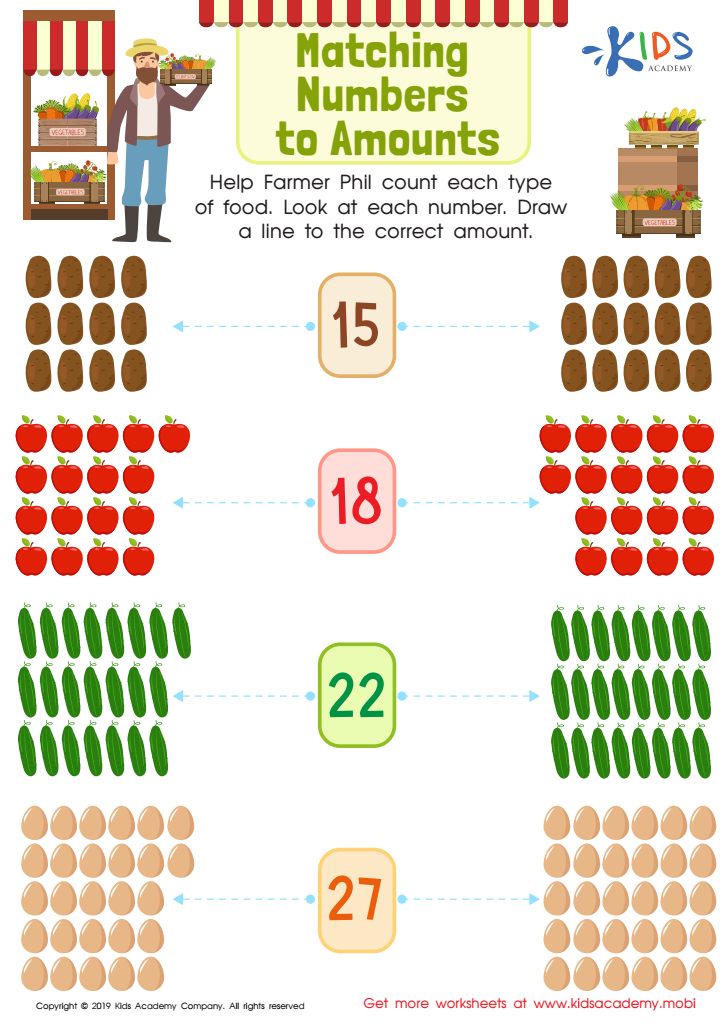
Matching Numbers to Amounts Worksheet
Farmer Phil needs your kid's help! Ensure they know the basics of math such as counting, adding and subtracting. Before beginning, help your child identify and count the different foods in the picture. Then, draw a line to the correct amount.
Matching Numbers to Amounts Worksheet
Worksheet
Join Kids Academy for Free
Who is primarily going to use this learning content?








Parents and teachers should prioritize the development of matching skills and number recognition in children aged 4-9 as these foundational abilities are crucial for cognitive and academic growth. Matching skills enhance visual discernment, attention to detail, and memory, facilitating advanced learning. Engaging in activities that require comparing and contrasting helps children build critical thinking and problem-solving capabilities, laying a groundwork for more complex tasks.
Understanding and recognizing normal numbers underscore the importance of numeracy skills, which are vital for everyday tasks and future academic success. By establishing a firm grasp of numerical concepts early on, children better grasp subjects like science and technology. Number familiarity fosters counting proficiency, addition, subtraction, and beyond, fortifying overall mathematical competence.
Moreover, these skills contribute significantly to a child’s self-confidence and independence. Positive early experiences with matching objects and identifying numbers foster a sense of achievement and reduce math anxiety. This emotional growth mirrors social benefits, as children often engage in collaborative activities, enhancing their communication and teamwork skills.
In summary, cultivating matching skills and numerical literacy at a young age equips children with essential life tools, fostering emotional well-being, intellectual growth, and future academic success. It’s a critical investment in a child’s holistic development.