Understanding base ten Normal Numbers Worksheets for Ages 4-9
3 filtered results
-
From - To
Our "Understanding Base Ten Normal Numbers Worksheets for Ages 4-9" make learning basic math concepts fun and engaging for young learners. Tailored for children from preschool through early elementary school, these worksheets help students grasp the foundation of our number system, known as base ten. Through various interactive activities, kids will learn to recognize and work with numbers up to 100, understand place values, and develop essential counting skills. Boost your child's confidence and proficiency in mathematics with these educational yet entertaining worksheets, designed to support early numeracy skills essential for lifelong learning.
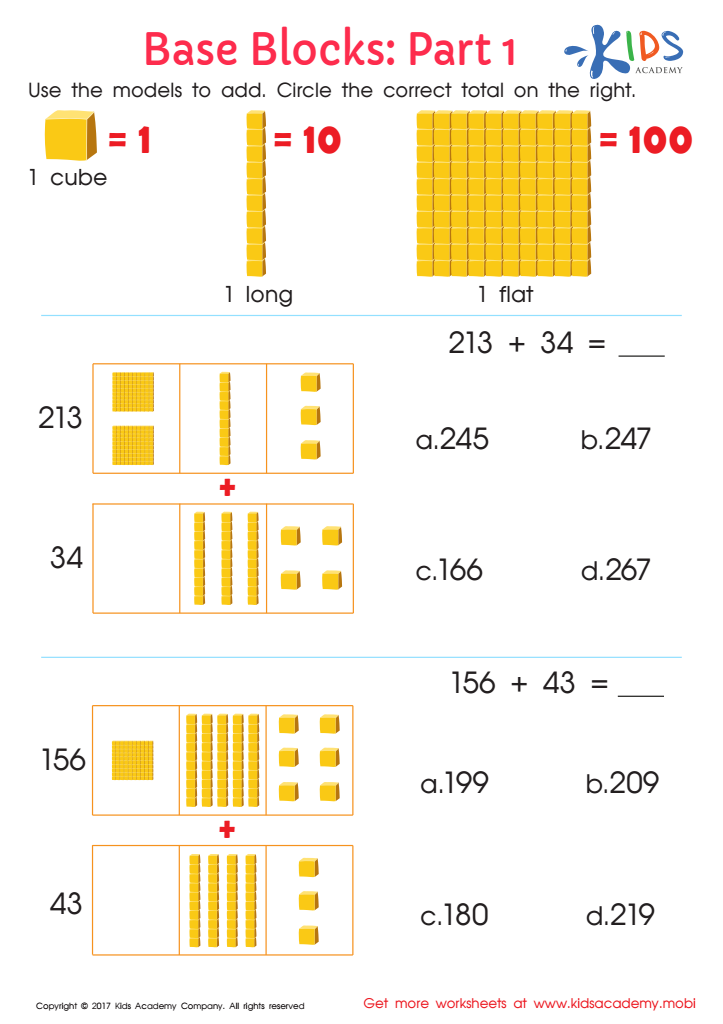
Base Ten Blocks Worksheet: Part 1
 Assign to My Students
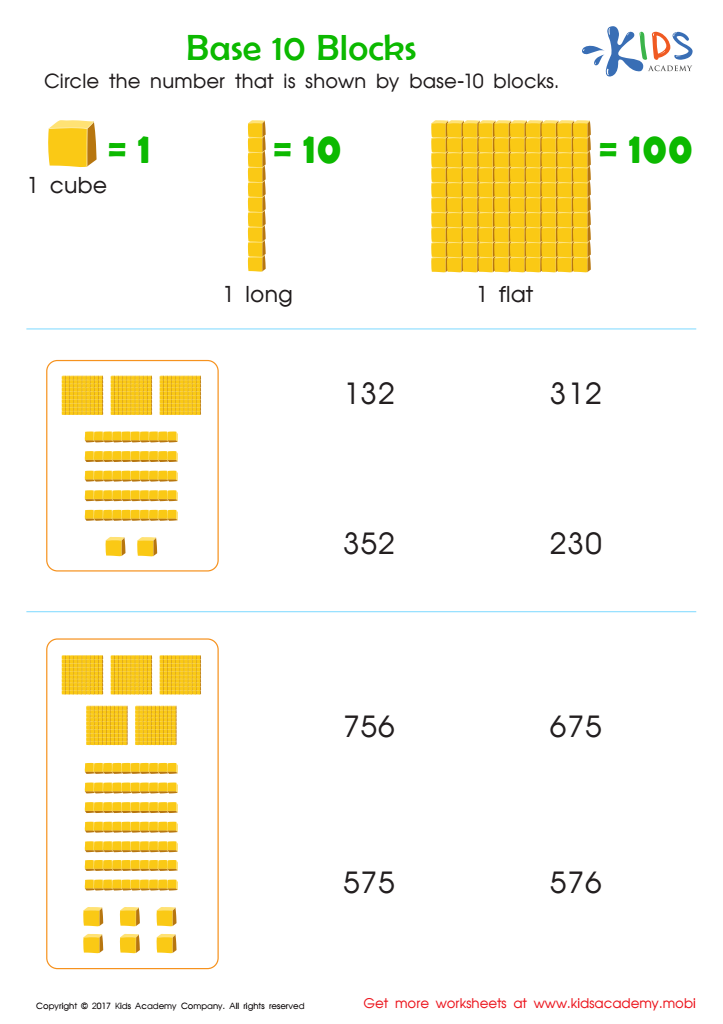
Base Ten Blocks Worksheet
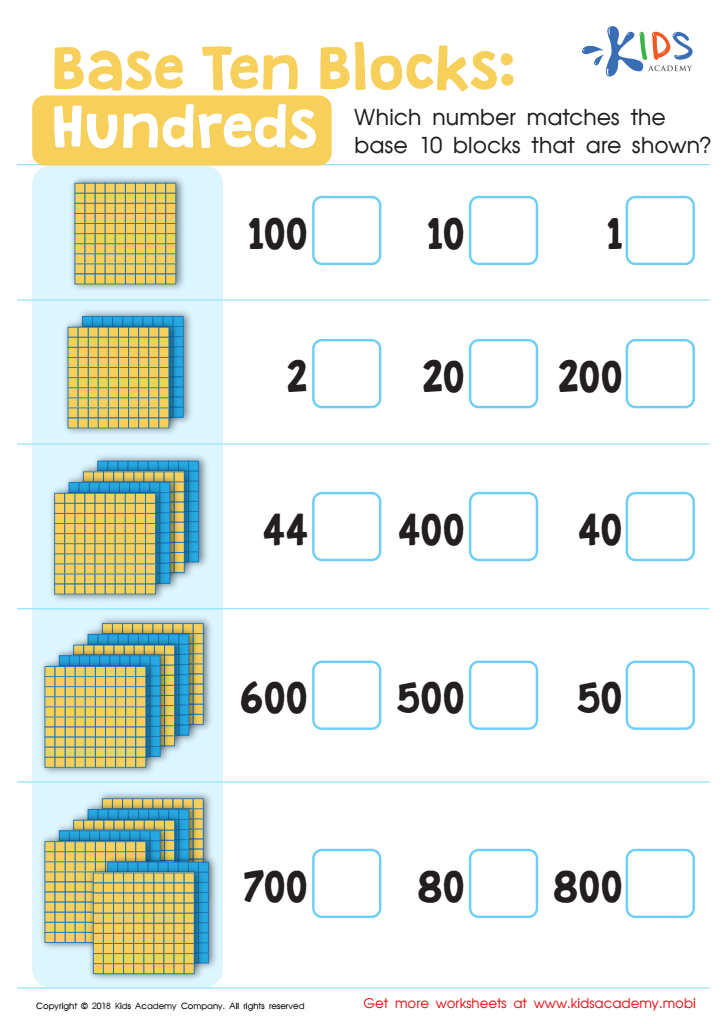
Base Ten Blocks: Hundreds Worksheet








Understanding the base ten number system is a foundational math skill for children aged 4-9, and it deserves serious attention from both parents and teachers. The base ten number system, also known as the decimal system, is the standard system for denoting integer and non-integer numbers. It involves the use of ten symbols (0-9) and is key to efficiently performing calculations and understanding more complex math concepts later in life.
For young children, grasping this system lays the groundwork for arithmetic operations like addition, subtraction, multiplication, and division. These basic operations, in turn, are the building blocks for higher math skills, including geometry and algebra. A solid understanding of base ten also helps with mental math strategies, making calculations quicker and more intuitive.
Moreover, proficiency in base ten concepts spills over into real-life skills. Understanding money, time, measurement, and even problem-solving in day-to-day activities requires a comfortable manipulation of base ten numbers.
Encouraging proficiency in base ten understanding early on fosters confidence in math, reduces anxiety around learning new concepts, and promotes logical thinking. Ultimately, it equips children with critical quantitative reasoning skills that will benefit their educational journey and everyday lives. Thus, parents and teachers should prioritize nurturing this understanding during these formative years.








