Understanding comparisons Normal Numbers Worksheets for Ages 4-9
3 filtered results
-
From - To
Understanding Comparisons Normal Numbers Worksheets for Ages 4-9 empower young learners by making math engaging and straightforward. Our expertly crafted worksheets, available on Kids Academy, build essential skills in comparing numbers, greater than, less than, and equal to, tailored for children aged 4-9. Perfect for parents and teachers aiming to bolster their students’ foundational math knowledge, these worksheets seamlessly integrate fun activities with educational content. Encouraging critical thinking and analytical skills, our resources set a robust math foundation. Visit Kids Academy today and make learning comparisons an enjoyable adventure for your child!
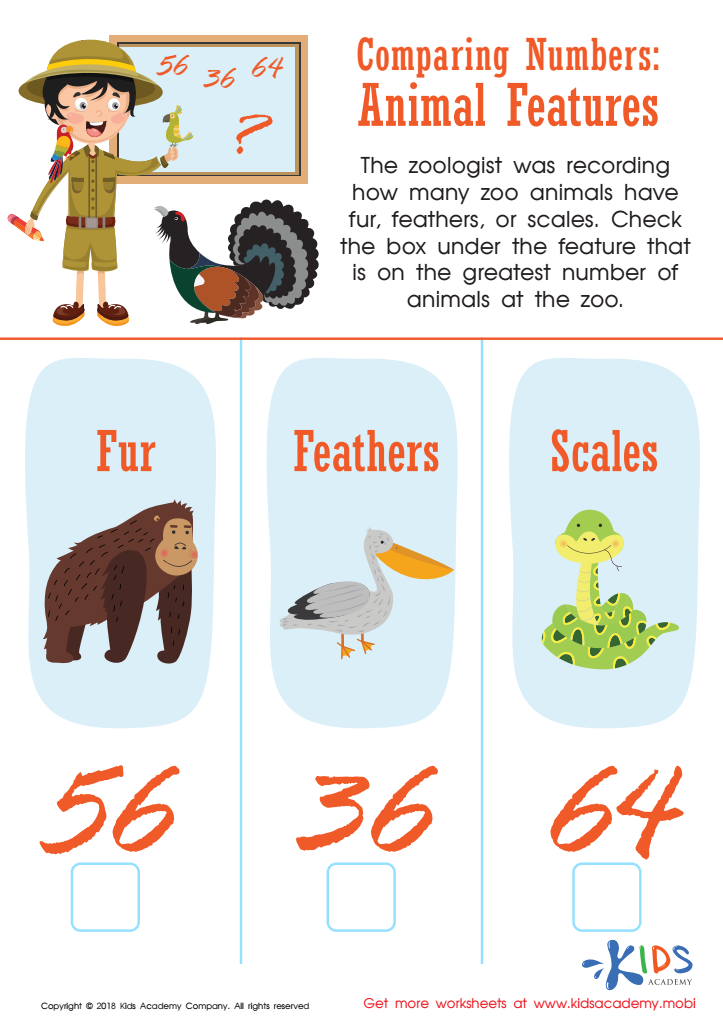
Animal Features Worksheet
 Assign to My Students
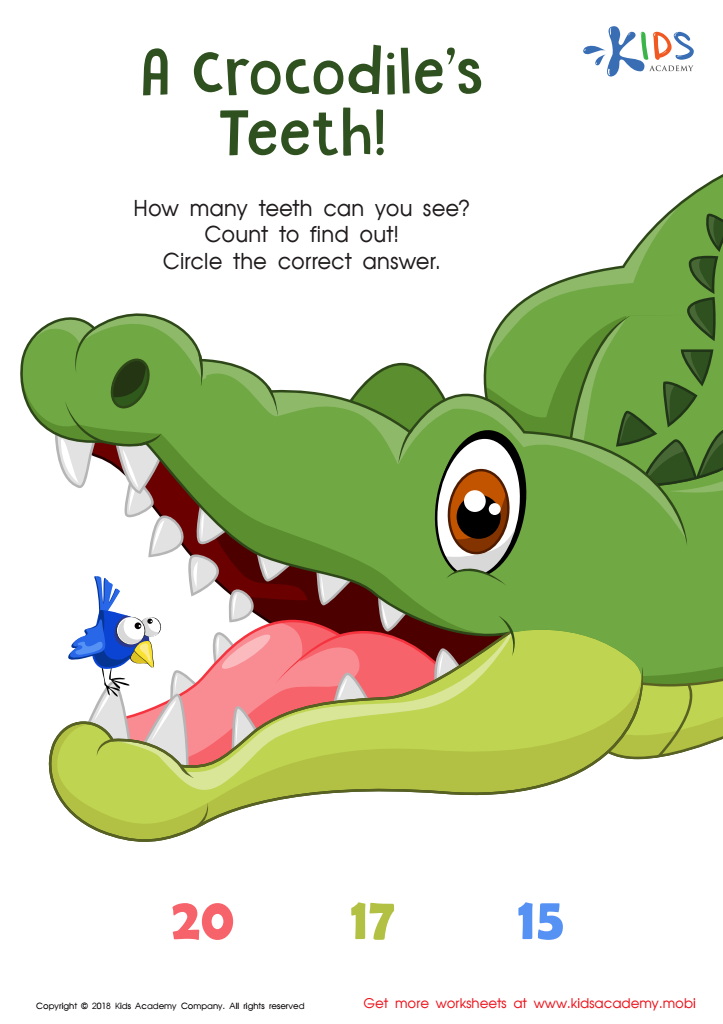
A Crocodile's Teeth Worksheet
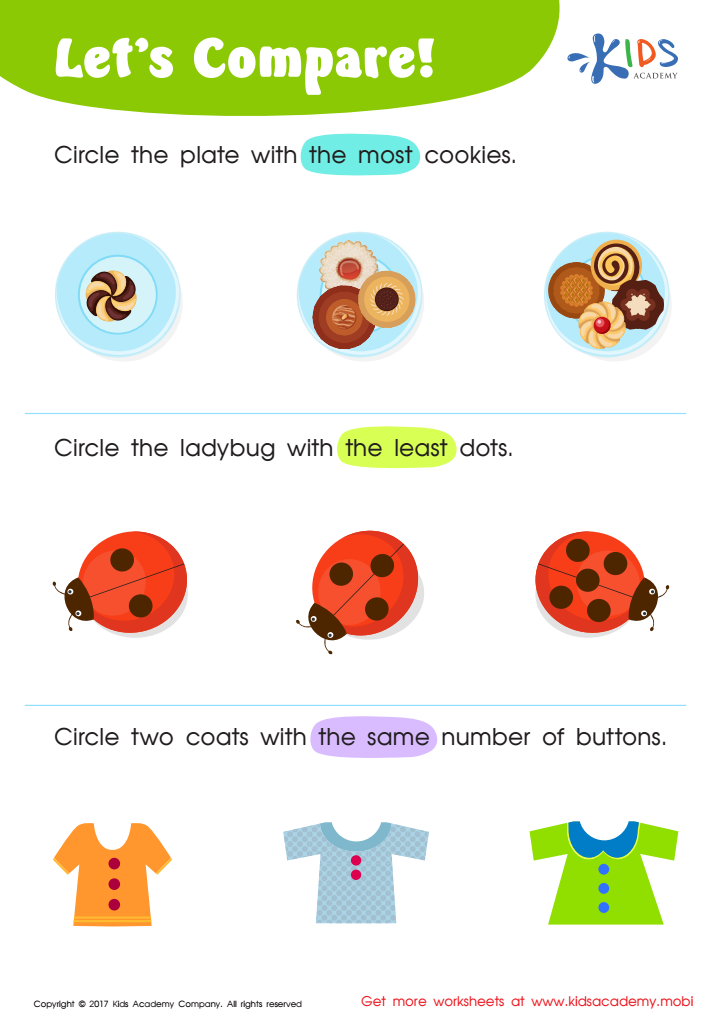
Matching: Classifying Toys by Size Worksheet






Understanding comparisons and number sense for children aged 4-9 lays a critical foundation for their future mathematical learning and cognitive development. During these formative years, children develop basic skills that serve as building blocks for more complex concepts. By grasping comparisons—such as identifying which of two numbers is larger or which object is smaller—children learn essential problem-solving skills and logical reasoning that extend beyond mathematics.
When children compare quantities, they begin to comprehend relationships between numbers, fostering numerical literacy and confidence. This skill is instrumental for everyday tasks, such as knowing whether they have enough money to buy an item, measuring ingredients in a recipe, or understanding time intervals.
For teachers and parents, emphasizing comparison skills helps in identifying and addressing potential learning difficulties early on. Children who struggle with basic comparisons may unknowingly lag in higher-level math, reading comprehension, and even aspects of critical thinking. Structured activities like sorting objects, playing with number lines, and engaging in games that involve comparing, offer opportunities to practice these skills in tangible, enjoyable ways.
By focusing on the development of comparison and number sense in young children, adults play a crucial role in ensuring that kids have a strong educational foundation, thereby promoting long-term academic success and cognitive growth.








