Developing problem-solving abilities Normal Math Worksheets for Ages 4-9
3 filtered results
-
From - To
Unlock your child's potential with our specially designed Normal Math Worksheets for Ages 4-9, focusing on developing essential problem-solving abilities. These engaging worksheets provide a fun and interactive way for young learners to tackle mathematical challenges, enhancing critical thinking and analytical skills. Each activity is tailored to match their developmental stage, featuring colorful graphics and relatable scenarios that spark curiosity and motivation. Encourage your child's confidence in math while they practice key concepts such as addition, subtraction, and pattern recognition. Perfect for home or classroom use, our worksheets pave the way for future academic success by nurturing an early love for learning!
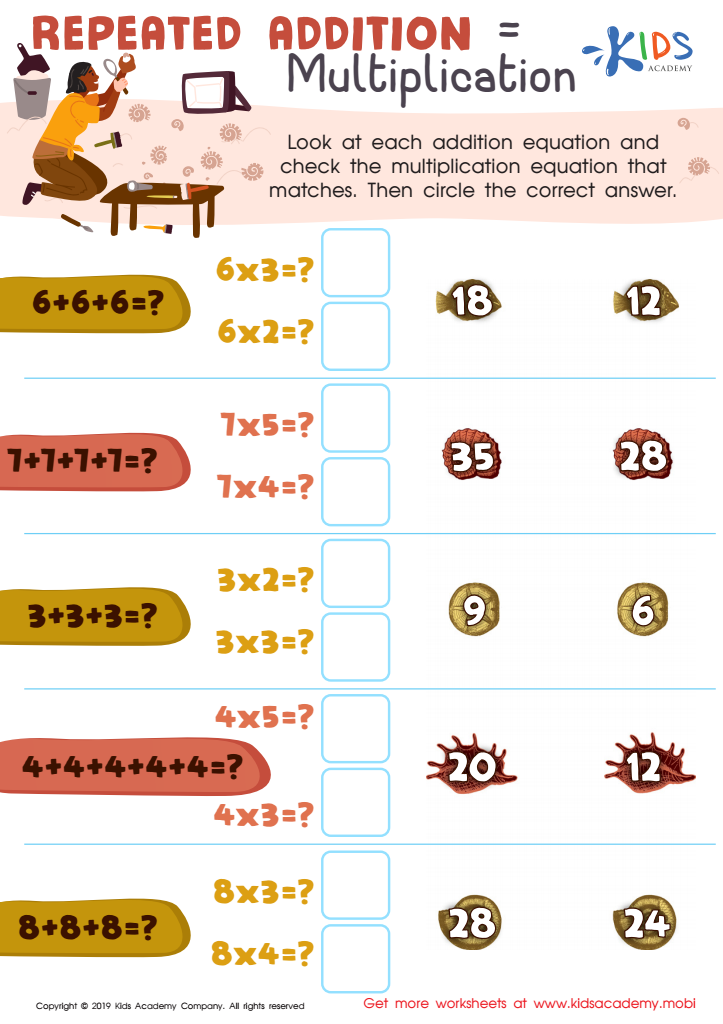
Repeated Addition = Multiplication Worksheet
 Assign to My Students
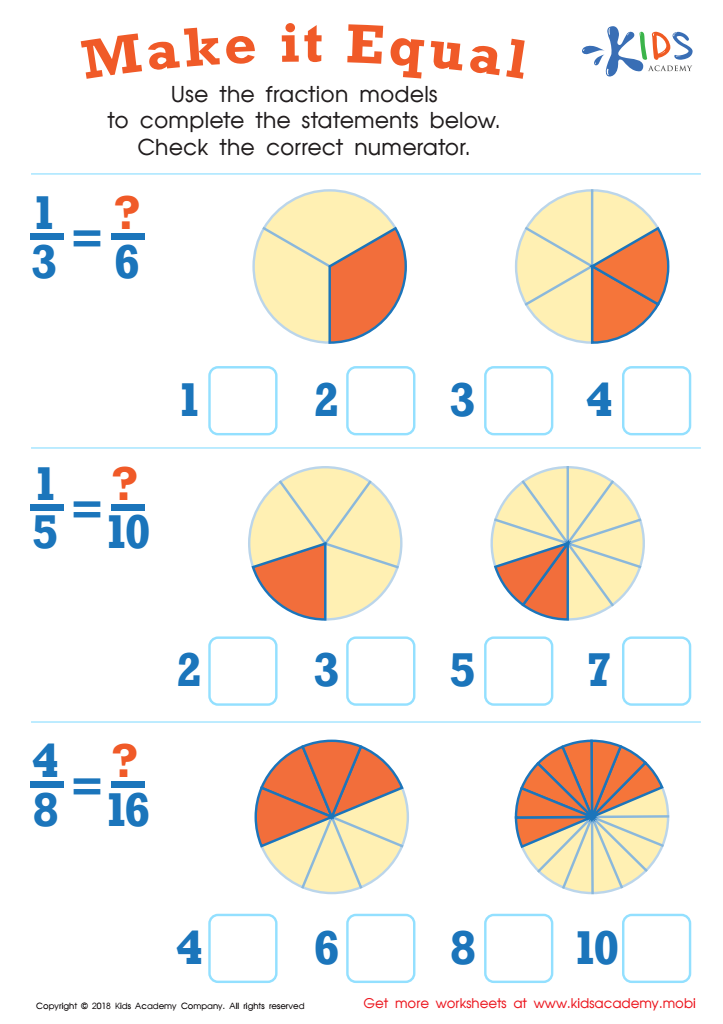
Make It Equal Worksheet
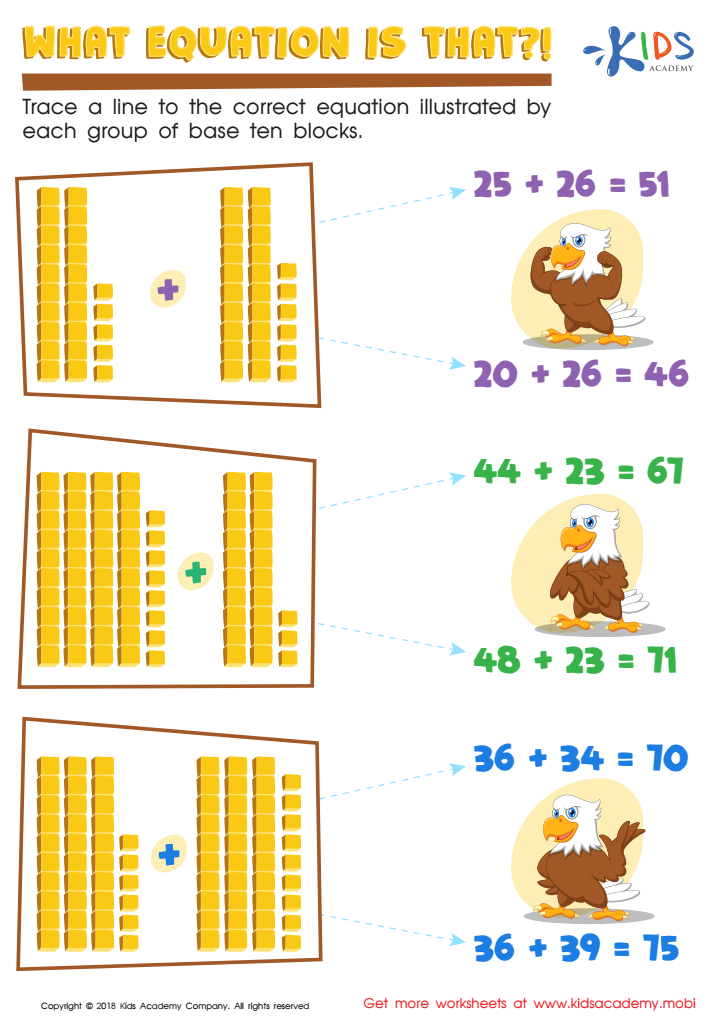
What Equation Is That? Worksheet








Developing problem-solving abilities in young children, specifically through Normal Math for ages 4-9, is vital for several reasons. Firstly, these foundational years are crucial for cognitive development. Children learn to navigate challenges, fostering resilience and adaptability—skills essential for lifelong learning and success. Engaging with math through problem-solving cultivates critical thinking, helping children learn to analyze information, make connections, and draw conclusions.
Moreover, Normal Math promotes a deeper understanding of mathematical concepts beyond rote memorization. By encouraging children to solve problems, they grasp underlying principles, making math more relatable and less intimidating. This can help dispel the anxiety often associated with math later in life.
Additionally, these problem-solving exercises often require cooperation and communication, enhancing social skills and teamwork. When children learn to work together to tackle a problem, they develop essential interpersonal skills, which are critical for their future interactions in both academic and professional settings.
Finally, problem-solving fosters a sense of accomplishment and boosts self-confidence when children overcome challenges. Cultivating these abilities prepares them not only for academic success but for real-world situations as they grow, making strong problem-solving skills a fundamental part of their development. Parents and teachers should prioritize this aspect of learning to lay a robust foundation for future achievement.








