
Logical thinking development Normal Math Worksheets for Ages 4-9
5 filtered results
Difficulty Level
Grade
Age
-
From - To
Subject
Activity
Standards
Discover an exciting avenue for your child to enhance their logical thinking with our Normal Math Worksheets designed for ages 4-9. Presented by Kids Academy, these engaging and age-appropriate activities focus on fostering critical thinking and problem-solving skills. Each worksheet offers a blend of fun and intriguing challenges, encouraging young learners to explore mathematical concepts in an enjoyable way. Ideal for early grade students, our resources ensure that foundational skills are strengthened, paving the path for academic success. Equip your child with the tools they need to grow confident in their problem-solving abilities through our expertly crafted material.
Favorites
With answer key
Interactive
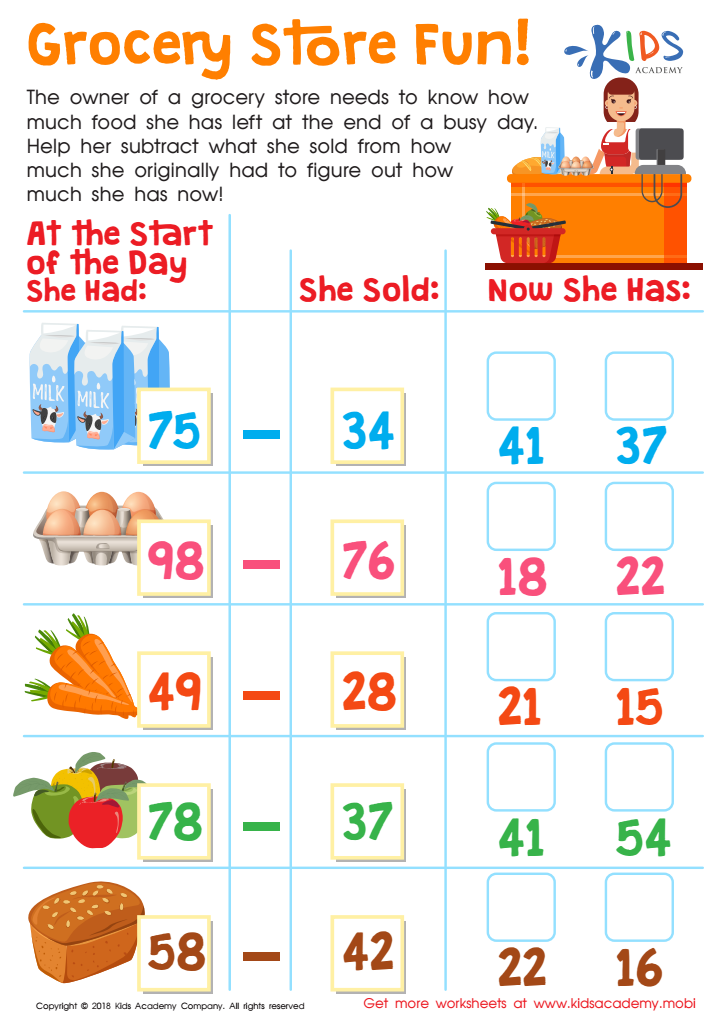
Grocery Store Fun! Worksheet
Let your kids have fun with this store worksheet. It requires them to help the owner by subtracting what she has sold from the original amount to figure out how much is left. Have them read and solve the equations in the printout to give the store owner the answer.
 Assign to My Students
Grocery Store Fun! Worksheet
Worksheet
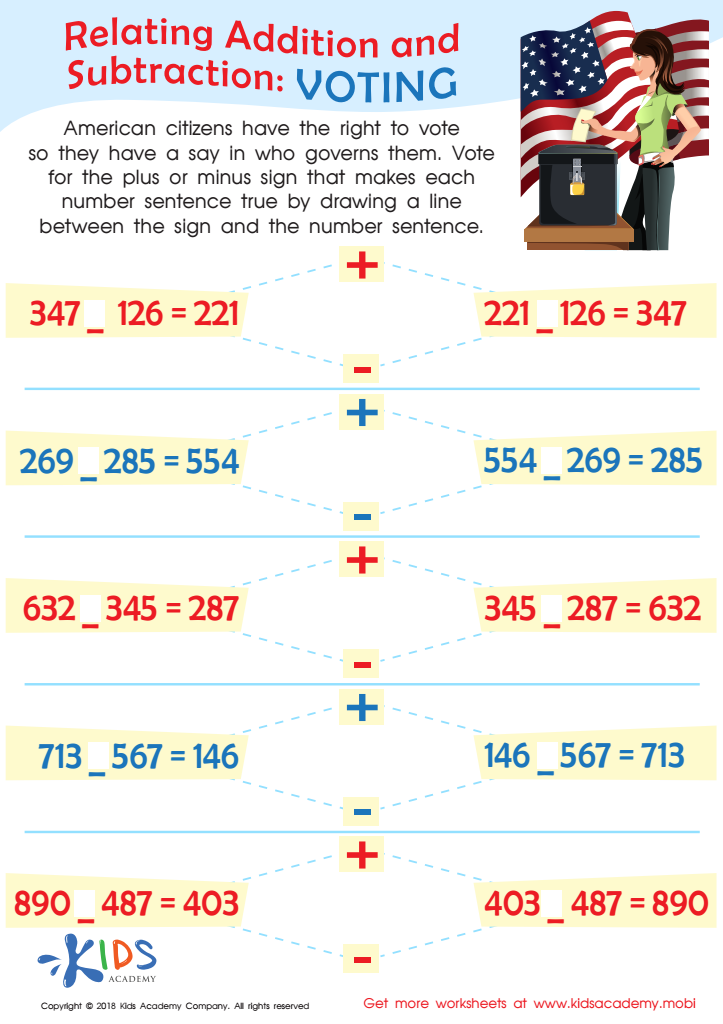
Voting Worksheet
This worksheet combines Social Studies and Math, teaching kids the democratic concept of voting. Guide learners to observe the problem, and decide if it needs a plus or minus. They "vote" for the correct answer by drawing a line from the problem to the correct operation symbol. Tally up the votes to check the answers!
Voting Worksheet
Worksheet
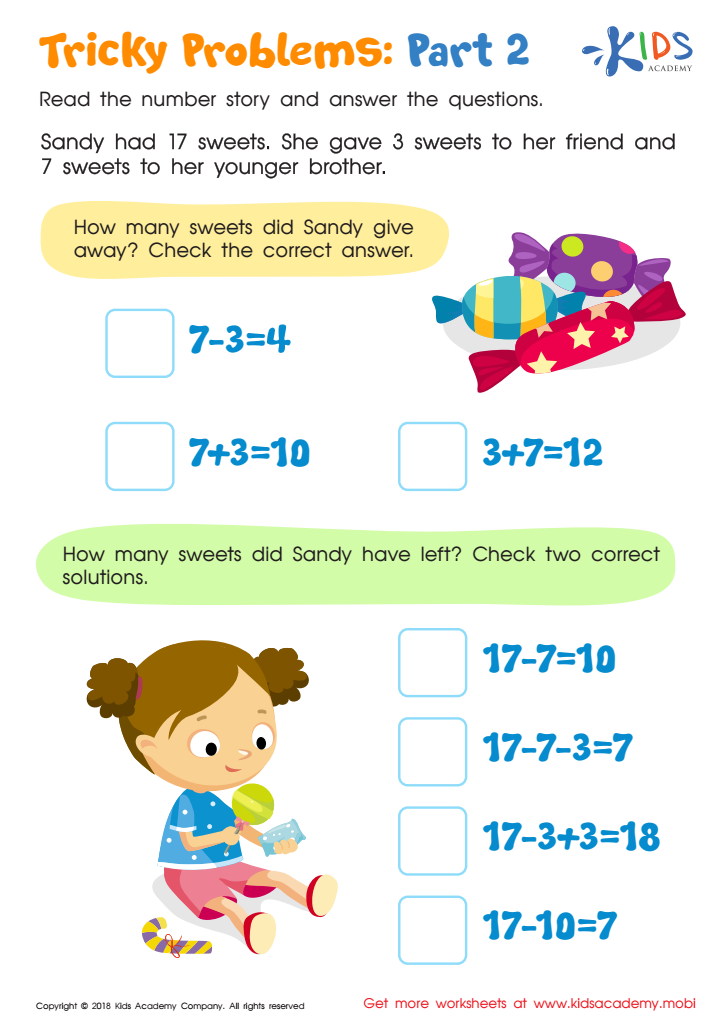
Tricky Problems Worksheet: Part 2
Help your little math learner visualize number stories with this engaging worksheet. They'll connect pictures to the story and use math facts to find the sums. After that, they'll be able to identify the correct number sentences to match. Let them practice and get better at problem solving!
Tricky Problems Worksheet: Part 2
Worksheet
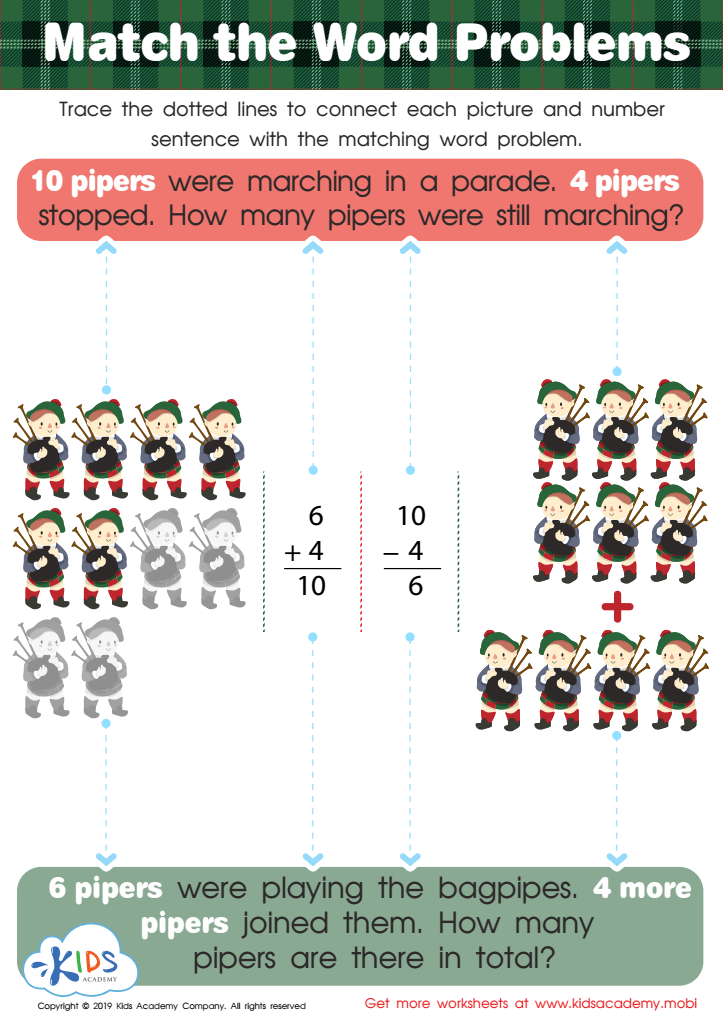
Match the Word Problems Worksheet
Read this word problem to your kids: Help them understand how it can be translated into a number problem. Trace the dotted lines to see how each picture and number sentence match the problem. With this worksheet, you can show your kids how easy it is to transform a word problem into a number problem.
Match the Word Problems Worksheet
Worksheet
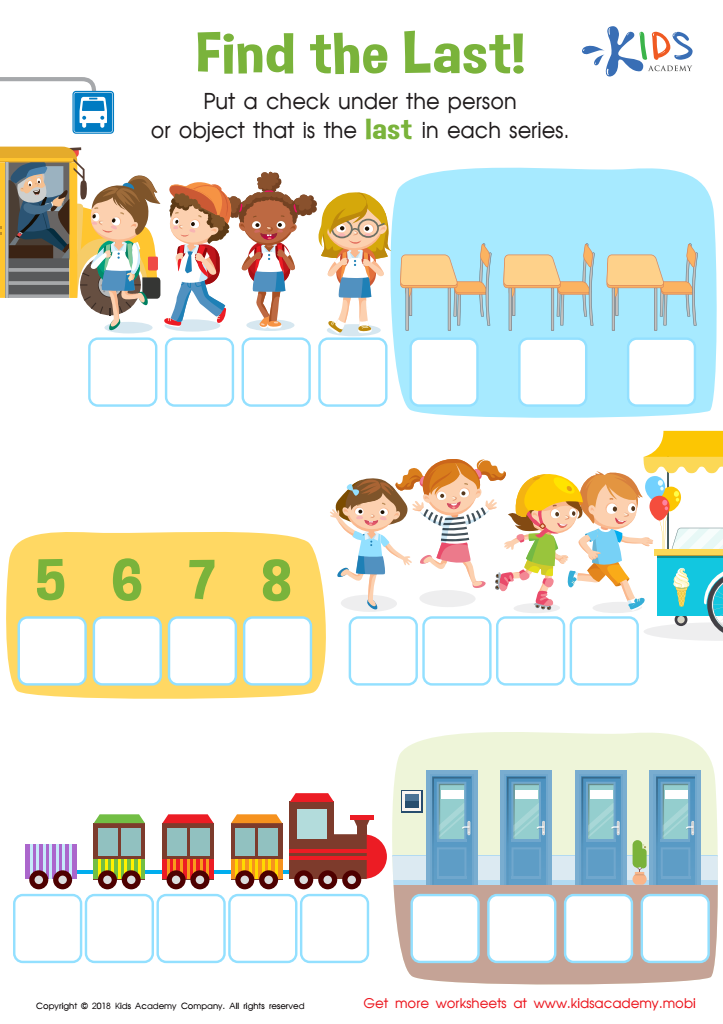
Find the Last! Worksheet
Teach young students about sequence words with this free worksheet. Have them look at sets of people or objects and choose the one that is last. Engage them further by having them describe or act out their day, and what happens last? Enjoy this printout and have fun!
Find the Last! Worksheet
Worksheet
Join Kids Academy for Free
Who is primarily going to use this learning content?








Logical thinking and early math skills play a crucial role in a child's development for several reasons. For starters, they form the foundation for problem-solving and critical thinking, skills that are indispensable in everyday life. When parents and teachers cultivate these abilities in children aged 4-9, they are providing the tools needed for them to understand and interact with the world more effectively.
Mathematics is essentially a language of patterns, numbers, and problem-solving strategies. Introducing logical thinking early on enables children to grasp these concepts more naturally, setting a strong educational foundation. These skills support academic achievements not only in math but in other subjects too, as logical reasoning impacts reading comprehension and scientific inquiries.
Moreover, developing logical thinking fosters cognitive abilities such as memory and attention span. Games, puzzles, and structured play can enhance these skills in a way that's both educational and enjoyable. It promotes a growth mindset, teaching youngsters that problems have solutions and can be approached from different angles.
Incorporating logical thinking and math from a young age helps build confidence and academic resilience, traits that will serve children well throughout their schooling and beyond. By investing time in this aspect of development, parents and teachers enable children to approach learning enthusiastically and competently.








