Mental math practice Normal Math Worksheets for Ages 4-9
5 filtered results
-
From - To
Welcome to our dedicated Mental Math Practice worksheets for children aged 4-9! Our engaging resources are designed to enhance mathematical skills through fun and interactive activities. These worksheets promote quick thinking and problem-solving, allowing young learners to sharpen their mental calculations in an enjoyable way. With a variety of exercises, students can explore addition, subtraction, and more, building confidence and fluency in math. Perfect for classroom use or at-home learning, our normal math worksheets provide essential practice tailored to your child's developmental stage. Start cultivating a strong foundation in mathematics today with our thoughtfully crafted, age-appropriate materials!
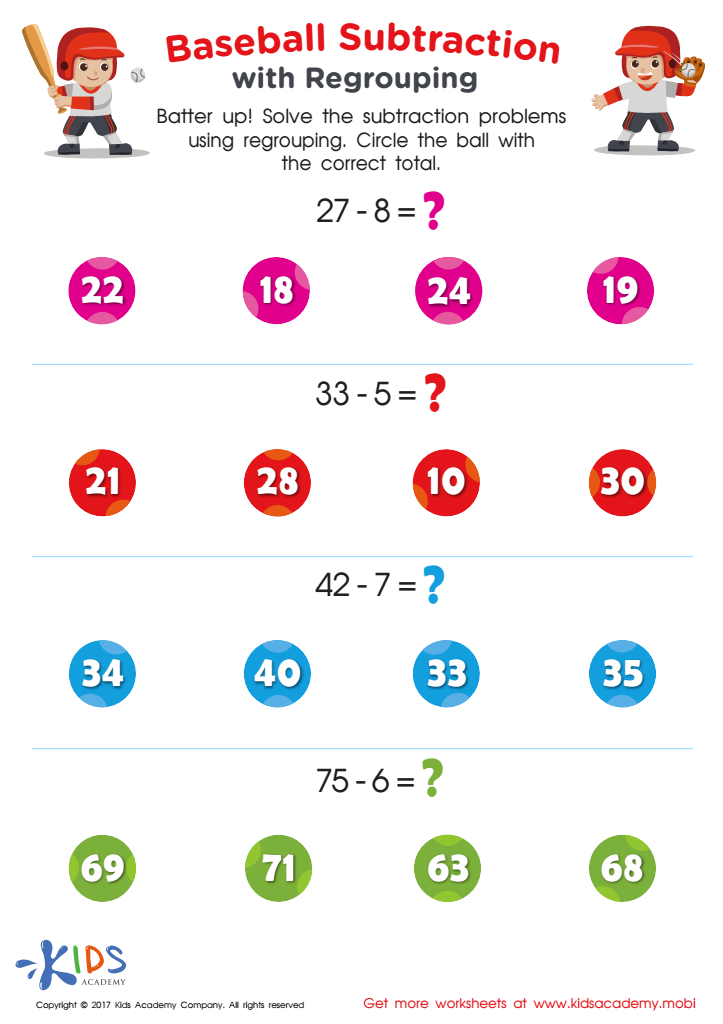
Subtraction With Regrouping for 2nd Grade Worksheet
 Assign to My Students
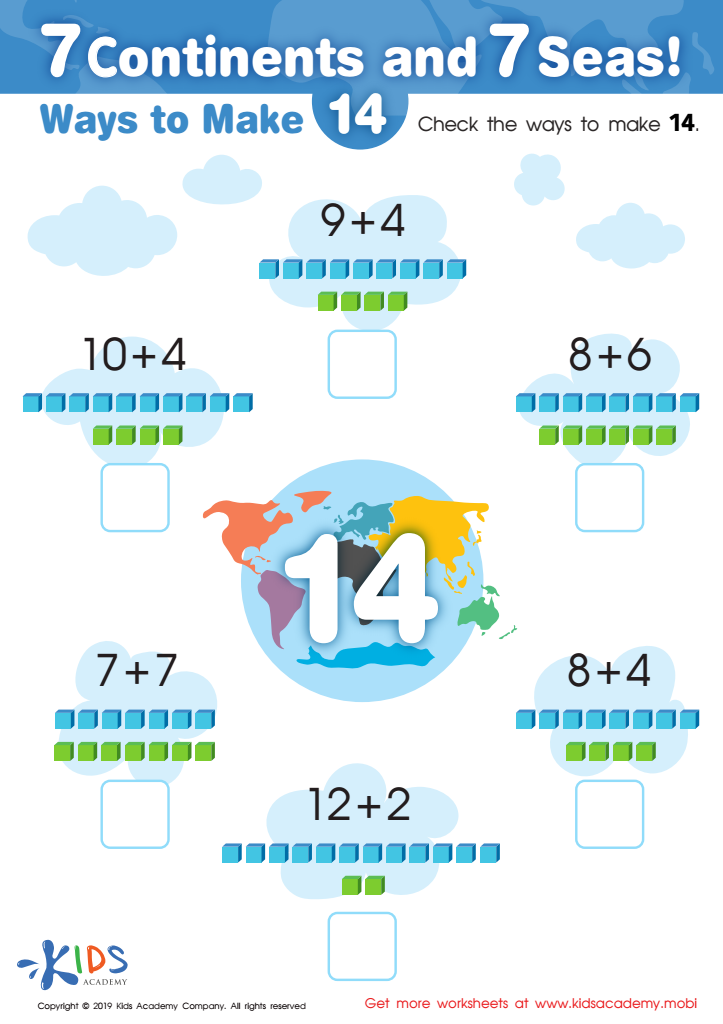
7 Continents and 7 Seas Worksheet
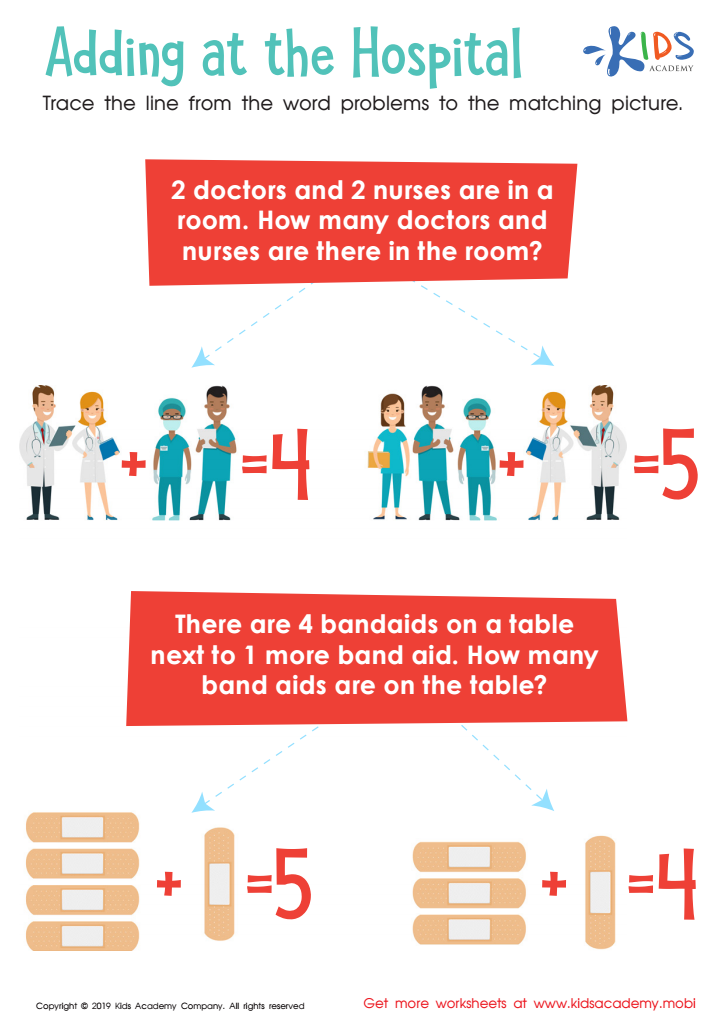
Adding at the Hospital Worksheet
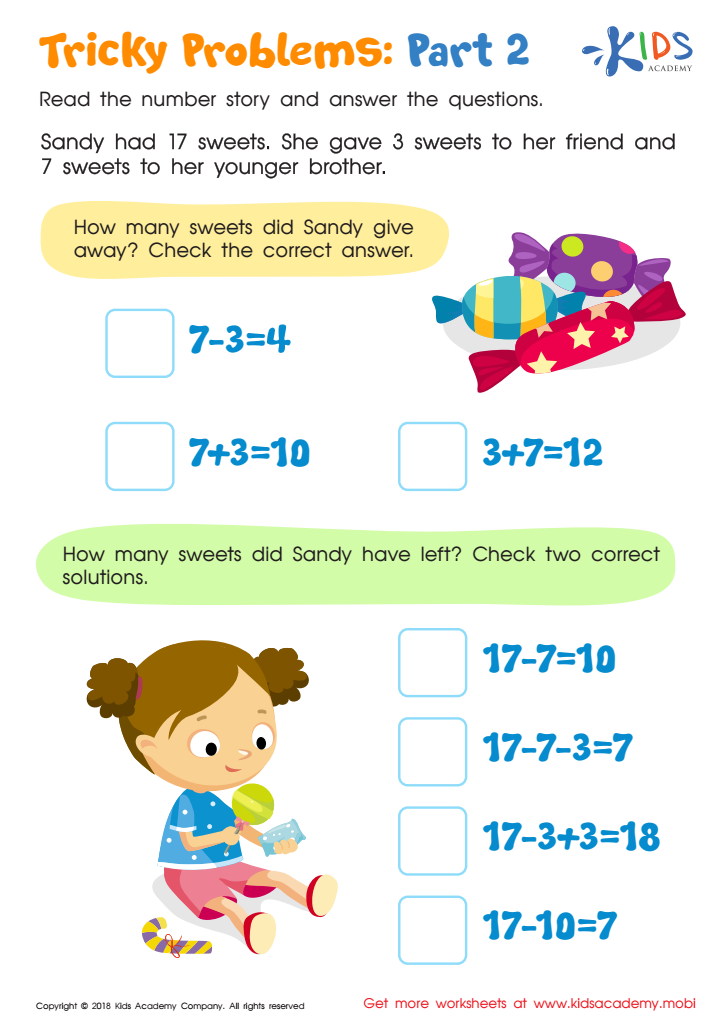
Tricky Problems Worksheet: Part 2
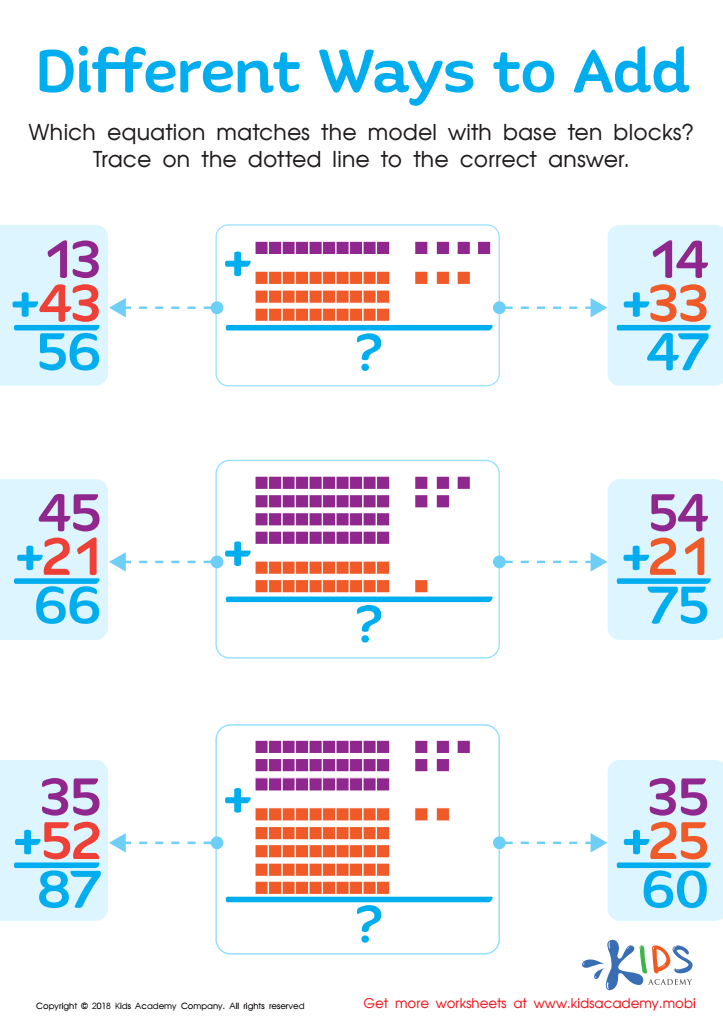
Different Ways to Add Worksheet







Mental math practice is crucial for children aged 4-9 for several reasons. First, it fosters numerical fluency, enabling kids to perform calculations quickly and accurately in their heads. This skill is particularly beneficial as they progress in their education, allowing them to tackle more complex mathematical concepts with confidence.
Second, mental math enhances problem-solving abilities. When children learn to visualize numbers and think critically, they become adept at manipulating figures to derive solutions without relying solely on paper and pencil. This cognitive development lays a strong foundation for higher-order thinking skills.
Moreover, mental math practice helps develop perseverance. As children tackle challenging problems mentally, they're encouraged to use trial and error and explore multiple approaches, reinforcing a growth mindset essential for academic success.
Lastly, involving parents and teachers in mental math practice can create engaging learning environments. It can encourage collaborative learning experiences, stimulating discussions about math and making it enjoyable. Consequently, this practice not only supports individual learning goals but also strengthens the home-school connection, fostering a community that values mathematics as a vital life skill. Thus, emphasizing mental math lays the groundwork for children's long-term academic and personal achievements.








