Multiplication practice Normal Math Worksheets for Ages 4-9 - Page 2
30 filtered results
-
From - To
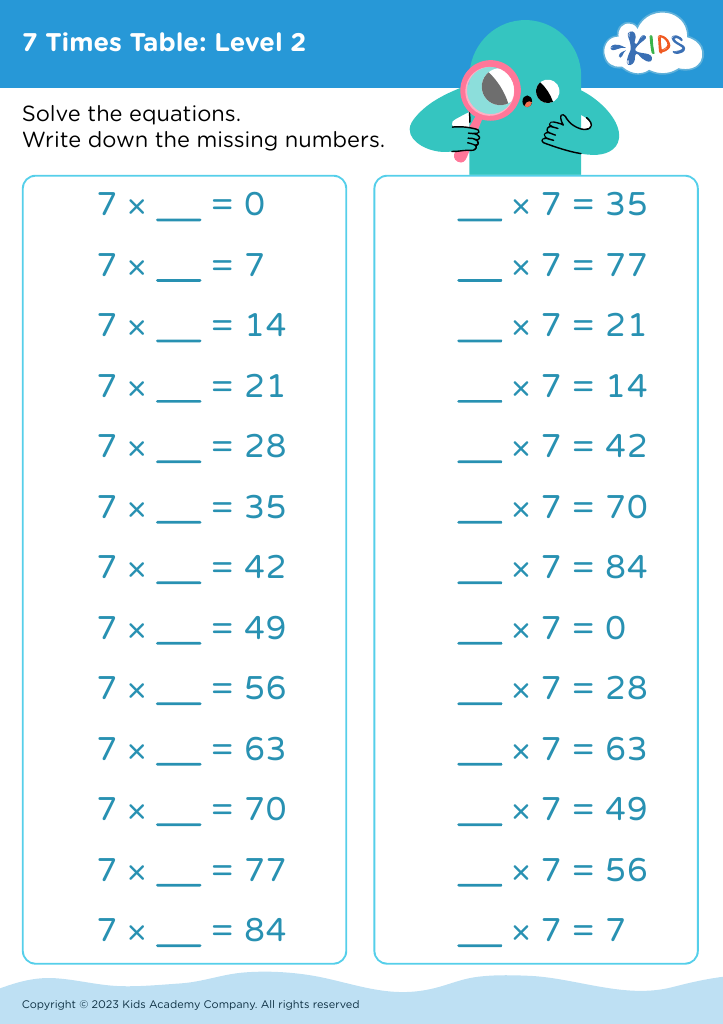
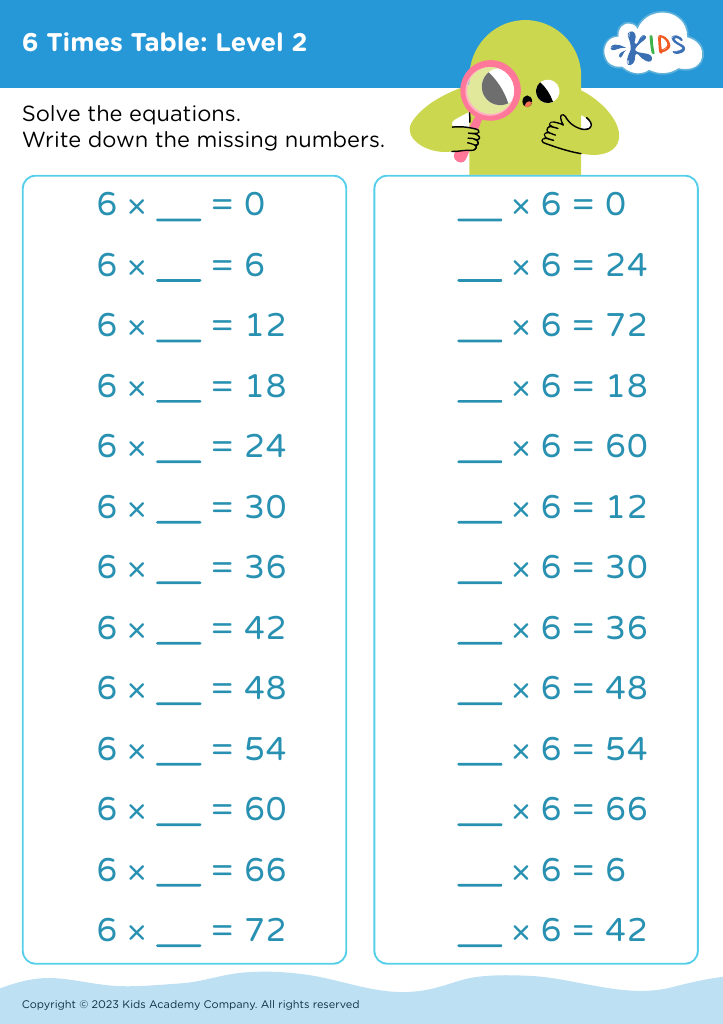
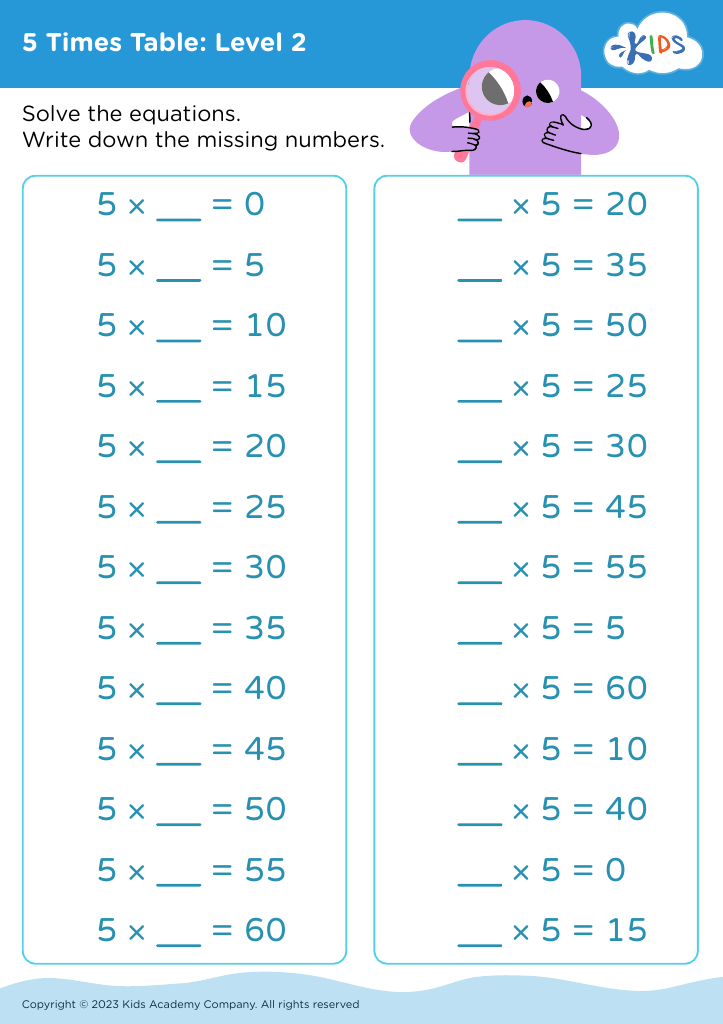
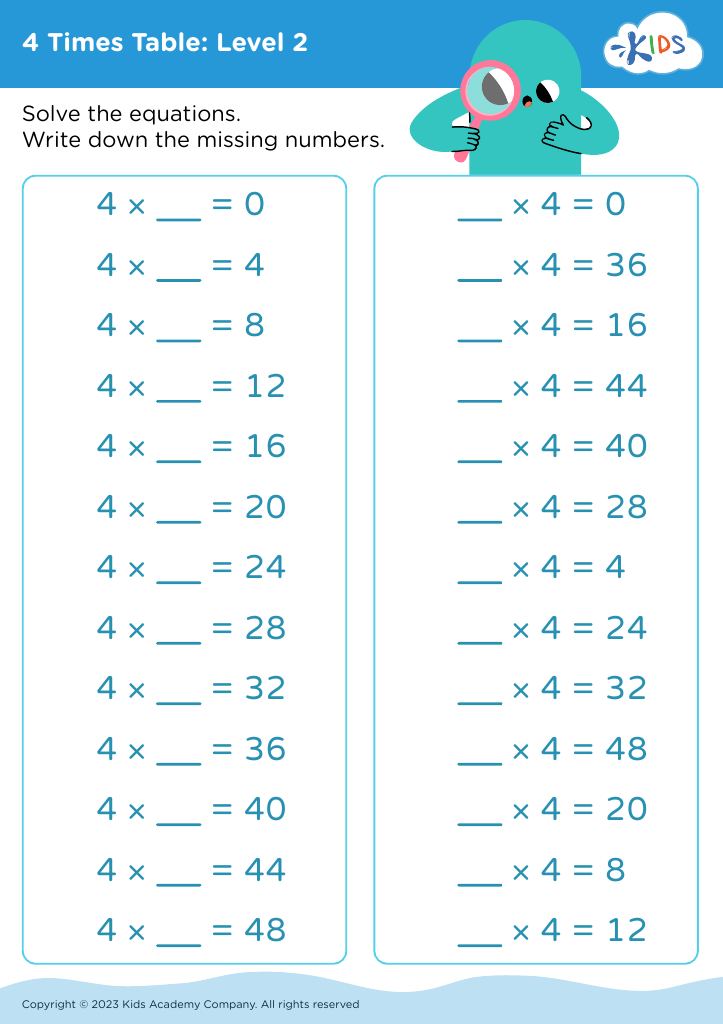
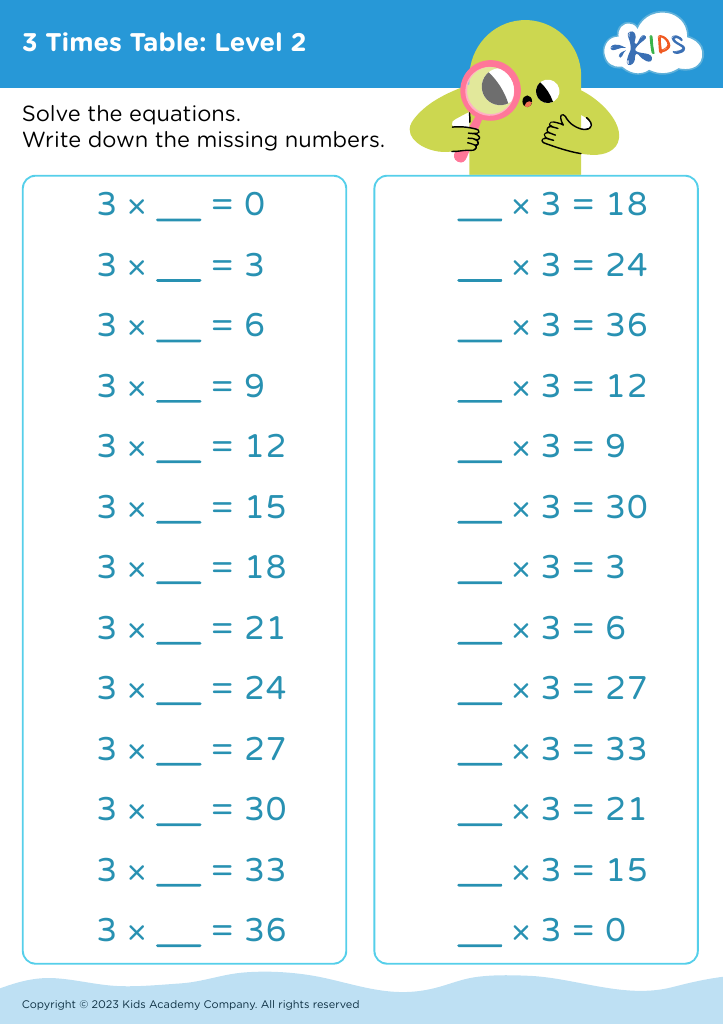
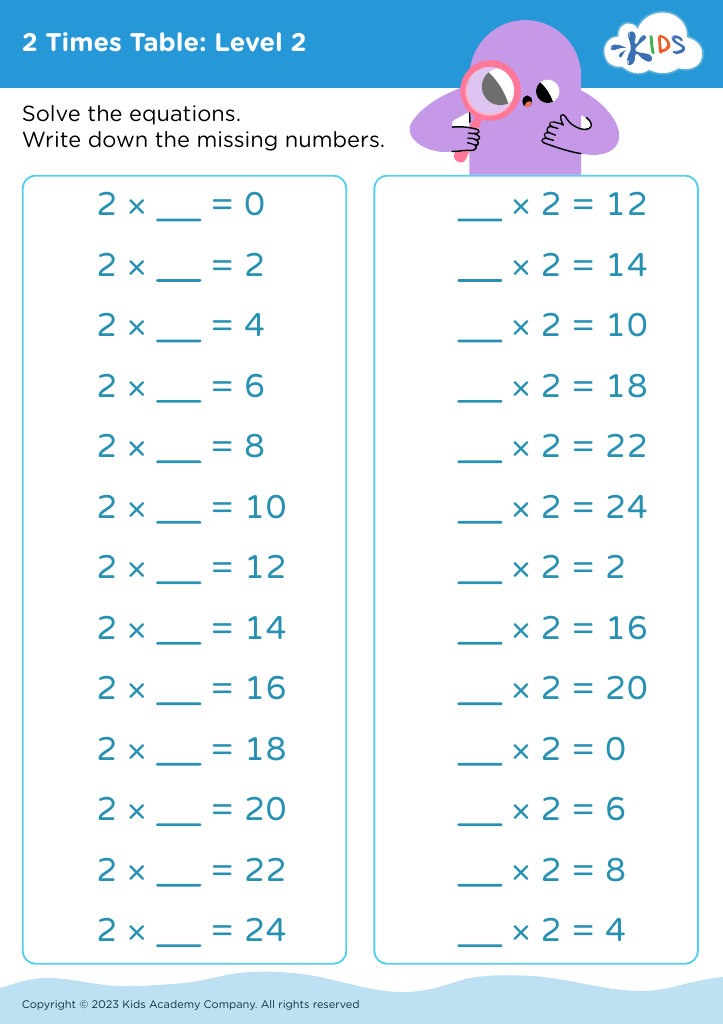







Multiplication practice is an essential aspect of a child's mathematical development, particularly for ages 4-9. During these formative years, children build foundational skills that will influence their academic journey. Incorporating multiplication practice into learning helps enhance not only mathematical comprehension but also critical thinking and problem-solving abilities. By understanding multiplication at a young age, children can learn to approach complex tasks with confidence.
Additionally, math skills are closely tied to overall academic success. Mastering multiplication lays the groundwork for future topics, such as division, fractions, and higher-level math concepts. For parents and teachers, engaging children in multiplication practice through fun activities, games, and visual aids can make learning enjoyable and less daunting.
Moreover, instilling a love for math early on fosters positive attitudes toward learning. When children successfully grasp multiplication concepts, they are more likely to develop resilience and a growth mindset towards challenging subjects. This enthusiasm culminates in a stronger sense of achievement and self-esteem.
Ultimately, investing time and resources in multiplication practice for young learners is critical for nurturing their mathematical minds and equipping them with essential skills for lifelong learning. Parents and teachers play pivotal roles in guiding this journey, making it a priority in early education.








