Understanding number relationships Normal Math Worksheets for Ages 4-9
3 filtered results
-
From - To
Unlock your child's potential with our "Understanding Number Relationships" math worksheets for ages 4-9! These engaging resources help children build essential math skills by exploring number bonds, patterns, and comparisons. Tailored to suit early learners, each worksheet fosters critical thinking and problem-solving abilities in a fun and effective manner. With a variety of activities ranging from simple addition to more complex number relationships, your child will develop a strong numerical foundation. Ideal for classroom or home use, our worksheets make learning math enjoyable and accessible for young minds. Start your child’s math journey with us today!
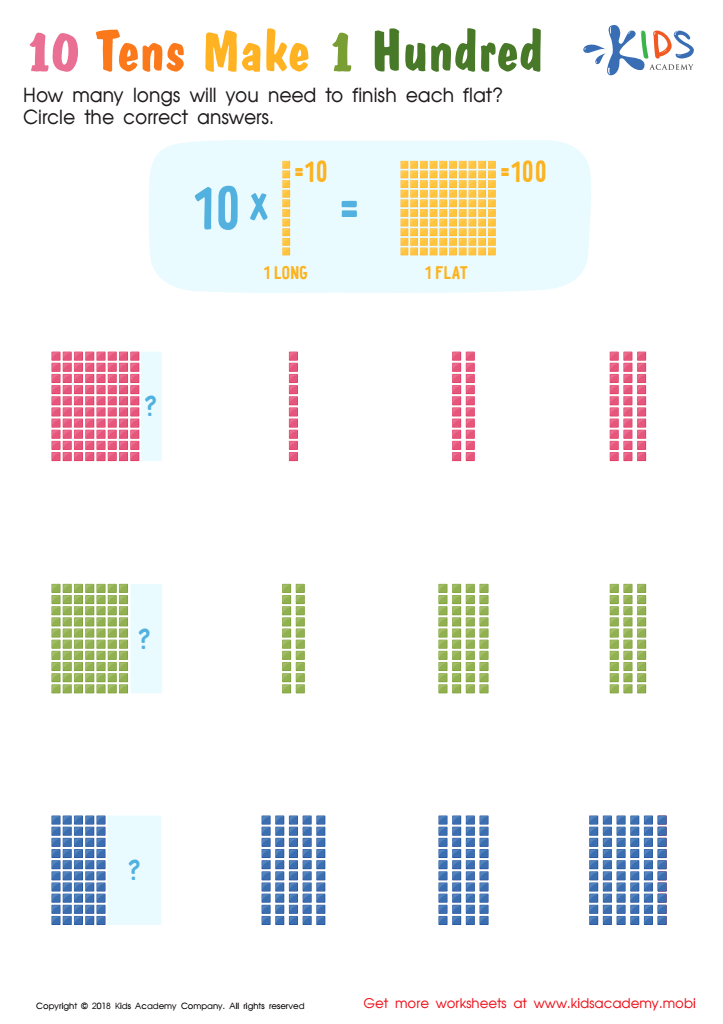
10 Tens Make 1 Hundred Worksheet
 Assign to My Students
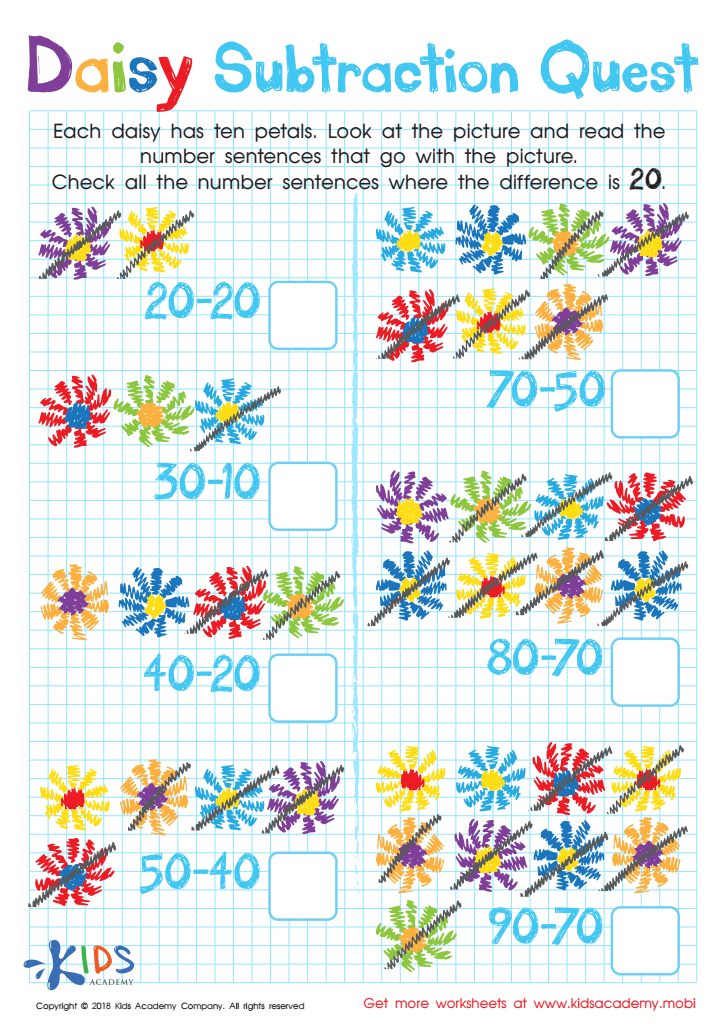
Daisy Subtraction Quest Worksheet
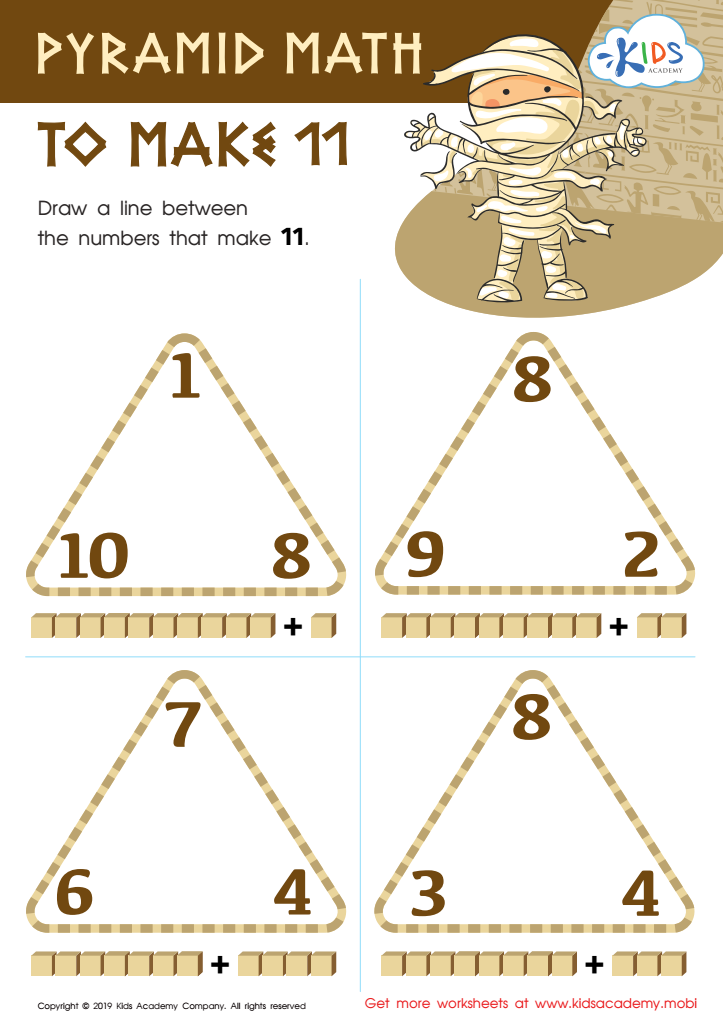
Pyramid Math to Make 11 Worksheet








Understanding number relationships is crucial for young children ages 4-9 as it lays the foundation for all future math learning. Parents and teachers should care about this because establishing a solid number sense helps children comprehend how numbers work and relate to one another. This understanding is essential for basic arithmetic, such as addition, subtraction, multiplication, and division, which are key components of more complex math skills they will encounter later.
When children grasp number relationships, they become better problem solvers. They can visualize numbers, make connections, and develop strategies for solving mathematical problems. For instance, recognizing that 10 is made up of 8 and 2, or 6 and 4, helps children to perform addition and subtraction more fluidly and flexibly. This flexibility fosters a deeper mathematical comprehension and reduces the reliance on rote memorization.
Moreover, early math skills are linked with future academic success, not only in math but in other subjects as well. Encouraging number sense boosts children's confidence in their abilities and promotes a positive attitude towards learning. By investing time and resources into understanding number relationships, parents and teachers are equipping children with the skills they need for lifelong critical thinking, logical reasoning, and successful problem-solving both inside and outside the classroom.








