
Visual Perception Skills Normal Math Worksheets for Ages 4-9
3 filtered results
Difficulty Level
Grade
Age
-
From - To
Subject
Activity
Standards
Enhance your child’s learning journey with our Visual Perception Skills Normal Math Worksheets, specially designed for ages 4-9. These engaging worksheets help build crucial visual processing abilities that are essential for mastering mathematical concepts. Featuring a variety of fun activities, children will develop skills such as pattern recognition, spatial awareness, and problem-solving through interactive math challenges. Easy to download and print, our worksheets provide parents and educators with valuable resources to support early learners in improving their math proficiency. Foster a love for math while bolstering visual perception with our age-appropriate and educational materials today!
Favorites
With answer key
Interactive
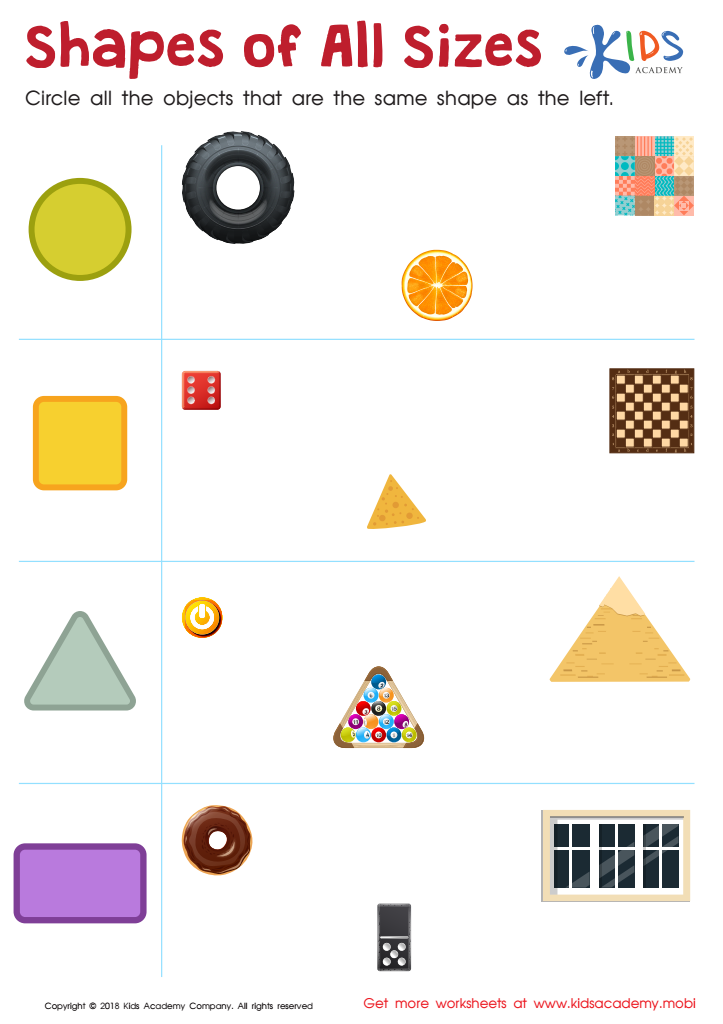
Shapes of All Sizes Worksheet
Students will have fun comparing basic shapes to familiar objects with this worksheet. It's an excellent way to help them recognize similarities in geometric shapes, building strong foundations for understanding congruence and similarity.
 Assign to My Students
Shapes of All Sizes Worksheet
Worksheet
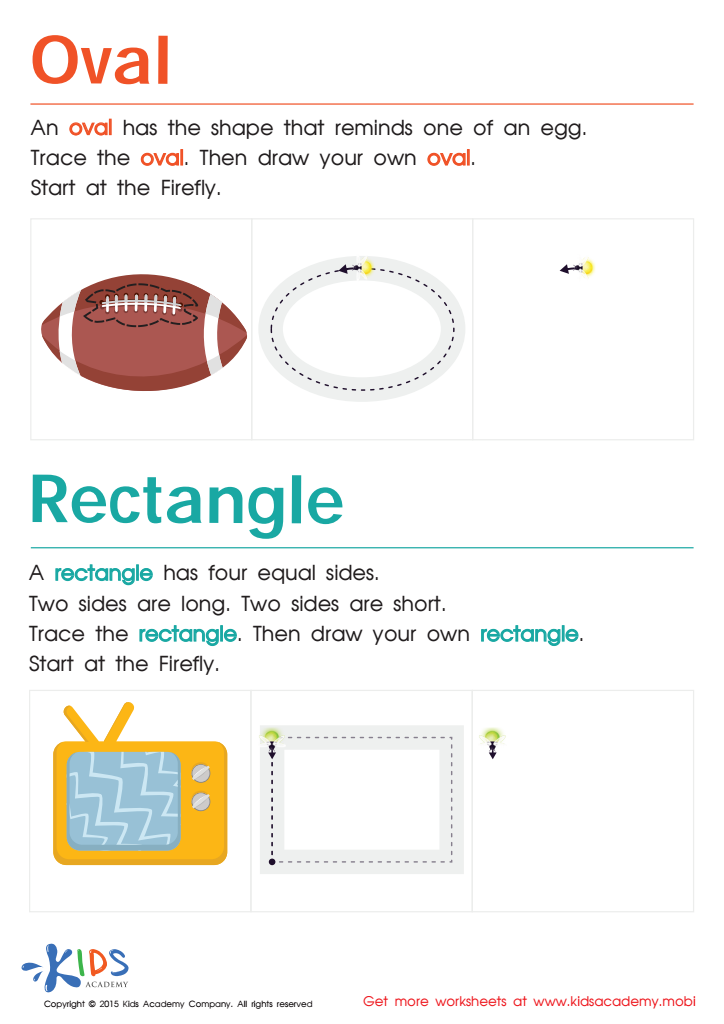
Easy Drawing of Ovals And Rectangles Worksheet
Kids Academy offers free geometry worksheets to make learning more fun and interesting. Trace an oval, rectangle, and many other shapes!
Easy Drawing of Ovals And Rectangles Worksheet
Worksheet
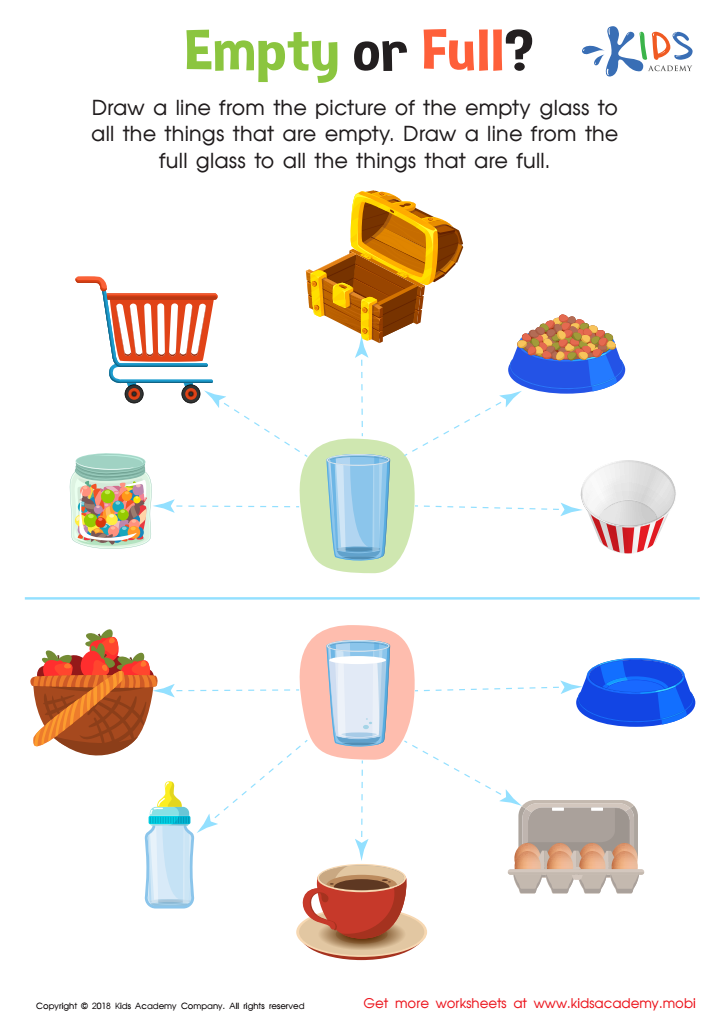
Empty or Full? Worksheet
Let students get to grips with the concepts of empty and full with this PDF worksheet. It uses fun, bright pictures to help them comprehend the difference and also helps develop fine-motor skills with tracing lines. Kids will be proud of themselves as they get answers right!
Empty or Full? Worksheet
Worksheet
Join Kids Academy for Free
Who is primarily going to use this learning content?



.jpg)




Visual perception skills are critical for children aged 4-9 as they form the foundation for learning, especially in subjects like math. These skills enable children to interpret and make sense of what they see, allowing them to recognize shapes, understand spatial relationships, and differentiate between similar objects. When children develop strong visual perception skills, they can more easily grasp mathematical concepts such as counting, sorting, and even basic addition and subtraction.
For parents and teachers, investing in these skills is essential, as children with weak visual perception may struggle with math and lose confidence in their abilities. This can lead to frustration, disengagement, and long-term academic challenges. By incorporating games and activities that strengthen visual discrimination, figure-ground discrimination, and visual memory, adults can create an enriching learning environment that boosts children's overall performance.
Moreover, these skills play a role beyond academics; they enhance problem-solving and critical thinking abilities. Caring about visual perception skills today means equipping children with the tools they need for lifelong learning and success, not only in math but in all areas of their development. Hence, fostering visual perception in early education can have profound, positive implications for a child's esteem and future achievements.








