
Enhancing observation skills Normal Measurement Worksheets for Ages 4-9
3 filtered results
Difficulty Level
Grade
Age
-
From - To
Subject
Activity
Standards
Enhance your child's observation skills with our specially designed Normal Measurement Worksheets for ages 4-9. These engaging worksheets promote critical thinking and attention to detail through fun activities that challenge young learners to explore measurements in their environment. Designed to improve skills like comparing lengths, understanding sizes, and recognizing patterns, these worksheets foster early mathematical abilities while keeping learning enjoyable. Perfect for home or classroom use, these printable activities encourage independence and confidence in young learners. Download our free worksheets today to give your child a head start in mastering essential observational skills through interactive and educational play!
Favorites
With answer key
Interactive
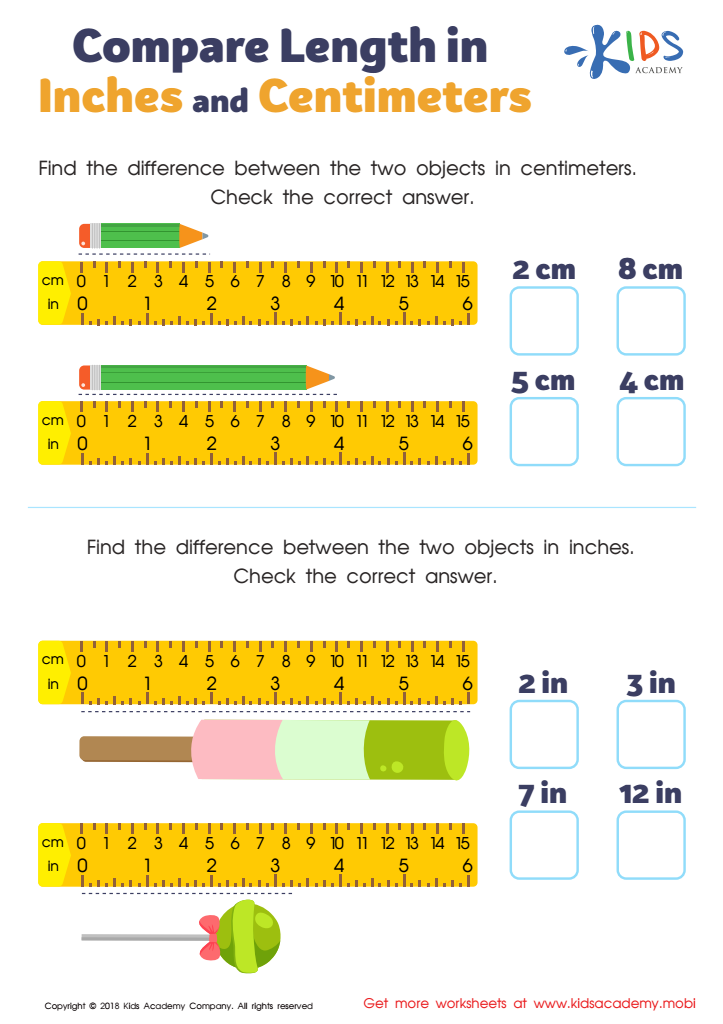
Compare Length in Inches and Centimeters Worksheet
This worksheet has your child measuring objects in both centimeters and inches. The first task requires measuring both objects in centimeters, then finding their difference. The second task is the same but in inches.
 Assign to My Students
Compare Length in Inches and Centimeters Worksheet
Worksheet
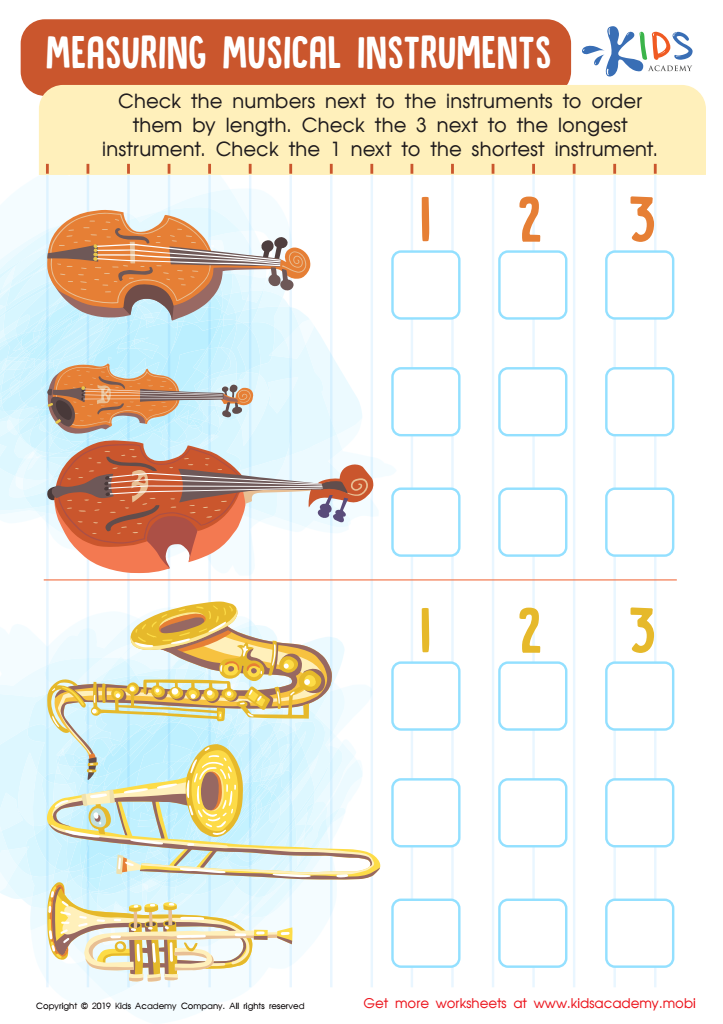
Measuring Musical Instruments Worksheet
Learning measurements can be tricky, but this worksheet makes it easy. Ask your child to identify the instruments in the pictures. Then, order them by length using the numbers. 3 is the longest, 1 is the shortest. Simple exercises like this will help them understand the different metric systems.
Measuring Musical Instruments Worksheet
Worksheet
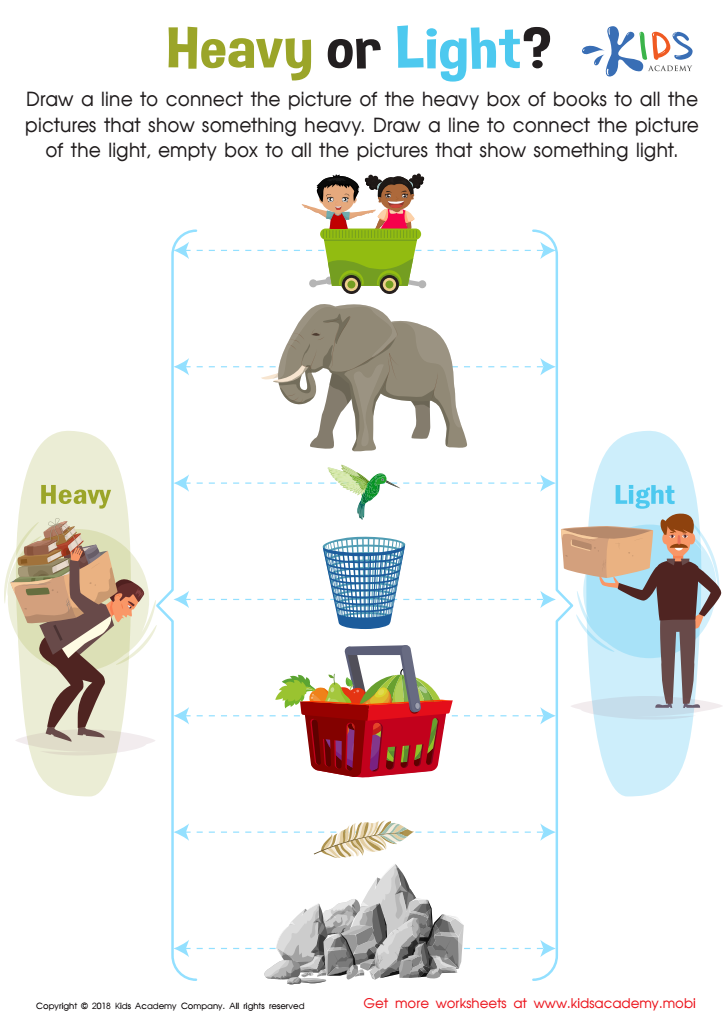
Heavy or Light? Worksheet
Kids can struggle to understand weight comparison, as size and mass matter. This free PDF helps develop fine-motor and hand-eye skills as kids trace lines to match pictures. The familiar pictures create concrete representations, ideal for learning more complex concepts.
Heavy or Light? Worksheet
Worksheet
Join Kids Academy for Free
Who is primarily going to use this learning content?




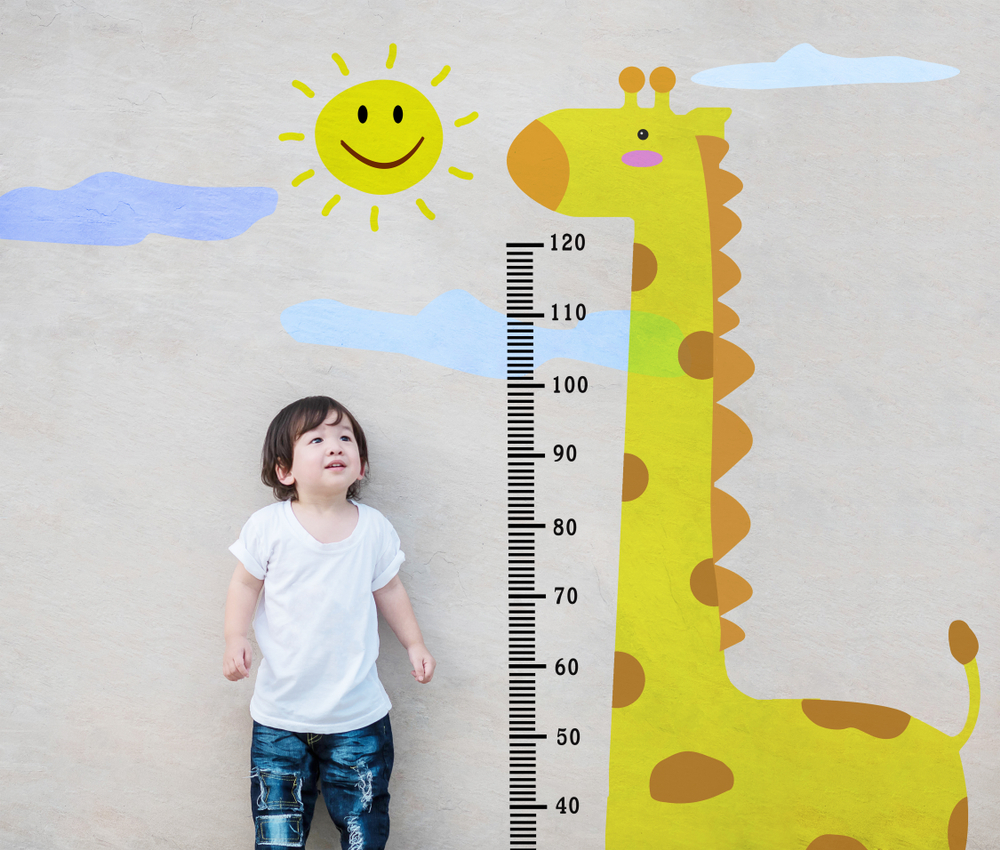



Enhancing observation skills in children aged 4-9 is essential for their overall development. During these formative years, children are naturally curious and eager to explore their surroundings. Cultivating strong observation skills not only supports their learning but also fosters critical thinking and problem-solving abilities.
Parents and teachers play a pivotal role in harnessing this potential. By encouraging focused observation, adults help children become more aware of their environment, promote cognitive engagement, and nurture their creativity. For example, when a child observes the world around them, they learn to make connections, recognize patterns, and develop language skills by describing their findings.
Moreover, strong observation skills can enhance children's ability to follow instructions and engage in scientific inquiry, laying the groundwork for a lifelong love of learning. Enhancing these skills also leads to better social interactions, as children learn to read nonverbal cues and empathize with others.
Incorporating observation-focused activities, such as nature walks, art projects, or collaborative tasks, is vital. By being involved and providing guidance, parents and teachers can cultivate an environment conducive to developing these critical observational skills, equipping children with the tools needed for success in school and beyond.








