Reading comprehension Normal Multiplication Worksheets for Ages 4-9
5 filtered results
-
From - To
Explore our engaging Reading Comprehension Normal Multiplication Worksheets designed for children ages 4 to 9! Perfect for enhancing literacy and math skills, these worksheets combine fun stories with multiplication exercises that captivate young learners. Kids will read simple yet vibrant narratives while answering questions that reinforce both comprehension and arithmetic principles. With a variety of topics and formats, these worksheets promote critical thinking as learners make connections between text and numbers. Ideal for classroom use or at-home practice, our materials support early education and build a strong foundation for future academic success. Enhance learning today with our interactive resources!
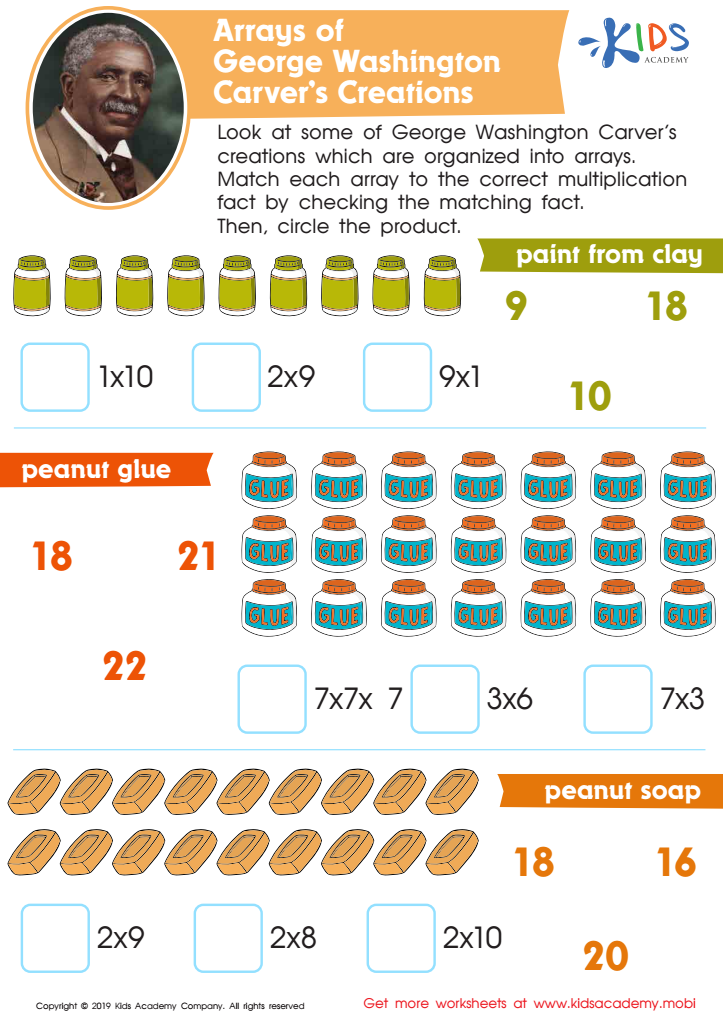
Arrays of George Washington Carver’s Creations Worksheet
 Assign to My Students
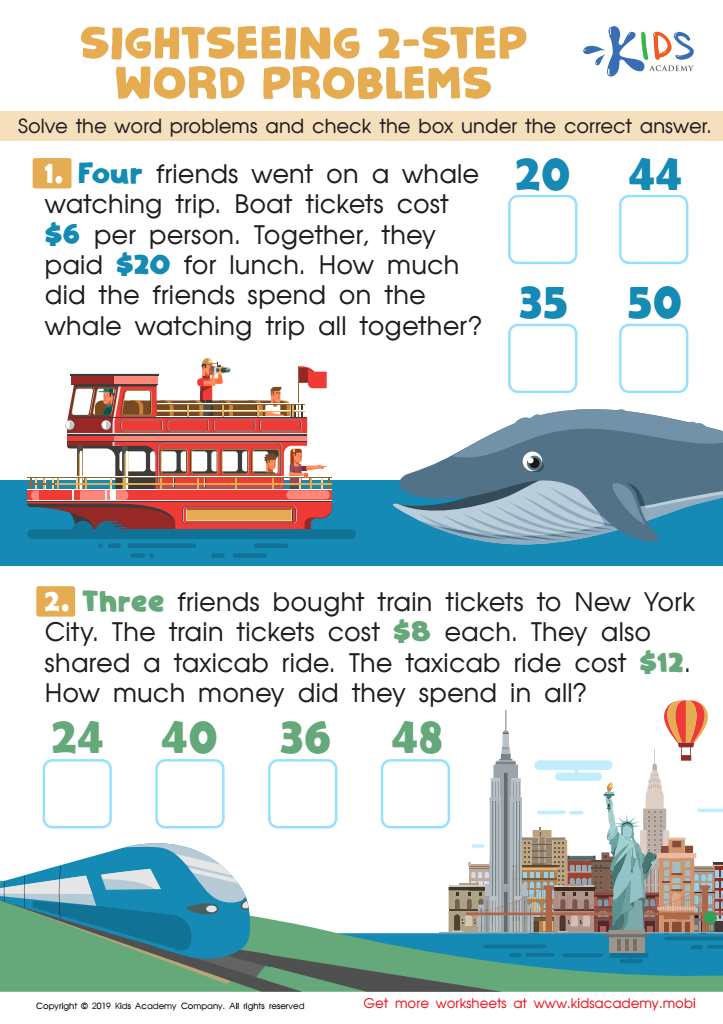
Sightseeing 2-Step Word Problems Worksheet
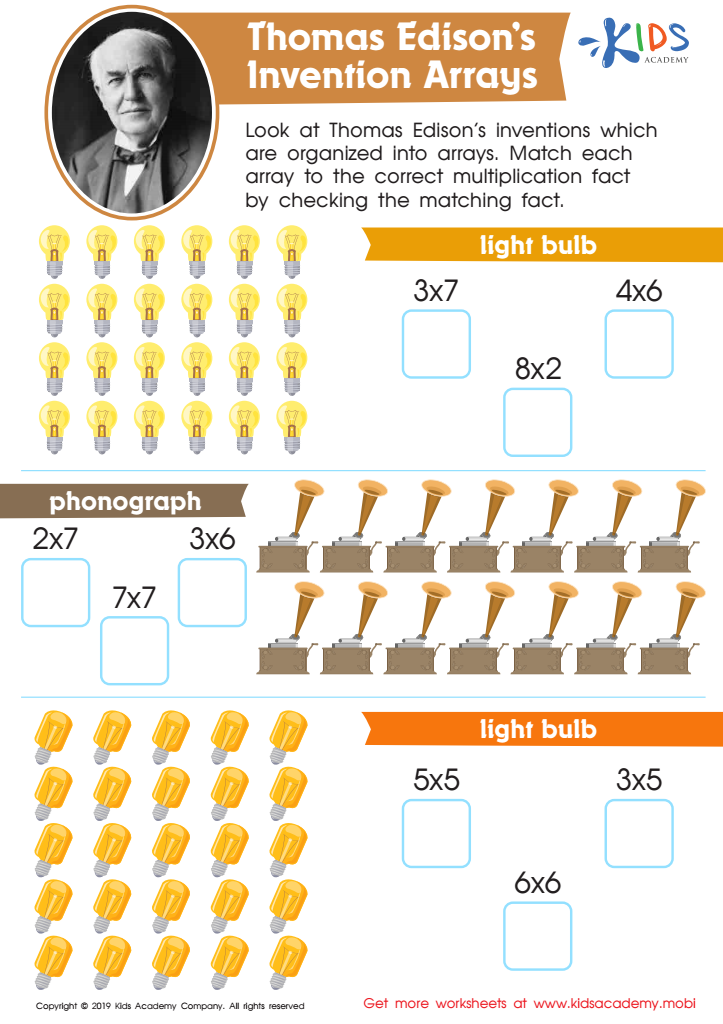
Thomas Edison’s Invention Arrays Worksheet
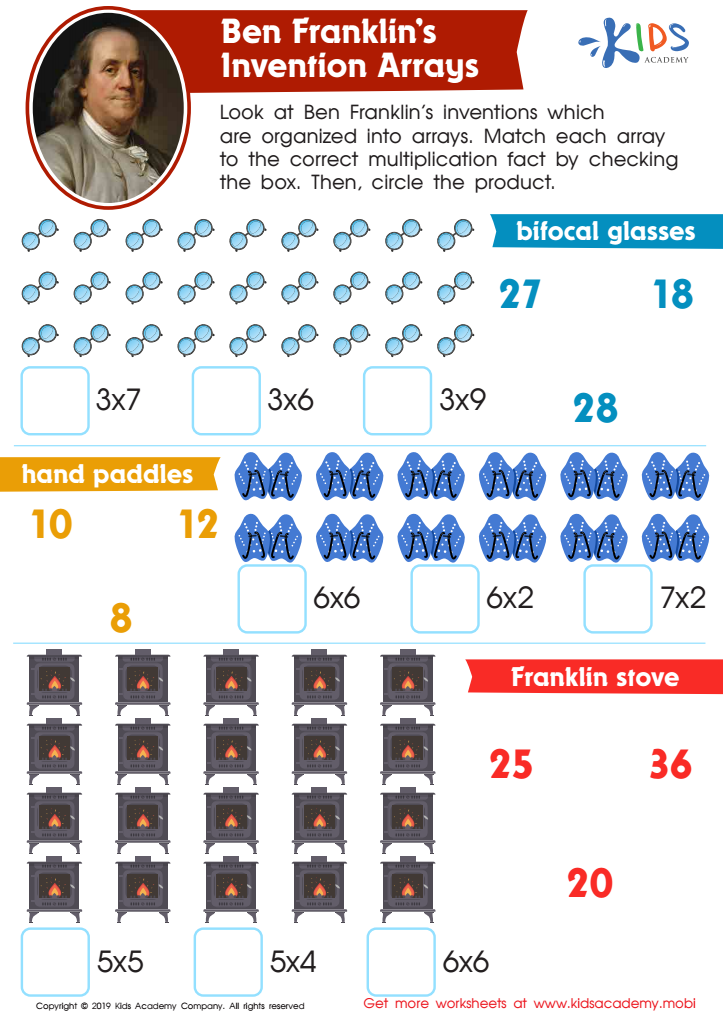
Ben Franklin’s Invention Arrays Worksheet
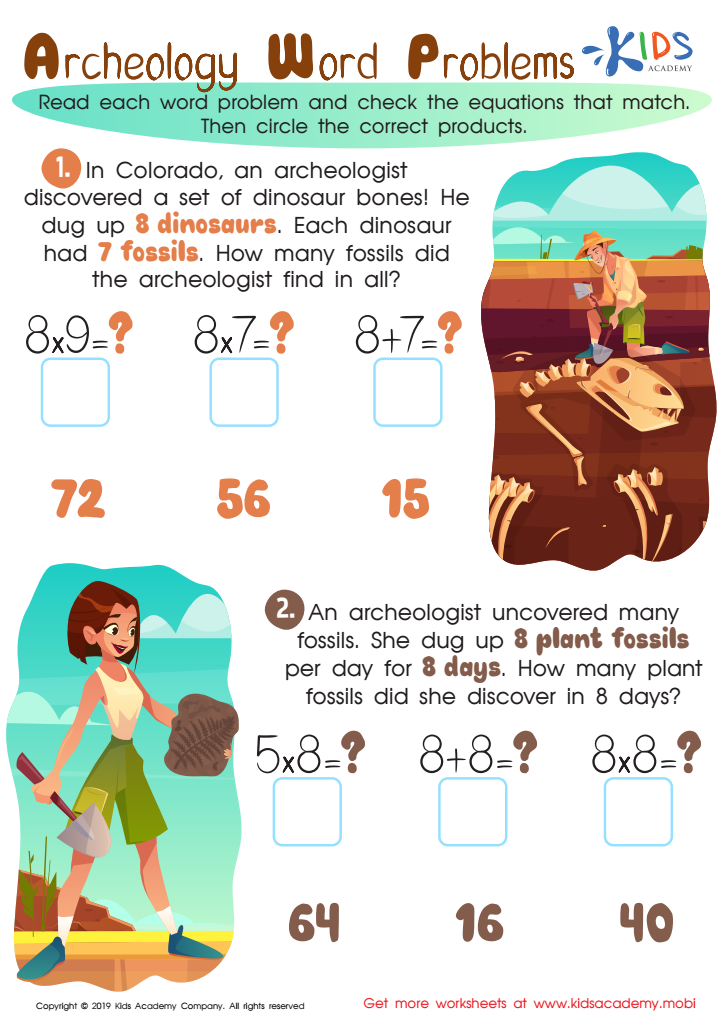
Archeology Word Problems Worksheet








Reading comprehension and proficiency in multiplication are essential skills that form the foundation for future academic success in children aged 4-9. For parents and teachers, promoting reading comprehension is crucial because it enhances a child's ability to understand and engage with texts, which influences their overall literacy development. Strong comprehension skills enable children to grasp concepts across subjects, fostering critical thinking and the love of reading.
Similarly, normal multiplication skills are vital during these formative years. Mastery of multiplication lays the groundwork for more advanced math concepts and problem-solving abilities. It boosts a child’s confidence in math and strengthens their ability to tackle calculations efficiently. Teaching multiplication through engaging methods, like games or visual aids, can make learning enjoyable and memorable.
Together, these skills support a child's ability to navigate an increasingly complex world. Enhanced reading comprehension aids in interpreting questions and instructions, while solid multiplication skills contribute to their analytical capabilities. By focusing on these areas, parents and teachers not only promote academic achievement but also inspire a lifelong love for learning. Fostering these skills encourages children to explore ideas, solve problems, and develop resilience as they encounter new challenges in their educational journey.








