Understanding patterns Normal Multiplication Worksheets for Ages 4-9
3 filtered results
-
From - To
Unlock the key to mastering multiplication with our "Understanding Patterns: Normal Multiplication Worksheets for Ages 4-9." Designed for young learners, these printable worksheets ensure a solid foundation in math by using engaging patterns to teach multiplication concepts. By integrating familiar illustrations and intuitive sequences, children gradually develop their multiplication skills while having fun. Suitable for ages 4-9, these resources cultivate critical thinking and problem-solving abilities, bridging the gap between learning and play. Perfect for both classroom and home use, watch your students or children confidently grow in their math journey with these well-structured and captivating worksheets.
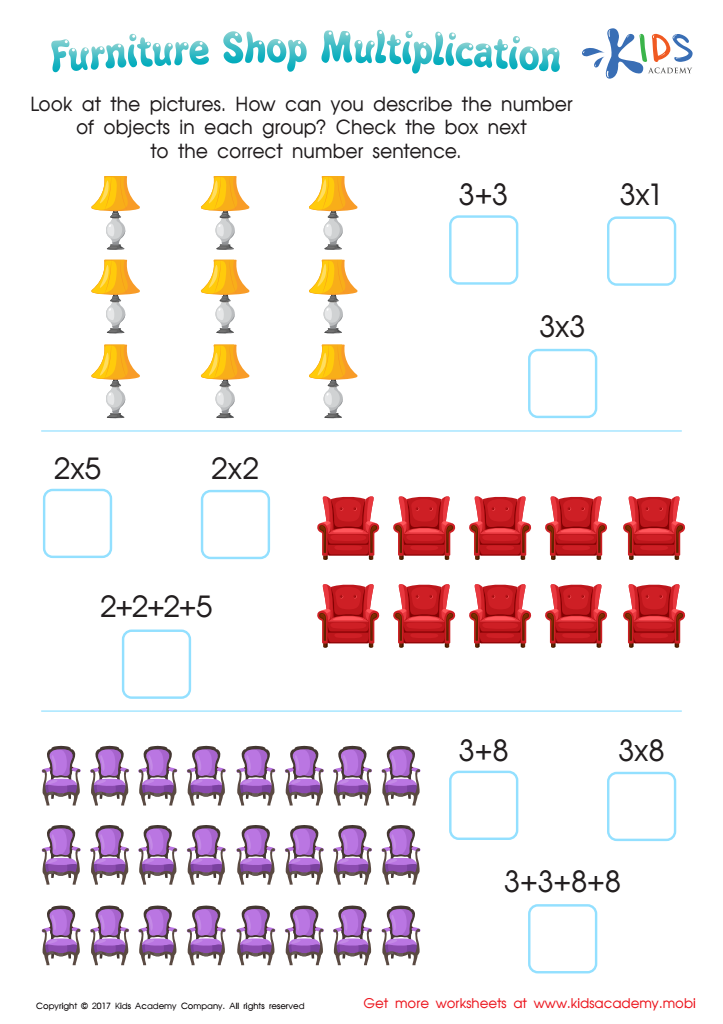
Furniture Shop Worksheet
 Assign to My Students
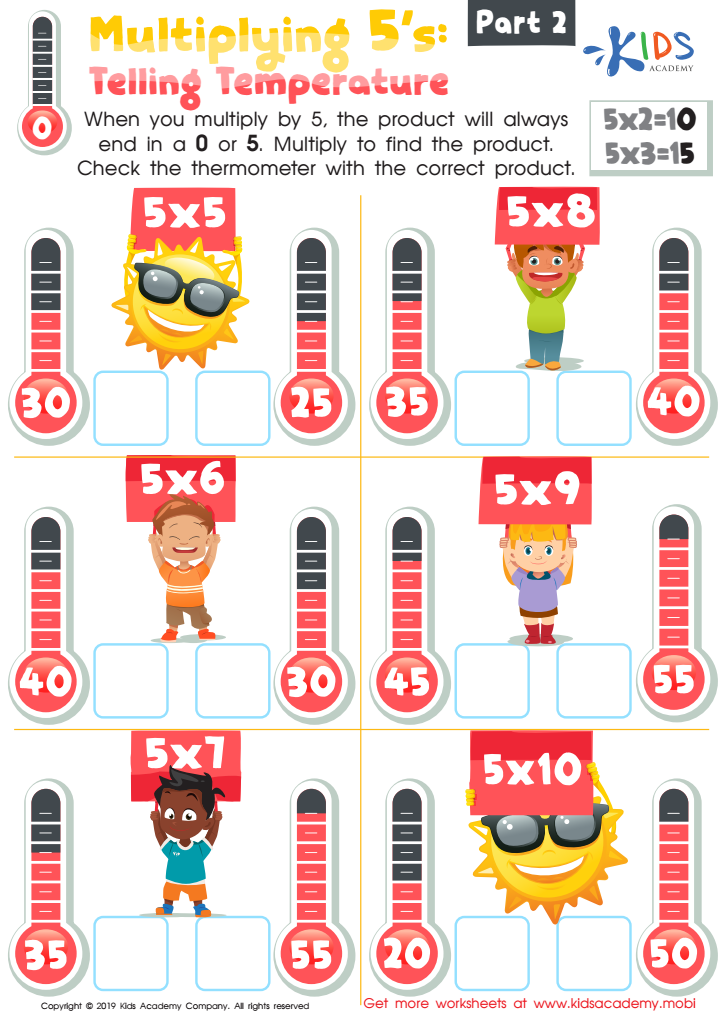
Multiplying 5’s: Telling Temperature Part 2 Worksheet
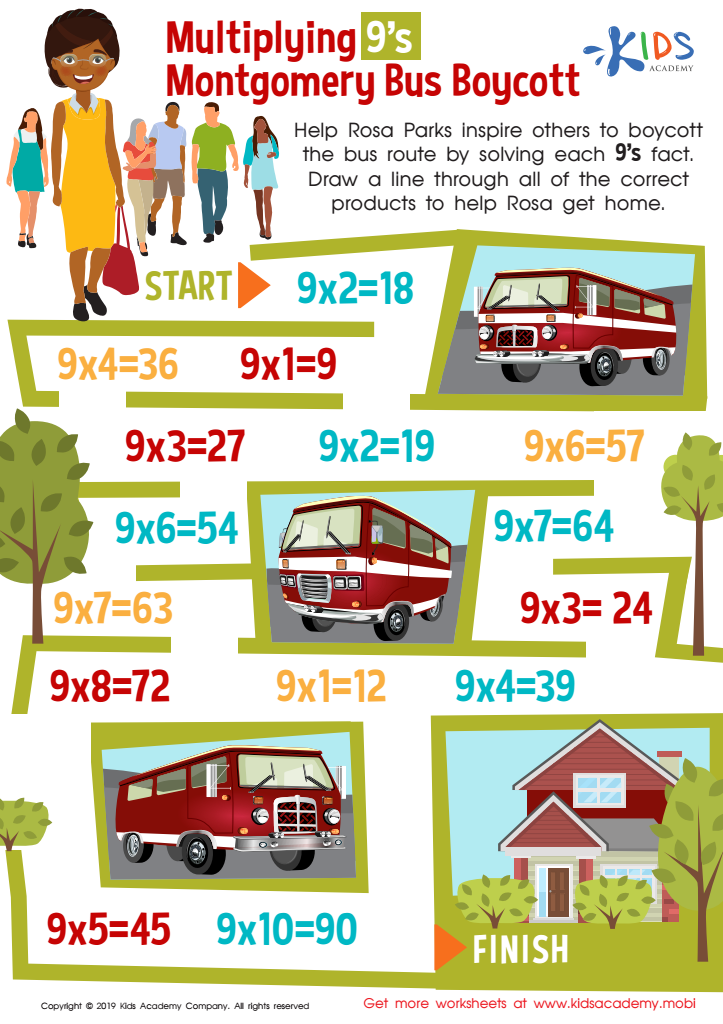
Multiplying 9’s Montgomery Bus Boycott Worksheet








Understanding the principles of normal multiplication is crucial for children ages 4-9, as it lays a solid foundation for their future mathematical learning. Patterns in multiplication, such as repeated addition, contribute to a child's number sense and mental arithmetic skills. By grasping these concepts early, children develop confidence and ease in tackling more complex math problems later on.
For teachers, introducing multiplication concepts through engaging activities and visual aids helps make abstract ideas more tangible. Recognizing patterns, such as multiplying by 2s, 5s, and 10s, allows children to build shortcuts and improve their speed. It's an excellent way to make learning enjoyable and meaningful, thereby increasing students' motivation.
Parents play an equally important role. Home reinforcement through playful activities like counting objects, playing number games, or using multiplication in everyday situations (like cooking or shopping) extends learning beyond the classroom. This consistent practice helps instill a deeper, practical understanding of how numbers work, solidifying their knowledge.
Both parents and teachers help ensure children have a well-rounded, supportive learning environment. By prioritizing an understanding of multiplication patterns, they are investing in the child’s long-term success, making math less intimidating and more accessible as they progress in their educational journey.








