Pattern recognition Normal Patterns Worksheets for Ages 4-9
5 filtered results
-
From - To
Discover our engaging Pattern Recognition Normal Patterns Worksheets tailored for ages 4-9 at Kids Academy! These worksheets are designed to enhance young learners' mathematical skills by teaching them to identify and complete various normal patterns, fostering critical thinking and logical reasoning. Ideal for early learners, our resources make learning fun and interactive. Each worksheet is crafted to progressively build pattern recognition expertise, ensuring kids master this foundational skill. Whether in the classroom or at home, our printable worksheets offer an effective educational tool to support your child’s journey into the world of patterns and sequences. Explore now!
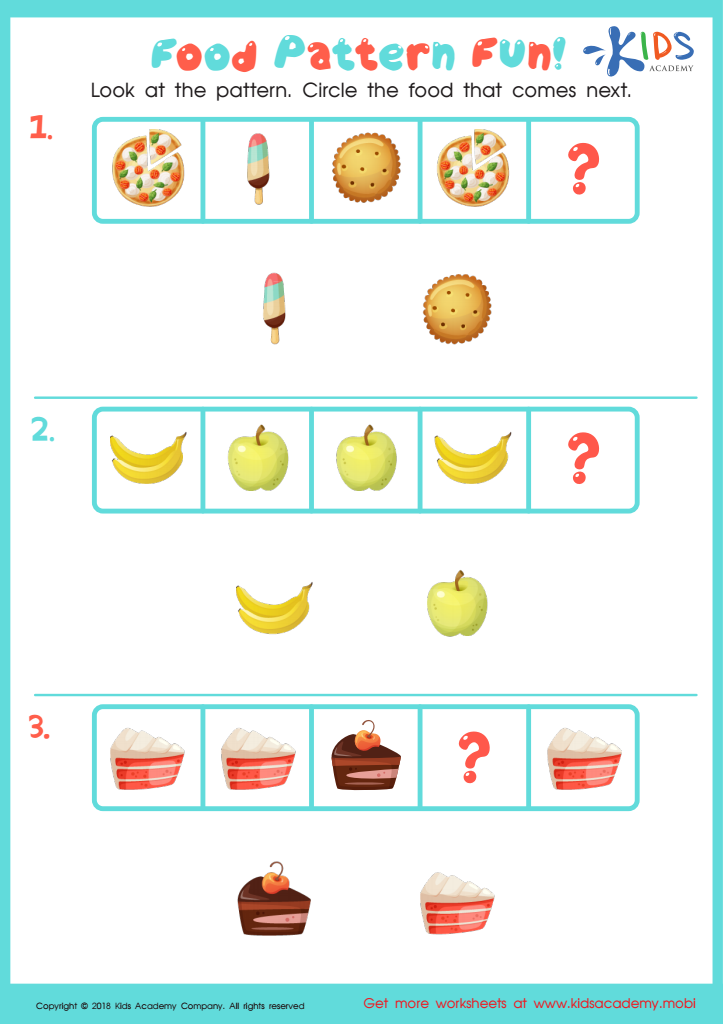
Food Pattern Fun Worksheet
 Assign to My Students
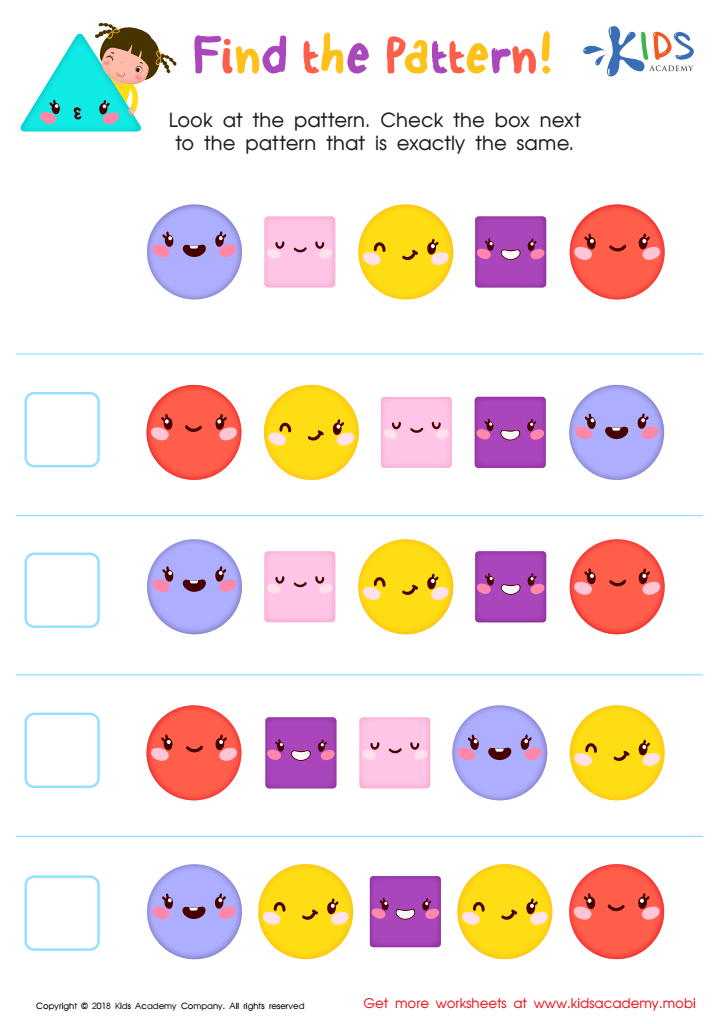
Find the Pattern Worksheet
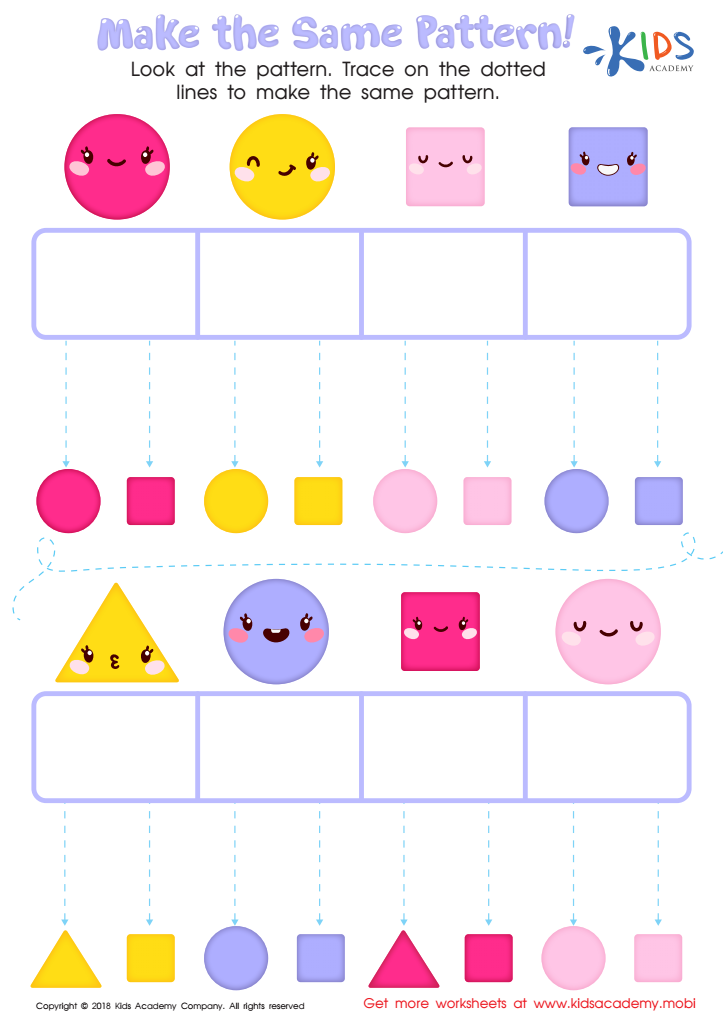
Make the Same Pattern Worksheet
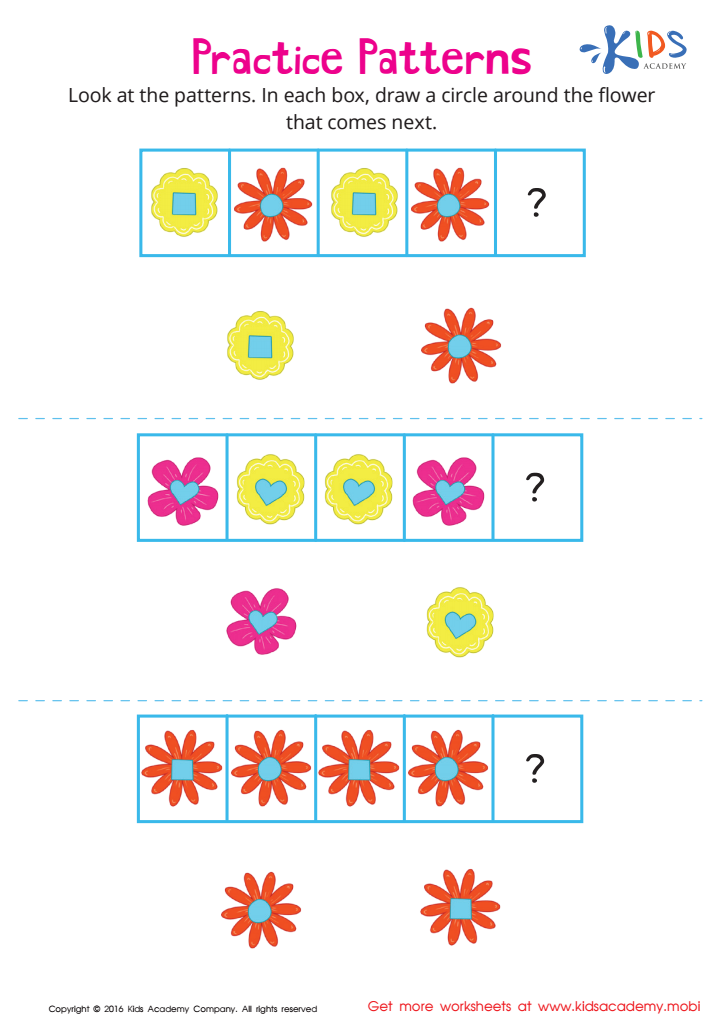
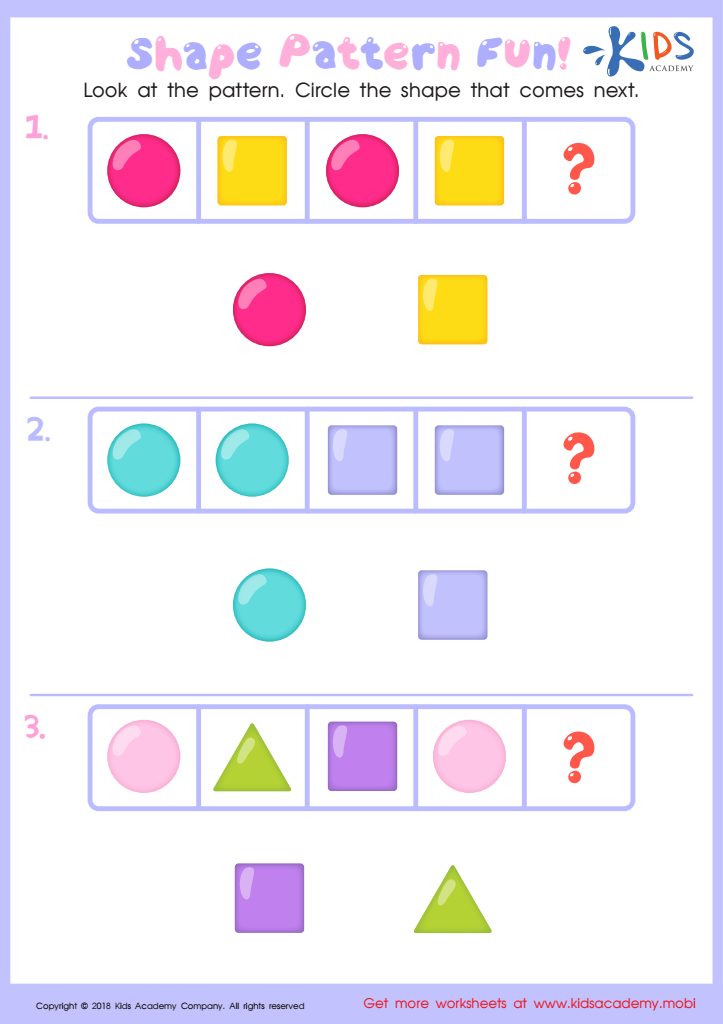
Shape Pattern Fun Worksheet








Pattern recognition is a fundamental cognitive skill that forms the basis for a child's ability to make sense of their environment, and it is crucial for children aged 4-9. Parents and teachers should care about nurturing this skill because it plays a key role in their academic and everyday life successes.
Firstly, it sets the foundation for mathematical skills. Recognizing patterns helps children understand sequences, predict outcomes, and develop problem-solving strategies, which are essential for learning mathematics. For instance, identifying numerical patterns directly relates to performing arithmetic operations and understanding mathematical concepts.
Secondly, pattern recognition supports language development. In reading and writing, children notice patterns in letters, sounds, and word structures, which helps them decode new words and understand sentence structure. This skill accelerates their reading fluency and comprehension.
Additionally, observing patterns is critical in developing logical thinking. Children learn to categorize, connect disparate ideas, and identify relationships. This fosters a stronger understanding of cause and effect, promoting critical thinking and reasoning skills.
Moreover, it aids in social understanding and integration. Recognizing behavioral patterns enables children to navigate social situations more effectively, predict actions, and respond appropriately.
In summary, focusing on pattern recognition in early childhood paves the way for academic achievement and practical life skills, making it a worthy focus for both parents and educators.








