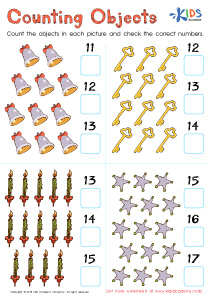
Enhancing Counting Skills Normal Place Value Worksheets for Ages 4-9
3 filtered results
Difficulty Level
Grade
Age
-
From - To
Subject
Activity
Standards
Enhancing counting skills is vital for young learners aged 4-9 on their mathematical journey. Our Normal Place Value Worksheets provide engaging, age-appropriate activities that stimulate students' understanding of numbers and their positions. These worksheets focus on reinforcing counting by helping kids visualize and practice place value concepts in an interactive manner. Created to support both classroom learning and home practice, these resources feature colorful designs and practical exercises that hold children’s interest while boosting their confidence in math. Explore our collection today and watch your child flourish in their counting and number comprehension skills!
Favorites
With answer key
Interactive
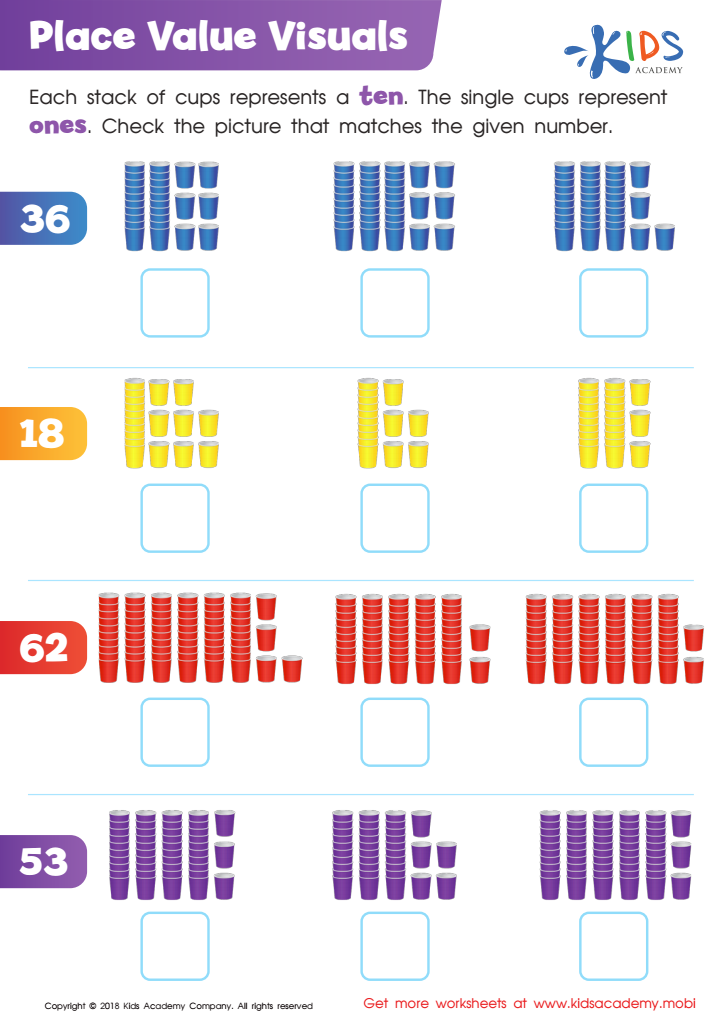
Place Value Visuals Worksheet
Help your child count the cups in each picture, using the simple rule that each stack is 10 and each single cup is 1. Ask them to match the number on the left to the picture on the right. No need to count each cup individually; since each stack is 10, 3 stacks is 30 and so on.
 Assign to My Students
Place Value Visuals Worksheet
Worksheet
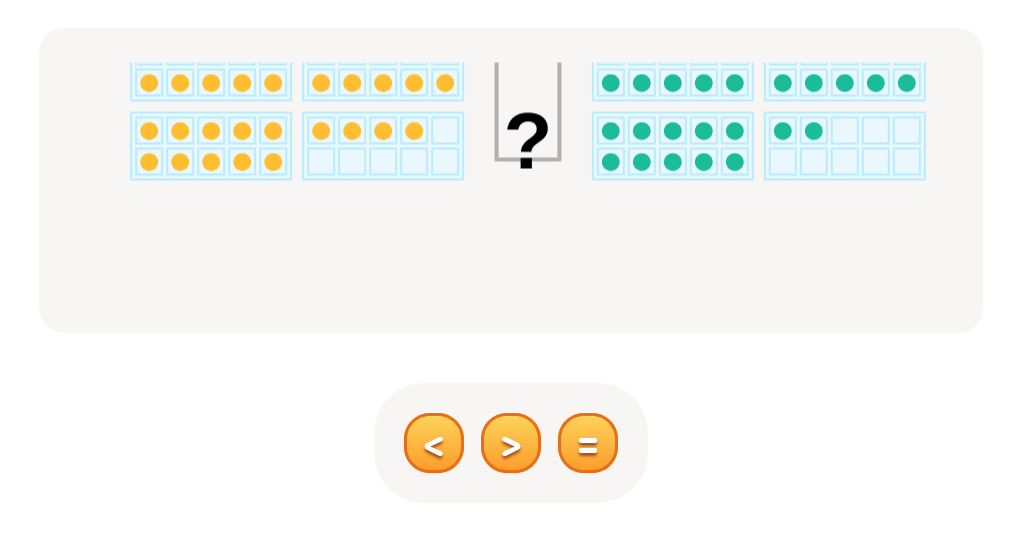

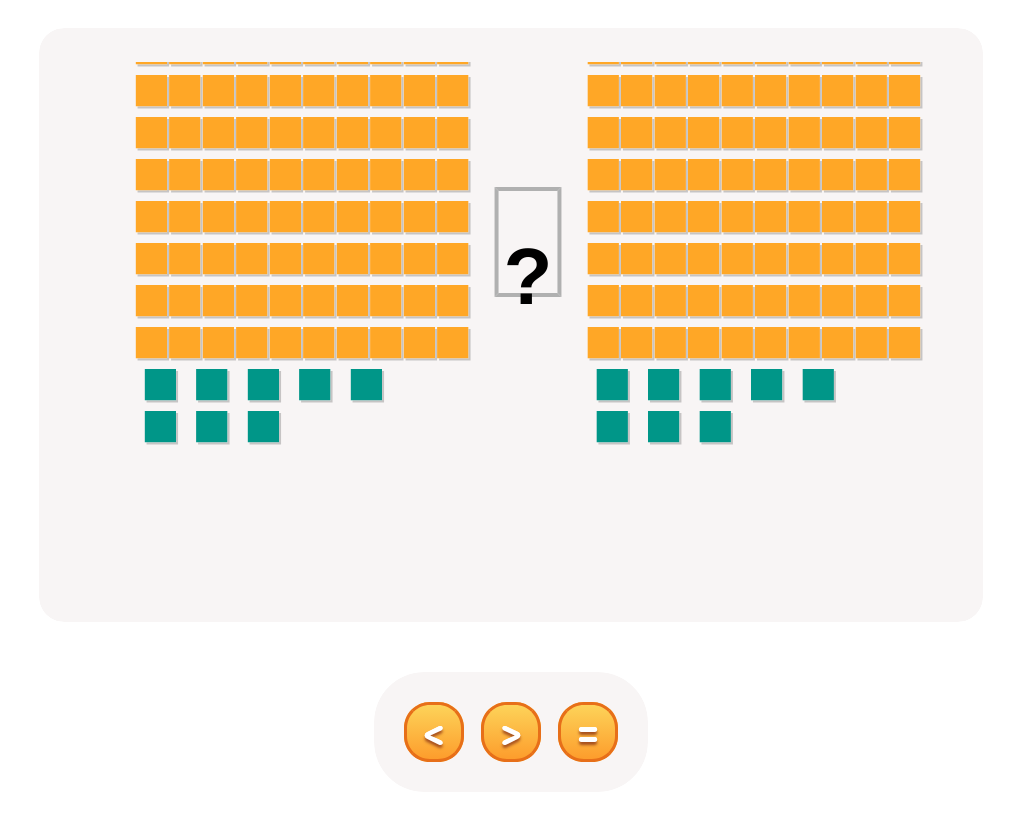
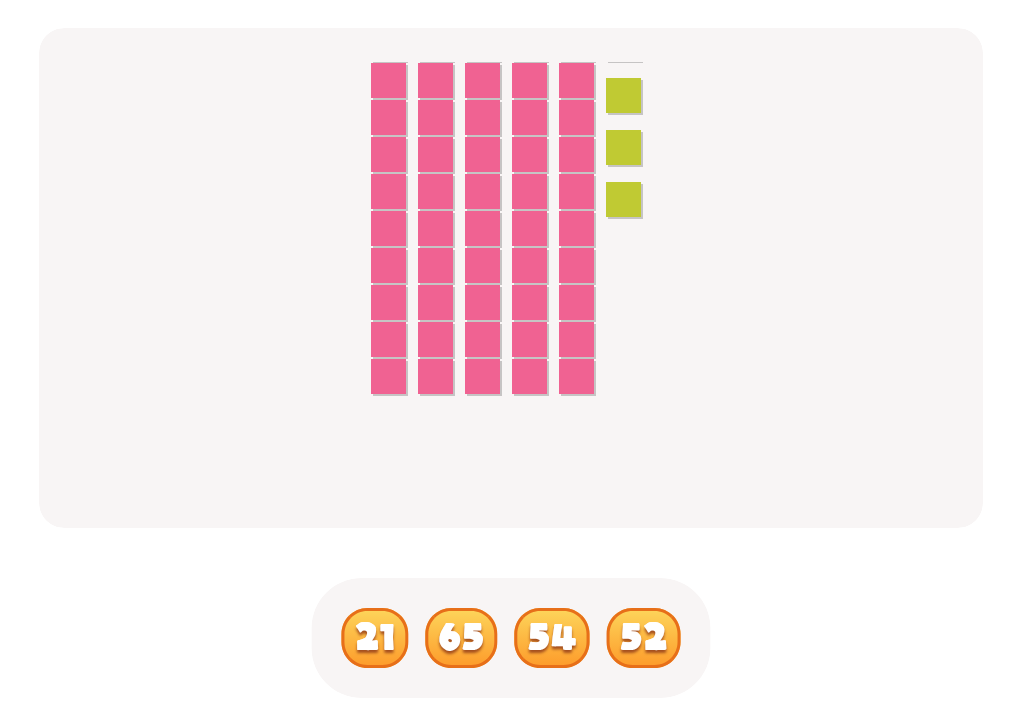
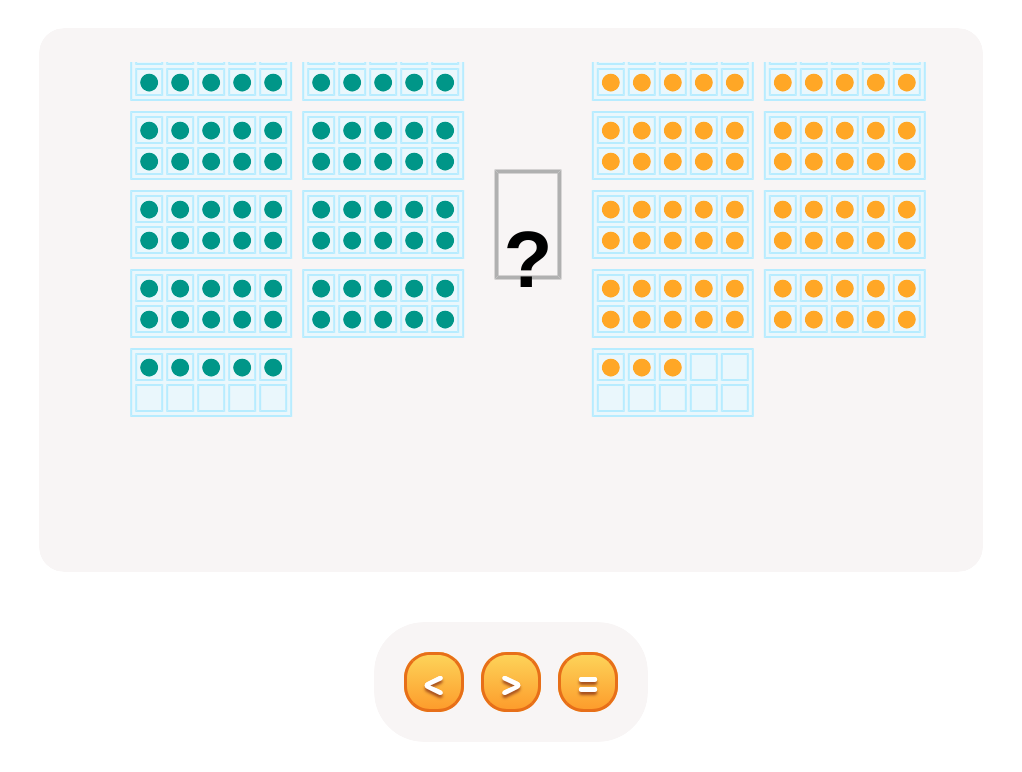
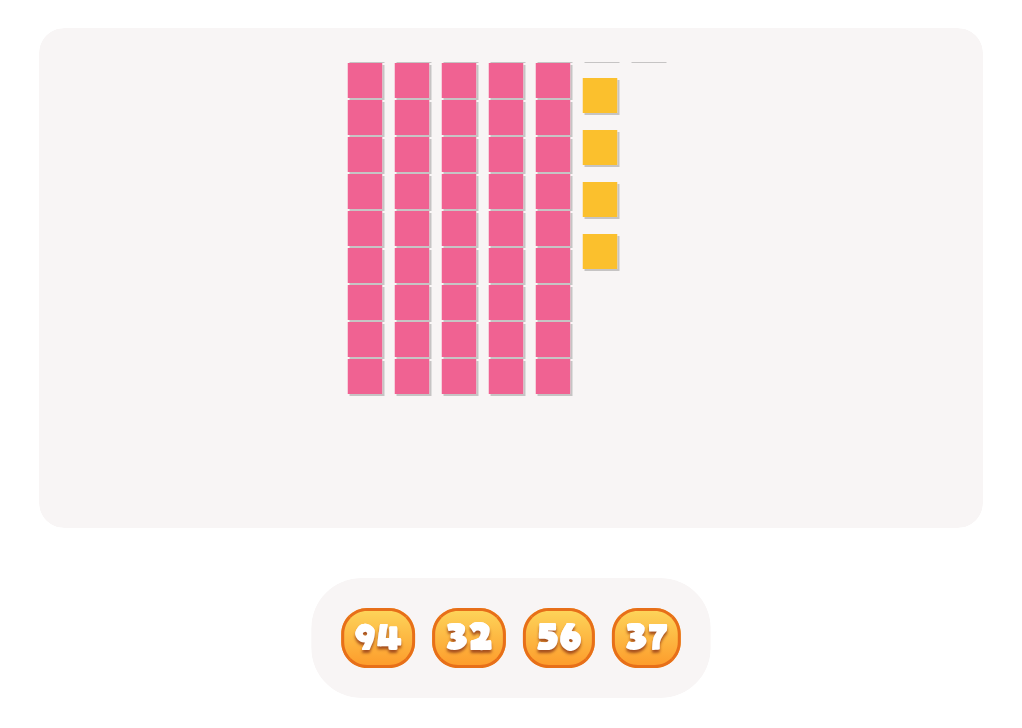
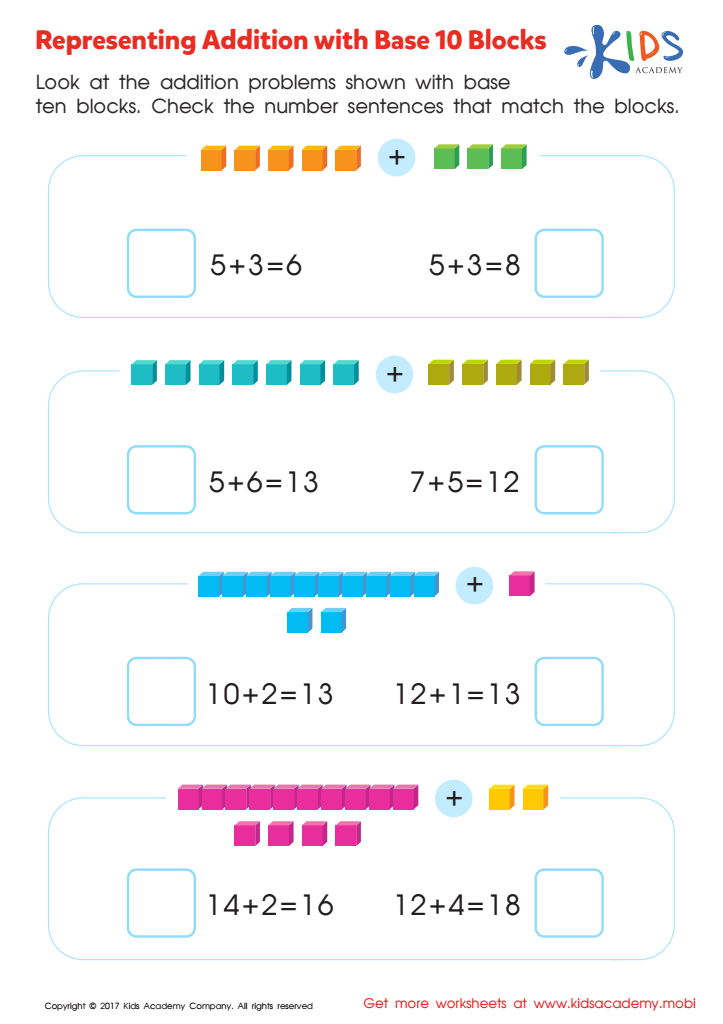
Representing Addition with Base 10 Blocks Worksheet
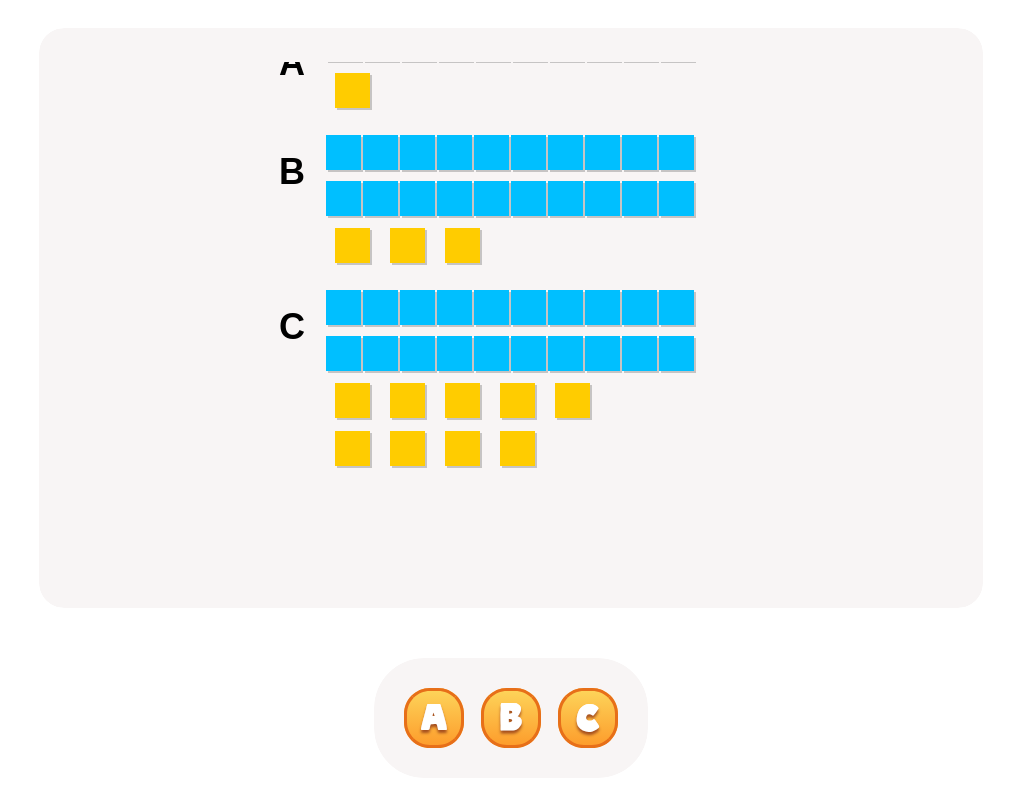
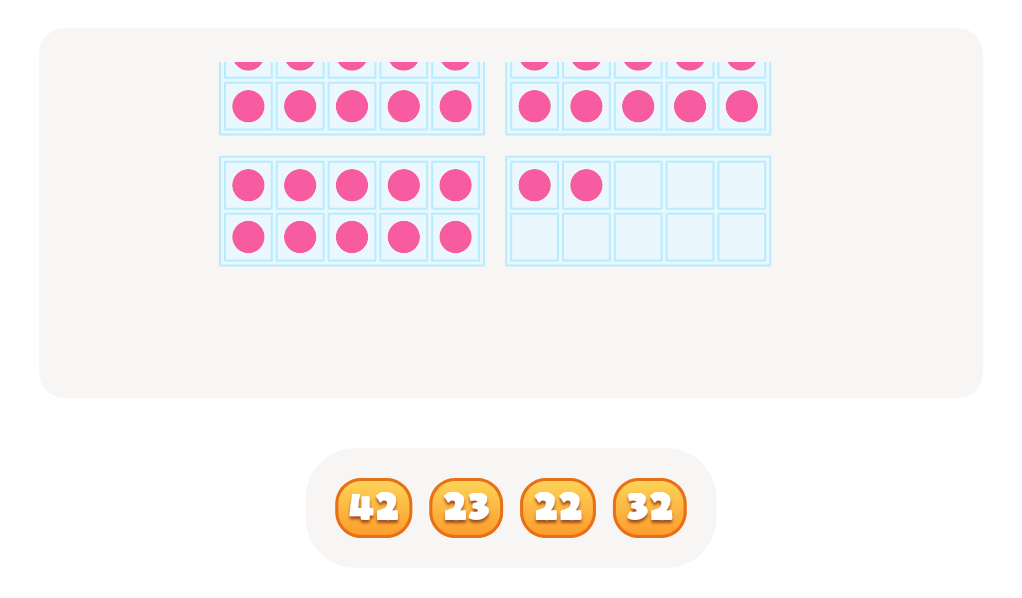
Solve addition problems with your little one: help them count the blocks, then select the correct equation from the choices. Circle the answer. Word play and math make a winning combo!
Representing Addition with Base 10 Blocks Worksheet
Worksheet
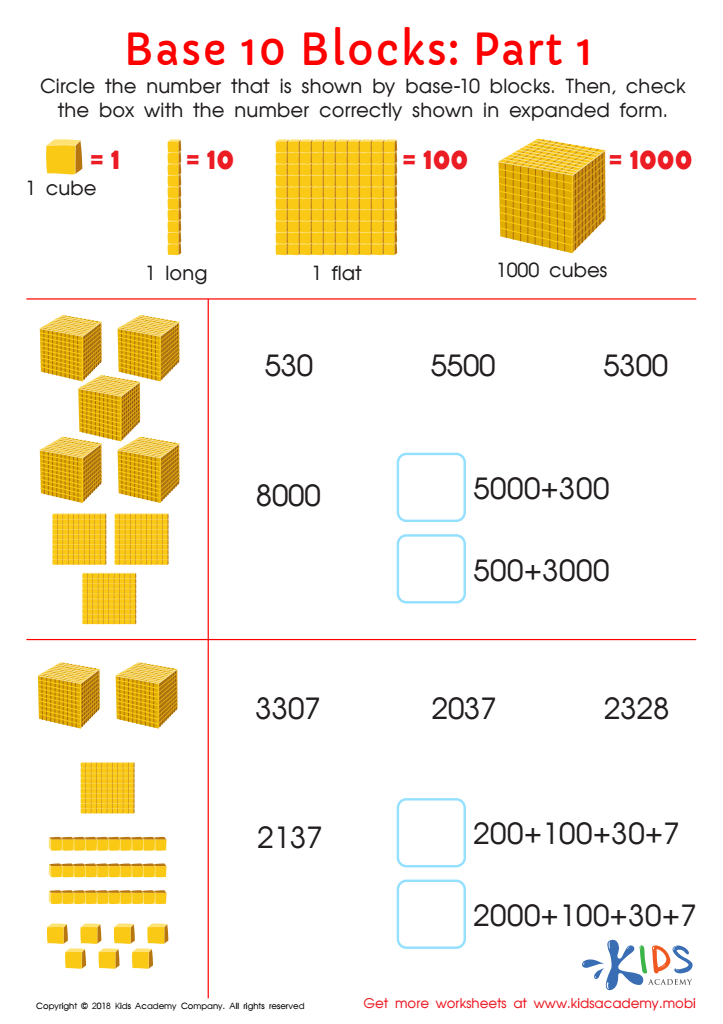
Base 10 Blocks Worksheet: Part 1
Need help teaching place value without manipulatives? Kids Academy has you covered! Our printable worksheet will help learners review the language like cubes, longs and flats. Just use the images at the top as a reference and have learners circle the answers and select its expanded form. Kids will master one to four-digit numbers without needing manipulatives.
Base 10 Blocks Worksheet: Part 1
Worksheet
Join Kids Academy for Free
Who is primarily going to use this learning content?








Enhancing counting skills and understanding place value is crucial for children aged 4-9, as these foundational concepts form the building blocks for more complex mathematical ideas. Early familiarity with counting establishes a strong numerical sense, which is essential for performing basic arithmetic and problem-solving later on. As children grasp the concept of normal place value, they begin to understand the significance of digit positions in numbers, which helps in comprehending larger numbers and operations such as addition and subtraction.
Furthermore, supporting counting skills fosters confidence in math, an area where many children can struggle due to anxiety or negative experiences. By focusing on these skills early, parents and teachers can enhance students' engagement in math and reduce future math-related challenges. This foundational knowledge also reinforces critical thinking and cognitive development, improving logical reasoning abilities that extend beyond mathematics into other disciplines.
Additionally, promoting these skills at home and in the classroom nurtures a child's love for learning. Engaging activities such as games and fun exercises can make learning enjoyable, encouraging children to persevere through challenges and view math positively. Ultimately, investing in counting skills and place value understanding during these formative years is pivotal for academic success and lifelong learning.