Problem-Solving Skills Normal Two-step Word Problems Worksheets for Ages 4-9
9 filtered results
-
From - To
Enhance your child's problem-solving skills with our Normal Two-step Word Problems Worksheets designed for ages 4-9! These engaging printable worksheets help young learners develop critical thinking and math skills by solving two-step word problems. Tailored to challenge kids in a fun way, our exercises use relatable scenarios to teach essential math concepts such as addition, subtraction, multiplication, and division. Perfect for classroom use or at-home practice, these worksheets are an excellent resource for teachers and parents looking to build confidence and proficiency in early math learners. Unlock your child's potential and make learning math an exciting adventure!
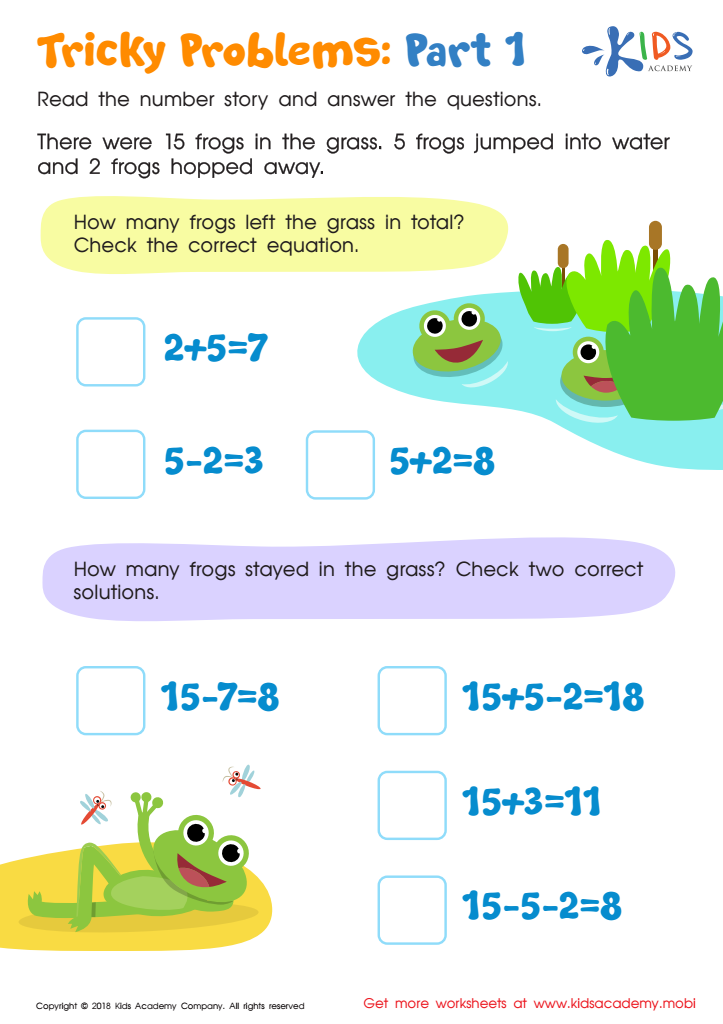
Tricky Problems Worksheet: Part 1
 Assign to My Students
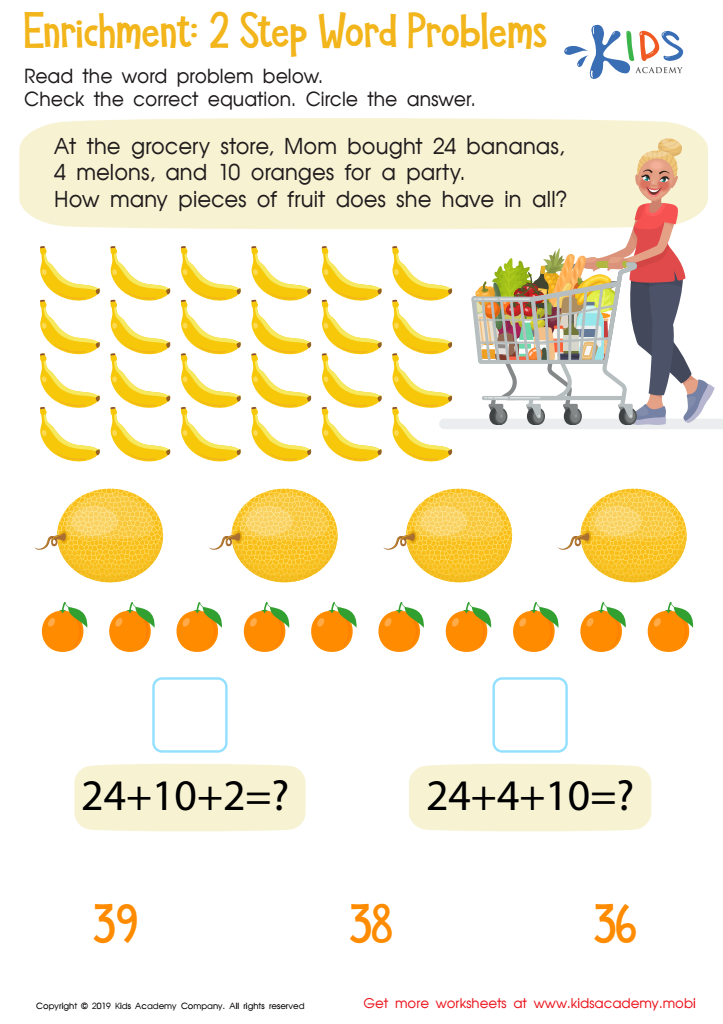
Enrichment -2 Step Word Problems Worksheet
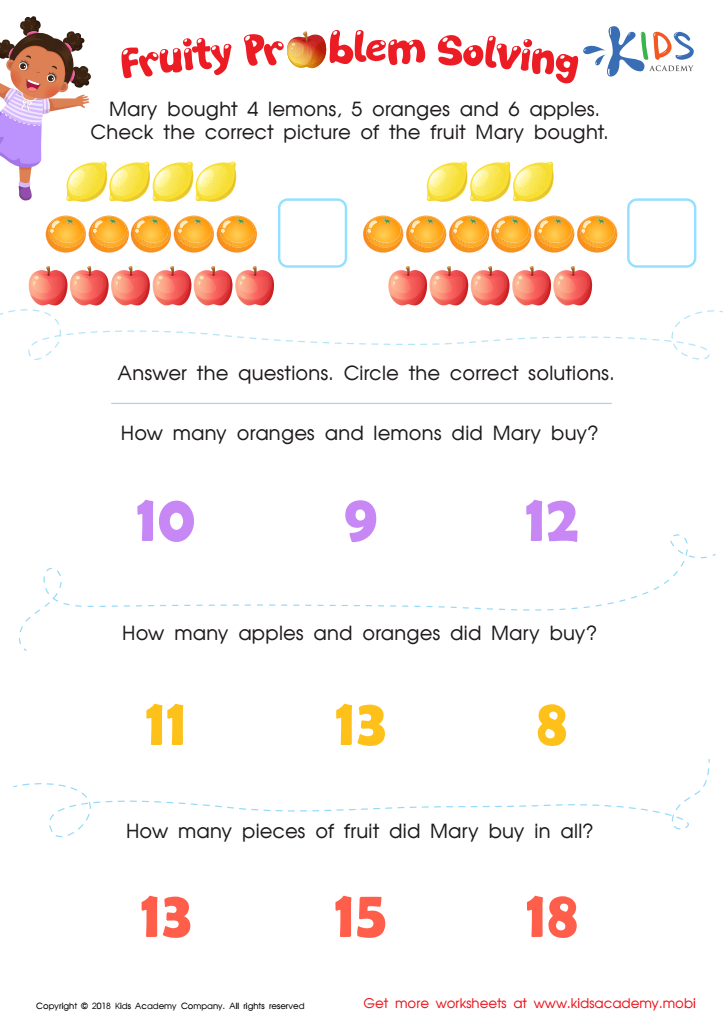
Fruity Problem Solving Worksheet
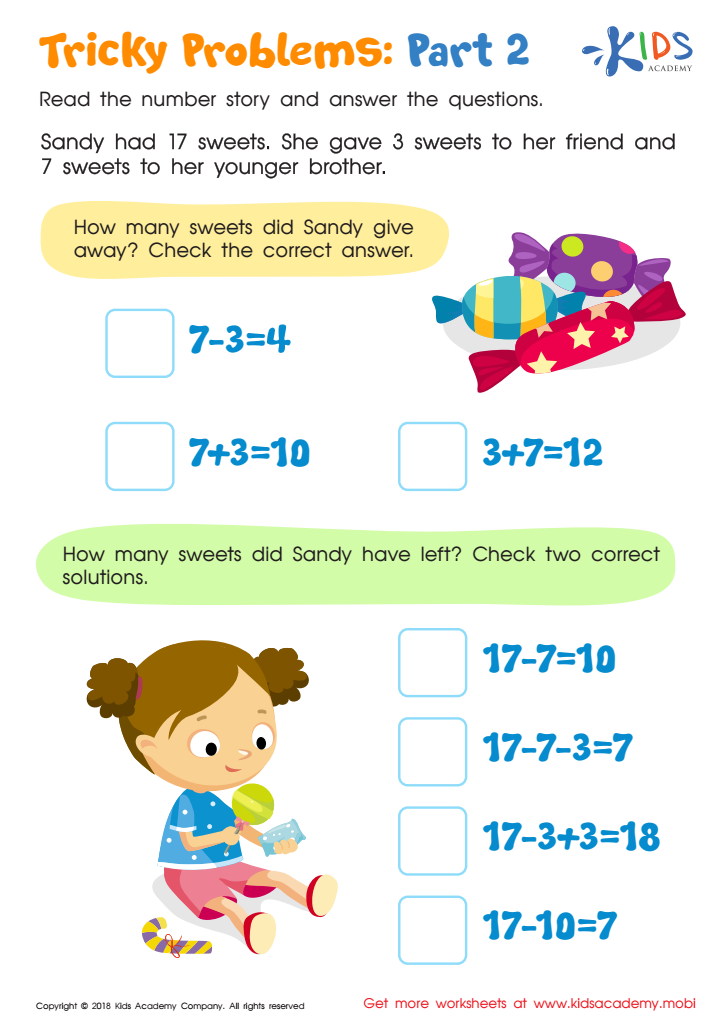
Tricky Problems Worksheet: Part 2
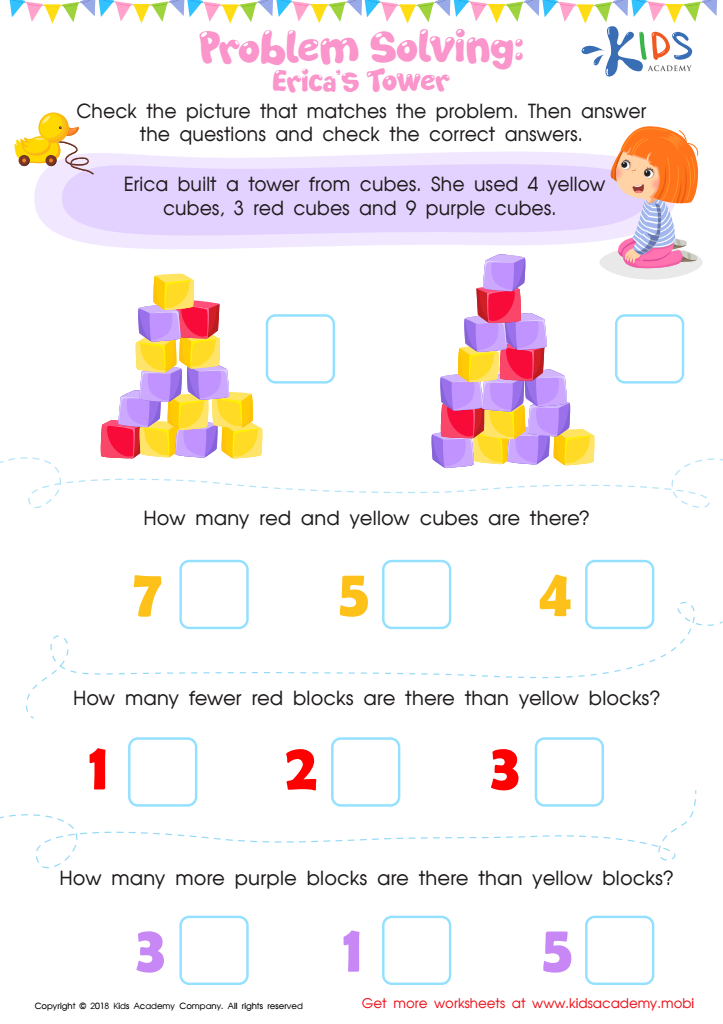
Problem Solving: Erica's Tower Worksheet
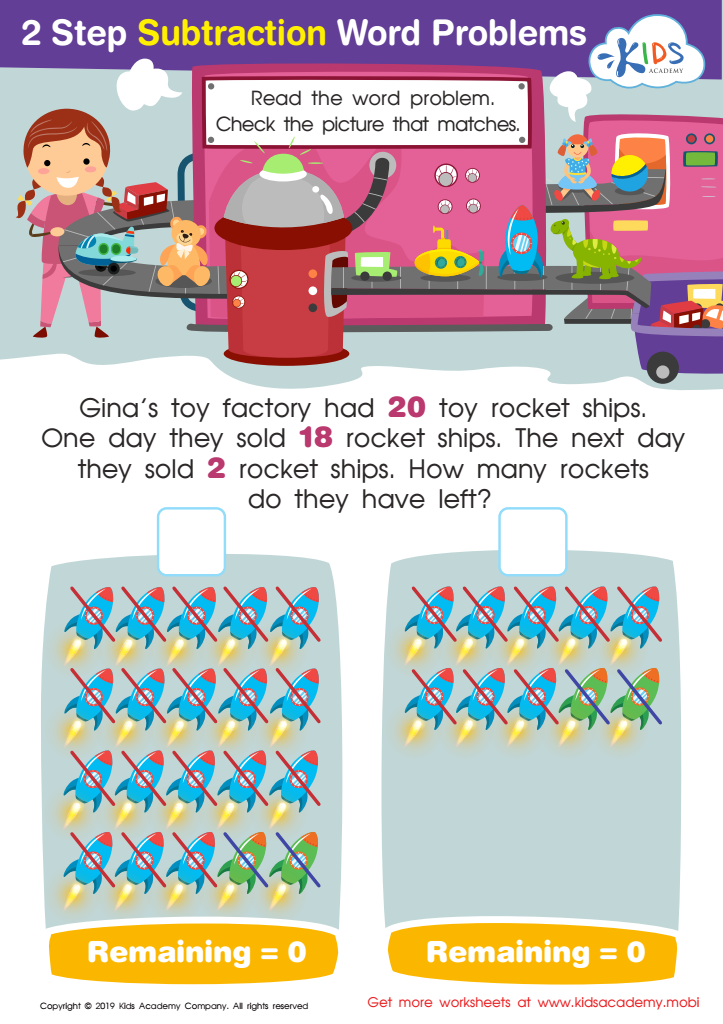
Step Subtraction Word Problems Worksheet
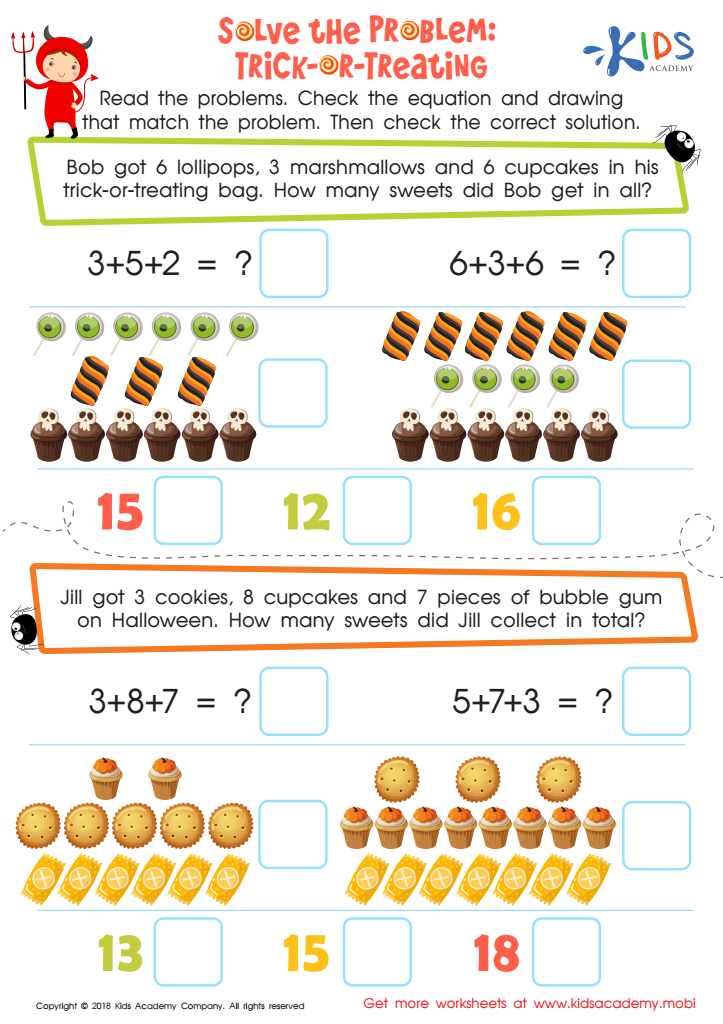
Solve the Problem: Trick–or–treating Worksheet
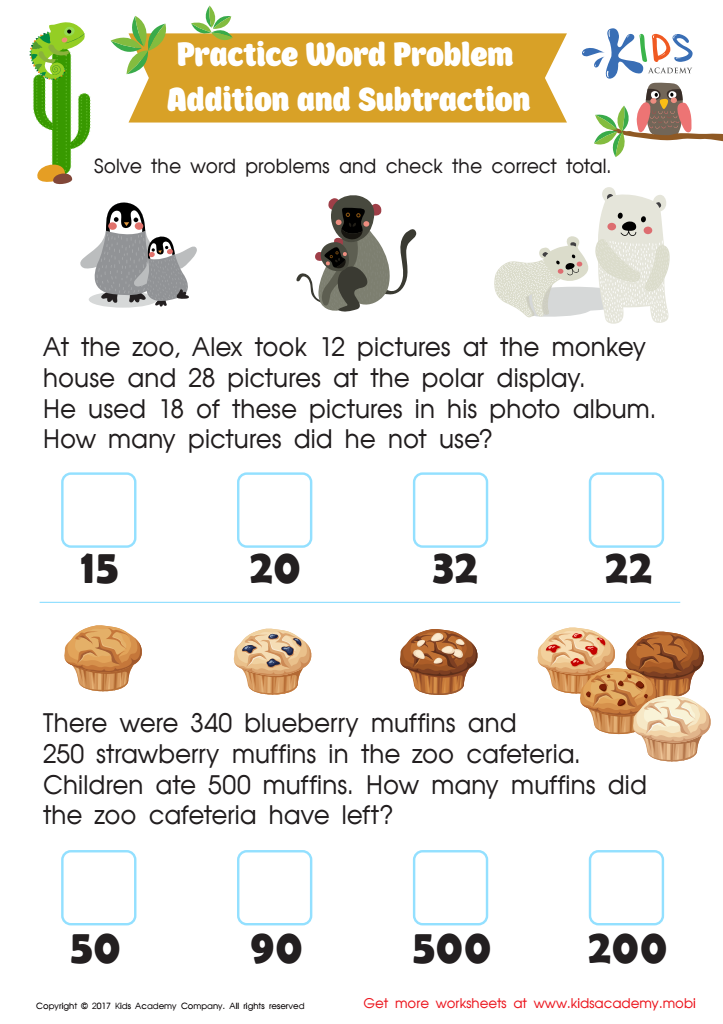
Addition and Subtraction: Word Problems Worksheet
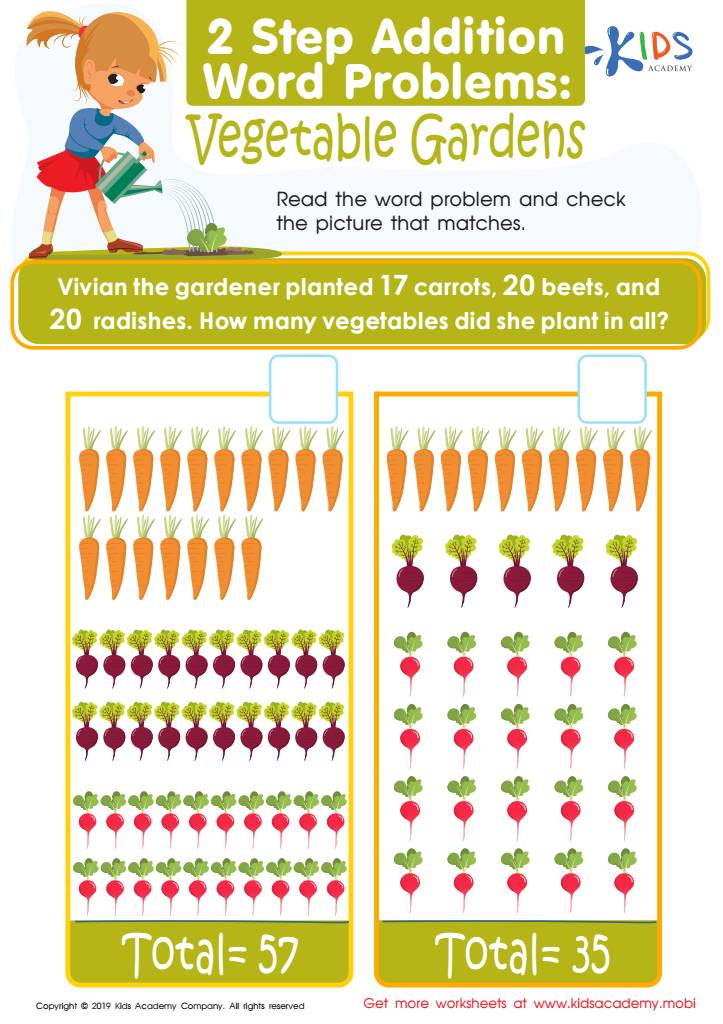
Vegetable Gardens Worksheet



Parents and teachers should prioritize fostering problem-solving skills through normal two-step word problems for children ages 4-9 because these formative years are crucial for cognitive development. Young children are naturally curious, and early exposure to structured problem-solving tasks can significantly shape their critical thinking and analytical abilities. When children engage with two-step word problems, they develop a strong foundation in logical reasoning, sequencing, and mathematical thinking, which are vital for academic success and everyday life challenges.
By tackling these word problems, children also improve their reading comprehension, as they need to understand and interpret the written problem correctly before attempting a solution. This dual-benefit approach helps to enhance both math and literacy skills simultaneously. Moreover, solving problems in steps teaches persistence and the ability to break complex tasks into manageable parts, promoting resilience and a growth mindset.
Additionally, collaborative problem-solving activities foster teamwork and communication skills, as children often discuss strategies and solutions with peers or guiding adults. This social interaction further enhances their learning experience, making problem-solving a fun and engaging process. Prioritizing these skills in early childhood education sets the stage for lifelong learning, helping children to become confident, independent thinkers capable of tackling various challenges.