Moral lesson understanding Normal Reading Worksheets for Ages 4-9
5 filtered results
-
From - To
Our "Moral Lesson Understanding Normal Reading Worksheets for Ages 4-9" are designed to enrich young learners' reading and comprehension skills by introducing valuable moral lessons. Through engaging stories and activities, children are guided to reflect on essential values like honesty, kindness, and teamwork. These worksheets support critical thinking and encourage meaningful discussions, helping kids to not only read but understand and internalize important life lessons. Fun and educational, our resources cater to varied learning styles, making the process enjoyable and impactful for early readers. Foster a love for reading while instilling foundational morals with our expertly crafted worksheets.
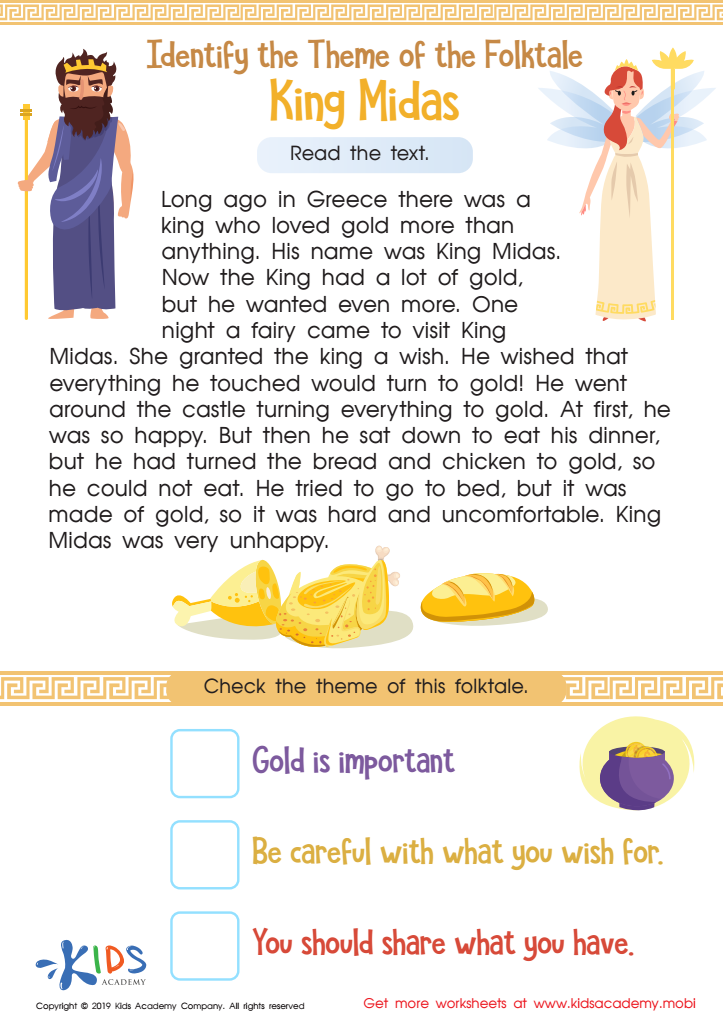
King Midas Worksheet
 Assign to My Students
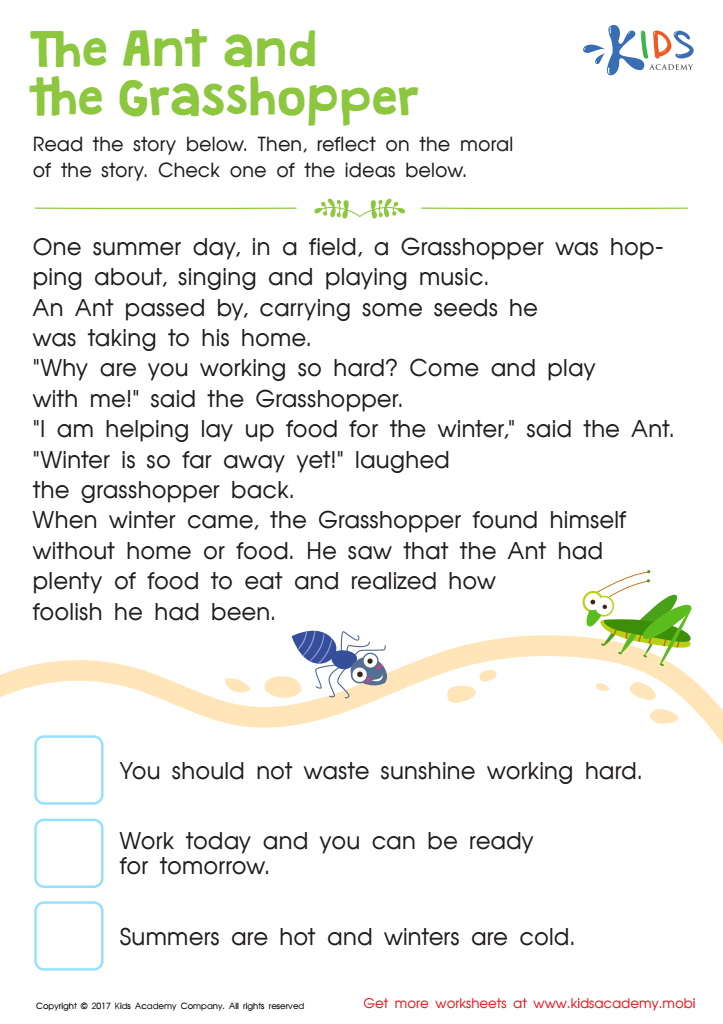
The Ant and The Grasshopper Printable
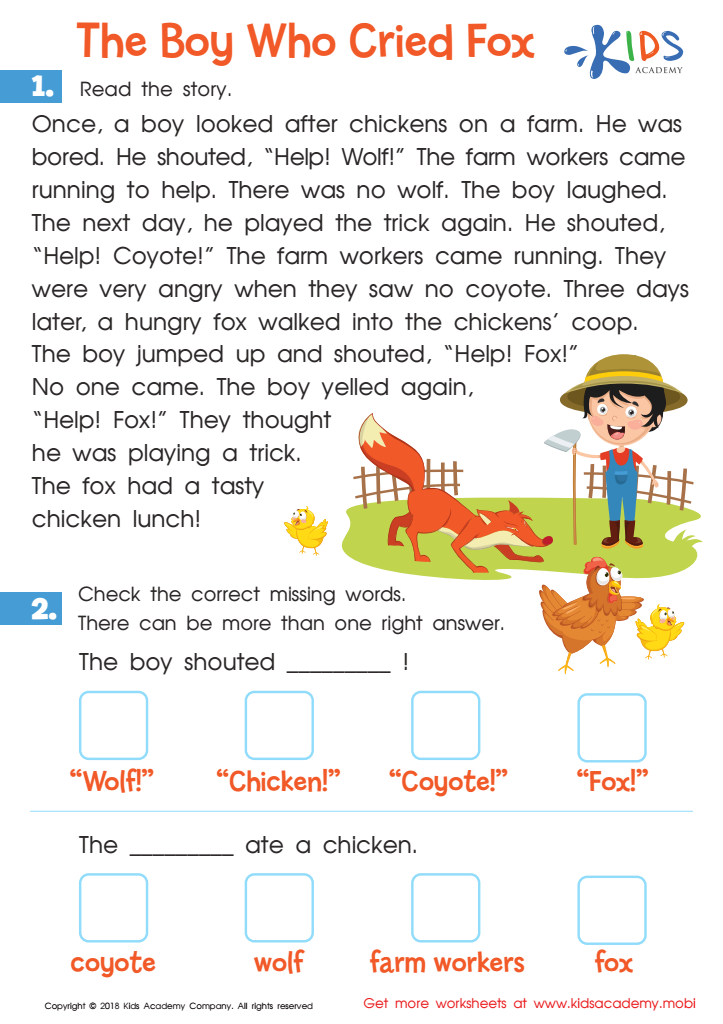
The Boy Who Cried Fox Worksheet
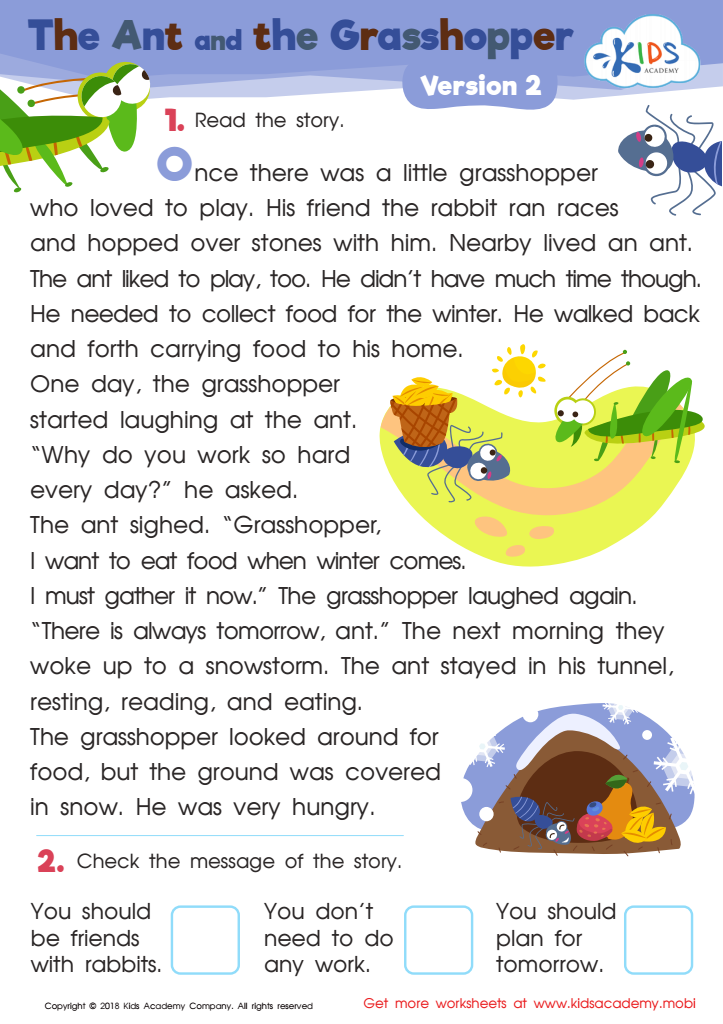
The Ant and The Grasshopper Version 2 Worksheet
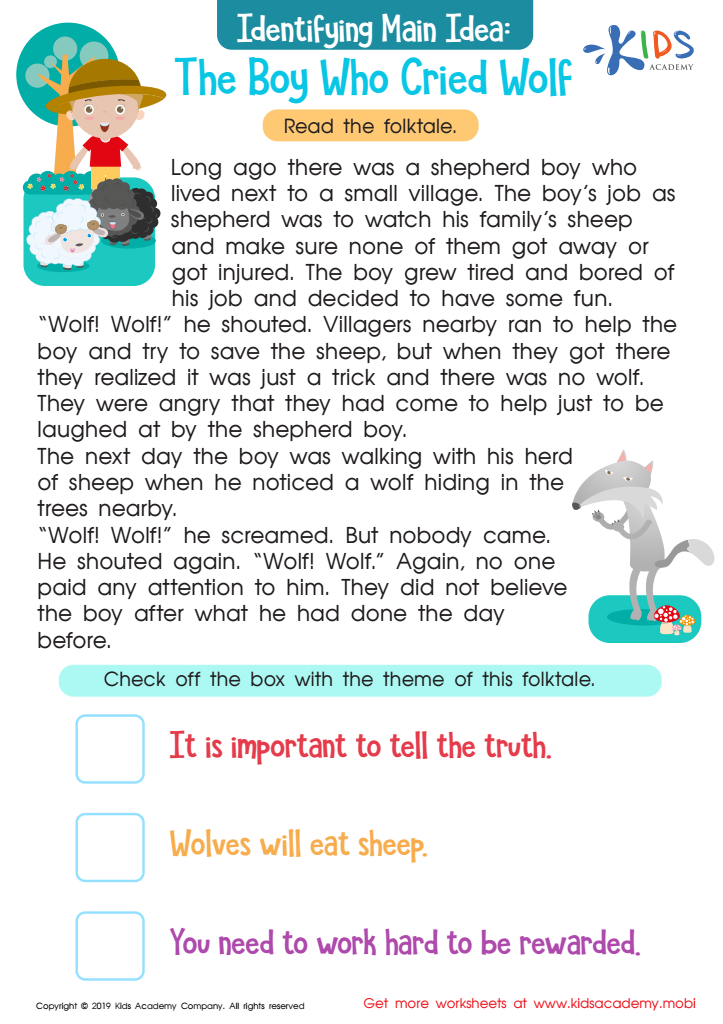
The Boy Who Cried Wolf Part 2 Worksheet





.jpg)
Understanding moral lessons and developing reading skills are both fundamental for children aged 4-9, a critical period for cognitive, emotional, and social development. Firstly, moral lessons help children differentiate right from wrong, fostering empathy, kindness, and responsibility. By learning moral values, young kids comprehend the effects of their actions on others, developing traits like honesty, fairness, and respect. This early moral foundation shapes their character and guides their future behavior, promoting positive interactions both in school and in their wider communities.
Reading skills, on the other hand, are the bedrock of all future learning. When parents or teachers provide opportunities for normal, consistent reading, children develop language, comprehension, and critical thinking skills. Furthermore, stories often convey moral lessons during reading sessions, establishing an ideal scenario where children simultaneously enhance their literacy and moral understanding. A well-developed reading ability enables children to explore stories independently and reflect on moral dilemmas, enriching their overall worldview.
Moreover, reading together strengthens the parent-child or teacher-student bond, creating a supportive emotional environment in which moral and intellectual growth can flourish. In essence, prioritizing both moral lesson comprehension and reading skills ensures children develop into well-rounded, thoughtful, and capable individuals, equipped for future challenges.








