Understanding Sequences Normal Reading Worksheets for Ages 4-9
3 filtered results
-
From - To
Introduce your child to the fun and engaging world of reading through our "Understanding Sequences Normal Reading Worksheets" for ages 4-9. These expertly designed worksheets help young learners comprehend the order of events, a crucial aspect of developing strong reading and comprehension skills. Suitable for children at different reading stages, our worksheets offer a variety of exercises that foster critical thinking and logical progression. Whether your child is just starting or sharpening their skills, these sequence exercises provide the perfect blend of education and entertainment to build a solid foundation in reading. Start enhancing your child’s learning journey today!
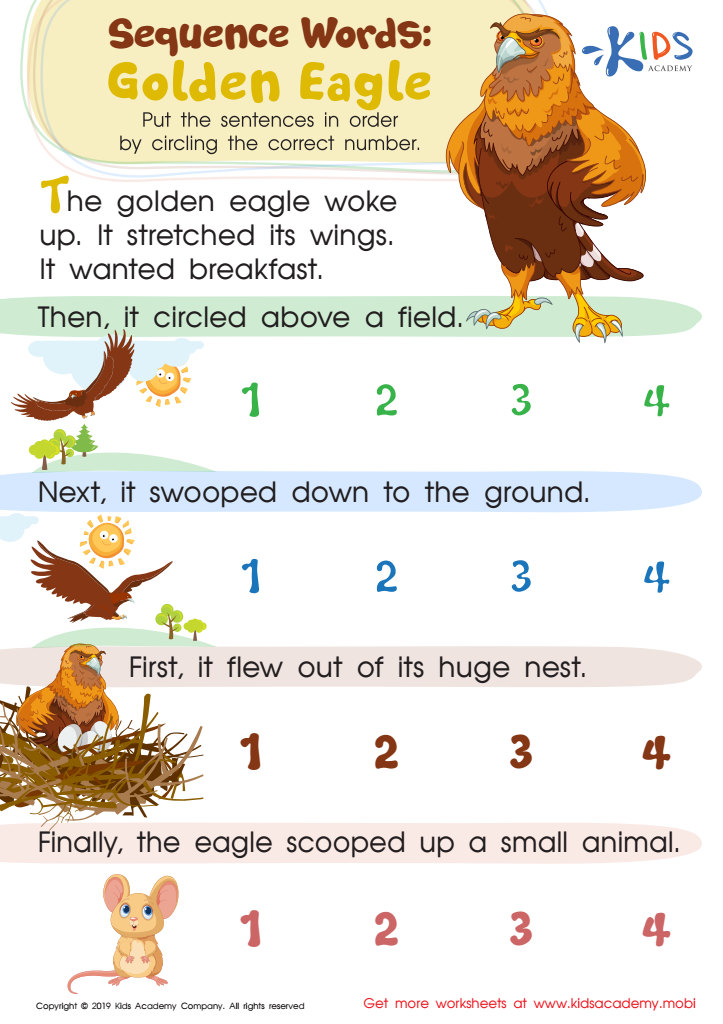
Sequence Word Eagle Worksheet
 Assign to My Students
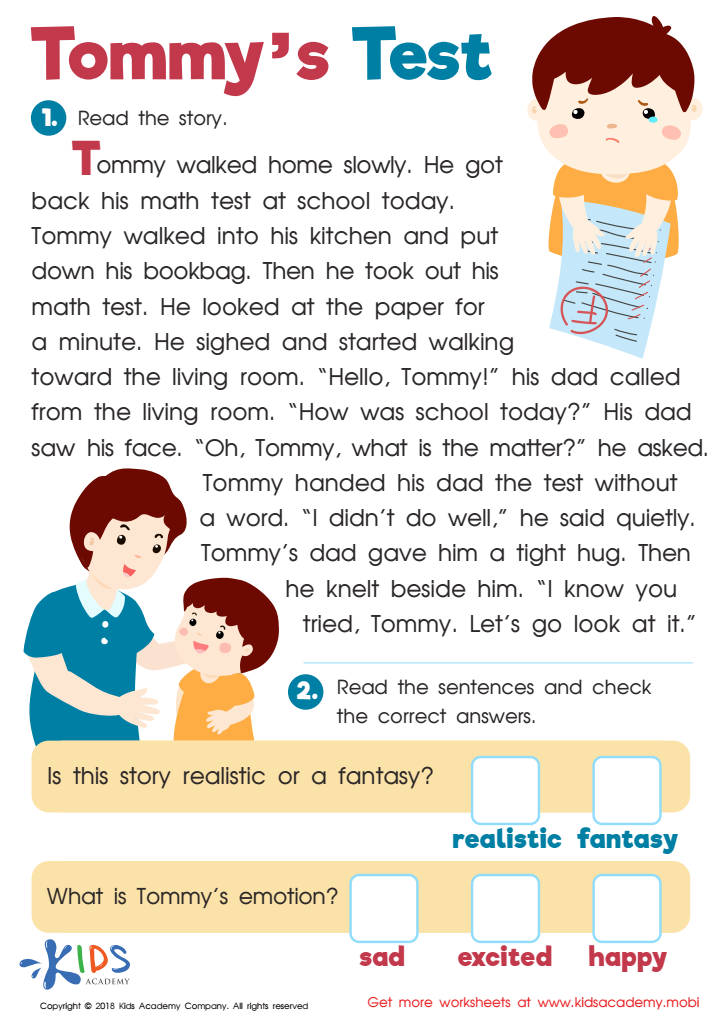
Tommys Test Worksheet
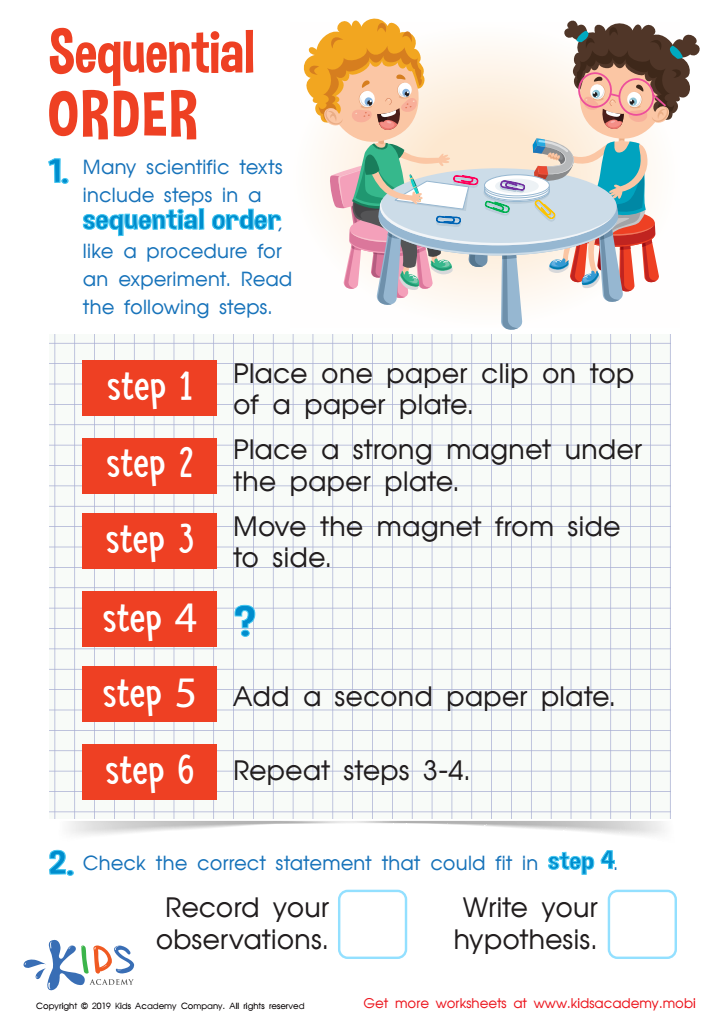
Sequencential Order Worksheet





.jpg)

Understanding sequences in reading is crucial for children aged 4-9 because it lays the foundation for many essential academic and life skills. Sequences help young learners grasp the concept of order, which is fundamental in reading comprehension, mathematical reasoning, and problem-solving. When children understand the order of events, they are better equipped to comprehend stories, predict outcomes, and retell narratives, all of which are key components in early literacy development.
In reading, recognizing sequences enables kids to follow plots, understand cause and effect, and make connections between events. This skill boosts their ability to comprehend texts, enhancing their reading fluency and overall literacy. Additionally, strong sequencing skills inform other academic areas like mathematics, helping students grasp patterns, follow multi-step instructions, and organize their thoughts cohesively.
Moreover, understanding sequences impacts children’s daily lives, teaching them routines and enabling them to manage tasks independently. For example, dressing up or following a schedule involves sequential thinking.
By focusing on this early, parents and teachers can create enriching learning environments where children can thrive. Integrating sequencing activities—such as story maps, sequence cards, and step-by-step instruction—makes learning engaging and establishes a strong educational foundation. In essence, developing sequencing skills in the early years is integral for a child's academic success and everyday functionality.








