Vocabulary improvement Normal Reading Worksheets for Ages 4-9
3 filtered results
-
From - To
Boost your child's vocabulary with our engaging Normal Reading Worksheets designed for ages 4-9! These meticulously crafted worksheets provide a fun and interactive way for young learners to expand their language skills. Each worksheet features age-appropriate reading materials and activities that encourage creativity and comprehension. Ideal for both classroom and home use, our resources help reinforce vocabulary improvement through various exercises, including matching words with pictures, fill-in-the-blanks, and engaging dialogues. Equip your child with essential language skills while making learning enjoyable. Start your vocabulary journey today and watch them flourish in reading and communication! Explore our collection now!
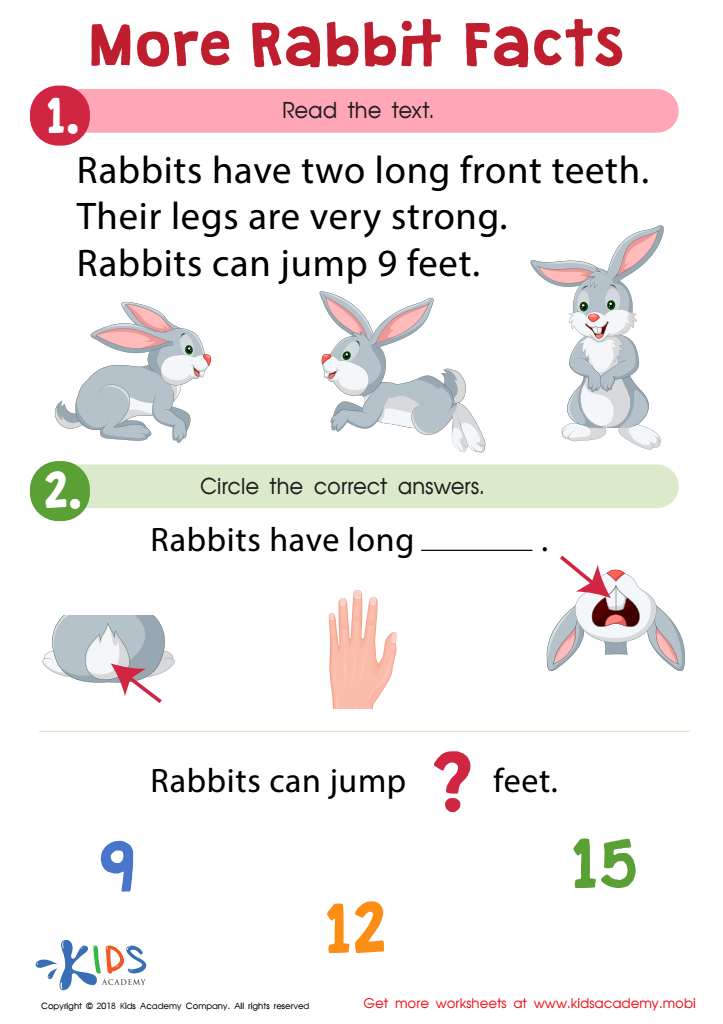
More Rabbit Facts Worksheet
 Assign to My Students
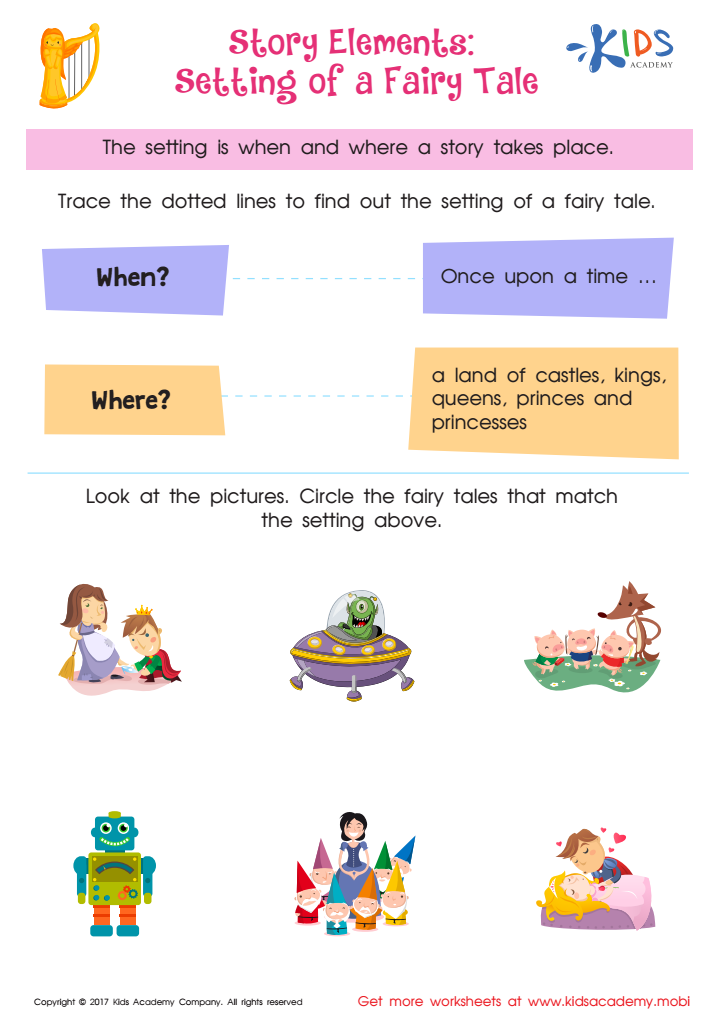
Story Elements: Setting of a Fairy Tale Printable
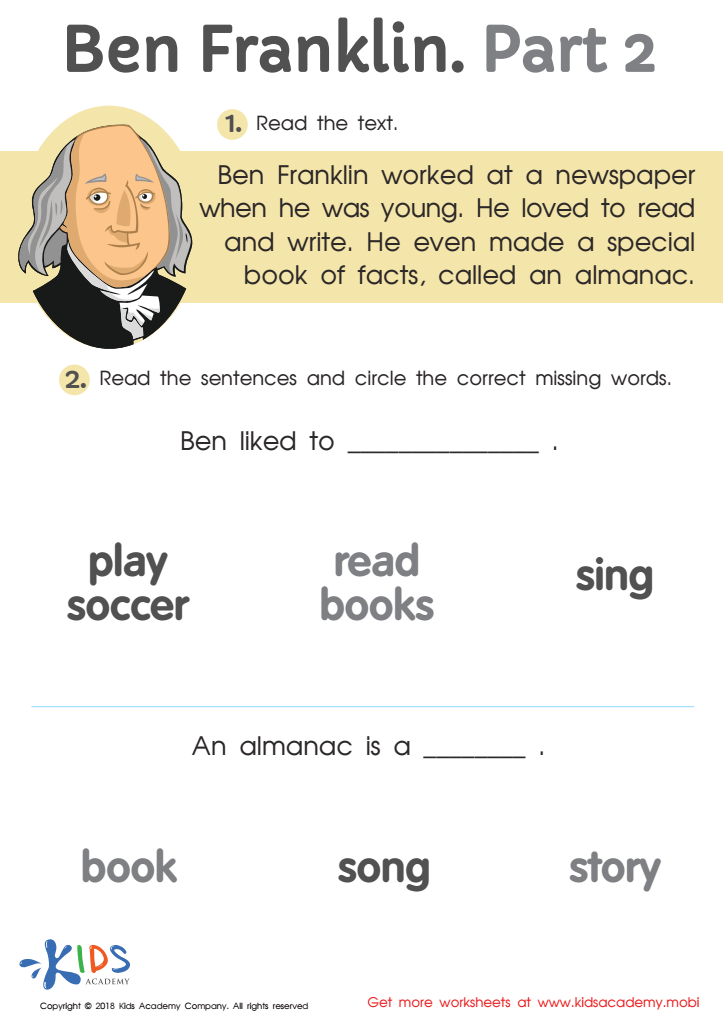
Ben Franklin Part 2 Worksheet




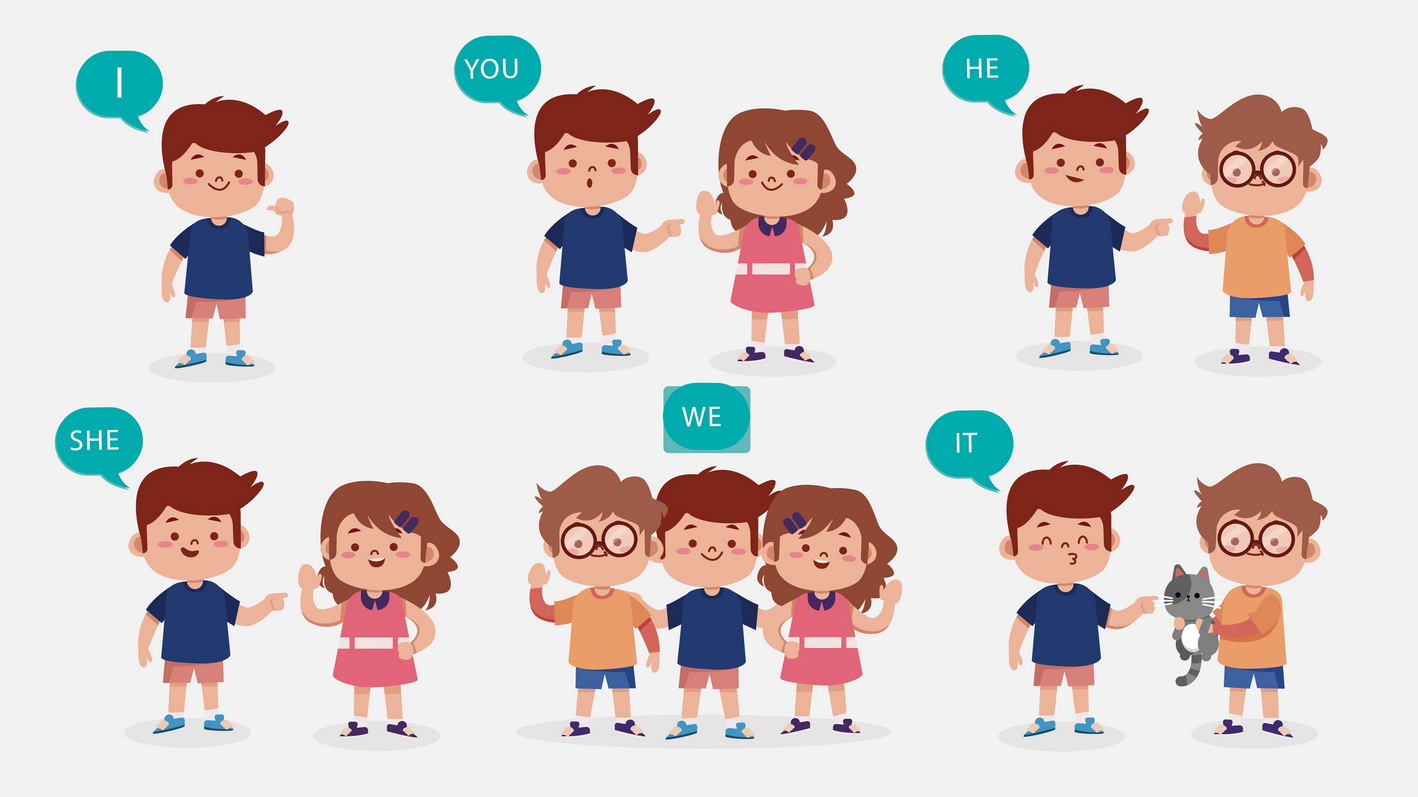



Improving vocabulary in children aged 4-9 is critical for their overall language development and academic success. This age group is a key period for language acquisition, where children absorb new words and their meanings at an astonishing rate. Enhanced vocabulary not only aids in reading comprehension but also helps children express their thoughts and feelings more clearly. When parents and teachers prioritize vocabulary improvement, they equip children with the tools necessary for effective communication and social interaction.
A robust vocabulary contributes to better reading skills, allowing children to tackle more complex texts in later grades. Research shows that a strong vocabulary foundation is closely linked to higher academic achievement. Moreover, children who regularly encounter new words in different contexts develop better critical thinking and analytical skills.
Engagement in vocabulary-building activities, such as reading aloud, storytelling, and interactive games, promotes a love for language and learning. When parents and teachers collaborate to nurture vocabulary growth, they foster an enriching environment that supports literacy and cognitive development. Ultimately, empowering children with a rich vocabulary prepares them for future educational challenges and instills a lifelong love for reading and learning. This investment reaps countless rewards throughout their academic journey and beyond.








