Word identification Normal Reading Worksheets for Ages 4-9
5 filtered results
-
From - To
Unlock your child's reading potential with our Word Identification Normal Reading Worksheets designed for ages 4-9. These engaging worksheets promote essential literacy skills through fun, interactive activities tailored to young learners. They will help children recognize and understand various words, enhancing their vocabulary and comprehension. Our printable resources provide diverse exercises that cater to different learning styles, ensuring that every child thrives in their reading journey. Parents and educators can confidently use these worksheets to foster a love for reading while building foundational skills. Start your child's adventure into the world of words today! Visit our site for easy access and resources.
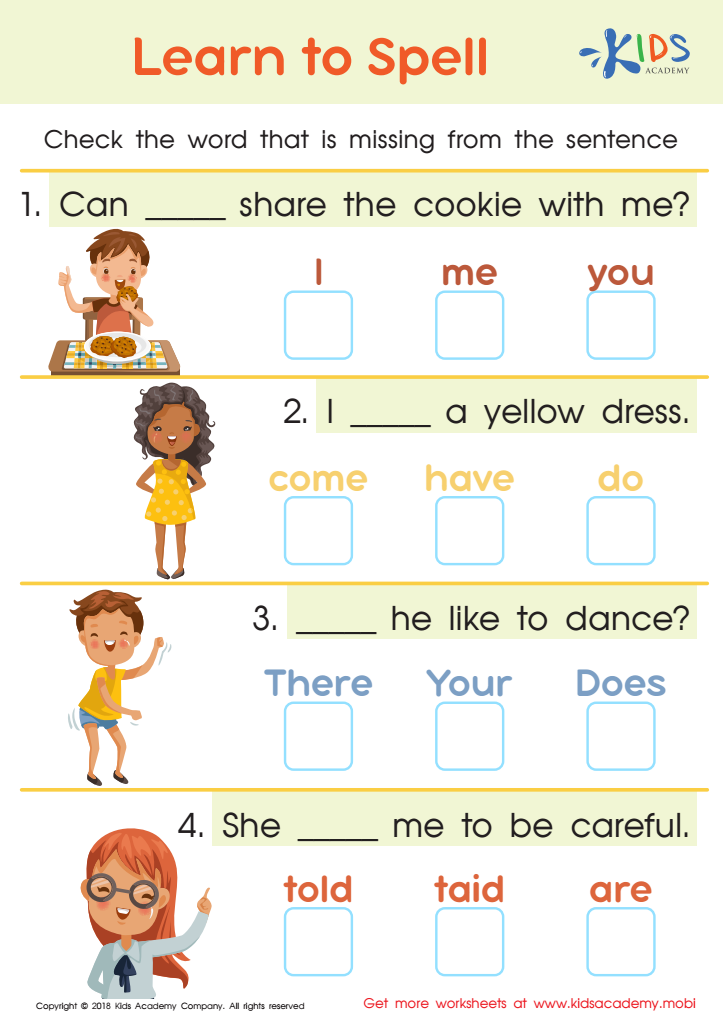
Learn to Spell Worksheet
 Assign to My Students
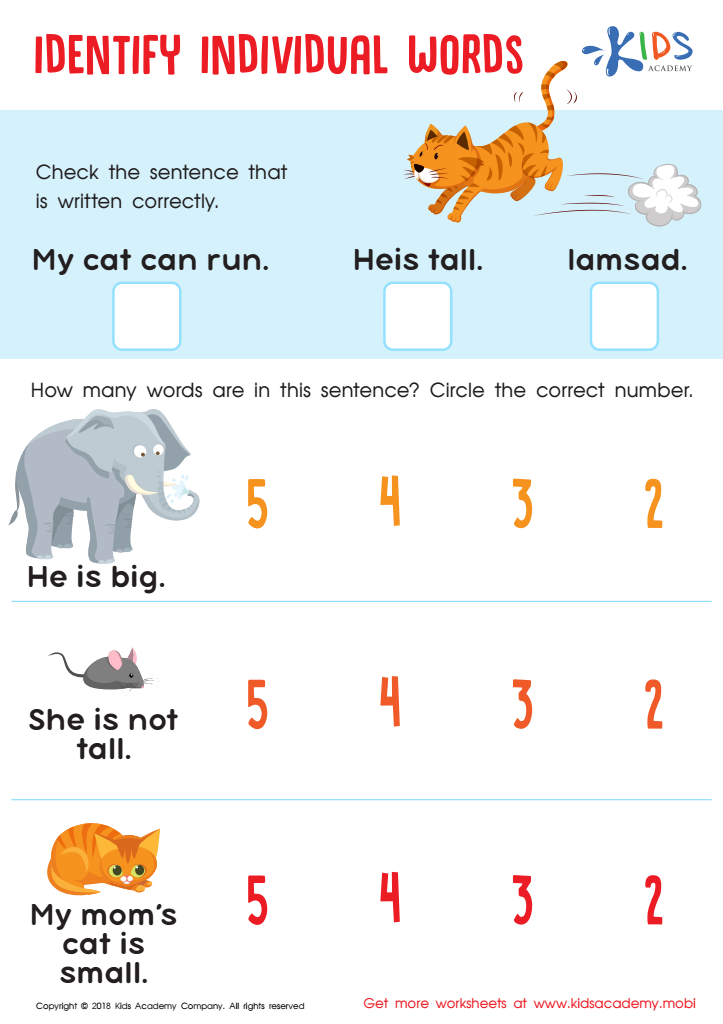
Identify Individual Words Worksheet
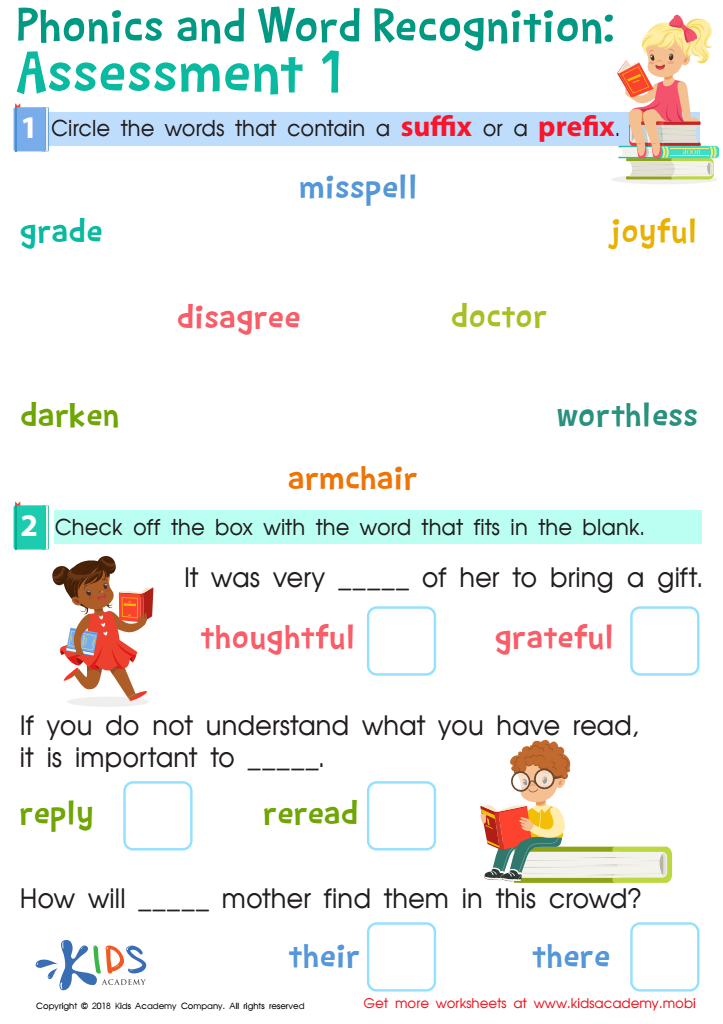
Phonics and Word Recognition: Assessment 1 Worksheet
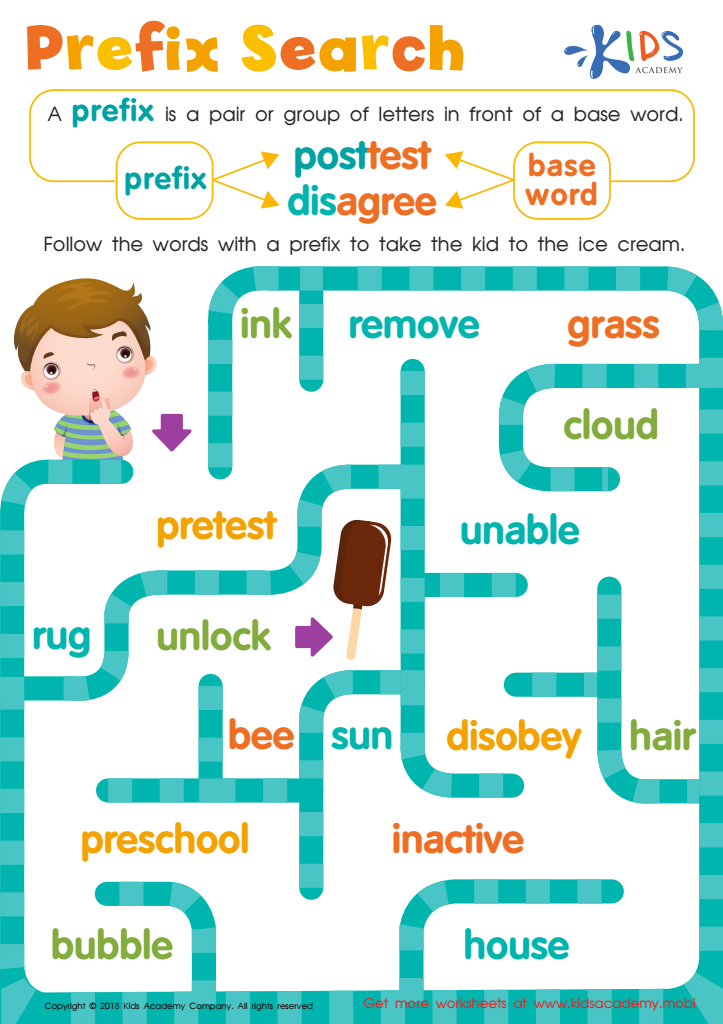
Reading: Prefix Search Worksheet
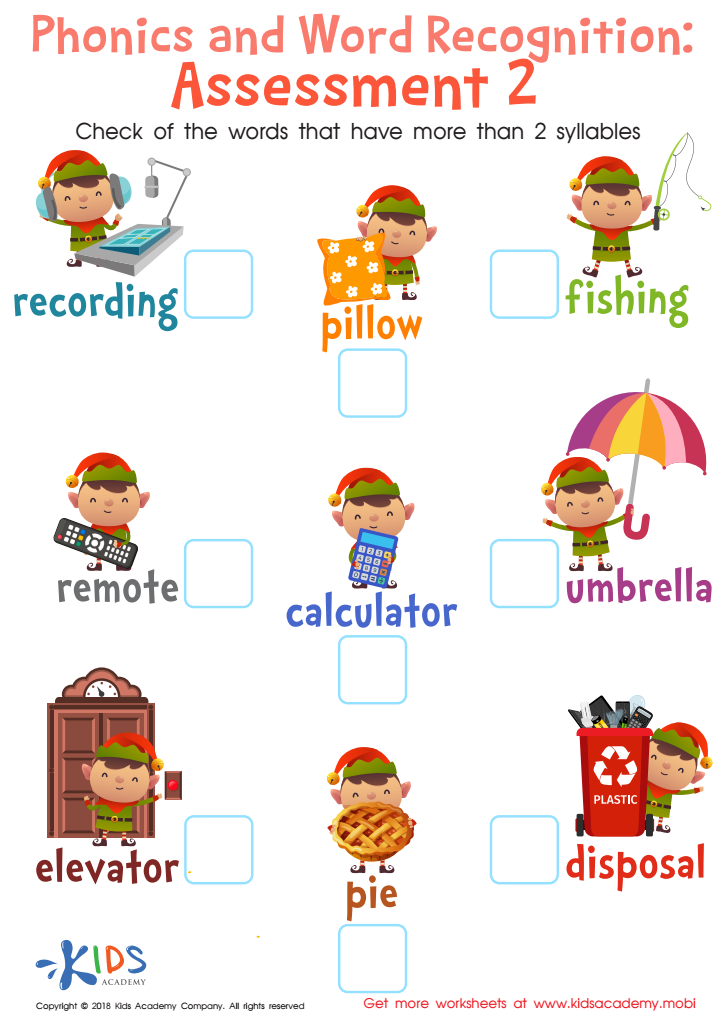
Phonics and Word Recognition: Assessment 2 Worksheet





.jpg)


Parents and teachers should care about Word Identification Normal Reading for Ages 4-9 because it lays the foundational skills necessary for a child's literacy development. Mastering word identification allows young learners to recognize and process words quickly, which is essential for fluent reading. When children can effortlessly identify words, they can focus more on comprehension and meaning rather than decoding, enhancing their overall understanding of texts.
Moreover, strong word identification skills contribute to a child's confidence and motivation in reading. Engaging with stories becomes enjoyable rather than daunting, fostering a lifelong love for literature. Effective word identification also supports vocabulary growth as children encounter diverse texts and contexts.
In the digital age, where literacy is critical for accessing knowledge and information, equiping children with solid word identification skills ensures they are prepared for future educational challenges. Additionally, this competency is vital for performing well in standardized assessments and contributes to academic success. By nurturing these skills, parents and teachers equipmentate children with essential tools to thrive academically and socially, creating independent learners ready to navigate an increasingly complex world. Overall, prioritizing word identification helps ensure a strong literacy foundation that contributes significantly to a child's educational journey.








