Visual interpretation Normal Reading Fiction Worksheets for Ages 4-9
5 filtered results
-
From - To
Explore our engaging Visual Interpretation Normal Reading Fiction Worksheets, specifically designed for children ages 4-9. These interactive resources help young learners develop critical thinking and comprehension skills by interpreting illustrations alongside textual content. Each worksheet encourages students to analyze images, make connections, and enhance their storytelling abilities, fostering creativity and imagination. Activities are aligned with early reading standards, making them perfect for classrooms or home learning. Whether you're a teacher or a parent, our worksheets provide a fun and supportive way to enhance reading comprehension through visual aids. Download now to boost your child's reading skills and confidence!
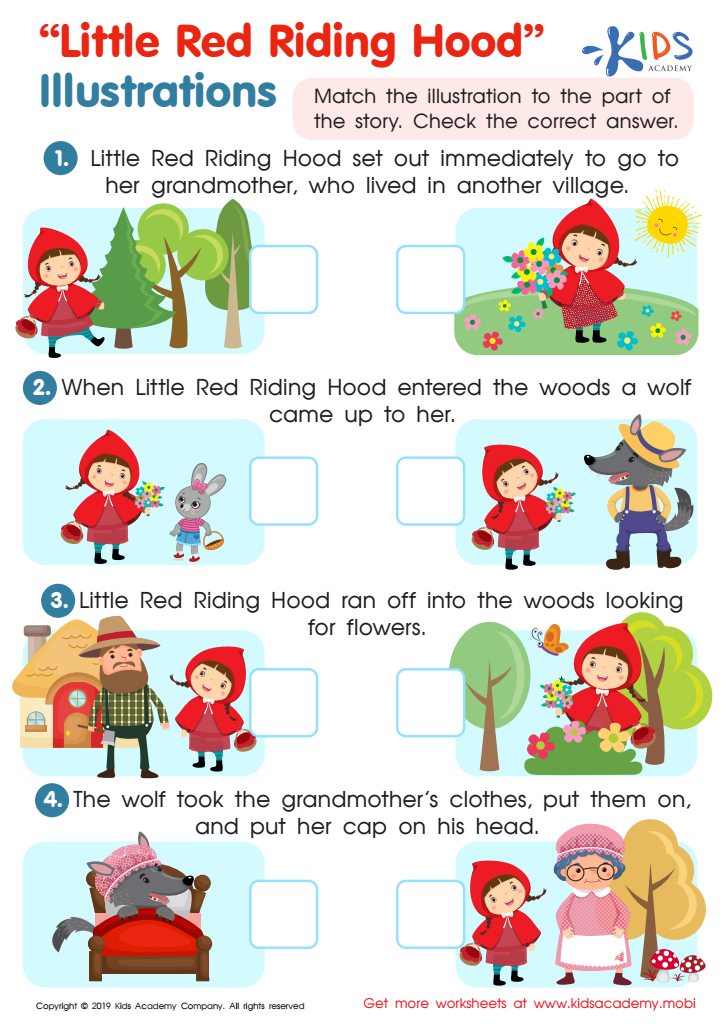
Little Red Riding Hood: Illustrations Worksheet
 Assign to My Students
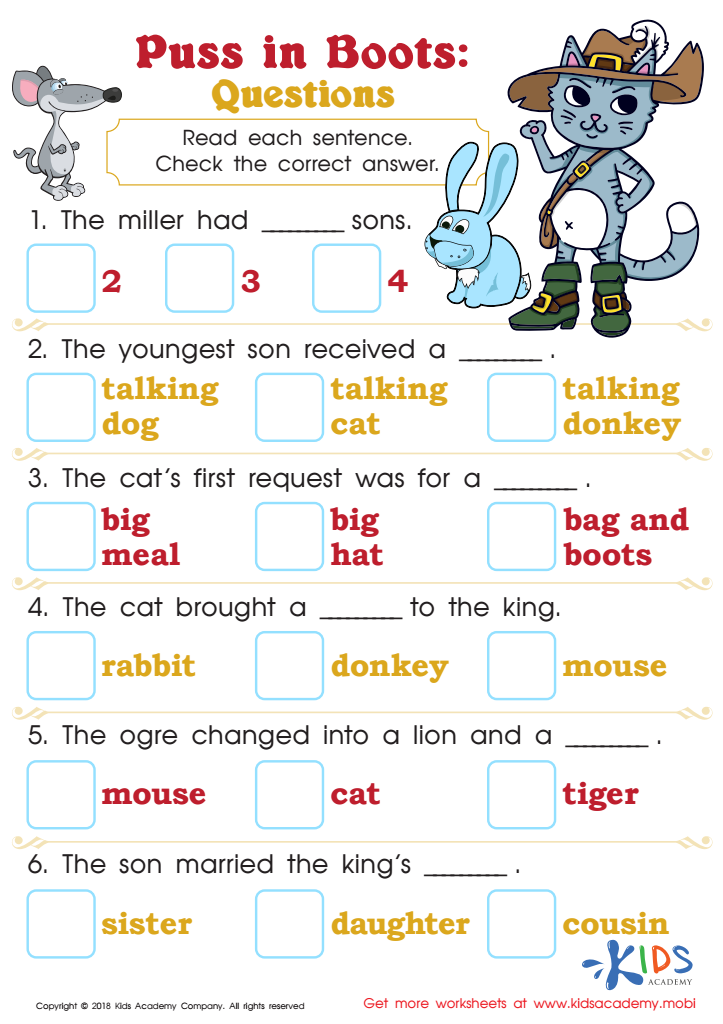
Puss in Boots: Questions Worksheet
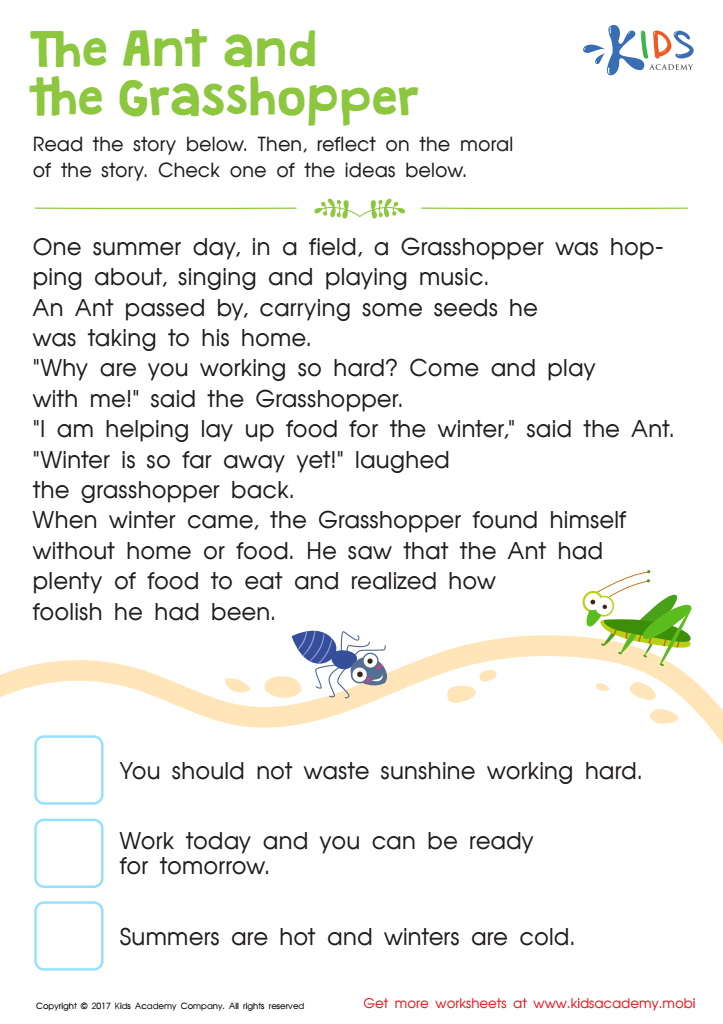
The Ant and The Grasshopper Printable
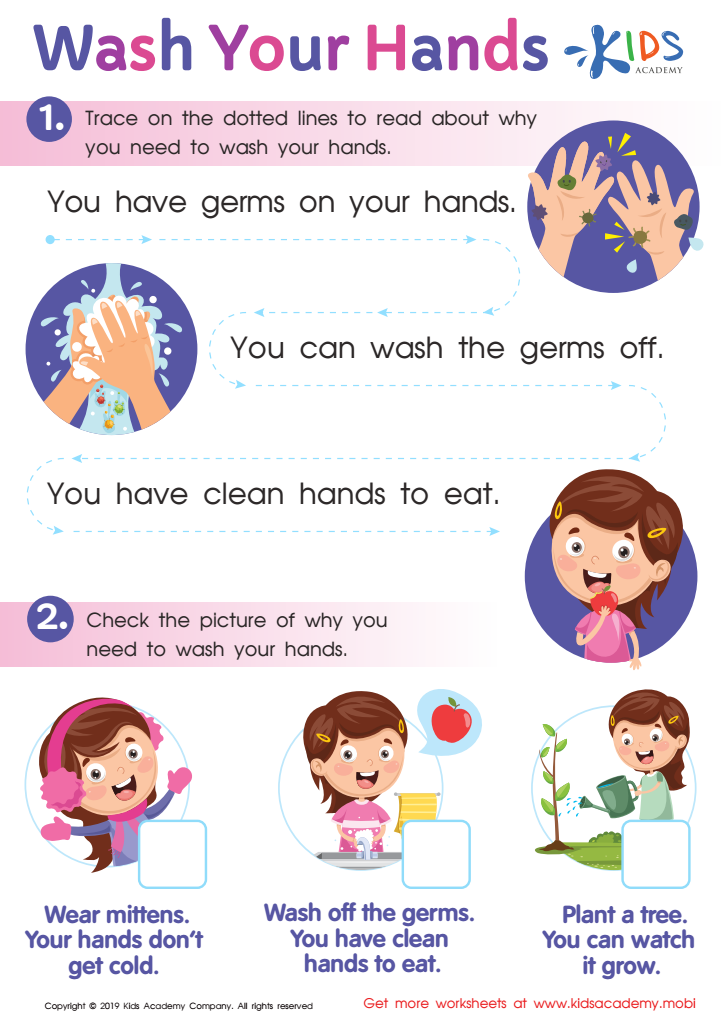
Wash Your Hands Worksheet
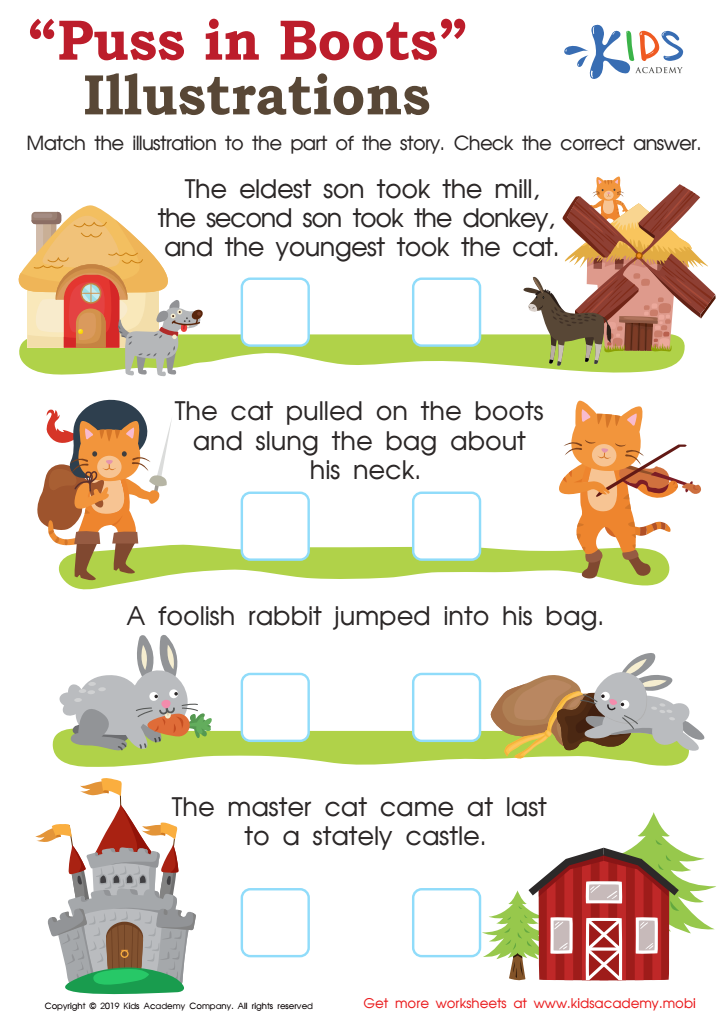
Puss in Boots Illustrations Worksheet







Visual interpretation plays a crucial role in the developmental stages of children aged 4-9, particularly when it comes to normal reading and fiction. At this age, children's cognitive and linguistic skills are rapidly evolving, and engaging with visual elements enhances their understanding of stories and boosts their imagination. When parents and teachers support children's ability to interpret illustrations alongside the text, they help develop critical thinking and analytical skills.
Fiction often employs nuanced themes and emotions, which illustrations can help convey. Engaging with pictures aids in making connections between the narrative and the visual context, fostering deeper comprehension. Children learn to infer meaning, sequence events, and recognize character emotions through images, skills invaluable for their overall literacy development.
Moreover, fostering an interest in visual storytelling encourages creativity. Children experiment with their narratives and illustrations, developing not only a love for reading but also a holistic understanding of communication—a vital skill extending beyond academics. As such, parents and teachers should prioritize activities that integrate visual interpretations with reading to cultivate a love for fiction and enhance literacy in early childhood education. By doing so, they ensure a well-rounded foundation for their children's future reading competencies.







